
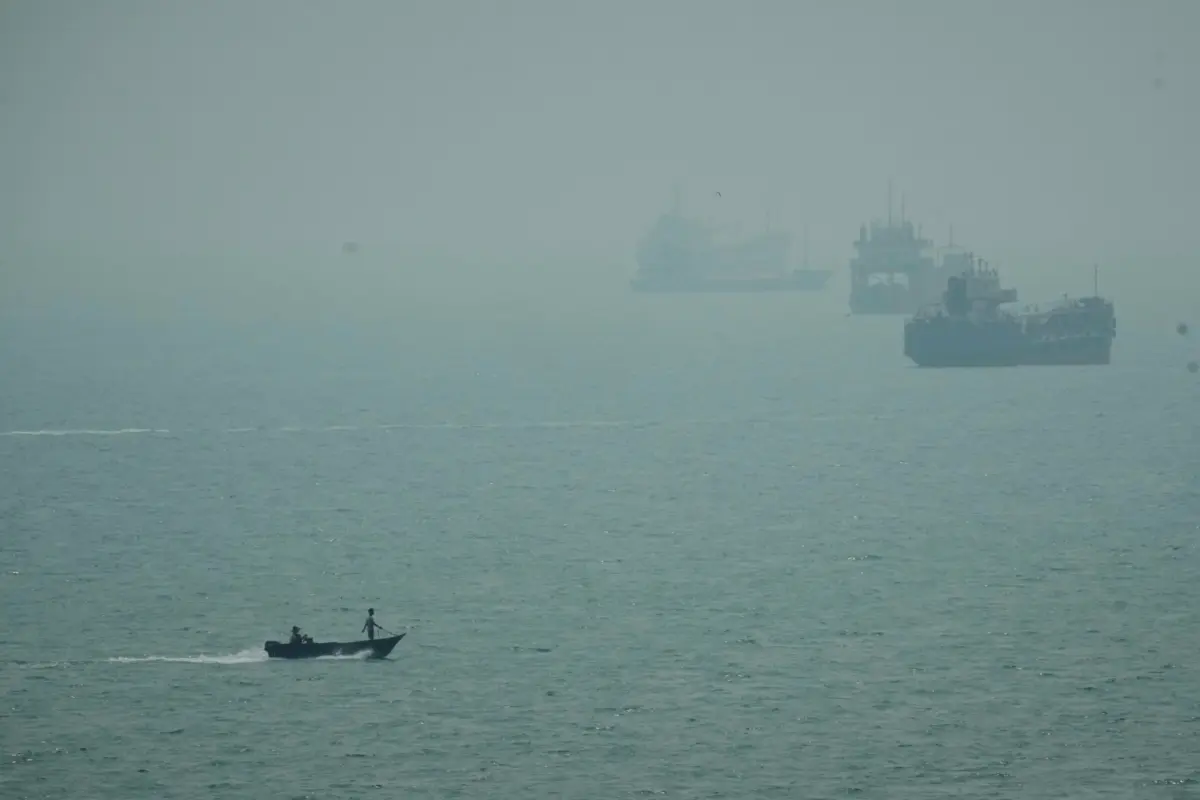

WASHINGTON and TEHRAN — Six months after the outbreak of a devastating conflict initiated by U.S. and Israeli airstrikes, the war between Iran and Western-led coalition forces has entered a highly volatile and unpredictable phase. On Monday, September 7, 2026, Iranian state media announced a fundamental and aggressive shift in the country’s military posture, declaring a new defense doctrine: Tehran will now execute preemptive military strikes against perceived threats before they can materialize.
This doctrinal shift coincides with claims of a successful technological test of the Qassem Basir, a sophisticated solid-fueled anti-ship ballistic missile, which Iranian officials assert was recently fired at a U.S. warship in the Persian Gulf. As the White House flatly rejects Tehran’s attempts to establish a unilateral "exclusion zone" in the strategically vital Strait of Hormuz, international maritime observers warn that the conflict is transitioning from a localized trade disruption into an all-out naval war with catastrophic implications for the global economy.
Executive Overview: A New Era of Preemptive Warfare
For decades, the Islamic Republic of Iran’s military posture has been characterized by active deterrence and asymmetric, retaliatory warfare. However, the prolonged conflict that began on February 28, 2026, has fundamentally altered Tehran’s strategic calculations. According to reports published Monday by Iran’s state news agency, the nation’s armed forces have adopted a doctrine of preemption. The state-run media asserted that Iran "will take action against any threat, even before it is carried out," signaling a willingness to launch first strikes against U.S., Israeli, and allied assets in the region.
At the center of this new posture is the Qassem Basir, an upgraded precision-guided ballistic missile designed specifically to target hostile naval vessels. Mohsen Rezaei, the head of Iran’s Supreme National Security Council, boasted on state television that this advanced weaponry had been "tested" directly against a U.S. Navy warship.
                       [ STRAIT OF HORMUZ CHOKEPOINT ]
                                      |
             +------------------------+------------------------+
             |                                                 |
             v                                                 v
   [ Iranian Ambitions ]                             [ U.S. & Allied Response ]
  • Unilateral "Exclusion Zone"                     • Mine-Clearing Operations (U.S. Navy)
  • Mandatory Iranian-designated routes             • Freedom of Navigation Off Oman
  • Deployment of Qassem Basir ASBM                 • Ongoing Blockade of Iranian Oil Ports
  • Preemptive Strike Doctrine                      • Redirection of 94+ Commercial Vessels
While the Pentagon confirmed that American warships had successfully evaded multiple ballistic missile attacks over the weekend, the deployment of such high-end military hardware against Western naval vessels marks a dangerous escalation. For the first six months of the war, Iranian actions at sea were largely confined to harassing, mining, and seizing commercial shipping vessels. Direct, state-sanctioned ballistic missile strikes on active U.S. warships represent a crossing of red lines that has already triggered heavy American retaliatory strikes against Iran’s domestic maritime infrastructure.
Detailed Chronology: The Road to Preemption
To understand the gravity of the current crisis, it is necessary to trace the rapid escalation that has occurred since the war’s inception in early 2026.
2026
  ├── Feb 28: Outbreak of war; preventive U.S. & Israeli strikes on Iranian missile sites.
  ├── Mar - Aug: Six months of "grey-zone" warfare; Iranian forces target commercial shipping.
  ├── Aug 31: Lethal attack on Saudi-owned tanker; 2 crew killed, 7 missing.
  ├── Sept 5 (Sat): Iranian ballistic missiles launched at U.S. warships; U.S. retaliates, striking 3 Iranian tankers.
  ├── Sept 6 (Sun): Mohsen Rezaei announces "exclusion zone" and claims Qassem Basir test.
  └── Sept 7 (Mon): Iranian state media codifies the new "Preemptive Strike Doctrine."
The Outbreak (February 28, 2026)
Following months of intelligence warnings regarding Iran’s rapidly advancing ballistic missile and nuclear enrichment programs, the United States and Israel launched coordinated, preventive airstrikes on military installations across Iran. The strikes aimed to neutralize Tehran’s missile launch complexes, research facilities, and command centers. Instead of capitulating, Iran mobilized its regional proxy network and deployed its domestic naval assets to wage a protracted war of attrition in the Persian Gulf and the Gulf of Oman.
The Grey-Zone Maritime Campaign (March – August 2026)
For half a year, Iran avoided direct, overt confrontations with U.S. Navy strike groups. Instead, Tehran targeted commercial vessels, using limpet mines, loitering munitions, and fast-attack craft to disrupt trade. This strategy was designed to drive up global oil prices and pressure Western coalition partners to sue for peace.
The Saudi Tanker Tragedy (Late August 2026)
The maritime conflict turned deadly when an unidentified projectile—widely believed to be an Iranian-manufactured drone—struck a Saudi-owned commercial oil tanker transiting near the Strait of Hormuz. The strike killed two crew members and left seven unaccounted for. If the missing crew are confirmed dead, it will mark the single deadliest maritime incident since the war began, prompting intense diplomatic outrage from Riyadh and its regional partners.
The Direct Clash (Saturday, September 5, 2026)
Departing from asymmetric tactics, Iranian forces launched a salvo of ballistic missiles directly at U.S. warships patrolling the Gulf of Oman. Although the warships utilized advanced onboard electronic warfare and missile defense systems to evade the attack without sustaining damage, the Pentagon responded immediately. U.S. Navy aircraft and naval vessels launched retaliatory strikes, destroying three Iranian oil tankers anchored near major export terminals.
The Doctrinal Declaration (September 6–7, 2026)
Following the U.S. retaliatory strikes, Mohsen Rezaei took to Iranian state television to announce the creation of an "exclusion zone" in the Strait of Hormuz. By Monday morning, state-run media had codified this announcement into the new preemptive defense strategy, declaring that the Qassem Basir missile program has permanently shifted the balance of power in the Middle East.
Supporting Context & Metrics: The Battle for the Chokepoint
The Strait of Hormuz is widely considered the most critical maritime chokepoint in the world, with roughly one-fifth of the world’s petroleum consumption transiting through its narrow waters daily. The current military standoff has severely restricted this vital artery of global commerce.
Technical Analysis: The Qassem Basir Missile
First unveiled in late 2025 and deployed in high numbers throughout 2026, the Qassem Basir represents a significant leap in Iran’s domestic military industry:
- Propulsion: Solid-fueled, allowing for rapid launch times with minimal preparation, making it highly survivable against preemptive Western airstrikes.
- Range: Verified at a minimum of 1,200 kilometers (745 miles), placing the entire Persian Gulf, the Gulf of Oman, and parts of the Arabian Sea within its operational envelope.
- Warhead: Carries a high-explosive conventional warhead weighing approximately 500 kilograms (half a ton).
- Guidance: Equipped with an electro-optical and infrared seeker, enabling terminal guidance to strike moving naval targets with high precision.
Maritime Operations and Economic Disruptions
According to data released by the global commerce information firm Kpler, vessel transits through the Strait of Hormuz dropped to historic lows during the first week of September.
| Metric / Indicator | Operational Status / Value |
|---|---|
| Hormuz Transit Volume | Dropped sharply (lowest levels since Feb 2026) |
| U.S. Blockade Status | Ongoing; targeting all Iranian oil export terminals |
| Redirected Vessels | 94 commercial ships rerouted by U.S. Military command |
| Disabled Vessels | 3 commercial ships disabled due to kinetic strikes |
| U.S. Countermeasures | Active minesweeping and escort operations off Oman |
The United States military confirmed that while it continues to enforce a strict naval blockade on Iranian ports to starve the regime of oil revenue, it has successfully cleared several critical shipping lanes of naval mines. To bypass the contested Iranian-controlled waters, the U.S. Navy has been escorting a limited number of commercial tankers along a alternative corridor off the coast of Oman.
Rezaei acknowledged this alternative route, noting that Iranian forces have refrained from sinking these tankers because they carry crude oil, citing "environmental concerns" regarding potential catastrophic oil spills in their backyard. However, analysts believe this restraint is highly transactional, designed to avoid pushing neutral international powers into joining the U.S.-led coalition.
Official Statements: Diplomatic Fractures and Defiance
The rhetoric emerging from all sides of the conflict highlights a complete breakdown of regional diplomacy and a growing consensus that the security architecture of the Persian Gulf has been permanently altered.
Tehran’s Defiance
During his address on state television, Mohsen Rezaei, Head of Iran’s Supreme National Security Council, framed the exclusion zone as a legitimate act of sovereign self-defense:
"The Persian Gulf is our home, and we will dictate the rules of engagement here. Any vessel attempting to transit without our authorization does so at its own peril. We have proven our capabilities against the American war machine, and we will not hesitate to strike again."
Washington’s Dismissal
The White House and the Pentagon immediately issued a joint statement dismissing Rezaei’s declaration of an exclusion zone, reaffirming their commitment to keeping international waterways open:
"The Strait of Hormuz is an international waterway, and the United States will continue to fly, sail, and operate wherever international law allows. Iran’s claims of an exclusion zone are legally baseless and militarily unenforceable. The U.S. Navy remains the guarantor of maritime security in the region, and we will defend our assets and international shipping against any preemptive or retaliatory aggression."
Regional Alarm in the Gulf
The escalation has caused immense frustration and panic among neighboring Gulf states, who find their economic lifelines caught in the crossfire. Anwar Gargash, a senior diplomatic adviser to the President of the United Arab Emirates, spoke candidly at a high-level security forum in Abu Dhabi:
"No single state should be allowed to control or hold hostage a waterway that is essential to the survival of the global economy. Our energy exports, our trade, and our economic livelihood will not be held hostage by Tehran’s military calculations. Rebuilding trust between Iran and the Gulf Cooperation Council (GCC) is no longer a matter of diplomatic rounds—it will take decades to repair the damage done to regional stability."
Following a series of missile and drone attacks on its own infrastructure, the UAE suspended all remaining trade ties with Iran in late August.
In Cairo, Nabil Fahmy, Secretary-General of the Arab League, echoed these sentiments during an emergency ministerial-level meeting:
"We will not accept our sovereign maritime corridors becoming a bargaining chip in the calculations of extra-regional powers or Iranian expansionist policies. The Arab League stands united in condemning these reckless attacks on commercial shipping and Gulf security."
Future Outlook: A Highly Volatile Horizon
The introduction of Iran’s preemptive strike doctrine, combined with the deployment of advanced anti-ship ballistic missiles like the Qassem Basir, has pushed the Persian Gulf to the brink of an unmanageable wider war.
                          [ ESCALATION PATHWAYS ]
                                     |
         +---------------------------+---------------------------+
         |                                                       |
         v                                                       v
[ Tactical Escalation ]                                [ Strategic Collapse ]
• Escalating missile/drone duels                       • Total closure of Strait of Hormuz
• Intensive localized naval skirmishes                  • Devastating global energy shock
• Increased U.S. strikes on Iranian soil               • Direct clash involving GCC states
As both sides double down on their respective strategies, several scenarios emerge for the coming months:
1. The Viability of the "Exclusion Zone"
It remains highly unlikely that Iran can successfully enforce a total blockade of the Strait of Hormuz in the face of the U.S. Navy’s superior firepower. However, by utilizing asymmetric warfare, sea mines, and mobile ballistic missile launchers, Iran can make transiting the strait prohibitively expensive due to soaring maritime insurance rates. If commercial shipping companies refuse to transit the area, Iran will have achieved a de facto blockade without having to defeat the U.S. Navy in a conventional engagement.
2. Escalation to Land-Based Targets
With the U.S. already striking Iranian oil tankers and Iran targeting U.S. warships, the threshold for striking land-based assets has lowered. If an Iranian missile successfully penetrates a U.S. warship’s defenses, the American response would likely entail massive, sustained airstrikes against missile production facilities, command-and-control centers, and leadership targets deep within mainland Iran.
3. The Collapse of Regional Energy Security
The longer the conflict persists, the higher the likelihood of a major disruption to global energy supplies. While the U.S. has managed to route some traffic through Oman, a sustained campaign using the Qassem Basir could shut down alternative routes as well. This would trigger a global energy crisis, driving oil prices well past historic highs and severely impacting Western economies already strained by the war.
Six months into the conflict, the hope for a swift diplomatic resolution has evaporated. By declaring a preemptive doctrine and attempting to rewrite the maritime rules of the road, Iran has signaled that it is prepared for a long, high-intensity conflict—one that threatens to drag the entire Middle East into a dark and uncertain future.

0 Comments