

By the Investigative Desk
Published: July 2026
Executive Overview
The pristine shoreline of Panama City, nestled along Florida’s vibrant panhandle, transformed into a scene of sheer terror on June 9, 2026. A horrifying, near-shore shark attack—captured chillingly on camera—has left a swimmer fighting for their life in a local intensive care unit. This latest act of ocean violence has immediately reignited a nationwide debate: Are shark attacks on the rise? Which species pose the most acute threat to humans? And, most importantly, what systemic measures can we take to safeguard beachgoers?
Against the backdrop of this gruesome attack, momentum has reached a fever pitch for the implementation of a landmark piece of federal legislation known as Lulu’s Law. Having successfully navigated both the House of Representatives and the Senate, the proposed national shark alert system now sits on the desk of the President, awaiting final executive approval.
Proponents argue that this legislation is long overdue. By establishing an automated, localized emergency broadcast network for marine hazards, Lulu’s Law aims to bridge a critical communication gap that has historically left swimmers entirely in the dark.
To understand the gravity of this legislative push, one must look not only at the statistics—which reveal a troubling upward tick in both unprovoked bites and fatalities globally—but also at the personal accounts of survivors and the insights of leading maritime researchers. Among them is New York Times bestselling author Michael Tougias, a preeminent authority on maritime disasters and survival stories. Through his extensive investigations into human encounters with apex predators, Tougias offers a sobering reality check: while humans may view themselves as the masters of the coastline, the ocean remains an untamed wilderness where apex predators rule.
Detailed Chronology: The Anatomy of Modern Shark Attacks
To comprehend the necessity of a national alert system, analysts point directly to the harrowing incidents that have shaped the conversation. Chief among them is the tragedy that birthed the very name of the impending legislation: the story of Lulu Gribbin.
The Catalyst: Lulu Gribbin’s Ordeal
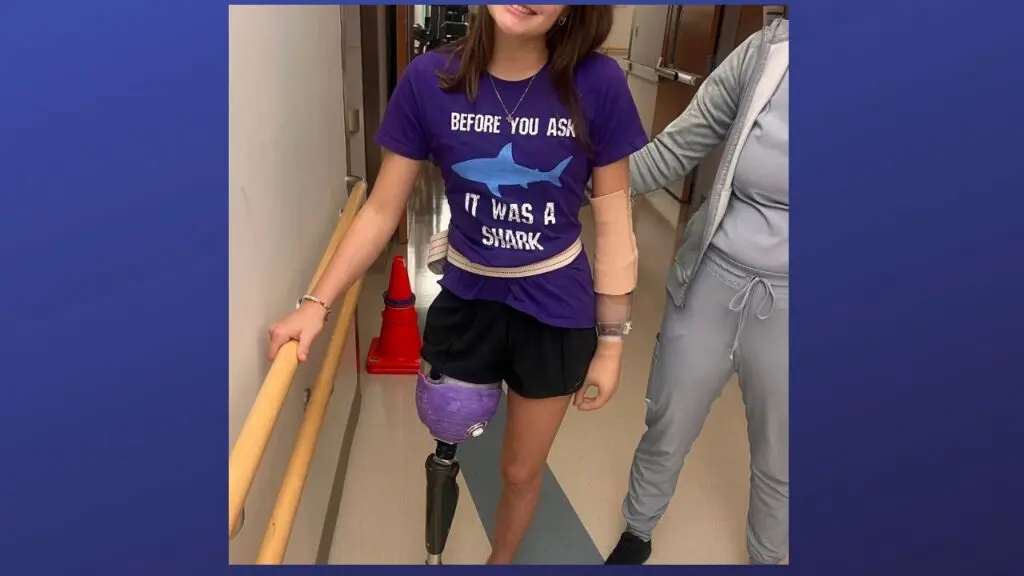
In the summer of 2024, 17-year-old Lulu Gribbin was enjoying a day at the beach in Walton County, Florida, unaware that a predator was hunting nearby. A sudden, violent shark attack stripped Gribbin of her left hand and right leg, forever altering the trajectory of her youth.
What makes Gribbin’s story particularly agonizing, however, is the timeline of events.
"Ninety minutes prior to my accident," Gribbin recounted in subsequent interviews, "only three miles down the coast, there was another shark attack, and we believe it was the same shark."
That initial attack severely injured two other individuals, marking a rare and terrifying double-incident day in the same geographical vicinity. Gribbin has since become an impassioned advocate for beach safety, noting that had a coordinated notification system been active that day, word of the first attack would have instantly reached her stretch of the coast. She would have stayed out of the water, and her catastrophic injuries might have been entirely prevented.
The Panhandle Emergency of June 2026
Fast forward nearly two years to June 9, 2026, in Panama City. The dynamics of the recent attack mirror the chilling predictability of aggressive, roaming predators. A swimmer, enjoying the coastal waters, was suddenly struck. The violence of the encounter was captured on video, spreading rapidly across news outlets and social media, shocking viewers with its swiftness and brutality. As medical professionals fought to save the victim’s life, local authorities scrambled to close beaches, once again reacting after the blood had already been drawn rather than preemptively warning the public.

Lu Nguyen’s 26-Hour Survival Battle
While coastal attacks command immediate media attention, open-water encounters present an entirely different dimension of horror. Michael Tougias explores this in his gripping new book, In Deep Water: A True Story of Sharks, Survival and Courage.
The book chronicles the harrowing 2022 ordeal of Lu Nguyen. After his friend’s vessel sank, Nguyen found himself cast adrift, fighting for survival in the open ocean for an agonizing 26 hours. As if hypothermia, dehydration, and exhaustion were not enough, Nguyen was targeted by a massive, 10-foot tiger shark.
"Lu’s survival story is off the charts," Tougias states, reflecting on his decades of documenting maritime disasters. "I’ve written ten books about castaways at sea and have never come across a story as harrowing as Lu’s. It’s amazing how Lu fought off the shark after it lunged for his head and instead bit down on his lifejacket and tried to drag him from his fellow survivors."
Nguyen’s survival required a supreme exertion of will against an apex predator that viewed him not as an accidental misunderstanding, but as active prey.
Supporting Context & Metrics: Are Attacks Really Increasing?
A central point of contention among marine biologists, conservationists, and beach safety advocates is whether shark attacks are genuinely on the rise or if increased media coverage and coastal populations are simply skewing perception.
Decoding the Data
According to metrics compiled by the International Shark Attack Files (ISAF), the trends do not favor the casual beachgoer. When comparing data from 2025 to the preceding year, researchers noted a stark 38.3% increase in the number of individuals bitten by apex ocean predators. Even more alarming is the lethality of these encounters: the number of fatalities recorded in 2025 spiked by 50% compared to the 10-year historical average of six deaths per year.
Experts often comfort the public by stating that sharks do not actively hunt humans, arguing instead that bites are cases of "mistaken identity"—where a surfer’s silhouette resembles a seal, or murky waters obscure vision. Michael Tougias challenges this comforting narrative based on his investigative findings.
"Lu would disagree with that, and so would I," Tougias asserts. "I’ve investigated many attacks. Every now and then, there is a shark that is bold and hungry, and anything alive in the water becomes its prey."
The Regional Threat Landscape
The geographic distribution of dangerous shark species is also shifting, driven by environmental and ecological factors:
- The American South: A noticeable surge in bull shark populations—known for their aggressive temperament and ability to tolerate low-salinity estuarine waters—has heightened risks in Gulf and Southern Atlantic states.
- The Northeast Coast: An exploding population of seals, protected by federal conservation laws, has naturally drawn a growing number of great white sharks closer to New England and mid-Atlantic shores.
This overlapping confluence of rising marine predator populations and expanding human coastal recreation creates an inherently volatile mix.
Official Statements and the Mechanics of "Lulu’s Law"
With the legislative branch having cleared Lulu’s Law and the measure resting before the President, lawmakers and safety advocates are detailing how the system will fundamentally transform beach safety.

How the Alert System Works
If signed into law, Lulu’s Law will mandate the creation of a standardized, rapid-response shark alert framework.
- Geo-Targeted Notifications: The moment a confirmed shark attack occurs, or if a large, aggressive shark (such as a great white, tiger, or bull shark) is spotted in close proximity to a public swimming area, automated emergency alerts will be broadcast directly to all cellular devices within a designated geographic radius.
- Proactive Public Safety: Much like severe weather warnings or Amber Alerts, the system is designed to bypass the lag time of traditional lifeguards having to physically raise flags, clear water manually, or wait for local news stations to broadcast updates.
Michael Tougias champions the initiative, noting that while the law could not have prevented open-water incidents like Lu Nguyen’s sinking, it is an indispensable tool for shore-based swimmers.
"The law is designed so that if a shark attack happens or a large shark is spotted near shore, an alert goes to all the cell phones within a specific radius," Tougias explains.
Furthermore, Tougias’s research into serial attacks—such as the double-incident days occurring near Pensacola and Walton County—suggests that a single rogue shark is frequently responsible for multiple strikes within a compressed timeframe. Rapid communication is the only way to neutralize this threat before subsequent swimmers enter the water.
Future Outlook: Coexisting with the Apex of the Food Chain
As we look toward the remainder of the 2026 summer season and beyond, authorities emphasize that legislation alone cannot eliminate risk. Education, vigilance, and structural policy changes must go hand in hand.
Recommendations for Coastal Safety
- Embrace Technological Integration: Once Lulu’s Law is formally enacted, beachgoers must ensure their mobile devices are enabled to receive regional emergency alerts while visiting coastal areas.
- Dusk and Dawn Restrictions: Avoid swimming during peak feeding times for predatory sharks—specifically at dawn, dusk, and nighttime—when visibility is low and predatory activity naturally spikes.
- Avoid Bait and Schools of Fish: Steer clear of areas with diving seabirds, schooling baitfish, or commercial fishermen cleaning catches, as these environments act as magnets for large sharks.
- Mind the Environment: Recognize that murkier waters, river mouths, and deep drop-offs naturally increase the likelihood of unexpected close encounters.
A Humble Reminder
Michael Tougias encapsulates the ultimate philosophy that every ocean-goer must adopt moving forward. In a world where tourism and coastal real estate development continue to push humans deeper into marine habitats, we must respect the hierarchy of the natural world.
"Between the increasing number of bull sharks in the south, and the increase in great white sharks along the northeast coast because of exploding seal populations, we all need to be more careful when we enter the ocean," Tougias warns.
"The sharks are at the top of the food chain, not us."
With Lulu’s Law poised to become the law of the land, the nation takes a vital, overdue step toward protecting its citizens—acknowledging that while we cannot tame the ocean, we can certainly improve our preparedness when venturing into its depths.
About the Expert:
Michael Tougias is widely recognized as America’s leading maritime survival and rescue author. With over 30 adult books and 9 young adult books to his credit—including the bestselling The Finest Hours (adapted into a major Disney motion picture), Ten Hours Until Dawn, Fatal Forecast, Overboard, and his latest release, In Deep Water: A True Story of Sharks, Survival and Courage—Tougias continues to shed light on the profound resilience of the human spirit when faced with the unforgiving power of the sea. For more information, visit www.michaeltougias.com.

0 Comments