

Executive Overview
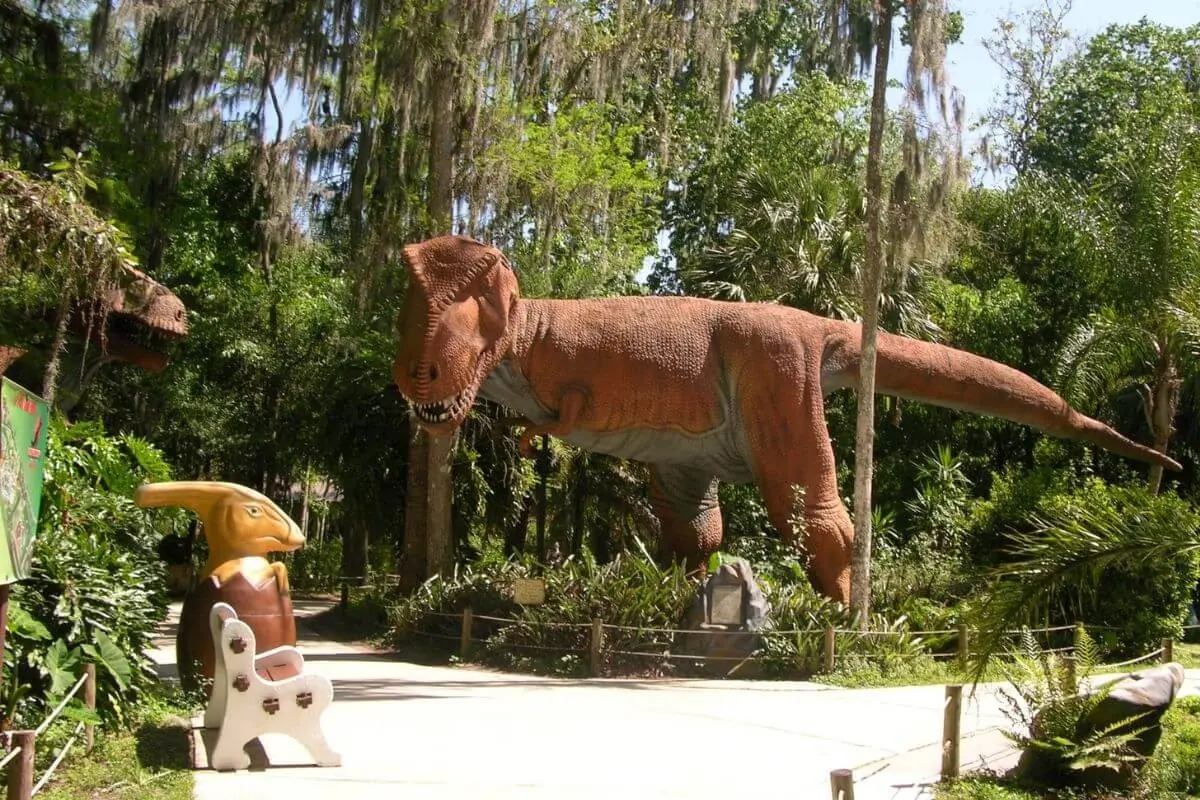
When travelers picture Florida, images of sun-drenched beaches, emerald-green palm trees, and sprawling theme park castles typically spring to mind. However, beneath the veneer of modern tourism lies an unexpected, roaring prehistoric subculture. According to the Paleobiology Database—a comprehensive, non-profit public resource tracking global fossil distribution—Florida ranks among the top five states in the United States for the highest concentration of unearthed dinosaur fossils.

This geological richness has birthed an astonishing array of dinosaur-themed attractions. From classic mid-century roadside oddities constructed out of chicken wire and concrete to state-of-the-art interactive science museums and world-class theme park spectacles, Florida boasts more simulated and fossilized dinosaurs per square mile than nearly anywhere else on Earth. This comprehensive investigation explores the most captivating, educational, and eccentric dinosaur attractions scattered across the Sunshine State, offering an authoritative roadmap for paleontology enthusiasts, families, and road-trip adventurers alike.
Detailed Chronology: The Evolution of Florida’s Dino Culture
The history of dinosaur tourism and paleontology in Florida spans nearly a century, transforming from speculative roadside curiosities into sophisticated scientific hubs.
- 1948–1952 (The Birth of Bongoland): During the golden age of the American roadside attraction, visionary creators began populating Florida’s highways with larger-than-life prehistoric beasts. Bongoland, located in Port Orange, introduced hand-crafted concrete and chicken-wire dinosaurs to dazzle passing motorists, setting a quirky precedent for roadside entertainment.
- 1964 (The Sinclair Legacy & Mid-Century Boom): Spurred by the cultural phenomenon of the 1964 New York World’s Fair, independent creators and corporate entities alike began investing heavily in dinosaur iconography. Gas stations and private properties adopted iconic sauropods, most notably the colossal Apatosaurus at what is now Harold’s Auto Center in Spring Hill, and the ill-fated "Dinoland" dream in Brooksville.
- Late 20th Century (The Rise of Educational Centers): As public interest shifted from kitsch to cognitive engagement, institutions like the Florida Museum of Natural History in Gainesville and the Orlando Science Center began curating permanent, research-backed fossil exhibitions to educate the public on prehistoric ecosystems.
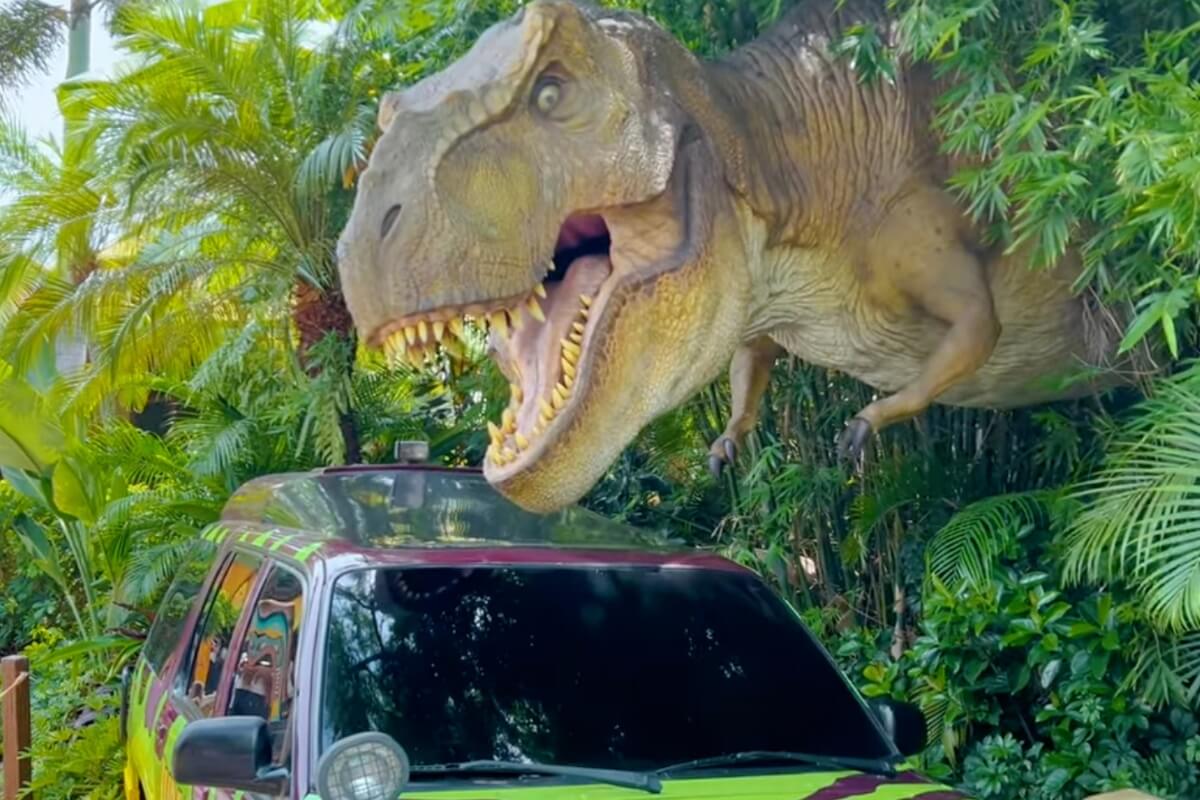
- 1999 (The Blockbuster Era): Universal’s Islands of Adventure opened its gates in Orlando, featuring the groundbreaking Jurassic Park island. This integration of cinematic storytelling and physical theme park design forever changed how visitors interact with animatronic and simulated prehistoric predators.
- 21st Century (Interactive & Immersive Preservation): Modern attractions such as Dinosaur World in Plant City, The Dinosaur Store in Cocoa Beach, and the Museum of Discovery & Science in Fort Lauderdale have embraced augmented reality, hands-on fossil digs, and interactive mini-golf, ensuring the prehistoric past remains vibrantly alive for twenty-first-century audiences.
Supporting Context & Metrics
To truly understand Florida’s obsession with dinosaurs, one must examine the intersection of geography, paleontology, and tourism economics.
- Fossil Abundance: Florida’s unique geological history—specifically its ancient limestone foundations, phosphate mines, and extensive river networks—creates optimal conditions for preserving vertebrate fossils. While the state’s actual indigenous dinosaur fossils primarily date to the Cretaceous period, the Pleistocene epoch also left behind a rich tapestry of megafauna (such as saber-toothed cats and mammoths) frequently exhibited alongside true dinosaur displays.
- Tourism Impact: Roadside attractions and regional science centers contribute significantly to domestic tourism revenue in secondary markets outside of traditional central Florida mega-resorts. Venues like Dinosaur World draw hundreds of thousands of visitors annually, fueling local hospitality economies in places like Plant City and Cocoa Beach.
- Preservation vs. Kitsch: A fascinating cultural dichotomy exists within Florida’s dinosaur landscape. On one end lie deteriorating historical monuments like the Headless Brontosaurus in Brooksville, which serve as poignant reminders of unfulfilled mid-century dreams. On the other end sit heavily funded, climate-controlled museum halls housing authentic, multi-million-dollar skeletal mounts.
Official Statements & Regional Spotlights
Dinosaur World Florida — Plant City
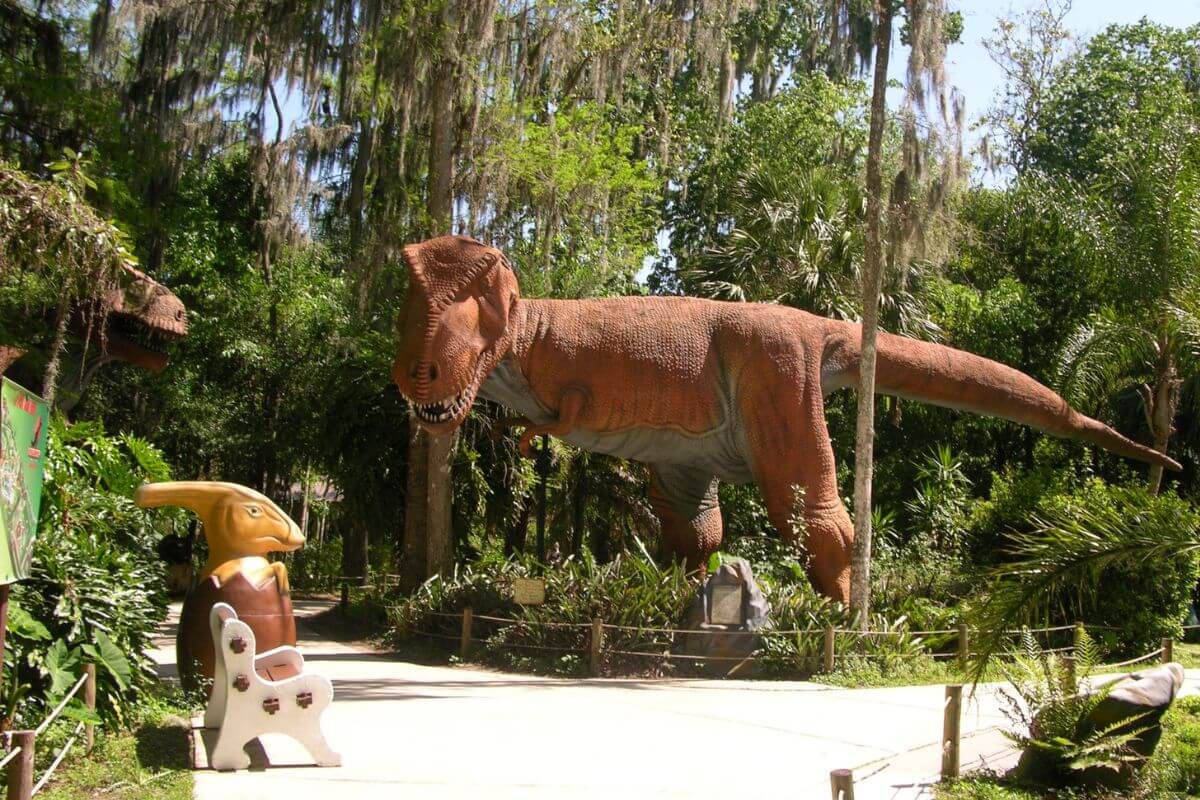
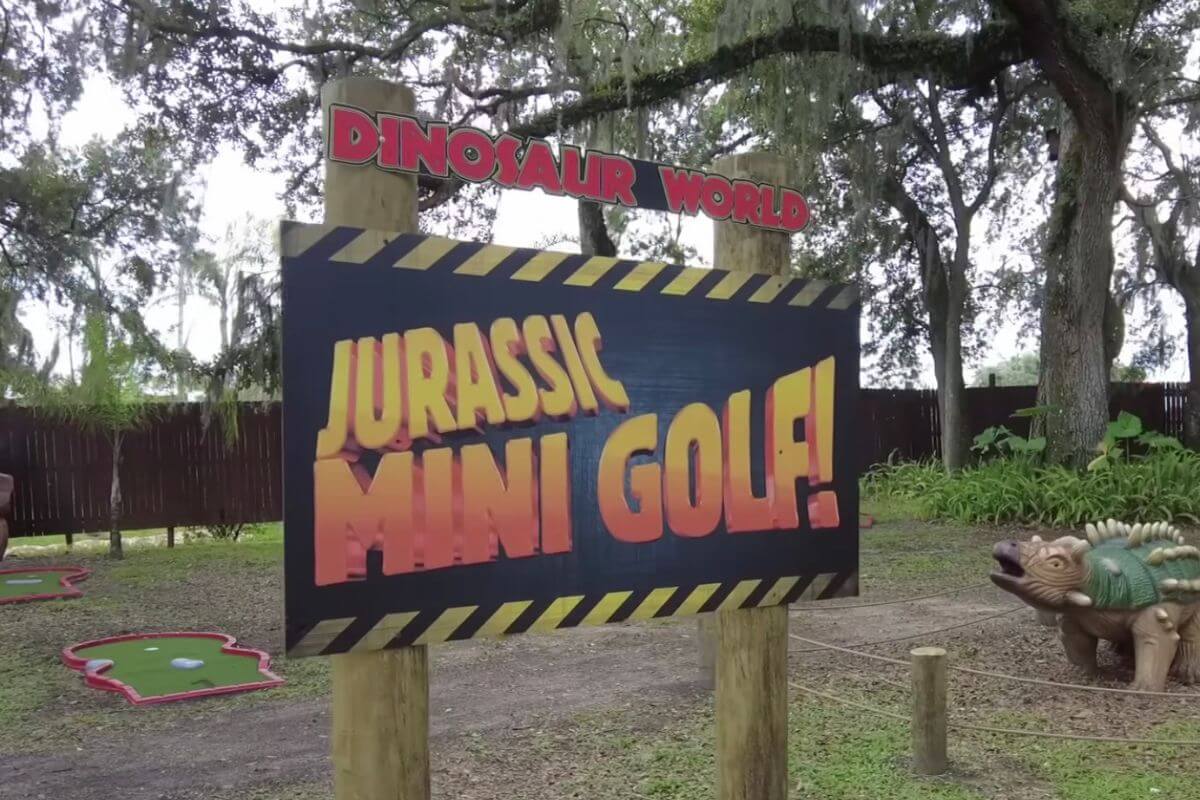
Located in Central Florida, Dinosaur World is a premier roadside attraction tailored explicitly for families and paleo-enthusiasts. Spanning acres of natural shade, the park features hundreds of life-sized, scientifically inspired dinosaur statues nestled within native Florida foliage. Visitors can explore the indoor fossil museum, which houses authentic artifacts, animatronic displays, and educational exhibits. Admission also grants access to interactive playgrounds, a dedicated fossil dig area, and the popular Jurassic Mini Golf course.
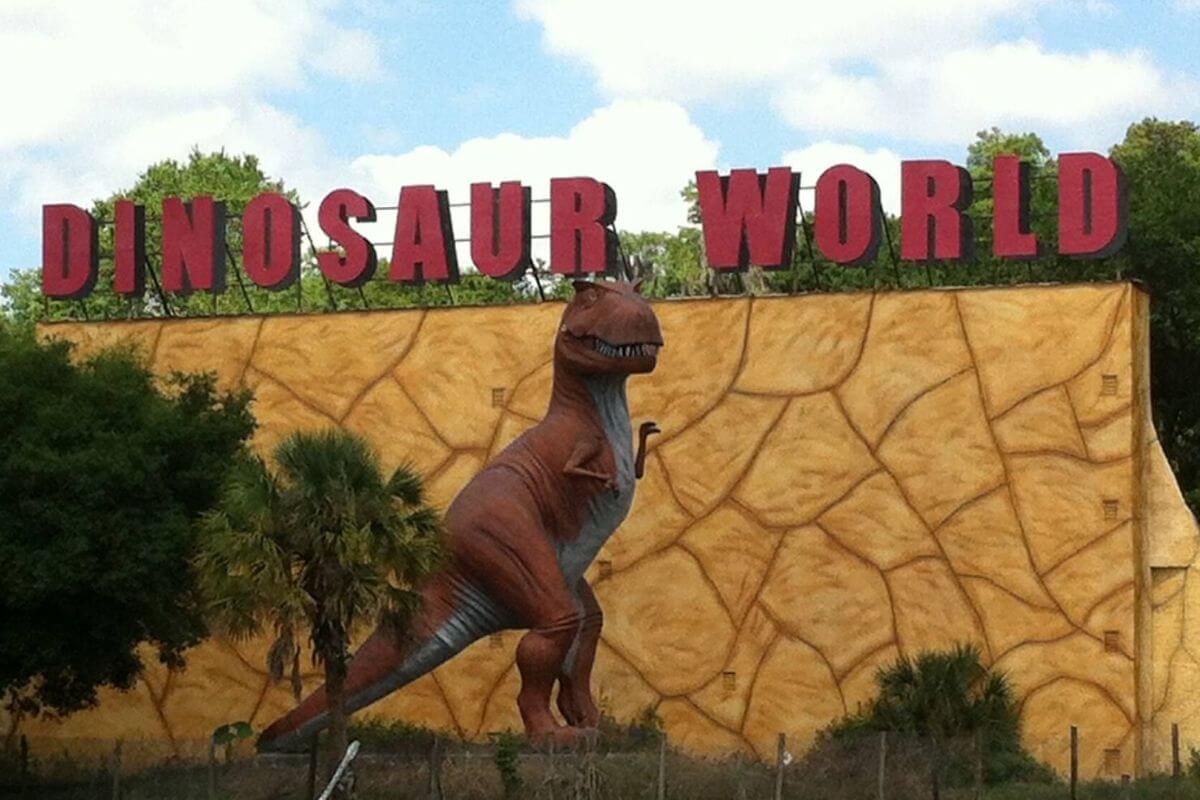
- Address: 5145 Harvey Tew Rd., Plant City, FL 33565
Orlando Science Center — Orlando
For those seeking an academically rigorous encounter with prehistory, the Orlando Science Center’s permanent DinoDigs exhibit is an essential stop. This immersive gallery explores the lives of colossal predators and herbivores alike. Guests can examine authentic fossil casts, study prehistoric sharks and giant reptiles, and participate in a hands-on fossil excavation pit that simulates real-world paleontological fieldwork.
- Address: 777 E. Princeton St., Orlando, FL 32803
Florida Museum of Natural History — Gainesville
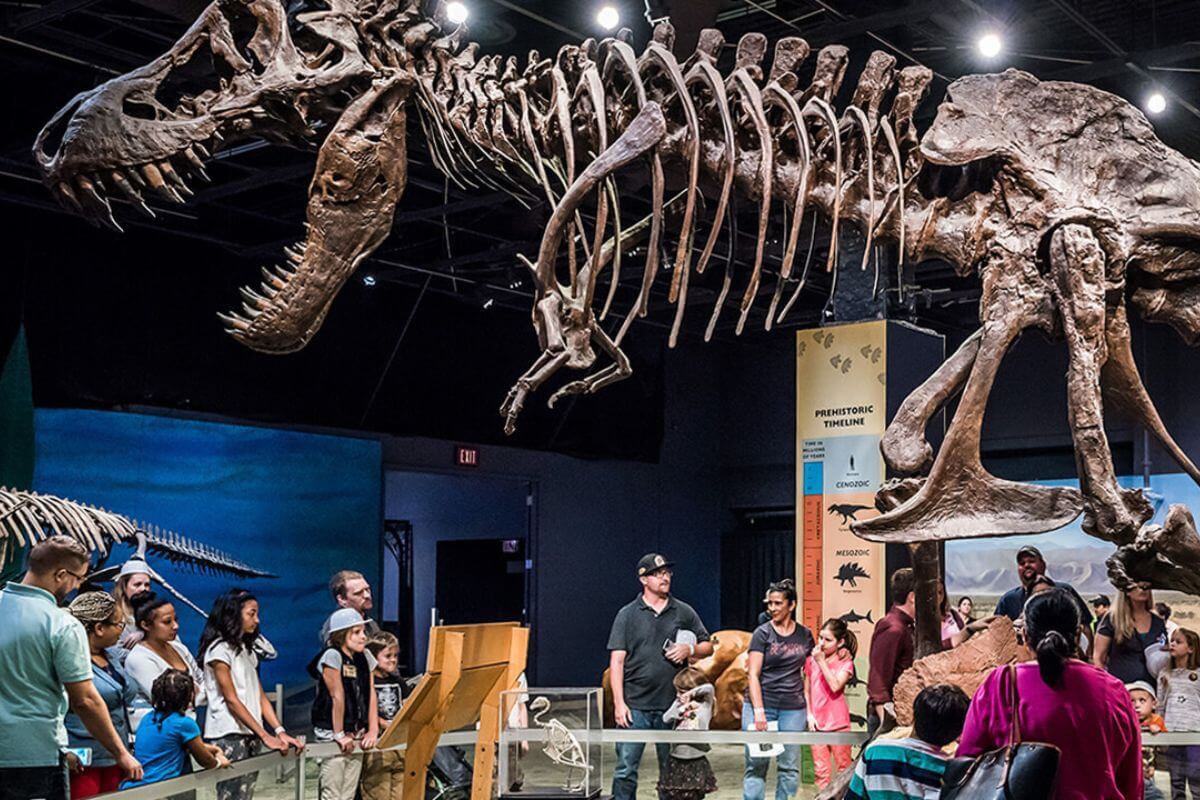
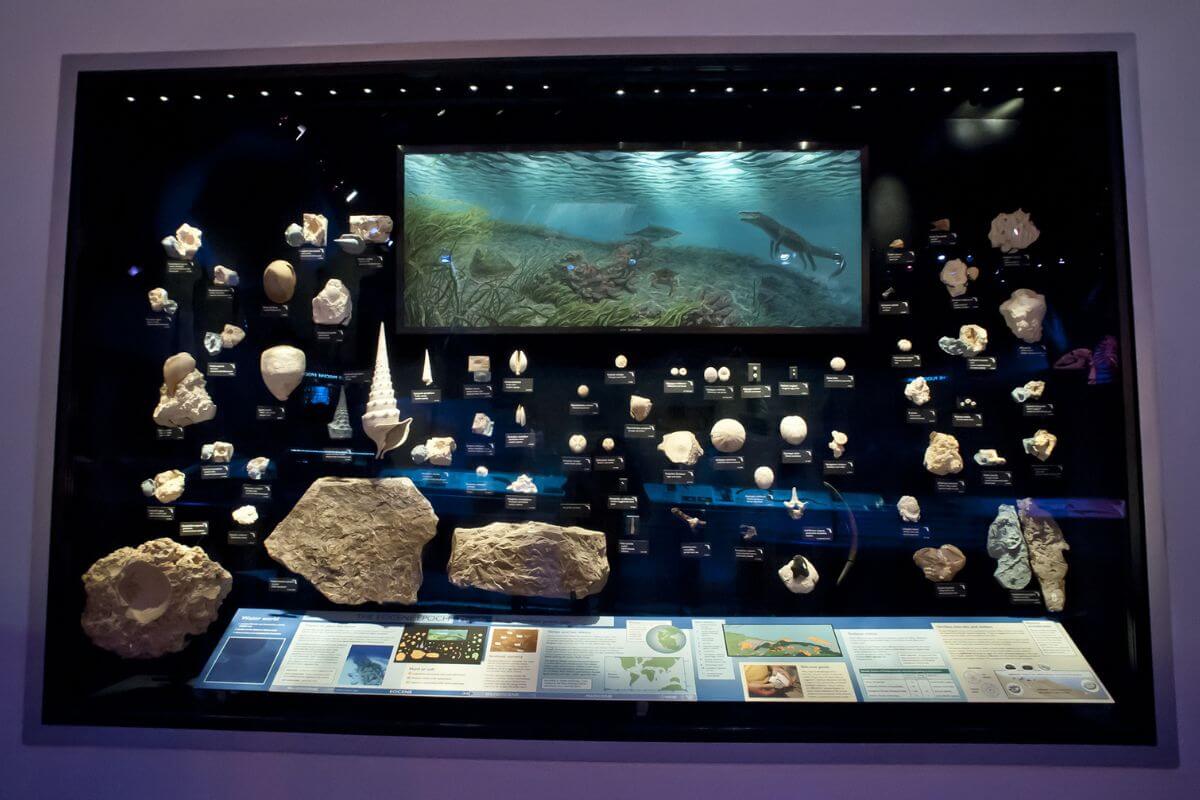
Situated on the campus of the University of Florida, this institution houses the renowned Florida Fossils: Evolution of Life and Land exhibit. Spanning 65 million years of Earth’s history, the gallery displays breathtaking collections of teeth, bones, and complete skeletal mounts. It provides deep insight into how shifting global climates and environments shaped the evolution of life in the Southeast.
- Address: 3215 Hull Rd., Powell Hall, UF Cultural Plaza, Gainesville, FL 32611
Museum of Discovery & Science — Fort Lauderdale
Serving as South Florida’s premier STEM hub, the Museum of Discovery & Science features the engaging Dino Dana exhibit and the expansive Dinosaur Boneyard. Visitors can uncover prehistoric mysteries through state-of-the-art augmented reality Fossil Hunt experiences, blending cutting-edge technology with ancient history.
- Address: 401 SW Second St., Fort Lauderdale, FL 33312
Jurassic Park at Universal’s Islands of Adventure — Orlando
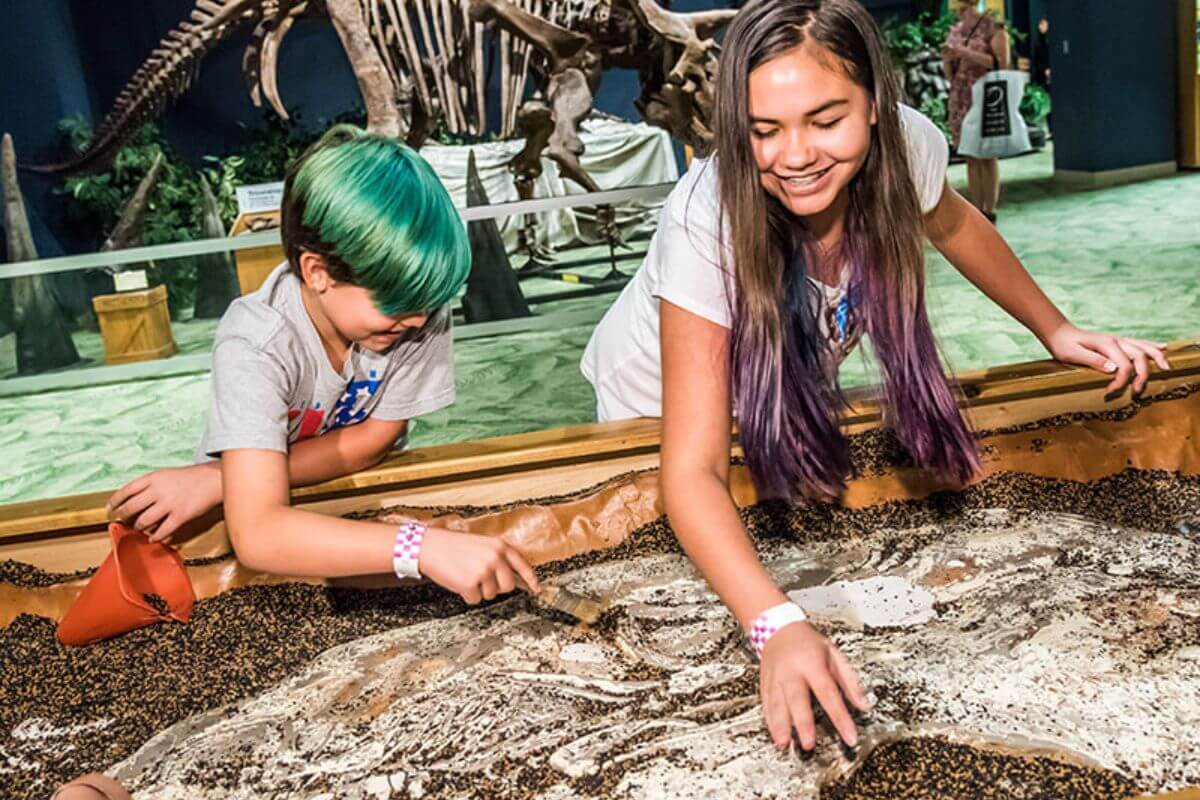
Though operating on a cinematic scale, the Jurassic Park sector of Universal Orlando remains an architectural and engineering marvel. Centered around the Jurassic Park Discovery Center, the area allows guests to examine simulated "dinosaur eggs" hatching in real-time, explore high-tech interactive terminals, and stand beneath towering skeletal displays that pay homage to the legendary film franchise.
- Address: 6000 Universal Blvd., Orlando, FL 32819
The Dinosaur Store — Cocoa Beach
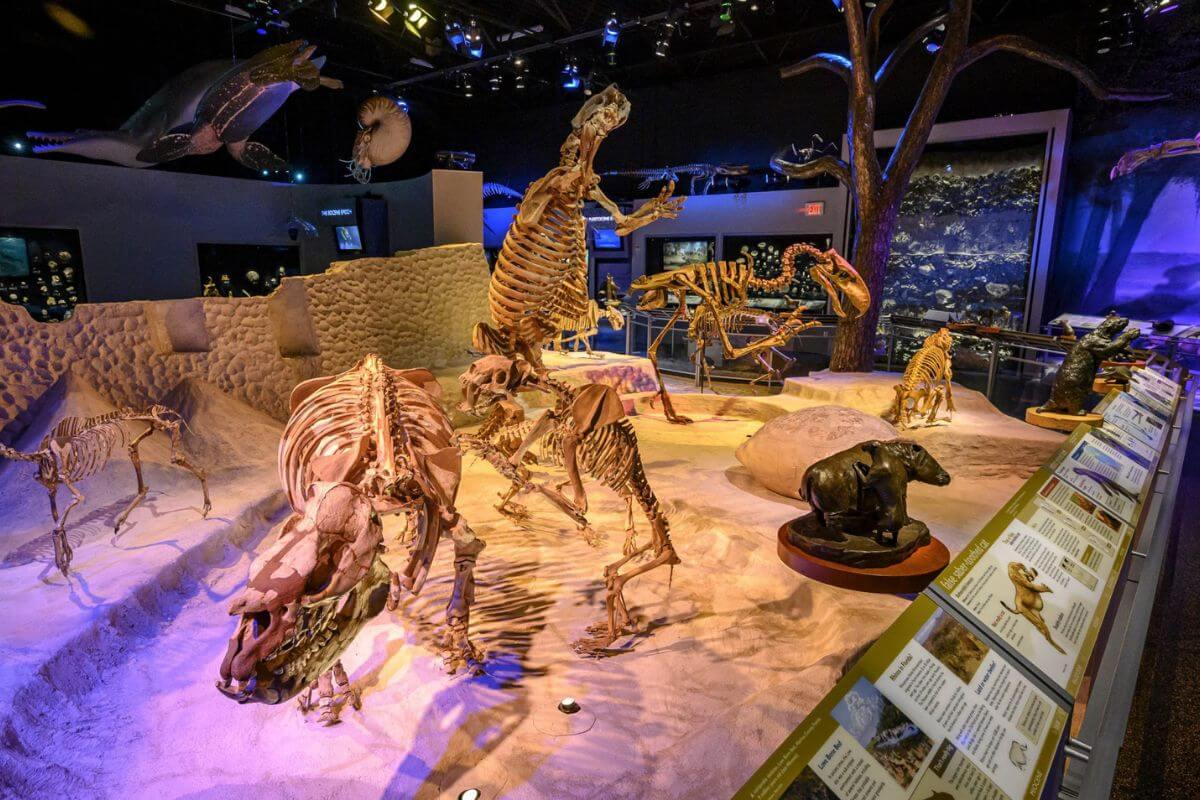
Positioned just moments away from Florida’s famous Space Coast beaches, The Dinosaur Store is a multi-level complex combining a retail wonderland with a legitimate museum. The Dinosaur Hall showcases pristine cast skeletons and authentic fossils from various prehistoric eras, while the massive 4,000-square-foot gift shop offers everything from rare minerals to dinosaur apparel.
- Address: 250 W. Cocoa Beach Causeway, Cocoa Beach, FL 32931
Historic Roadside Oddities: Bongoland, Harold’s Auto Center, & The Headless Brontosaurus
- Bongoland (Port Orange): Operating originally from 1948 to 1952, surviving concrete-and-chicken-wire dinosaurs from this pioneering roadside attraction still reside within the lush pathways of the Dunlawton Sugar Mill Gardens.
- Harold’s Auto Center (Spring Hill): Home to "Dino," a staggering 47-foot-tall, 110-foot-long Apatosaurus originally constructed in 1964 as part of a Sinclair gas station franchise.
- Headless Brontosaurus (Brooksville): Built in the 1960s by August Herwede in an ambitious attempt to replicate the New York World’s Fair "Dinoland," this unfinished and famously headless concrete sauropod stands today as an eerie yet captivating monument to mid-century roadside folklore.
Future Outlook
As cultural fascination with prehistoric creatures continues to be fueled by blockbuster franchises, advanced documentaries, and emerging paleontological discoveries, Florida’s dinosaur attractions are poised for sustained evolution. Institutions are increasingly blending traditional physical exhibits with augmented reality (AR) and virtual reality (VR) technologies, allowing visitors to visualize living dinosaurs roaming familiar Florida landscapes.
At the same time, grassroots preservation efforts are stepping in to protect mid-century roadside landmarks, ensuring that the whimsical concrete beasts built by twentieth-century dreamers remain standing alongside cutting-edge science museums. Whether you are searching for authentic Cretaceous fossils or looking to snap a photograph next to a 110-foot concrete sauropod, Florida’s prehistoric landscape guarantees an adventure unlike any other on Earth.

0 Comments