

Executive Overview
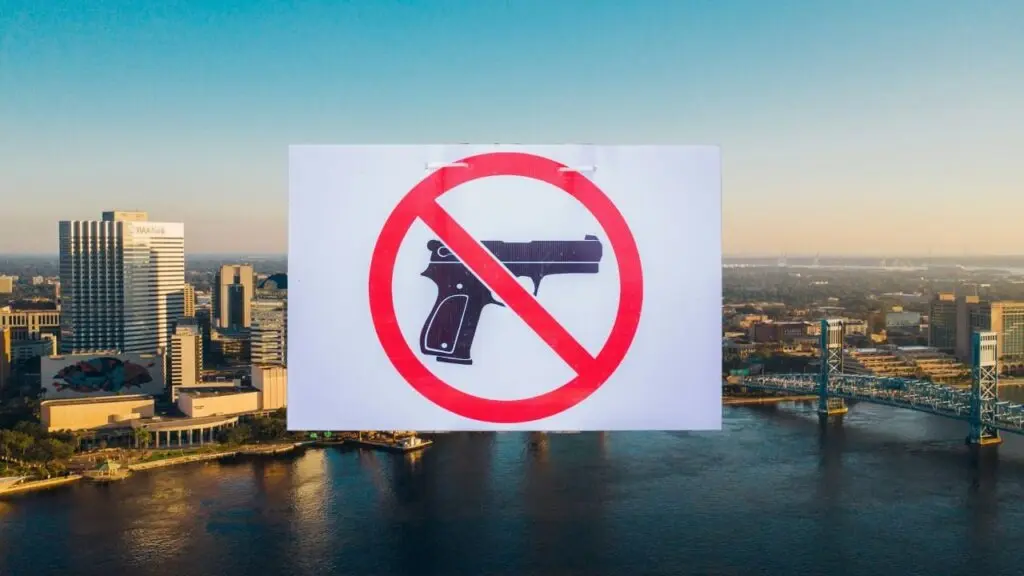
The ongoing national debate regarding the boundaries of municipal authority versus state-level firearm preemption has erupted into direct litigation in Northeast Florida. The Gun Owners of America (GOA)—representing a coalition of over two million active members nationwide—has formally filed a high-stakes civil rights lawsuit against the City of Jacksonville, Mayor Donna Deegan, and Duval County Sheriff T.K. Waters.
The legal challenge, brought forward in partnership with the Gun Owners Foundation (GOF), Florida Carry Inc., and several individual plaintiffs including high-profile regional advocates, targets what the plaintiffs characterize as a systematic and unlawful pattern of Second Amendment infringements enforced across major municipal-owned and city-leased venues. At the core of the complaint is the allegation that the city and its administrative leadership have flagrantly violated Florida’s robust state preemption statutes by establishing unauthorized, de facto gun-free zones at popular public entertainment centers, sports complexes, and cultural event spaces.
According to the lawsuit, law-abiding citizens exercising their lawful right to carry concealed firearms have been routinely subjected to unconstitutional disarmament, denied entry, or threatened with ejection at prominent locations throughout Jacksonville, including EverBank Stadium, the Jacksonville Fairgrounds, the Florida Theatre, and the Moran Theater.
Legal scholars and civil rights advocates are closely monitoring the case, as it highlights a contentious friction point in modern governance: the extent to which local municipalities can regulate firearm possession on public property when state law explicitly strips them of such legislative powers. If successful, the lawsuit could dismantle local security policies across Jacksonville’s premier entertainment infrastructure and establish a commanding legal precedent that reinforces the supremacy of Florida’s preemption framework over municipal overreach.
Detailed Chronology: From Megyn Kelly’s Event to the Courthouse Steps
The genesis of this landmark legal action can be traced back to a specific, escalating series of confrontations between local law enforcement officers, municipal venue operators, and gun rights advocates attempting to exercise their constitutional privileges in public spaces.
The flashpoint occurred during a public speaking engagement hosted at a prominent Jacksonville venue featuring nationally syndicated SiriusXM radio host and political commentator Megyn Kelly. Luis Valdes, the Florida State Director for Gun Owners of America and a named plaintiff in the ensuing federal and state challenges, attended the event. Valdes had established an informational booth to engage attendees on Second Amendment issues, operating under the assumption that his status as a law-abiding, licensed concealed carry holder would be respected in accordance with state law.
However, the routine exercise of his rights was abruptly halted when a local police officer stationed at the venue approached Valdes. The officer informed him that he was explicitly prohibited from carrying his firearm inside the facility, citing local security directives enforced at the venue. Despite Valdes’s immediate objections—pointing out that the venue was not designated as a statutory gun-free zone under Florida law and that the event itself did not fall under any legally recognized exemptions—law enforcement officials maintained that the firearm must be secured outside the premises or Valdes would face removal.
This confrontation was not an isolated administrative error, according to the plaintiffs, but rather the manifestation of a broader, systemic policy enforced by Jacksonville authorities. Following the incident, GOA investigators and Florida Carry representatives began documenting a pattern of systematic disarmament occurring across multiple city-owned or city-regulated properties.

Lawfully armed citizens attempting to attend concerts, political forums, trade expos, and community gatherings reported being forced to choose between forfeiting their constitutional right to self-defense or missing out on public events held on taxpayer-funded property. The locations cited in the legal filings represent some of the most heavily trafficked assembly points in the region:
- EverBank Stadium: Home of the NFL’s Jacksonville Jaguars.
- The Jacksonville Fairgrounds: A sprawling multi-purpose convention and exhibition space.
- The Florida Theatre: A historic downtown landmark hosting performing arts and entertainment.
- The Moran Theater: A primary hub for theatrical productions and large-scale public assemblies.
In each of these instances, plaintiffs argue that municipal authorities overstepped their constitutional and statutory boundaries by deploying security screening protocols that prohibited the lawful carry of concealed weapons, ignoring the legal reality that Jacksonville possesses no home-rule authority to draft, enact, or enforce independent firearm regulations.
Supporting Context & Metrics: Florida’s Preemption Law and Municipal Overreach
To fully understand the weight of the GOA’s lawsuit against Jacksonville, one must examine the legal architecture of Florida’s firearm preemption statutes, which are among the most stringent and comprehensive in the United States.
The Anatomy of Florida Statute § 790.33
Enacted to prevent a chaotic patchwork of conflicting local ordinances across Florida’s 67 counties and hundreds of municipalities, Florida Statute § 790.33 explicitly preempts the entire field of firearm and ammunition regulation to the state legislature. The statute reads, with limited and explicit exceptions, that the state preempts the whole field of regulation of firearms and ammunition, including the purchase, sale, transfer, taxation, manufacture, ownership, possession, storage, and transportation thereof, to the exclusion of all county, city, town, or municipal governments.
The statute was intentionally designed with teeth. It allows for civil actions against local government officials who attempt to pass or enforce illegal local gun restrictions, opening them up to personal financial liability and civil penalties. The legislative intent behind the law is clear: a citizen driving from Miami to Jacksonville should not have to navigate a labyrinth of differing local rules regarding where and how they may lawfully exercise their Second Amendment rights.
The Stadium and Public Venue Exception Controversy
At the heart of the legal dispute between the GOA and the City of Jacksonville is the nuanced interpretation of where firearms can legally be restricted on public property. Under Florida law, statutory exceptions where concealed carry can be legally banned include:
- Police stations and detention facilities.
- Courthouses and courtroom spaces.
- Polling places during elections.
- School campuses, universities, and professional athletic events (under specific statutory guidelines).
However, the City of Jacksonville and its contracted venue operators have allegedly adopted a blanket, catch-all approach to security. City officials have routinely treated multi-purpose municipal venues as permanent gun-free zones, regardless of the nature of the event taking place inside.
Legal experts working alongside the GOA emphasize a critical distinction that the city allegedly ignores: EverBank Stadium and other municipal venues do not magically transform into comprehensive gun-free zones simply because a crowd has gathered. For example, while Florida law permits certain restrictions during professional sporting events or school functions, a standard speaking engagement, commercial convention, or cultural performance hosted in a city-owned facility does not strip citizens of their pre-existing constitutional and statutory rights to carry concealed firearms for self-defense.

By applying blanket prohibitions to non-exempt events, Jacksonville officials are accused of inventing localized gun control policies out of whole cloth—a direct violation of the preemption doctrine designed to prevent precisely this type of municipal overreach.
Official Statements and Stakeholder Perspectives
The litigation has drawn sharp lines between gun rights organizations, municipal defenders, and local leadership, generating intense public debate regarding public safety, constitutional liberties, and government accountability.
Gun Owners of America (GOA) and Plaintiff Perspectives
Luis Valdes, the GOA Florida State Director and a central plaintiff in the legal action, did not mince words when discussing the city’s behavior during public announcements regarding the lawsuit.
"There is a pattern the city of Jacksonville has, by going around disarming law-abiding gun owners, violating their rights," Valdes stated emphatically. "Jacksonville does not get to invent its own gun laws. Florida law is clear that it preempts localities from imposing stricter gun control."
Valdes stressed that the actions of the Jacksonville Sheriff’s Office and municipal venue managers represent a direct assault on the rule of law. By forcing citizens to disarm under the threat of criminal trespass or ejection—without any backing from state statute—the city is allegedly engaging in intimidation tactics against lawful firearm owners.
Erich Pratt, Senior Vice President of Gun Owners of America, echoed Valdes’s sentiments in national briefings, framing the Jacksonville lawsuit as a critical nationwide defense of the Second Amendment.
"When local bureaucrats and law enforcement agencies decide they are above state law, they trample on the fundamental liberties of the citizens they swore to protect," Pratt noted. "GOA and our partners will not sit idly by while cities like Jacksonville establish unconstitutional free-fire zones where armed criminals are emboldened, and law-abiding citizens are left defenseless."
Municipal and Official Response
Represented in the lawsuit are high-ranking municipal figures, including Jacksonville Mayor Donna Deegan and Duval County Sheriff T.K. Waters. While formal legal responses in court filings are pending as the litigation proceeds through the initial stages, municipal representatives have historically defended venue security policies by pointing to the operational necessities of managing massive crowds, ensuring public safety during high-profile gatherings, and complying with the private security requests of visiting talent, touring productions, and sports leagues.

Proponents of the city’s policies argue that public safety officials must retain the operational flexibility to establish baseline security perimeters at large public gatherings to mitigate modern security threats. They contend that allowing open or concealed carry within packed, high-emotion public venues could complicate law enforcement responses in emergency scenarios or create unnecessary friction between patrons and security personnel.
However, gun rights attorneys counter that administrative convenience and public safety anxieties do not grant local governments the legal authority to bypass state statutes. Under Florida jurisprudence, public safety concerns cannot serve as a blank check for municipalities to legislate or regulate firearms outside the narrow boundaries established by the Florida Legislature.
Future Outlook: Legal Precedent and What Lies Ahead
As the lawsuit moves forward in the judicial system, the legal community, municipal planners, and gun owners across the Sunshine State are watching closely to see how the courts navigate the intersection of municipal venue management and state firearm preemption.
Key Legal Questions for the Court
- Scope of Preemption: Will the presiding judge rule that Jacksonville’s blanket security policies at multi-use venues violate Florida Statute § 790.33 by creating unauthorized, localized firearm bans?
- Liability of Officials: Will Mayor Donna Deegan and Sheriff T.K. Waters face individual or official accountability for the enforcement of policies that plaintiffs argue are knowingly preempted by state law?
- Operational Reform: If the plaintiffs prevail, what mandatory changes will be forced upon EverBank Stadium, the Florida Theatre, the Moran Theater, and the Jacksonville Fairgrounds regarding their public access security protocols?
Potential Statewide Implications
A victory for the Gun Owners of America could send shockwaves through municipal governments across Florida. Many cities and counties currently utilize broad, sweeping security policies at taxpayer-funded facilities that restrict lawful concealed carry under the guise of general event management. A definitive judicial ruling against Jacksonville would serve as a powerful deterrent, signaling to local municipalities statewide that they cannot bypass state preemption laws simply by outsourcing security enforcement to private venues or utilizing local police details to execute unconstitutional disarmament policies.
Conversely, a ruling in favor of the City of Jacksonville could open the door for local governments to carve out increasingly aggressive administrative exemptions to Florida’s preemption laws, effectively eroding the statewide uniformity that the legislature sought to protect.
For now, the battle lines are drawn at the courthouse. As the litigation unfolds, the outcome will serve as a defining chapter in the ongoing struggle between local administrative control and constitutionally protected individual liberties in Florida.

0 Comments