


Executive Overview
In early September 2026, the volatile dynamics of the Pacific "Ring of Fire" once again ground Southeast Asian aviation to a halt. The continuous, violent eruption of Mount Anak Krakatau—the notorious volcanic island nestled within the Sunda Strait—triggered an unprecedented two-day shutdown of Indonesia’s primary aviation gateways. Between Sunday, September 6, and Monday, September 7, 2026, volcanic ash plumes forced the closure of Soekarno-Hatta International Airport, Halim Perdanakusuma Airport, and several key regional transit hubs, paralyzing travel for over 340,000 passengers and disrupting nearly 3,000 flights.
While flight operations began a tentative, phased resumption early Tuesday, September 8, 2026, the crisis has exposed the profound vulnerability of Jakarta’s metropolitan transport infrastructure to regional geological hazards. With five airports shuttered at the peak of the crisis, the Indonesian Ministry of Transportation was forced to balance immense economic losses against the catastrophic safety risks posed by airborne volcanic silicate. This investigative report analyzes the chronology of the eruption, the operational and economic metrics of the airspace shutdown, the defensive strategies deployed by state officials, and the long-term outlook for aviation resilience in one of the world’s most seismically active zones.
Detailed Chronology
[Sept 5: Initial Activity] ➔ [Sept 6-7: Peak Eruptions & Airspace Closure] ➔ [Sept 8: Phased Reopening]
  * Drone footage captures     * Continuous lava fountains & booms     * Airports reopen past midnight
    massive ash plumes           * 2,961 flights canceled                * Cleaning of runways begins
  * Alert level remains high   * 341,000 passengers stranded           * Dynamic wind monitoring ongoing
The genesis of the September 2026 crisis traces back to late August, during which Indonesia’s Geological Agency (Badan Geologi) observed a marked increase in deep volcanic earthquakes beneath the Sunda Strait. By Saturday, September 5, drone reconnaissance photos captured by the Ministry of Energy and Mineral Resources revealed a rapidly deteriorating situation: Anak Krakatau was venting dense, ash-laden pyroclastic clouds high into the tropical atmosphere, accompanied by localized lava flows spilling down its southwest flank.
The Peak Eruption: September 6–7, 2026
The crisis escalated dramatically on the morning of Sunday, September 6. Anak Krakatau entered a phase of continuous paroxysmal eruption, characterized by towering lava fountains, intense thermal anomalies, and low-frequency acoustic booms audible across the coastal communities of Banten and Lampung.
Driven by prevailing seasonal winds, a massive plume of highly abrasive volcanic ash drifted directly northeast into the flight paths of the Greater Jakarta Area (Jabodetabek). Confronted with real-time satellite imagery showing ash concentrations exceeding safe thresholds for commercial turbofan engines, Transportation Minister Dudy Purwagandhi authorized the immediate closure of:
- Soekarno-Hatta International Airport (CGK) in Tangerang, the nation’s premier international gateway.
- Halim Perdanakusuma Airport (HLP) in East Jakarta, a vital hub for domestic, charter, and military flights.
- Husein Sastranegara Airport (BDO) in Bandung, West Java.
- Two critical regional airfields in Banten province.
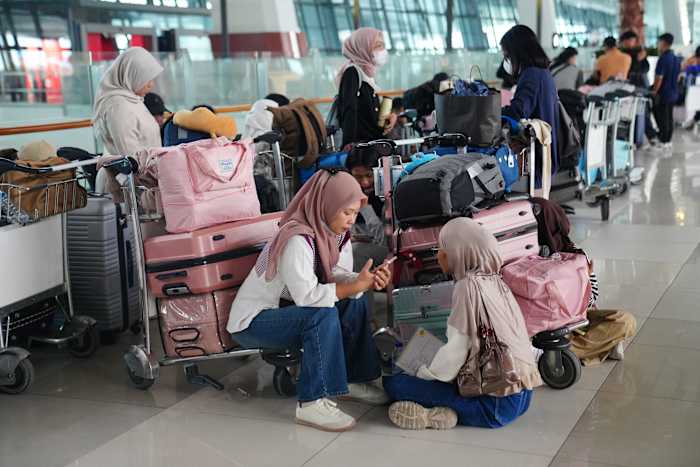
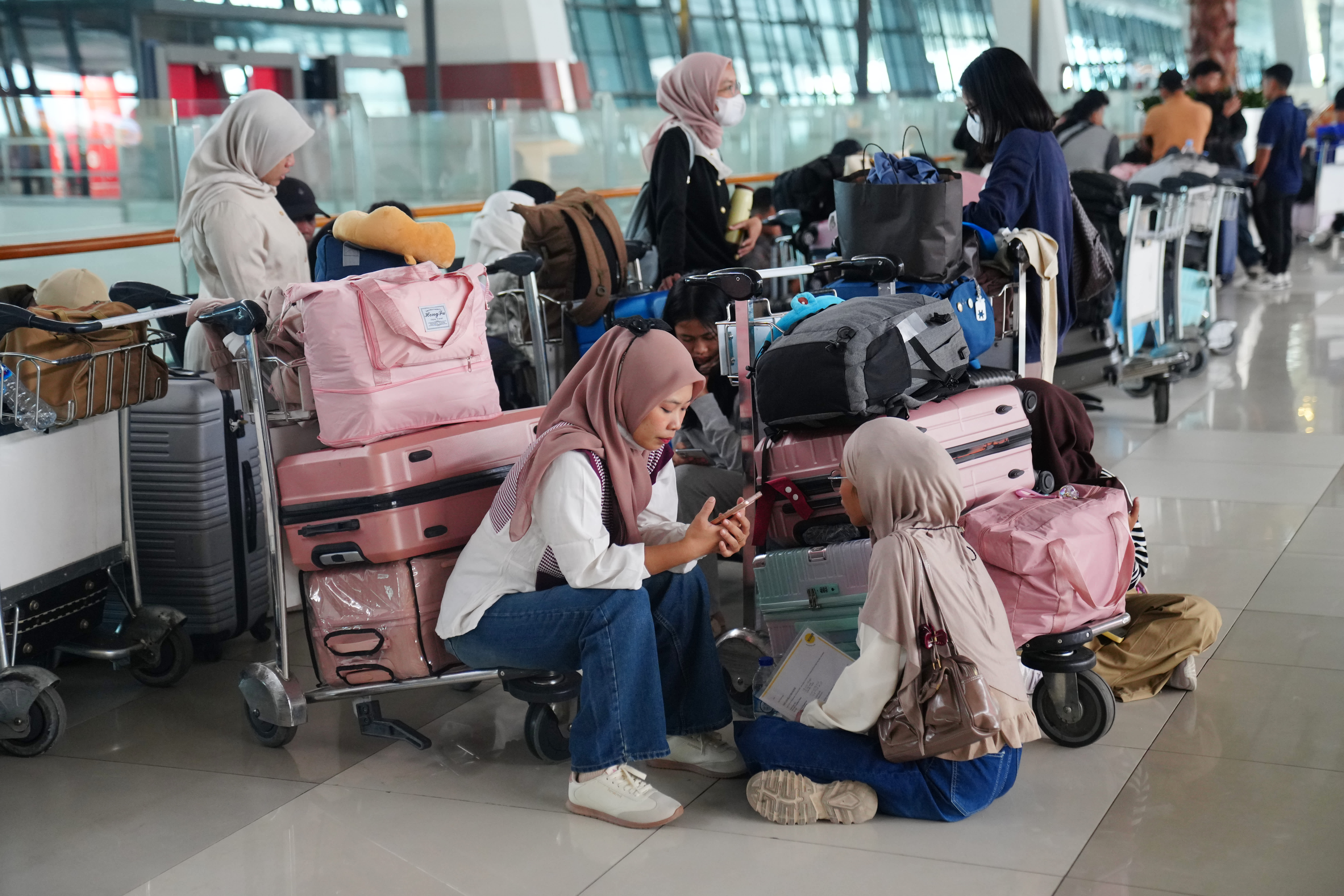
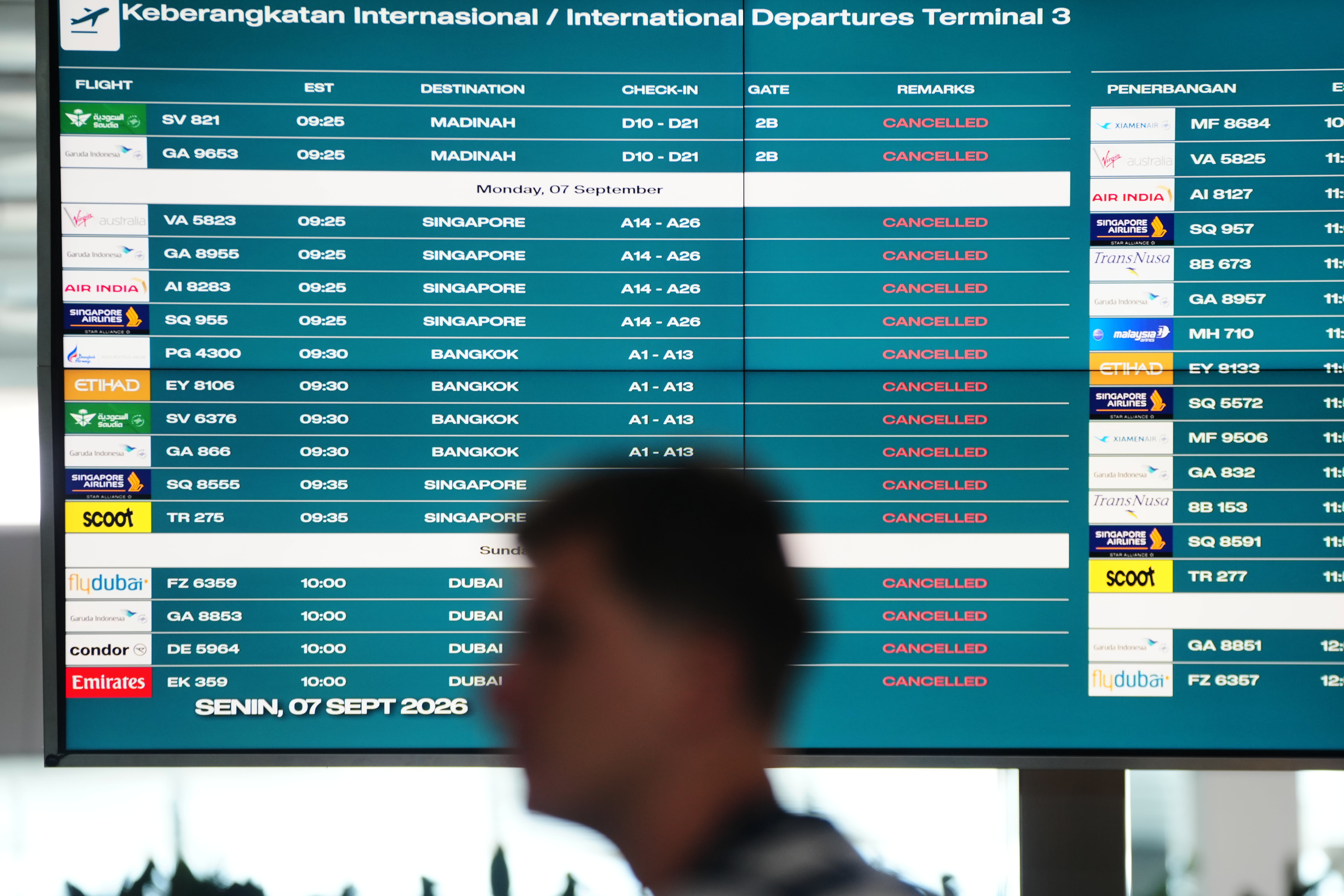
For 48 hours, the airspace above western Java was rendered a virtual no-fly zone. At Soekarno-Hatta, departure boards flashed solid blocks of red "Cancelled" notices, leaving thousands of travelers stranded in terminal corridors.
The Dawn of Tuesday, September 8, 2026: Phased Recovery
The continuous phase of the eruption subsided late Sunday evening, though the volcano remained highly active and unpredictable. Just after midnight on Tuesday, September 8, Minister Purwagandhi announced the official reopening of the primary Jakarta and Bandung airports.
However, the resumption of flights was far from a return to normalcy. Early Tuesday morning, scientists at the Pasauran observation post in Banten recorded two distinct eruptive pulses at 5:08 AM and 5:34 AM. Although heavy cloud cover and residual haze prevented visual confirmation of the ash column height, the seismic instruments confirmed that Anak Krakatau’s internal plumbing remained highly pressurized.
To mitigate ongoing risk, authorities maintained closures at several peripheral facilities. Radin Inten II Airport in Lampung, situated on the southern tip of Sumatra and directly downwind of the volcano’s immediate drift path, remained closed until at least 10:00 AM on Tuesday. Meanwhile, Atung Bungsu Airport in South Sumatra, which had experienced minor ash fall, was cleared to resume normal operations on Monday morning after wind shear pushed the primary plume away from its runway alignment.
Supporting Context & Metrics
The operational toll of the two-day shutdown highlights the fragile interconnectedness of Southeast Asian aviation. The suspension of operations across five airports triggered a massive logistical backlog that will take local airlines days to resolve.
Key Operational Metrics of the Shutdown
| Metric | Impact Volume | Key Details / Affected Areas |
|---|---|---|
| Total Cancelled Flights | 2,961 | Domestic and international routes combined |
| International Services Halted | 622 | Major routes to Singapore, Kuala Lumpur, Tokyo, and Sydney |
| Stranded Passengers | ~341,000 | Concentrated at Soekarno-Hatta (CGK) and Halim (HLP) |
| Airports Closed (Peak) | 5 | CGK, HLP, BDO, and two regional Banten facilities |
| Exclusion Zone Radius | 3.0 km (1.9 miles) | Enforced around the active Anak Krakatau crater |
| Volcanic Alert Status | Level III (Siaga) | Indonesia’s second-highest warning level |
Flight Cancellations Breakdown:
Total: 2,961 flights
┌──────────────────────────────────────┐
│ Domestic Flights: 2,339 (79%)        │
├───────────────────┬──────────────────┘
│ International:    │
│ 622 (21%)         │
└───────────────────┘
The Threat of Volcanic Ash to Modern Aviation
The decision to shut down major airports is never taken lightly, given the staggering financial losses incurred by airlines and airport operators. However, the physical threat that volcanic ash poses to commercial aircraft is absolute.
Unlike household dust, volcanic ash consists of microscopic, jagged fragments of volcanic glass (silica), minerals, and rock. When an aircraft flies through an ash cloud:
- Engine Meltdown: The operating temperature of modern jet engines exceeds the melting point of silicate glass. The ash melts instantly upon entering the combustion chamber, coating the turbine blades and blocking the cooling holes. This leads to rapid engine surge, flameout, and complete thrust failure.
- Abrasion: The highly abrasive particles sandblast the cockpit windshields, rendering them opaque, and erode critical aerodynamic surfaces.
- Sensor Failure: Ash clogs Pitot tubes, which measure airspeed and altitude, feeding corrupted data to flight computers and leaving pilots blind in mid-air.
Broader Societal Impact: Online Learning Shift
The eruption’s footprint extended beyond the aviation sector. As the volcanic plume dispersed over Banten and parts of West Java, air quality indices deteriorated, showing elevated levels of fine particulate matter ($PM2.5$ and $PM10$) laden with sulfur dioxide ($SO_2$).
In response, the Indonesian government authorized local municipalities to transition primary and secondary schools to online learning. This measure was designed to protect children from the respiratory hazards of ash inhalation, demonstrating an integrated municipal response to a geological crisis.
Official Statements and Safety Protocols
State officials emphasized that their conservative response to the disaster was dictated by the highly volatile meteorological conditions in the Sunda Strait.

"We are taking a conservative approach because wind direction is highly dynamic. We want to ensure that volcanic ash has moved away from airports around Anak Krakatau."
— Dudy Purwagandhi, Indonesian Minister of Transportation
Minister Purwagandhi explained that even though ground-level tests at several airports showed no detectable traces of volcanic ash on Monday evening, the decision to extend closures into the night was necessary to conduct rigorous safety inspections. "The extended closures allowed our ground crews sufficient time to inspect and thoroughly clean critical surfaces—including runways, taxiways, and parked aircraft—that may have suffered subtle exposure to abrasive dust," he stated.
The Role of the Geological Agency (Badan Geologi)
At the Pasauran volcanic observation post in Banten, technicians worked around the clock monitoring drum helicorders and digital seismographs. Technicians noted that while the visual aspect of the eruption was obscured by weather on Tuesday morning, the seismic signatures—characterized by continuous volcanic tremors and low-frequency events—indicated that magma displacement was still actively occurring near the surface.
The Geological Agency maintained Anak Krakatau’s alert level at Level III (Siaga), the second-highest tier. Under this protocol, civil authorities have strictly enforced a 3-kilometer (1.9-mile) exclusion zone around the active crater, prohibiting entry to fishermen, tourists, and marine researchers.
Future Outlook
The September 2026 crisis is a stark reminder of the geopolitical and economic realities of operating a major regional trade hub on the Pacific Ring of Fire. Indonesia is home to over 120 active volcanoes, with Anak Krakatau being among the most historically volatile.
       [Historical Context of Krakatau's Volcanic Lineage]
                               │
            ┌──────────────────┴──────────────────┐
            ▼                                     ▼
   [1883 Super-Eruption]                 [2018 Flank Collapse]
   * Decimated the original island       * Triggered devastating tsunami
   * Triggered global cooling            * Killed over 430 people
   * Formed "Anak Krakatau" (1927)       * Proved danger of landslides
The Shadow of 1883 and 2018
Anak Krakatau ("Child of Krakatau") emerged from the caldera left behind by the legendary 1883 eruption of Krakatau, which obliterated the original volcanic island, generated global tsunamis, and altered worldwide temperatures for years.
In December 2018, a moderate eruption of Anak Krakatau caused a catastrophic underwater landslide, collapsing a massive chunk of the volcano’s southwestern slope into the sea. This displacement generated a silent, devastating tsunami that struck the coastlines of Java and Sumatra without warning, claiming at least 430 lives.
Because of this history, any uptick in Anak Krakatau’s activity triggers immediate alarm among emergency management officials. The risk is not merely atmospheric; there is always the latent threat of another structural failure of the island’s steep underwater flanks.
Engineering Long-Term Aviation Resilience
As Jakarta continues to expand its footprint as a global economic hub, the vulnerability of its aviation infrastructure demands structural and technological solutions. Industry experts point to several areas where Indonesia must bolster its resilience:
- Advanced Atmospheric Modeling: Integrating real-time lidar (laser-based radar) and satellite-derived sulfur dioxide tracking to map ash cloud density with high precision, allowing for targeted corridor closures rather than blanket airspace shutdowns.
- Diversified Airport Infrastructure: Developing secondary international airports further inland or in Eastern Java that can act as immediate diversion points, equipped with rapid-transit rail links to the capital.
- Enhanced Airway Routing: Designing pre-programmed "volcanic bypass airways" in coordination with neighboring air traffic control centers in Singapore and Australia to keep international transit moving around the Sunda Strait.
Ultimately, the successful, zero-casualty management of the September 2026 eruption demonstrates that Indonesia’s early-warning protocols have matured significantly since the disasters of the past decade. However, as Anak Krakatau continues to grow and reshape itself in the waters of the Sunda Strait, the battle between geological volatility and human logistical ingenuity remains an ongoing challenge.

0 Comments