

Executive Overview
As the Gulf of Mexico brewed one of the most menacing meteorological events of the 20th and 21st centuries, the administrative apparatus of the Florida state government took decisive, early action to safeguard its workforce. On September 24, 2024, Senate President Kathleen Passidomo issued an official memorandum directing the complete closure of all Florida Senate offices located in Tallahassee. The shutdown—spanning Wednesday, September 25, through Friday, September 27, 2024—was enacted out of an abundance of caution as Hurricane Helene rapidly intensified off the western coast of the Florida peninsula.
The directive underscored a critical balancing act required of state governance during natural disasters: ensuring the immediate physical safety of public servants and their families while maintaining emergency preparedness frameworks. While Tallahassee-based operations ground to a halt, the memorandum granted individual senators administrative discretion regarding the operational status of their respective district offices, particularly those situated directly in the anticipated impact zones along the Gulf Coast and the Big Bend region.
Furthermore, the memorandum addressed the logistical vulnerabilities inherent in major hurricanes, specifically anticipating widespread telecommunications failures, disrupted supply chains, and infrastructural damage. By proactively ordering closures, leadership sought to mitigate traffic congestion, clear roadways for evacuation and emergency response vehicles, and allow staff members adequate time to secure their households. This report provides an exhaustive, multi-dimensional examination of the memorandum, the operational and meteorological context surrounding Hurricane Helene, the administrative protocols governing Florida’s legislative branch during state emergencies, and the broader socioeconomic and infrastructural implications of the storm.
+-----------------------------------------------------------------+
|              FLORIDA SENATE EMERGENCY SHUTDOWN                  |
+-----------------------------------------------------------------+
|  TO:      Senators and Senate Staff                             |
|  FROM:    Senate President Kathleen Passidomo                   |
|  DATE:    September 24, 2024                                    |
|  SCOPE:   Tallahassee Senate Offices                            |
|  PERIOD:  Wednesday, Sept. 25 – Friday, Sept. 27, 2024          |
|  POLICY:  District offices at Senator discretion                |
+-----------------------------------------------------------------+
Detailed Chronology
The unfolding of events leading up to, during, and immediately following the issuance of Senate President Passidomo’s memorandum reflects the compressed, high-stakes timeline characteristic of modern hurricane management in the Sunshine State.
Phase 1: Meteorological Genesis and Early Warnings (September 20–22, 2024)
Days before the formal memo was drafted, meteorologists at the National Hurricane Center (NHC) began tracking a broad area of low pressure over the western Caribbean Sea. Favorable environmental conditions—including exceptionally warm sea surface temperatures, low vertical wind shear, and abundant moisture—signaled high potential for tropical cyclogenesis. By September 22, the system consolidated into Tropical Depression Nine, prompting initial discussions among state emergency management officials in Tallahassee, including the Division of Emergency Management (FDEM) and legislative leadership.
Phase 2: Rapid Intensification and Legislative Action (September 23–24, 2024)
As the system tracked northward into the southern Gulf of Mexico, it achieved tropical storm status, designated Helene. Computer models increasingly pointed toward a catastrophic landfall along Florida’s Big Bend or Nature Coast. The forecast trajectory highlighted an environment ripe for explosive intensification due to the "loop current" and unprecedented oceanic heat content.
Recognizing the escalating threat, Senate leadership monitored local school district closures, county-level emergency declarations, and mandatory evacuation orders. On the morning of September 24, 2024, Senate President Kathleen Passidomo finalized the internal memorandum. The document was transmitted electronically to all senators and Senate staff members, formally shuttering the Tallahassee headquarters starting Wednesday, September 25.
Phase 3: The Mandated Shutdown and Storm Impact (September 25–27, 2024)
During the three-day closure window, Tallahassee experienced deteriorating weather conditions, including squall lines, tropical-storm-force wind gusts, and heavy rainfall. While the capital city escaped the absolute worst of the storm’s direct eyewall impact, the broader region suffered profound disruptions.
During this period, Hurricane Helene officially made landfall as a monstrous Category 4 storm near Perry, Florida, packing maximum sustained winds of 140 miles per hour. The unprecedented storm surge, reaching heights of 15 to 20 feet in some coastal communities, decimated barrier islands, flooded historic downtowns, and tore through timberlands. Staff members sheltered in place, while district offices in heavily impacted counties navigated localized power outages, structural damage, and severed communication lines.
Phase 4: Post-Storm Assessment and Re-entry (September 28–30, 2024)
As the storm system dissipated over the Tennessee Valley, recovery and assessment efforts commenced. In accordance with Passidomo’s instructions, staff members who experienced severe impacts or prolonged communication blackouts attempted to notify their immediate supervisors as cellular networks and internet connectivity were painstakingly restored by utility crews. Legislative operations began the arduous process of transitioning from emergency preservation mode to legislative oversight and constituent recovery assistance.
Supporting Context & Metrics
To fully appreciate the gravity of Senate President Passidomo’s directive, one must examine the meteorological, infrastructural, and administrative metrics that defined Hurricane Helene and its intersection with state government operations.
Meteorological Metrics of Hurricane Helene
- Category at Landfall: Category 4 on the Saffir-Simpson Hurricane Wind Scale.
- Maximum Sustained Winds: Approximately 140 mph (225 km/h) at landfall near the mouth of the Aucilla River in Taylor County, Florida.
- Central Pressure: 938 millibars, indicating an extremely potent and dangerous storm.
- Storm Surge Peak: Up to 20 feet above normal ground level along portions of the Big Bend coastline, washing away entire neighborhoods and municipal structures.
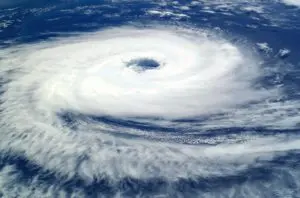
- Spatial Extent: Hurricane-force winds extended outward up to 60 miles from the center, while tropical-storm-force winds reached a staggering 350 miles outward, impacting nearly the entire Florida peninsula, Georgia, the Carolinas, and Tennessee.
Administrative and Operational Metrics
- Closure Duration: 3 consecutive business days (September 25, 26, and 27, 2024).
- Affected Facilities: All centralized Florida Senate administrative buildings, committee rooms, and member offices located within the Capitol Complex and surrounding state office buildings in Tallahassee.
- Decentralized Units: Dozens of legislative district offices spread across Florida’s 40 Senate districts, operating under localized threat assessments.
- Communications Vulnerability: 100% reliance on auxiliary satellite networks and intermittent cellular data for post-storm status reporting due to widespread fiber-optic and cellular tower damage in the Big Bend and surrounding counties.
Official Statements and Administrative Philosophy
The memorandum issued by Senate President Kathleen Passidomo serves as a textbook example of proactive crisis management within state legislative bodies. While executive agencies—most notably the Governor’s Office and the Florida Division of Emergency Management—command the primary operational response, the legislative branch must similarly protect its personnel to ensure continuity of government.
"The storm that is anticipated to become Hurricane Helene is strengthening as she approaches Florida, and the exact path remains uncertain. It is important that everyone take the time to make preparations for your home and family."
— Senate President Kathleen Passidomo
Key philosophical pillars embedded within the official communication include:
- Employee-Centric Safety Primacy: By explicitly citing the need for individuals to "make preparations for your home and family," leadership prioritized human welfare over rigid adherence to administrative calendars. Recognizing that panic buying, long gas lines, and mandatory evacuation routes demand uninterrupted personal attention, the Senate eliminated the cognitive and physical burden of reporting to a brick-and-mortar office.
- Deference to Localized Intelligence: The policy regarding district offices acknowledged the vast geographical diversity of Florida. A blanket statewide closure for all district offices would have been impractical; an office in Miami or Jacksonville faced vastly different local conditions than an office in Cedar Key, Steinhatchee, or Tallahassee. Granting senators "discretion regarding the closure of any district office in the impacted areas" ensured that localized emergency management protocols were respected.
- Anticipation of Communications Collapse: Passidomo’s directive demonstrated a clear understanding of modern disaster realities: telecommunications infrastructure is often among the first casualties of a major hurricane. By advising staff to notify supervisors of severe impacts "to the extent possible," the Senate leadership established a flexible, non-punitive reporting structure that accounted for severed fiber lines, downed cell towers, and power grid failures.
Future Outlook: Legislative Resilience and Disaster Preparedness
The devastation wrought by Hurricane Helene, coupled with the administrative pivots executed by the Florida Senate, offers critical lessons for the future of state governance and institutional resilience. As climatic anomalies and warm sea surface temperatures continue to fuel more intense, rapid-intensifying tropical systems, legislative bodies must adapt their continuity-of-operations plans (COOP).
Enhancing Technological Redundancies
The vulnerability of wireless networks highlighted in the memorandum underscores the urgent need for state governments to invest in robust satellite communication backups. Future legislative protocols will likely integrate decentralized, satellite-enabled communication nodes for key leadership and district managers, ensuring that command-and-control capabilities remain intact even when terrestrial cellular and internet grids collapse entirely.
Refining Hybrid and Remote Work Frameworks
The forced closures of September 2024 demonstrated the efficacy of remote administrative operations during emergencies. Moving forward, the Florida Senate is expected to further codify hybrid operational capabilities, allowing staff members to seamlessly transition from physical offices to secure remote environments at the earliest warning of severe weather. This minimizes downtime, protects state assets, and ensures that constituent services—particularly post-disaster casework—can resume with minimal delay.
Infrastructure Hardening in the Capital City
While Tallahassee is situated inland compared to coastal surge zones, its dense canopy of historic oak trees makes it highly susceptible to prolonged power outages caused by tropical storm-force winds. Future capital improvement initiatives will likely focus on undergrounding electrical utilities around state government complexes, upgrading backup generator capacities, and reinforcing building envelopes to withstand higher wind loadings.
Conclusion
Senate President Kathleen Passidomo’s memorandum regarding Hurricane Helene was far more than a routine administrative notice; it was a vital instrument of public safety, risk mitigation, and institutional leadership. By balancing the imperative for government continuity with the absolute necessity of human preservation, the Florida Senate navigated one of the most destructive natural disasters in modern American history with discipline, foresight, and unwavering commitment to its workforce and the citizens of Florida.

0 Comments