

Executive Overview
The complex, high-profile murder-for-hire investigation surrounding the February 2022 ambush slaying of Jacksonville Beach software executive Jared Bridegan has escalated into a fierce constitutional battle. At the heart of the latest conflict is a high-stakes clash between a defendant’s right to a fair trial and a surviving victim’s right to privacy under Florida’s Marsy’s Law.
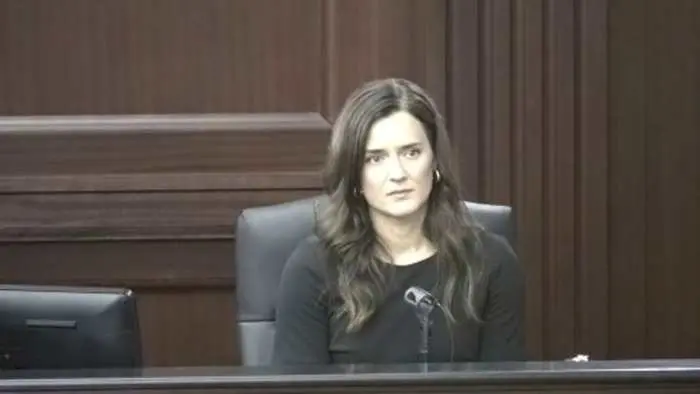
Shanna Gardner, 39, Bridegan’s ex-wife, is facing charges of first-degree murder, conspiracy to commit murder, solicitation to commit a capital felony, and child abuse. As her defense team prepares for a trial now slated for May 2027, they have initiated a aggressive legal campaign to obtain private communications from the victim’s widow, Kirsten Bridegan, as well as lead investigators and state prosecutors. The defense contends these communications could reveal witness bias, inconsistencies, or the improper shaping of testimony.
Conversely, Kirsten Bridegan and her legal counsel argue that the defense’s sweeping subpoenas constitute an invasive, overly broad "fishing expedition" that violates her privacy rights as a victim. The dispute has disrupted related trial proceedings, triggered an emergency intervention by an appellate court, led to failed attempts to disqualify the presiding judge, and exposed deep rifts between the defense, the state, and the victim’s family.
As the legal machinery grinds onward toward a distant 2027 trial date, this case stands as a critical touchpoint for the limits of digital discovery, the scope of prosecutorial disclosure obligations, and the constitutional boundaries of victim protections in capital cases.
Detailed Chronology
The road to the current legal impasse is marked by a sequence of dramatic courtroom confrontations, sudden appellate stays, and deeply personal conflicts.
+-----------------------------------------------------------------------------------------+
|                                    CASE TIMELINE                                        |
+-----------------------------------------------------------------------------------------+
|  Feb 2022: Jared Bridegan is murdered in Jacksonville Beach.                            |
|  Aug 11, 2026: Judge Kite orders State to search for communications involving widow.    |
|  Aug 20, 2026: Judge Kite orders Kirsten Bridegan to surrender her phone by Aug 21.     |
|  Aug 21, 2026 (9:00 AM): Widow misses deadline; emergency contempt hearing called.      |
|  Aug 21, 2026 (Afternoon): 5th District Court of Appeal issues emergency stay.          |
|  Late Aug 2026: Mario Fernandez convicted of first-degree murder.                      |
|  Sep 2, 2026: Appellate court confirms stay remains in place indefinitely.              |
|  Sep 3, 2026: Judge London Kite denies motions to recuse herself.                      |
|  May 2027: Shanna Gardner's trial scheduled to begin.                                   |
+-----------------------------------------------------------------------------------------+
The Genesis: A Deadly Ambush
On February 16, 2022, Jared Bridegan was driving home with his toddler daughter when he encountered a tire placed in the middle of a dark stretch of road in Jacksonville Beach. When he stepped out of his vehicle to move the obstruction, he was shot multiple times at close range in an engineered ambush. The crime shocked the local community and initiated a multi-agency investigation that eventually pointed to his ex-wife, Shanna Gardner, her new husband, Mario Fernandez, and Henry Tenon, the tenant of a property owned by Fernandez who acted as the gunman.
The Battle Over Kirsten Bridegan’s Phone
In mid-August 2026, ahead of the trial of Mario Fernandez, Gardner’s defense attorneys filed a motion to subpoena Kirsten Bridegan’s personal cell phone and social media accounts. The defense asserted that private communications between the widow, the lead detective, and prosecutors contained information vital to the defense.
On August 11, 2026, Circuit Judge London Kite ordered the state to determine if specific communications involving Kirsten Bridegan, lead Detective Christopher Johns, and state prosecutors were in the government’s "possession, custody, or control."
On August 20, 2026, following an in-camera review of a sealed submission from the defense, Judge Kite ordered Kirsten Bridegan to turn over her cellular device to the court by 9:00 a.m. the following morning. Judge Kite clarified that the court, not the defense, would conduct a private review of the device to filter out irrelevant personal information before disclosing any material.
A Trial Interrupted
On August 21, 2026, the 9:00 a.m. deadline passed without Kirsten Bridegan surrendering her phone. In a rare move, Judge Kite interrupted the ongoing trial of Mario Fernandez to hold an emergency hearing. The defense immediately moved for contempt proceedings against Bridegan.
Before the contempt hearing could take place later that afternoon, the Fifth District Court of Appeal intervened, issuing an emergency stay on Judge Kite’s order. On September 2, 2026, the appellate court confirmed that the stay would remain in place until a final disposition of Bridegan’s petition was reached.
Recusal Motions and Denials
In the wake of the chaotic events of August 21, both the State Attorney’s Office and Kirsten Bridegan’s attorney filed formal motions asking Judge Kite to recuse herself from Shanna Gardner’s case. They argued that the judge’s rapid scheduling of a contempt hearing and her refusal to wait for an appellate ruling created a reasonable apprehension of bias. On September 3, 2026, Judge Kite denied both motions, declaring them legally insufficient, thereby maintaining her control over the proceedings.
Supporting Context & Metrics
The procedural struggle in the Gardner case highlights the complex interplay of several landmark legal doctrines and statutory frameworks.
+-----------------------------------------------------------------------------------------+
|                                  KEY LEGAL DOCTRINES                                    |
+-----------------------------------------------------------------------------------------+
|  BRADY V. MARYLAND (1963)     | Requires prosecution to disclose exculpatory evidence   |
|                               | to the defense.                                         |
+-------------------------------+---------------------------------------------------------+
|  GIGLIO V. UNITED STATES      | Requires disclosure of information that could impeach   |
|  (1972)                       | the credibility of a prosecution witness.               |
+-------------------------------+---------------------------------------------------------+
|  MARSY'S LAW                  | Florida constitutional amendment protecting victims'     |
|                               | rights, privacy, and safety from harassment.            |
+-----------------------------------------------------------------------------------------+
The Constitutional Clash: Brady/Giglio vs. Marsy’s Law
The defense’s efforts to obtain Kirsten Bridegan’s communications are grounded in two foundational U.S. Supreme Court rulings:
- Brady v. Maryland (1963): Establishes that the prosecution must turn over any evidence favorable to the accused that is material to either guilt or punishment.
- Giglio v. United States (1972): Extends this obligation to include any evidence that could impeach the credibility of government witnesses.
Because Kirsten Bridegan is a key witness for the prosecution, the defense argues that any communications she had with investigators or prosecutors regarding the case, the defendants, or her own testimony are potential Giglio material. They contend these messages are necessary to uncover potential bias or coordinated testimony.
Conversely, the state and Kirsten Bridegan’s counsel rely on Marsy’s Law, a constitutional amendment approved by Florida voters in 2018 designed to provide crime victims with enforceable rights, including the right to be treated with fairness and respect, and to be reasonably protected from harassment, intimidation, and abuse.
Under Marsy’s Law, victims have a right to prevent the disclosure of information or records that could be used to locate or harass them or their families. The widow’s counsel argues that handing over a personal cell phone for forensic imaging—even for a judge’s private review—unnecessarily exposes highly private, sensitive family communications unrelated to the criminal case.
Key Case Metrics & Trial Parameters
- Total Defendants Charged: 3 (Shanna Gardner, Mario Fernandez, Henry Tenon).
- Fernandez Trial Outcome: Convicted in August 2026 of first-degree murder and solicitation to commit a capital felony; defense is currently seeking a new trial.
- Gardner Trial Start Date: Scheduled for May 3, 2027 (Jury Selection), with testimony set to begin May 10, 2027.
- Duration of Trial Delay: The trial was pushed back nearly nine months following Fernandez’s conviction and the introduction of separate child molestation charges against him, which defense attorneys argue fundamentally altered the legal landscape.
Official Statements
The legal battle has produced sharp, public exchanges between the opposing legal teams, reflecting the high emotional and strategic stakes of the litigation.
The Defense Perspective
In a public statement, Shanna Gardner’s defense team sought to clarify their objectives, emphasizing that they are not seeking direct access to the widow’s phone, but rather a neutral judicial review:
"The defense is not asking for Kirsten Bridegan’s phone. The judge ordered her to turn over specific communications with [family members], lead Detective Christopher Johns and the prosecutors assigned to the case, including the State Attorney. Those communications go to the judge, not the defense. Why are Kirsten Bridegan and the State fighting to keep these communications secret? What are they afraid these communications will show?"
The defense has also criticized the prosecution’s compliance with prior discovery orders, filing a motion asserting that the state has provided only generalized assurances rather than concrete logs of communications between investigators and the victim’s family.
The Victim’s Representation
Douglas Clifton, attorney for Kirsten Bridegan, has strongly defended his client’s privacy, characterizing the defense’s strategy as an intrusive overreach:
"The defense’s subpoena seeks highly private information and directly violates protections guaranteed under Florida’s Marsy’s Law. A forensic examination of my client’s phone, or even a broad sweep of her private messages, is nothing more than an overly broad fishing expedition. It risks exposing unrelated personal details and confidential family communications that have absolutely no bearing on the criminal trial of Shanna Gardner."
The Prosecution’s Stance
In their motion seeking the recusal of Judge Kite, state prosecutors expressed deep concern over what they perceived as a rush to judgment regarding the contempt proceedings against Kirsten Bridegan:
"The court’s words and conduct throughout the afternoon of August 21 created a reasonable and objective fear that matters involving Kirsten Bridegan have been prejudged. The rapid sequence of events, the sudden interruption of an active homicide trial, and the extremely limited time frame provided to a victim of a crime to secure counsel and prepare for a criminal contempt hearing undermine the appearance of a fair and impartial proceeding."
Future Outlook
The legal battle over Kirsten Bridegan’s phone and the broader scope of digital discovery will now be decided in the appellate courts. The Fifth District Court of Appeal’s decision on whether to uphold or quash Judge Kite’s subpoena order will establish an important precedent for how Florida courts balance Marsy’s Law protections against a defendant’s Sixth Amendment right to a fair trial and confrontation of witnesses.
Immediate Legal Hurdles
- Appellate Ruling on the Stay: If the appellate court vacates the stay, Kirsten Bridegan will again face the choice of surrendering her communications for judicial review or facing renewed contempt of court proceedings. If the court upholds her petition, the defense will be blocked from accessing these digital records, potentially forming a key issue for any future appeals should Gardner be convicted.
- The State’s Disclosure Compliance: Judge Kite must still rule on the defense’s motion to compel the state to perform a more exhaustive search of its own systems for communications involving Detective Johns and State Attorney Melissa Nelson’s prosecuting team.
- The New Trial Motion for Fernandez: Mario Fernandez’s defense team is actively pursuing a motion for a new trial. The outcome of that motion, combined with his pending trial on unrelated child molestation charges, will continue to impact the strategic decisions of Gardner’s defense team.
With Shanna Gardner’s trial delayed until May 2027, both sides have been handed a significant window to litigate these complex constitutional issues to their conclusion. What remains certain is that the outcome of this digital discovery dispute will heavily influence the evidentiary landscape of one of Northeast Florida’s most closely watched capital murder trials.

0 Comments