

By Tom Wilmes
September 1, 2026
Executive Overview
Sometimes, an unexpected find can inspire a vision far bigger than anyone might imagine. A wingback couch spotted in an antiques shop might prove the perfect piece to build a tearoom around. A long wooden bar tucked away in a warehouse could become the centerpiece of a retro-themed tavern. And stumbling across a chained driveway leading to a neglected old house could be the catalyst that transforms an entire community.
In the case of Linda Bruckheimer and Bloomfield, Kentucky, all three have proven true.
Over the past three decades, Linda Bruckheimer—writer, photographer, philanthropist, preservationist, and wife of Hollywood powerhouse producer Jerry Bruckheimer—has quietly orchestrated the cultural and economic resurrection of a tiny rural town. What began in 1993 as a private search for a countryside weekend retreat has blossomed into a multi-million-dollar preservation effort spanning numerous storefronts, historic venues, and hospitality spaces along Taylorsville Road.
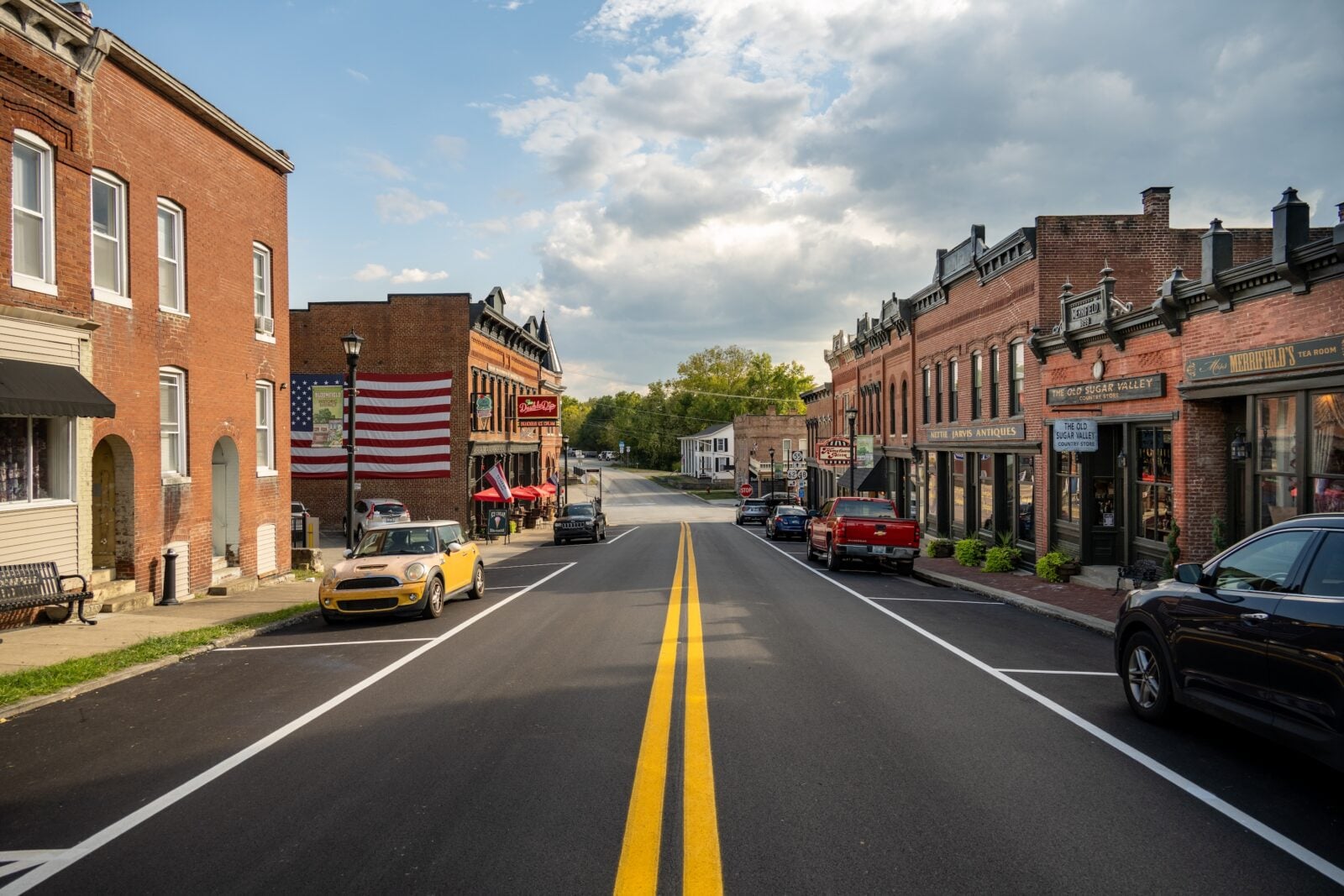
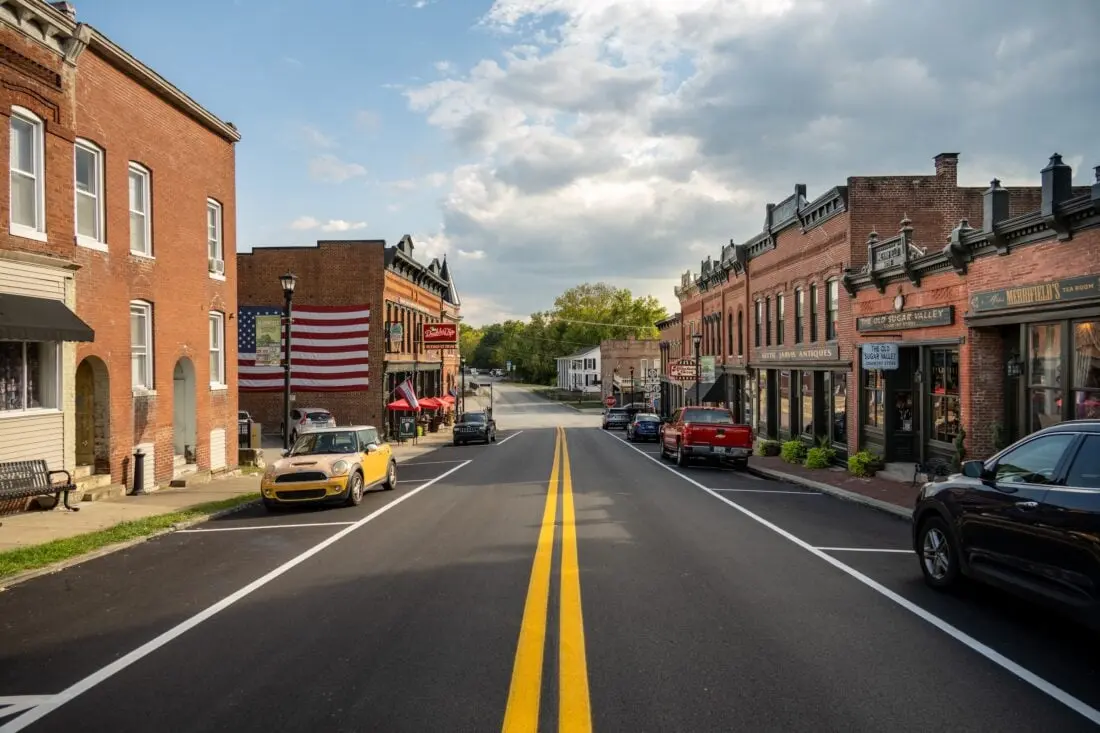
Today, downtown Bloomfield thrives as a surprising destination for art, antiques, and historic preservation. Visitors can spend an afternoon shopping for rare Americana, bowling on vintage lanes, sipping bourbon in meticulously styled spaces, and exploring vibrant local businesses that defy the traditional narrative of rural American economic decline. Yet, as Bruckheimer herself insists, the transformation was never part of a calculated corporate master plan; it was a deeply personal evolution driven by intuition, historical reverence, and an abiding affection for the Bluegrass State.
Detailed Chronology: From Abandoned Backroads to a Thriving Hub
1993: The Discovery of Walnut Groves Farm
Linda Bruckheimer’s journey in Bloomfield traces back to deep familial roots in Kentucky. Raised in Louisville before relocating to Southern California with her family as a teenager, Bruckheimer always maintained an emotional connection to the landscape of her early childhood.
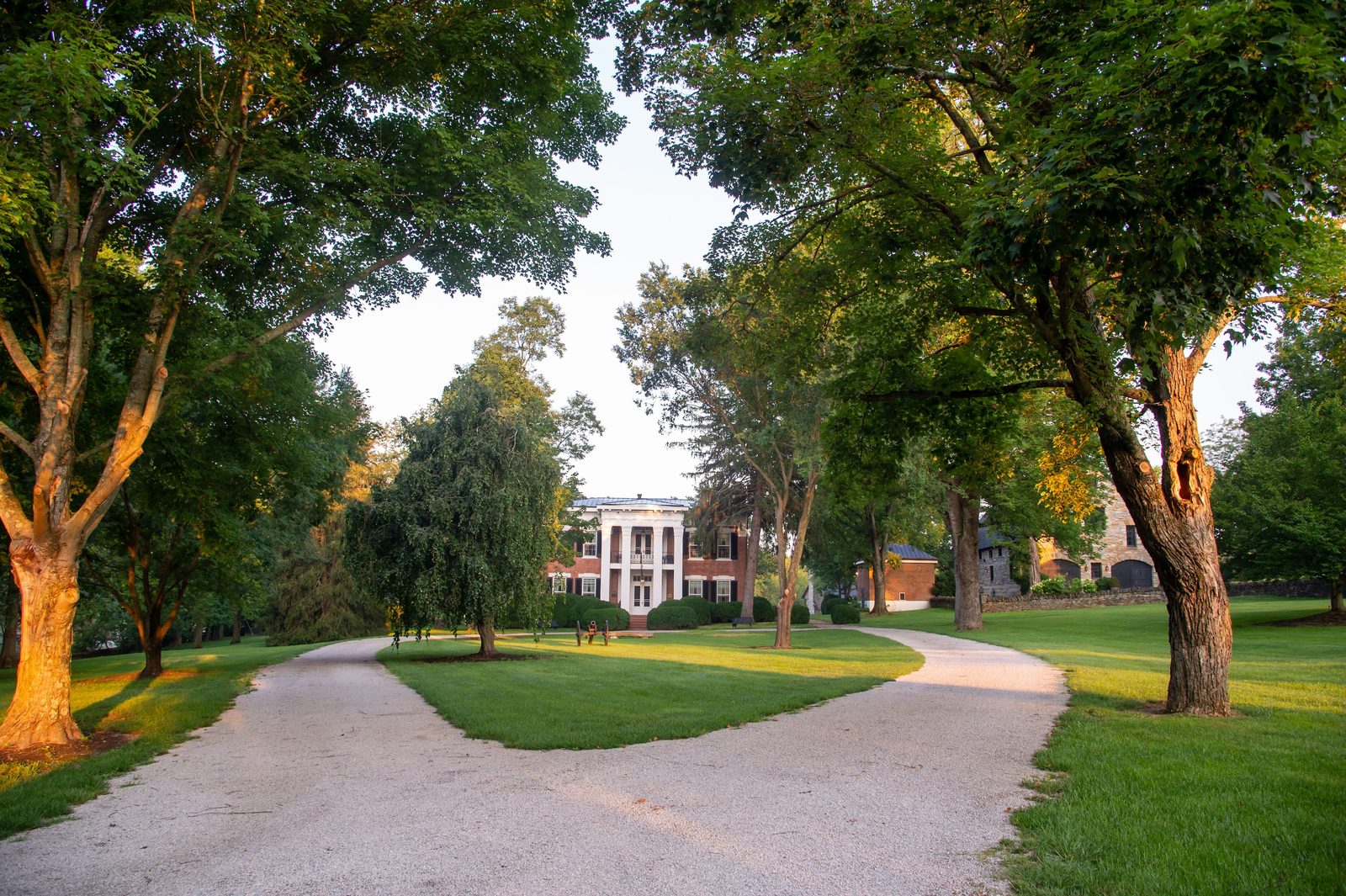
In 1993, while driving along the rural backroads of central Kentucky—roughly thirteen miles outside of historic Bardstown—she turned down a quiet stretch and encountered a grand, weather-beaten Greek Revival mansion. Built in the 1820s on the northern edge of Bloomfield, Walnut Groves Farm immediately captured her imagination.
The Bruckheimers purchased the historic property, transforming it into a peaceful rural sanctuary. Presiding over the long, winding front drive stood a massive oak tree that had miraculously survived a lightning strike. That resilient tree would eventually serve as the visual inspiration for the official corporate logo of Jerry Bruckheimer Films.
1996–2000s: The First Downtown Storefronts
Restoring Walnut Groves Farm acted as a gateway passion, gradually drawing Bruckheimer away from the countryside and into the heart of Bloomfield itself. Noticing boarded-up windows, crumbling facades, and hollowed-out commercial spaces along the main thoroughfare, she began quietly purchasing abandoned downtown properties.
In 1996, she opened Nettie Jarvis Antiques, named affectionately in honor of her great-grandmother.
"I definitely saw a need for preservation, but that wasn’t really my motivation in the beginning," Bruckheimer reflects. "Something just got into me. I saw one building, then another, and it simply developed. There was never some grand scheme. It just happened, but everything happened straight from the heart."
Stepping inside Nettie Jarvis Antiques today offers a striking testament to that philosophy. Visitors are greeted by eclectically styled rooms meticulously arranged with American antiques, rare Kentucky-made furniture, vintage Kentucky Derby glasses, historical books, and rich regional memorabilia. A small bar tucked inside the shop serves coffee, cappuccinos, and neat pours of local bourbon, setting a tone of hospitality that defines the entire downtown corridor.
Expanding the Canvas: The Creation of a Victorian and Retro Landscape
As Nettie Jarvis gained traction, Bruckheimer continued acquiring adjacent commercial properties, methodically expanding her vision block by block. Rather than gutting structures for modern uniformity, she elected to celebrate historic architecture by anchoring each new business in a distinct historical era or aesthetic motif.
- Miss Merrifield’s Tea Parlor & The Old Pink House: Situated just a few doors down from Nettie Jarvis, this destination offers traditional tea services. Stepping through the parlor leads to a shaded courtyard where Bruckheimer reimagined a neglected potting shed into the Old Pink House. Its interior drips with lush botanical installations designed by celebrated Kentucky landscape artist Jon Carloftis, serving as an idyllic venue for private luncheons and gatherings.
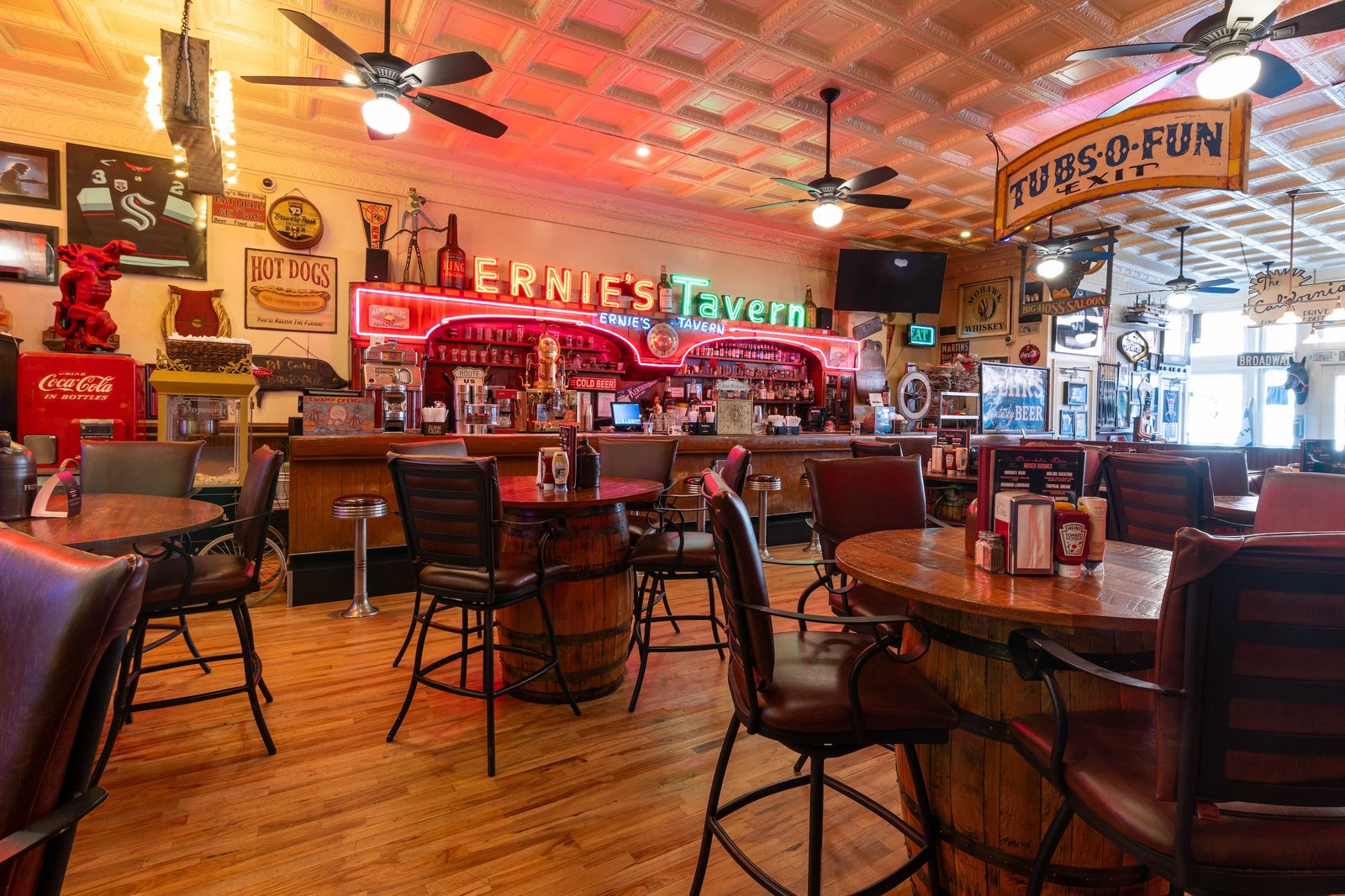
- The Double Dip Soda Fountain & Ernie’s Tavern: Located across the street in a former church activity center, the Double Dip features a classic soda fountain counter where visitors can order traditional banana splits. Directly adjacent is a four-lane, 1930s-era Brunswick bowling alley. Connected to it is Ernie’s Tavern, which preserves the original worn wooden floors from its past incarnation as a roller rink. The walls are decorated with pop-culture artifacts and personal history, featuring a guitar once owned by Johnny Cash, a flight jacket worn by Tom Cruise in the original Top Gun, and a black-and-white photograph of Bruckheimer’s grandmother, Alvah Aschbacher (affectionately known as "Miss Allie"), who moved to Bloomfield later in life and lived to 103.
- Anna Belle Archer’s & Rowdy’s Saloon: Perhaps Bruckheimer’s most audacious hospitality project is Anna Belle Archer’s, a lavish Victorian-themed boarding house situated directly above Rowdy’s Dance Hall & Saloon—a lively weekend venue featuring live music. Every square inch of the boarding house’s sleeping quarters and common areas is swathed in rich red velvets, heavily patterned Victorian wallpapers, ornate lighting fixtures, and period portraits. Floor sconces found during antiquing trips in England find a permanent home along its hallways, proving Bruckheimer’s philosophy that beautiful objects eventually find their purpose.
- The Velvet Room: Directly across the street from the boarding house, a former barbershop was converted into a sultry, 1920s-style speakeasy, offering patrons an immersive Prohibition-era experience.
Supporting Context & Metrics: Economic Impact on a 900-Resident Town
To understand the magnitude of Bruckheimer’s intervention, one must examine the baseline economic reality of Bloomfield prior to her arrival.
With a population hovering around 900 residents, Bloomfield historically relied heavily on agriculture—specifically tobacco farming. For generations, two massive local tobacco warehouses served as the economic lifeblood of the community. As agricultural markets shifted and corporate agribusiness expanded, rural towns across America experienced severe economic contraction, leading to population flight, collapsing commercial infrastructure, and vacant downtowns.
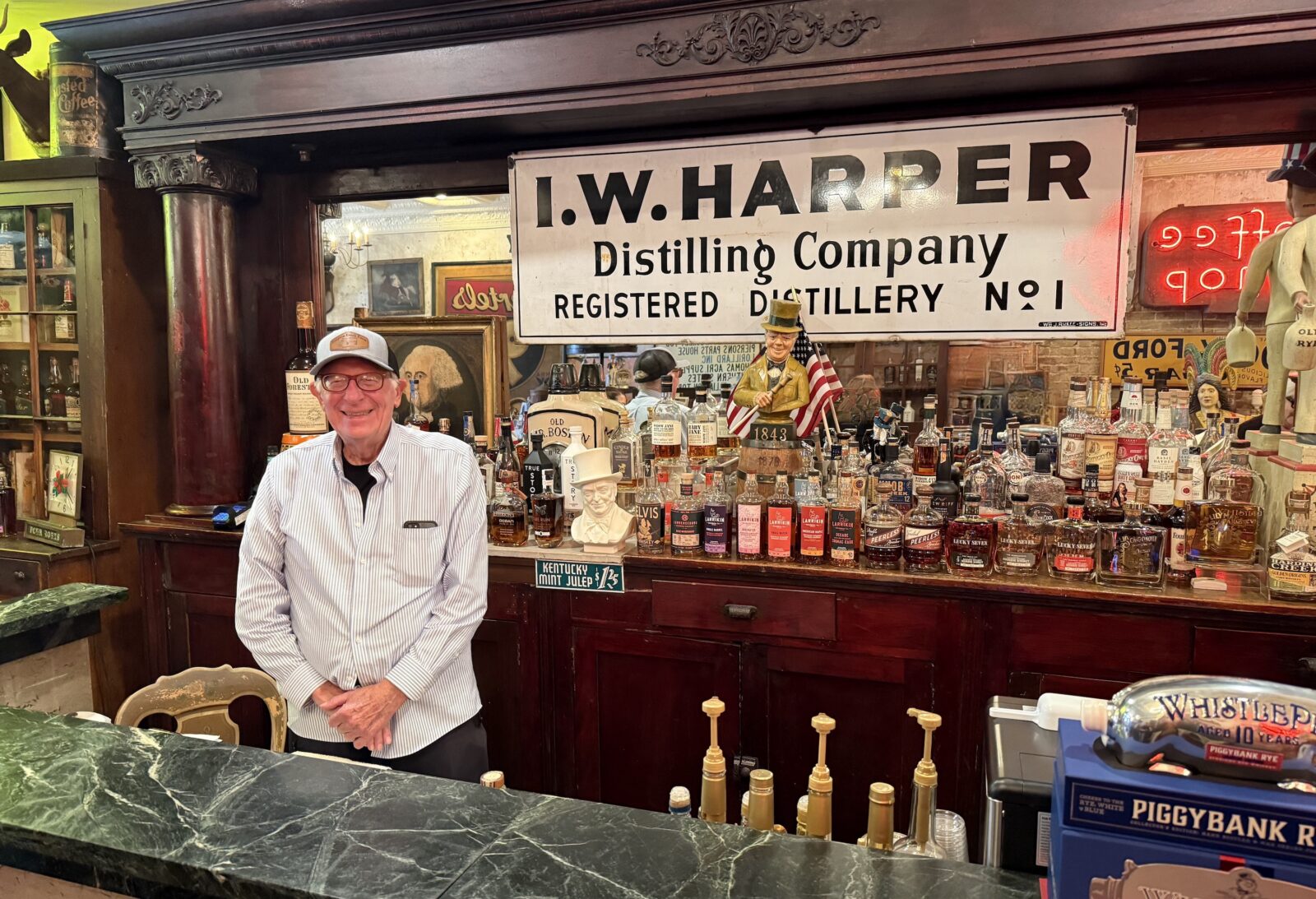
Tom Wigginton, a longtime Bloomfield resident who spent four decades in banking and farming before taking a part-time bartending role at Nettie Jarvis Antiques, offers a sobering assessment of the town’s trajectory.
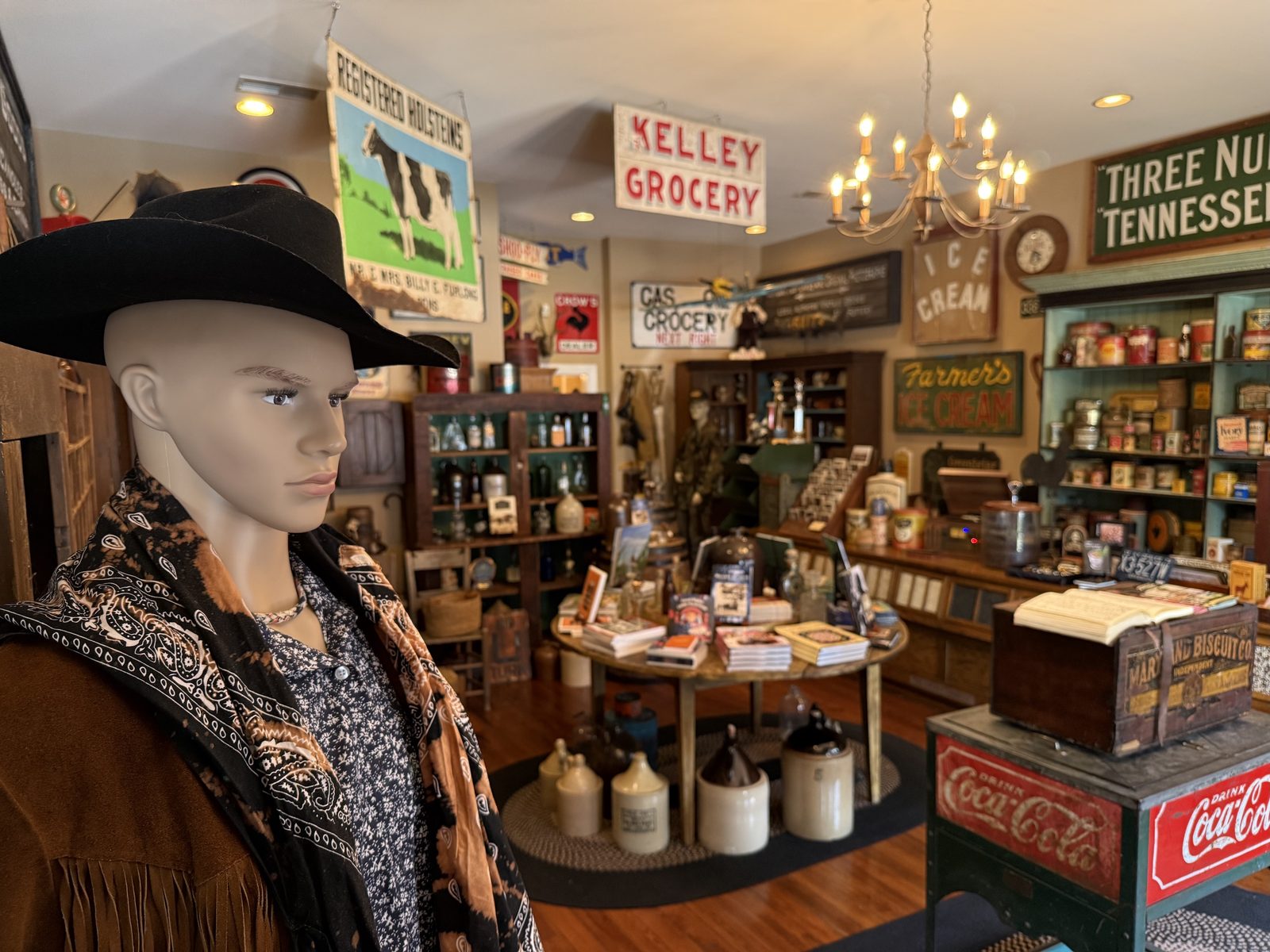
"We’re primarily an agricultural community, especially when tobacco was king," Wigginton explains. Reflecting on the commercial buildings that sat boarded up for decades, he notes plainly: "Without the Bruckheimers, the town would have fallen down around our ears."
Importantly, Bruckheimer’s investments catalyzed a broader, organic economic renaissance. Rather than operating as a closed ecosystem controlled by a single entity, her developments successfully kick-started private enterprise throughout the town. Today, a wave of independent business owners has staked a claim in Bloomfield’s future, opening establishments such as:
- Shortcrust Coffee and Pastry Bar
- Froggie’s Bar and Grill
- The Nest (an independent clothing boutique)
This diversification has transformed downtown Bloomfield from a sleepy, forgotten crossroads into a vibrant micro-economy capable of sustaining tourism, retail, hospitality, and residential growth simultaneously.
Official Statements and Local Perspectives
The relationship between Linda Bruckheimer and the residents of Bloomfield is characterized by mutual respect, shared history, and deep community integration.
During a summer afternoon conversation at Nettie Jarvis Antiques, local manager Jenny Wigginton (wife of Tom Wigginton) reflected on the existential reality of the town’s transformation while sitting in the basement of the town’s old Methodist church—an 1860s-era landmark that Bruckheimer is currently restoring into an event and performance venue. Jenny attended Sunday services in the very same building as a child.
"Tom said it right. If you hadn’t come to town, every one of us who is from here could shut our eyes and know exactly what we would be looking at," Jenny told Bruckheimer during their conversation. "You don’t know how many people tell me that. What on earth would Bloomfield be? If you hadn’t purchased the church, what would have happened to it?"
Bruckheimer’s response underscores her philosophy of organic, community-led sustainability:
"Somebody would have bought it. It’s one thing to be a one-person town, but you really don’t know if the town is successful until you have other people coming in and being successful. That’s the way a city should be."
Beyond local accolades, Bruckheimer’s preservation work has achieved national recognition. She has served with distinction on the board of trustees for the National Trust for Historic Preservation and established the Linda and Jerry Bruckheimer Preservation Fund for Kentucky, directing significant financial resources toward safeguarding architectural heritage throughout the Commonwealth.
Future Outlook: The Next Chapter for Bloomfield
Despite more than thirty years of continuous investment, acquisition, and meticulous restoration, Linda Bruckheimer views the project as an ongoing canvas rather than a completed masterwork.
The ongoing conversion of the 1860 Methodist church into a premier regional venue for weddings, theatrical performances, and civic events represents the next major milestone in Bloomfield’s evolution. As regional tourism surges—bolstered by Bloomfield’s proximity to Bardstown and the wider Kentucky Bourbon Trail—the town is uniquely positioned to model how historic preservation can successfully revitalize rural America without sacrificing local identity or charm.
"It’s funny," Bruckheimer muses, looking down the bustling, beautifully restored length of Taylorsville Road. "We’ve been here more than thirty years, and I feel like we’re just getting started."
For inquiries regarding lodging reservations in Bloomfield, historic property bookings, or private event hosting, visitors can consult nettie-jarvis.com or contact local property management directly.

0 Comments