

Executive Overview
As the global demand for artificial intelligence, cloud computing, and digital infrastructure reaches unprecedented heights, rural and semi-rural communities across the United States are finding themselves on the front lines of a rapid technological expansion. In North Florida, this tension is coming to a head in Putnam County. On Tuesday, county commissioners are scheduled to cast a decisive vote on a proposed temporary moratorium that would halt all new data center development projects until September 2027.
This legislative pause is not an isolated event; rather, it represents a growing regional and national movement of municipal resistance. Local governments are scrambling to understand and regulate the massive environmental, logistical, and infrastructural demands of these high-density computing facilities. For Putnam County—a region historically defined by its agricultural heritage, scenic waterways, and quiet residential communities—the sudden influx of interest from data center developers has prompted urgent questions about resource allocation, environmental stewardship, and the long-term vision for local economic development.
The upcoming vote at the Putnam County Government Complex in Palatka represents a critical juncture. If passed, the moratorium will grant county planners, environmental scientists, and utility experts a vital window to study the long-term impacts of these industrial giants and draft robust zoning laws to protect the county’s natural resources and public utility grid.
Detailed Chronology
The path to Tuesday’s high-stakes commission meeting has been paved by months of mounting concern among Putnam County residents, local administrative staff, and environmental advocacy groups.
[Late 2025 – Early 2026]
Speculative land inquiries & preliminary site applications by data center developers.
       │
       ▼
[Mid-2026]
Putnam County planning staff raise concerns regarding utility capacity and zoning loopholes.
       │
       ▼
[September 2026]
Commissioners draft a temporary moratorium ordinance; public pushback intensifies.
       │
       ▼
[October 2026]
First reading of the moratorium ordinance passes with unanimous commissioner support.
       │
       ▼
[Late October 2026]
Neighboring Columbia County hosts a public workshop to analyze regional data center impacts.
       │
       ▼
[November 2026 (Current)]
Putnam County Board of Commissioners convenes for the final vote on the moratorium.
The Inception of the Digital Influx
The pressure began in late 2025 and early 2026, when speculative land inquiries and preliminary site applications from digital infrastructure developers began quietly landing on the desks of county planning officials. Drawn by Florida’s expanding fiber-optic network, relatively affordable land, and proximity to major power transmission lines, developers identified Putnam County as an ideal frontier for expansion.
Administrative Red Flags
By mid-2026, county administrative staff realized that Putnam’s existing comprehensive zoning plans—designed primarily to regulate traditional agricultural, commercial, and light industrial activities—were woefully unequipped to handle the unique, high-intensity footprint of modern data centers. Unlike standard warehouses or manufacturing plants, data centers present highly concentrated utility demands that do not align with traditional industrial classifications.
Legislative Action and the First Reading
In response to these regulatory gaps, county commissioners drafted an ordinance to implement a temporary ban on the acceptance, processing, and approval of any zoning applications, special exceptions, or building permits related to data centers.
The first official reading of the moratorium took place last month, passing with unanimous support from the commission. This initial approval signaled a shared consensus among local leaders that the county needed to step back and evaluate the situation before permanent, irreversible decisions were made.
Regional Alignment
Putnam County is not acting in a vacuum. Throughout North Florida, local governments are grappling with the same pressures. Just last week, neighboring Columbia County convened a comprehensive public workshop specifically dedicated to examining the economic and environmental impacts of data centers on rural communities. This regional synchronicity underscores a growing awareness that the digital infrastructure boom requires a unified, cautious regulatory approach.
Supporting Context & Metrics
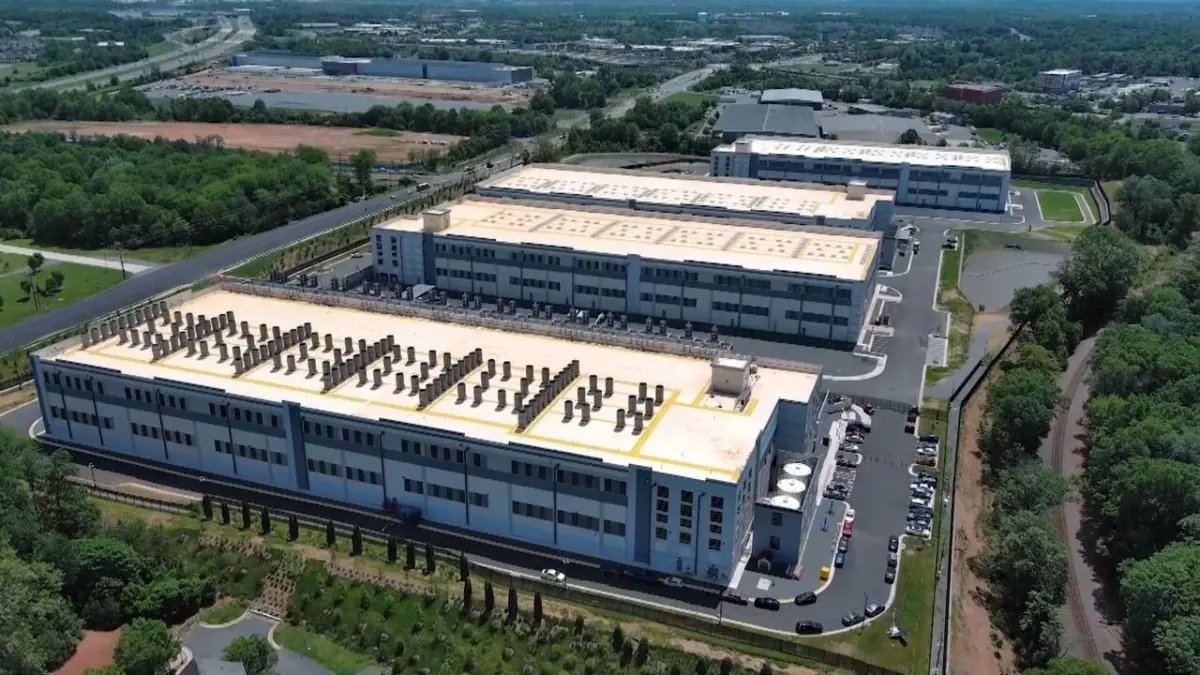
To understand why Putnam County leaders are pursuing a temporary ban, it is necessary to examine the sheer scale of the physical resources required to keep the modern internet running. Data centers are often described as "virtual" or "cloud-based," but their physical footprint is massive, resource-intensive, and highly disruptive to local ecosystems.
The Power Grid Strain
Data centers are among the most energy-intensive facilities on earth. A single hyperscale data center facility can require anywhere from 100 to 500 megawatts (MW) of power—enough to electricity-supply between 80,000 and 400,000 homes.
| Metric / Resource | Typical Single Hyperscale Data Center | Equivalent Local Impact |
|---|---|---|
| Power Consumption | 100 MW – 500 MW | 80,000 – 400,000 residential homes |
| Daily Water Usage | 1 million – 5 million gallons | Daily water needs of a medium-sized city |
| Land Footprint | 50 – 200+ acres | Multiple commercial shopping centers |
| Permanent Jobs Created | 30 – 50 specialized roles | Low employment density relative to acreage |
For a county like Putnam, which relies on a delicate balance of regional utility providers, the sudden addition of a massive energy consumer could strain the local grid, potentially driving up utility costs for everyday residents and complicating municipal transition plans toward renewable energy sources.
Aquifer Vulnerability and Water Consumption
One of the most pressing concerns for North Florida residents is the preservation of the Floridan Aquifer, one of the most productive aquifers in the world and the primary source of drinking water and agricultural irrigation for the region.
Many data centers utilize evaporative cooling towers to prevent thousands of computer servers from overheating. These systems can consume millions of gallons of water per day. In a region where natural springs, wetlands, and the St. Johns River are vital to the local ecology and tourism economy, the diversion of millions of gallons of groundwater to cool server racks is a highly contentious issue.
The Economic Paradox: High Land Use, Low Job Density
While data center developers often highlight the high capital investment associated with their projects, local planners point out a significant economic paradox:
- High Capital Investment: The physical construction and high-tech equipment represent hundreds of millions of dollars in short-term economic activity.
- Low Job Creation: Once built, a data center is largely automated. A massive, multi-acre facility may only employ 30 to 50 permanent staff members, including security personnel, system administrators, and facility managers.
For local governments seeking to diversify their tax base and foster robust, long-term employment opportunities for residents, dedicating large swathes of land to low-employment facilities is often a poor trade-off.
Official Statements & Stakeholder Perspectives
The debate surrounding the moratorium has drawn vocal input from various sectors of the community, highlighting the complex balance between economic development and environmental conservation.
Municipal Leadership
County officials have emphasized that the proposed moratorium is not an outright rejection of technological progress, but rather an exercise in responsible governance.
"Our job is to look out for the long-term well-being of Putnam County’s residents and our natural landscape," noted a county official involved in the planning stages. "We cannot allow rapid commercial development to outpace our infrastructure. This moratorium gives us the breathing room to ensure that if these facilities come to our county, they do so on our terms, under strict regulations that protect our water, our power, and our quality of life."
Environmental Advocates
Environmental groups and local conservationists have strongly praised the commission’s cautious approach, pointing to the delicate hydrology of North Florida.
"We are talking about a region defined by its springs and rivers," said a representative from a local watershed protection coalition. "Allowing massive, water-guzzling data centers to set up shop without a comprehensive study on how they will impact the Floridan Aquifer would be an ecological disaster. We applaud the commission for taking a step back to analyze the cumulative impact of these projects."
Industry and Development Proponents
While local developers and tech advocates understand the community’s concerns, they urge leaders not to close the door entirely on the digital economy.
"Data centers are the backbone of the modern world," a representative from an infrastructure development group stated. "They bring significant property tax revenues that can fund local schools, roads, and emergency services without placing a heavy burden on public services like schools or hospitals. A blanket ban, even a temporary one, sends a message that Putnam County is closed to high-tech investment."
Future Outlook
If the Putnam County Board of Commissioners approves the temporary moratorium on Tuesday morning, it will set off a structured, multi-phase legislative review process.
What Happens Next?
Between now and September 2027, Putnam County’s planning and zoning division will collaborate with environmental consultants, utility representatives, and legal experts to:
- Draft Specialized Zoning Ordinances: Create a dedicated "Data Center Overlay District" or similar zoning classification to restrict where these facilities can be built.
- Establish Strict Resource Limits: Implement caps on daily water consumption and mandate the use of closed-loop, water-free cooling technologies.
- Mandate Noise Mitigation: Require developers to install advanced acoustic dampening walls to suppress the constant, low-frequency hum generated by industrial cooling fans.
- Negotiate Renewable Energy Offsets: Require developers to fund or build dedicated solar arrays to offset their massive electricity consumption, ensuring the local residential grid remains unaffected.
The Regional Domino Effect
Putnam County’s decision is likely to influence neighboring jurisdictions. As rural counties across North and Central Florida watch Palatka’s proceedings, a successful implementation of the moratorium could serve as a blueprint for other communities seeking to defend their resources against the unbridled expansion of the digital cloud. The era of unchecked data center growth is meeting its match in the local planning commissions of Florida, where the preservation of natural heritage is proving to be just as valuable as the digital future.

0 Comments