

Executive Overview
Across the United States, an unexpected and powerful new wedge issue has emerged on the electoral map: automated license plate readers (ALPRs), particularly those manufactured by the Atlanta-based tech firm Flock Safety. What began as a localized debate over law enforcement tools and municipal privacy has erupted into a nationwide political firestorm. From gubernatorial showdowns in Wisconsin and Pennsylvania to congressional races in Michigan and statewide policy shifts in Florida and Rhode Island, candidates from across the political spectrum are seizing on the technology.
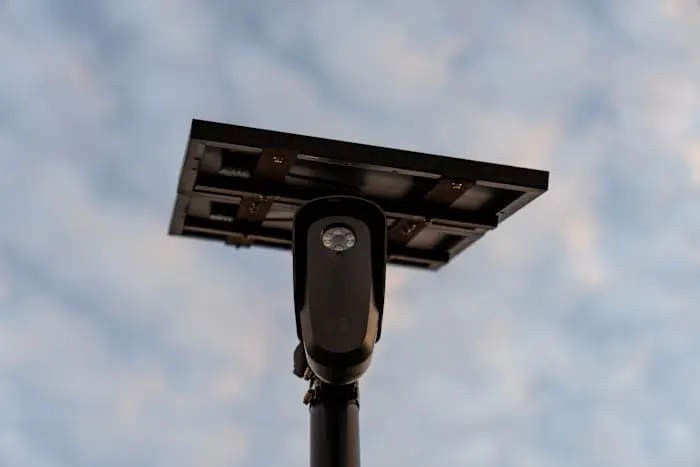
Flock Safety’s AI-powered surveillance network—which spans roughly 6,000 communities in every state except Alaska—captures and logs license plate numbers, vehicle makes, models, colors, and other identifying characteristics of passing traffic. This data is then aggregated into a massive, searchable database accessible to law enforcement agencies across jurisdictions. While police departments and public safety advocates hail the technology as an indispensable crime-fighting asset, critics increasingly characterize it as an unconstitutional expansion of warrantless mass surveillance.
As public awareness of the sprawling surveillance apparatus grows, fueled by investigative reporting and high-profile instances of officer misconduct, the debate has fused with broader public anxieties. Citizens and politicians alike are connecting the proliferation of Flock cameras to deep-seated unease over artificial intelligence, corporate data collection, and the massive data center construction boom. The result is a cross-partisan backlash that is reshaping campaigns, forcing incumbents to scramble, and establishing digital privacy as a defining battleground of modern American politics.
Detailed Chronology of the Backlash
The rapid escalation of Flock cameras from an under-the-radar municipal utility to a primary electoral talking point has unfolded through a steady accumulation of regulatory friction, legal challenges, and heightened media scrutiny.
From Municipal Tool to National Network (2017–2024)
Founded in 2017, Flock Safety steadily integrated its solar-powered and cellular-connected cameras into suburban neighborhoods, rural towns, and major metropolitan thoroughfares. Promoted primarily as a neighborhood watch tool capable of helping police solve property crimes, car thefts, and violent offenses, the company scaled rapidly. By the mid-2020s, its network had evolved from isolated pockets of surveillance into an interconnected, nationwide matrix capable of tracking vehicle movements across state lines.
The 2025–2026 Tipping Point
The backlash against Flock Safety reached a crescendo during the 2025–2026 election cycles, propelled by three primary developments:
- Legal Challenges and Constitutional Scrutiny: Public interest law firms, most notably the Institute for Justice, began filing lawsuits challenging the constitutionality of continuous, warrantless tracking of citizens’ movements on public roadways.
- Exposés on Misuse: News media and civil liberties watchdogs documented multiple cases of law enforcement officers abusing the technology, utilizing the expansive database to stalk personal acquaintances, romantic partners, and individuals outside official investigations.
- Political Opportunism: Recognizing a potent populist issue that cuts across traditional partisan lines, candidates began adopting hardline stances against unchecked surveillance.
By early 2026, the issue had penetrated high-profile races nationwide. In Rhode Island, Democratic Governor Dan McKee abruptly paused the installation of new cameras in late August 2026—just weeks before the state’s primary—pointing to unaddressed privacy concerns. Meanwhile, in Florida, outgoing Republican Governor Ron DeSantis’s administration ordered the total removal of automated license plate readers from state highway rights-of-way, shifting the landscape of state-sanctioned infrastructure monitoring.
Supporting Context & Metrics: Privacy vs. Public Safety
The debate over Flock cameras exposes a fundamental tension in contemporary governance: the desire for enhanced public safety versus the protection of constitutional civil liberties.
The Scale of the Network
- Geographic Reach: Flock Safety systems are currently deployed in approximately 6,000 communities across 49 states, absent only in Alaska.
- Data Collection: Unlike traditional traffic cameras designed to catch speeders or red-light runners, Flock units capture high-resolution imagery of every passing vehicle—logging timestamps, specific physical attributes, and license plate data, which is retained and searchable across cross-jurisdictional police networks.
The Law Enforcement Defense
Proponents of the technology argue that its utility in modern policing cannot be overstated. Law enforcement agencies rely on ALPR systems to intercept stolen vehicles, track amber alerts for missing children, and locate suspects fleeing crime scenes.
Mitchell Davis III, chief of police in Hazel Crest, Illinois, and president of the National Organization of Black Law Enforcement Executives, has been a vocal defender of the technology. In interviews, Davis has criticized communities rushing to ban the devices as committing a grave error. "Instead of focusing on eliminating the cameras, make sure that there’s proper guidelines and proper accountability for misuse of the cameras," Davis argued, framing the push for blanket bans as a classic case of "throwing the baby out with the bathwater."
The Civil Liberties Counter-Argument
Conversely, privacy advocates and legal scholars argue that the passive, continuous logging of citizens’ daily movements creates an Orwellian digital dossier of public life. Critics point out that because the data is shared across disparate law enforcement agencies and stored for extended periods, it effectively bypasses traditional Fourth Amendment protections against warrantless searches.
Furthermore, the integration of artificial intelligence into these systems allows for predictive policing algorithms and behavioral tracking that many constitutional lawyers argue far exceeds the original legislative intent of local traffic monitoring.
Official Statements and Candidate Positions
The political fallout from the Flock controversy has created unusual alignments, forcing candidates to navigate voter skepticism toward both big government and corporate tech overreach.
Wisconsin’s Gubernatorial Crucible
The intersection of technology policy and electoral politics was starkly illustrated in the Wisconsin gubernatorial race.
- David Crowley: The Democratic nominee faced intense scrutiny regarding his past support for turning Wisconsin into a global AI and data hub. In response, Crowley highlighted his executive action limiting Flock cameras within Milwaukee County and pledged to implement strict statewide transparency and accountability measures to prevent unwarranted citizen tracking.
- Tom Tiffany: The Republican nominee countered by proposing an immediate pause on state funding for Flock cameras. Tiffany called for a dedicated task force to establish rigorous data retention limits, penalties for misuse, and "safeguards against Communist China and foreign adversaries," referencing supply chain concerns regarding tech hardware.
The exchange quickly devolved into partisan crossfire. The Wisconsin Democratic Party circulated footage from April where Tiffany admitted ignorance regarding what Flock cameras were, prompting the state Republican Party to label Crowley as "Big Brother Crowley" for his historical ties to police surveillance advocacy.
Pennsylvania and Texas
- Josh Shapiro: Pennsylvania’s Democratic Governor, viewed as a rising national figure, announced his support for a statewide ban on Flock cameras. His Republican challenger, State Treasurer Stacy Garrity, echoed the sentiment, flatly stating that the devices represent "an intrusive invasion of privacy and they should be banned."
- James Talarico: In Texas, the Democratic U.S. Senate candidate bluntly declared on social media that "Flock cameras have no place in Texas," striking a populist chord against automated monitoring.
Legislative Actions and Grassroots Campaigns
- Michigan: Democratic congressional candidate William Lawrence labeled the technology "the most un-American thing I can imagine." Meanwhile, his opponent’s camp highlighted that incumbent Republican Rep. Tom Barrett co-sponsored federal legislation aimed at prohibiting federal agencies from utilizing Flock systems and blocking local municipalities from using federal grants to purchase them.
- Florida: Democratic Senate nominee Angie Nixon’s campaign capitalized on the state’s removal of highway readers by marketing campaign T-shirts emblazoned with the slogan: "FLORIDA NEEDS TO GET THE FLOCK OUT."
Corporate Response
Flock Safety has pushed back vigorously against the political wave, defending the efficacy and integrity of its platform. MoMo Zhou, the company’s vice president of communications, urged critics to anchor their debates in empirical evidence rather than rhetoric.
"We ask anyone weighing in on this issue to engage with the facts and the record: the crimes solved, the families reunited, the safeguards already in place, and what our technology actually does," Zhou said in a statement. "We ask them to work with the communities using this technology to decide what rules should govern it and not to spread misinformation or ban a critical public safety tool outright that is helping to make communities safer."
The company maintains that its systems have successfully aided in solving approximately one million crimes and assisted in reuniting nearly 10,000 missing individuals with their families.
Future Outlook
As the technological landscape evolves, the controversy surrounding automated license plate readers is unlikely to dissipate. Industry analysts and political communications experts suggest that the backlash against Flock Safety is merely a proxy war for a broader cultural and political reckoning regarding the rapid encroachment of artificial intelligence and automated surveillance into everyday American life.
Cayce Myers, an attorney and professor at Virginia Tech who specializes in political communications and privacy law, notes that citizens are increasingly forced to interface with novel technologies whether they consent to them or not.
"I think there’s a real synergy between the camera systems that we’re talking about and also this greater societal discomfort with AI and technology in general," Myers observed. He predicts that surveillance infrastructure will remain a permanent fixture of political discourse, forcing lawmakers to grapple with the uneasy alliance between municipal governments seeking expansive police powers and private technology corporations pursuing aggressive market growth.
For everyday citizens like Josh Chavez—an HVAC technician and anti-data center activist from West Texas—the cameras represent a deeper systemic anxiety. "This is the government seeking more power, right?" Chavez remarks, summarizing the sentiment of a growing anti-surveillance coalition. "In a partnership with Big Tech, who is seeking more money, all at the expense of us."
Ultimately, whether through legislative bans, strict regulatory frameworks, or continued court battles, the future of automated license plate readers will serve as a bellwether for how American democracy negotiates the boundaries between public safety and personal privacy in the digital age.

0 Comments