

Executive Overview
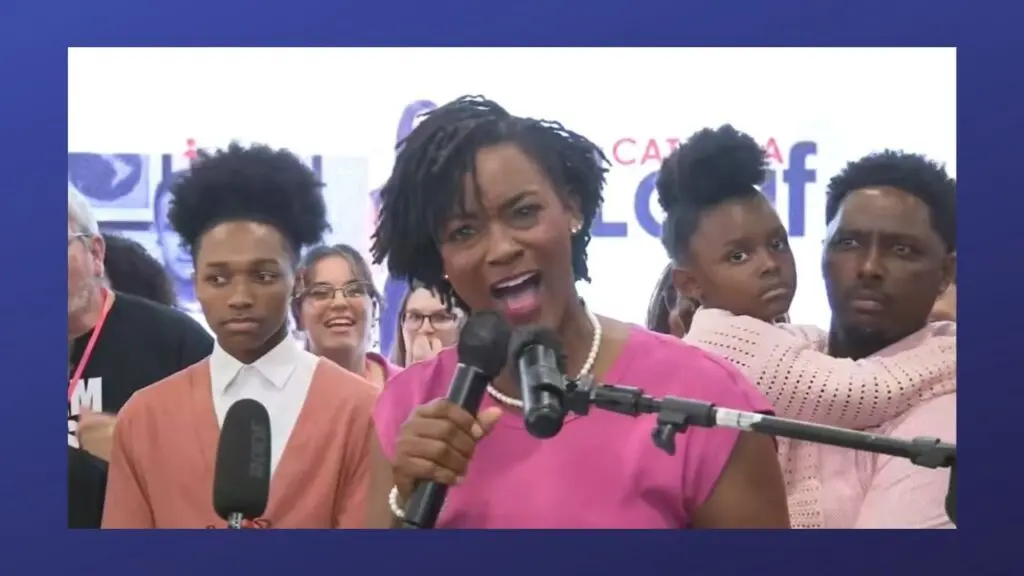
The political landscape of the Sunshine State is undergoing a fascinating, high-stakes transformation following one of the most unexpected primary upsets in recent memory. Democratic candidate Angie Nixon—a self-avowed progressive activist, labor organizer, and card-carrying member of the Democratic Socialists of America (DSA)—has secured the Democratic nomination for the United States Senate in Florida. Nixon’s stunning primary victory over Alex Vindman, a heavily funded establishment favorite backed by deep-pocketed national donors, has sent shockwaves through both political parties.
While primary elections traditionally prompt successful candidates to pivot toward the political center in anticipation of a general election, Nixon’s campaign has made it abundantly clear that moderation is not on the agenda. Rather than softening her rhetoric or shelving her progressive platform to appeal to moderate suburban voters, Nixon is doubling down on a platform rooted in democratic socialism, expansive social welfare programs, aggressive labor activism, and systemic governmental reform.
Standing in her path to Capitol Hill is the formidable Republican incumbent, Senator Ashley Moody. A seasoned conservative prosecutor and statewide official, Moody represents the institutional strength of the Florida GOP and has long positioned herself as a champion of law and order, fiscal conservatism, and traditional values. The November matchup between Nixon and Moody represents far more than a typical partisan contest; it is an ideological referendum on the future of Florida. It pits a populist, unapologetically far-left democratic socialist against a mainstream conservative Republican in a state long considered a red-leaning battleground.
As progressive political action committees rally around Nixon’s historic bid, national observers are watching closely to see whether a grassroots campaign fueled by the working-class left can mobilize enough support to pierce the armor of the Florida Republican machine.
Detailed Chronology: From Grassroots Activism to Primary Shockwave
The trajectory of Angie Nixon’s Senate campaign is a study in modern political disruption. Long before she set her sights on the U.S. Senate, Nixon established herself as a firebrand progressive voice within Florida’s political ecosystem. Her affiliation with radical and progressive labor organizations—including the Democratic Socialists of America (DSA), the Working Families Party, and the Service Employees International Union (SEIU)—defined her political identity well before her statewide ambitions materialized.
The Upset Against Alex Vindman
The defining moment of the 2026 primary cycle occurred when Nixon went head-to-head against Alex Vindman. Backed by substantial financial resources and the endorsement apparatus of the traditional Democratic establishment, Vindman was widely expected to cruise to the nomination. Political pundits and prognosticators frequently cited his campaign war chest and national profile as insurmountable advantages in a sprawling statewide primary.
However, Nixon’s campaign tapped into a deep vein of grassroots discontent among progressive activists, labor union members, and disaffected voters who felt ignored by centrist party leadership. By focusing on grassroots mobilization, door-to-door organizing, and uncompromised progressive messaging, Nixon pulled off a major upset victory.
In the wake of the primary defeat, Vindman announced he would channel his remaining multi-million-dollar campaign funds directly into other down-ballot and general election efforts for the Florida Democratic Party. Yet, the departure of the establishment frontrunner left the party apparatus grappling with a nominee whose policy positions sit far to the left of historical statewide norms in Florida.
The Pivot to the General Election
Conventionally, political scientists expect nominees who win competitive primaries through the backing of the party’s base to moderate their tone in the general election to capture crucial independent and undecided voters. Nixon, however, has defied this playbook. Rather than watering down her policy proposals, she has leaned heavily into her ideological roots, signaling that she intends to run an unvarnished progressive campaign against Senator Ashley Moody.

This uncompromising stance has galvanized far-left organizations nationwide, turning Florida into an unexpected focal point for progressive investment and experimentation.
Supporting Context & Metrics: The Platform and the Players
To fully understand the magnitude of the Nixon-Moody matchup, one must examine the specific policy pillars driving Nixon’s campaign, the mechanics of her primary victory, and the strategic positioning of both candidates.
The Progressive Policy Agenda
Nixon’s platform reads as a blueprint for democratic socialism and systemic economic restructuring. Unlike mainstream Democrats who typically advocate for incremental reforms, Nixon’s campaign centers on structural transformations of American society. Key components of her platform include:
- Immigration Reform: Nixon has championed a policy agenda that includes advocating for sweeping amnesty for undocumented immigrants currently residing in the United States. Furthermore, she has called for the complete abolition of U.S. Immigration and Customs Enforcement (ICE) and the immediate cessation of mass deportations.
- Economic & Labor Justice: Deeply tied to labor organizations like the SEIU and the Working Families Party, Nixon’s economic platform centers on strengthening labor rights, expanding union protections, and shifting government priorities away from corporate interests. Her campaign has consistently framed the election as a battle between working-class communities and wealthy billionaires.
- Social Welfare & Healthcare: Aligning with the national progressive wing, Nixon’s platform demands the implementation of a single-payer "Medicare for All" healthcare system. Additionally, she advocates for tuition-free public colleges, universities, and trade schools to eliminate student debt and expand educational access.
- Housing & Public Spending: Her platform calls for massive federal and state investments in affordable housing initiatives, arguing that housing is a fundamental human right that requires direct government intervention to guarantee.
- Civil Rights & Social Justice: Nixon has been an active, vocal supporter of the Black Lives Matter movement and has consistently integrated racial justice frameworks into her legislative and campaign agendas.
The Republican Counter-Offensive: Senator Ashley Moody
On the opposing side, Senator Ashley Moody enters the general election with significant advantages in institutional support, name recognition, and financial backing. As a former judge and Florida Attorney General, Moody has built a career centered on conservative judicial philosophies, robust border security enforcement, law enforcement support, and fiscal conservatism.
Republicans view Nixon’s nomination as an extraordinary gift. GOP strategists and conservative commentators have wasted no time weaponizing Nixon’s socialist affiliations and radical policy positions, seeking to paint the entire Democratic ticket with the broad brush of democratic socialism. For Moody, the campaign strategy relies heavily on contrasting her record of public safety and economic stewardship with Nixon’s far-left policy prescriptions.
Official Statements and Political Commentary
The political fallout from Nixon’s primary victory has elicited strong reactions from political action committees, financial commentators, and party insiders across the country.
Progressive Celebration and Mobilization
National progressive organizations have seized upon Nixon’s victory as a watershed moment for the left in the American South. The far-left progressive political action committee March On PAC issued an enthusiastic statement highlighting the core tenets of Nixon’s campaign:
"Nixon built a statewide campaign around working people, economic justice, immigrant rights, affordable housing, healthcare, labor rights, public education, and a fundamental belief that government should serve communities and not billionaires and corporations."
For groups like March On PAC, Nixon represents a new archetype of Southern progressive politics—one that rejects cautious triangulation in favor of bold, systemic change.

Skepticism from Financial and Political Analysts
Conversely, mainstream analysts and conservative commentators view Nixon’s candidacy as a high-risk gamble that could alienate the broad coalition of voters required to win a statewide election in Florida. Tom Gaitens, a prominent Florida talk radio financial commentator, offered a candid assessment of Nixon’s sudden rise within the state’s political ecosystem:
"She is literally the flavor of the month for all of the progressive groups who think they can turn Florida blue this November."
Gaitens’ sentiment captures the skepticism shared by many political observers who question whether a candidate aligned with the Democratic Socialists of America can successfully appeal to Florida’s critical voting blocs, including retirees, suburban homeowners, and independent voters wary of radical economic policies.
The Democratic Party Dilemma
Despite the private reservations of moderate party strategists, the primary results speak for themselves. A majority of participating Florida Democrats cast their ballots for Nixon, signaling that the party’s base was hungry for an authentic, uncompromised progressive alternative to establishment politics. Party leadership now faces the complex task of uniting a fractured primary electorate behind a nominee whose ideology sits far outside the historical comfort zone of Florida’s electorate.
Future Outlook: The Path to November
As the general election cycle accelerates, the contest between Angie Nixon and Senator Ashley Moody is poised to become one of the most closely watched and ideologically polarized Senate races in the country.
Strategic Imperatives for Angie Nixon
For Nixon, the path forward requires expanding her coalition far beyond the traditional progressive base. To pull off another historic upset in November, her campaign must:
- Maintain Grassroots Energy: Sustain the volunteer enthusiasm and door-to-door mobilization that propelled her past Alex Vindman in the primary.
- Persuade Working-Class Voters: Frame her progressive economic policies—such as affordable housing and labor rights—as practical solutions for working-class Floridians struggling with the state’s rising cost of living.
- Navigate the State’s Ideological Terrain: Address concerns from moderate and independent voters regarding polarizing positions on immigration, policing, and government spending without compromising the authenticity that won her the nomination.
Strategic Imperatives for Senator Ashley Moody
For Senator Moody, the playbook centers on definition and mobilization. Her campaign is expected to:
- Define the Opponent Early: Use Nixon’s explicit ties to the Democratic Socialists of America and radical policy positions (such as abolishing ICE and implementing Medicare for All) to define her as outside the mainstream of Florida values.
- Highlight Accomplishments: Emphasize her extensive record as a prosecutor, Attorney General, and sitting U.S. Senator who has prioritized public safety, economic growth, and fiscal restraint.
- Consolidate the Right: Secure high voter turnout among traditional Republican strongholds and conservative independents to neutralize any enthusiasm advantage held by progressive volunteers.
Conclusion
The collision between Angie Nixon and Ashley Moody in the Florida U.S. Senate race transcends a routine political contest. It serves as a laboratory for the broader national debate over the future of the Democratic Party: whether a bold, unapologetic progressive platform can conquer a historically competitive state dominated by a disciplined Republican machine.
As voters head to the polls this November, the outcome will not only determine who represents Florida in Washington, but it will also send a definitive signal regarding the political appetite of the American electorate in an era of deep ideological division.

0 Comments