Miniature golf—colloquially known as putt-putt, miniature golf, or short-course golf—occupies a unique intersection in the landscape of American leisure. It bridges the gap between structured athletic recreation and whimsical, family-friendly entertainment. Nowhere is this dynamic more vividly expressed than in the Sunshine State. Florida’s tourism ecosystem is globally renowned for its multi-billion-dollar theme parks, pristine coastlines, and sprawling championship golf links. Yet, nestled between these mega-attractions and quiet coastal highways lies a rich, culturally significant sub-culture of miniature golf courses.
From mid-century roadside marvels dating back to the late 1950s to state-of-the-art cinematic landscapes designed by major entertainment conglomerates, Florida’s mini-golf offerings represent a cross-section of architectural nostalgia, creative engineering, and community bonding. This comprehensive journalistic investigation maps the premier miniature golf destinations across Florida. It explores their historical origins, operational metrics, and cultural relevance to local communities and millions of annual visitors.
Detailed Chronology: The Evolution of Florida Putt-Putt
To understand Florida’s fascination with miniature golf, one must examine the chronological development of the industry within the state. The medium evolved from crude, improvised putting surfaces into elaborate, immersive themed environments that mirror the broader shifts in American roadside architecture and consumer culture.
The Golden Era of Mid-Century Nostalgia (1950s)
The late 1950s marked a watershed moment for leisure travel in the United States, catalyzed by the post-World War II economic boom and the proliferation of the Interstate Highway System. Florida became a primary destination for middle-class families seeking sun, sand, and novelty.
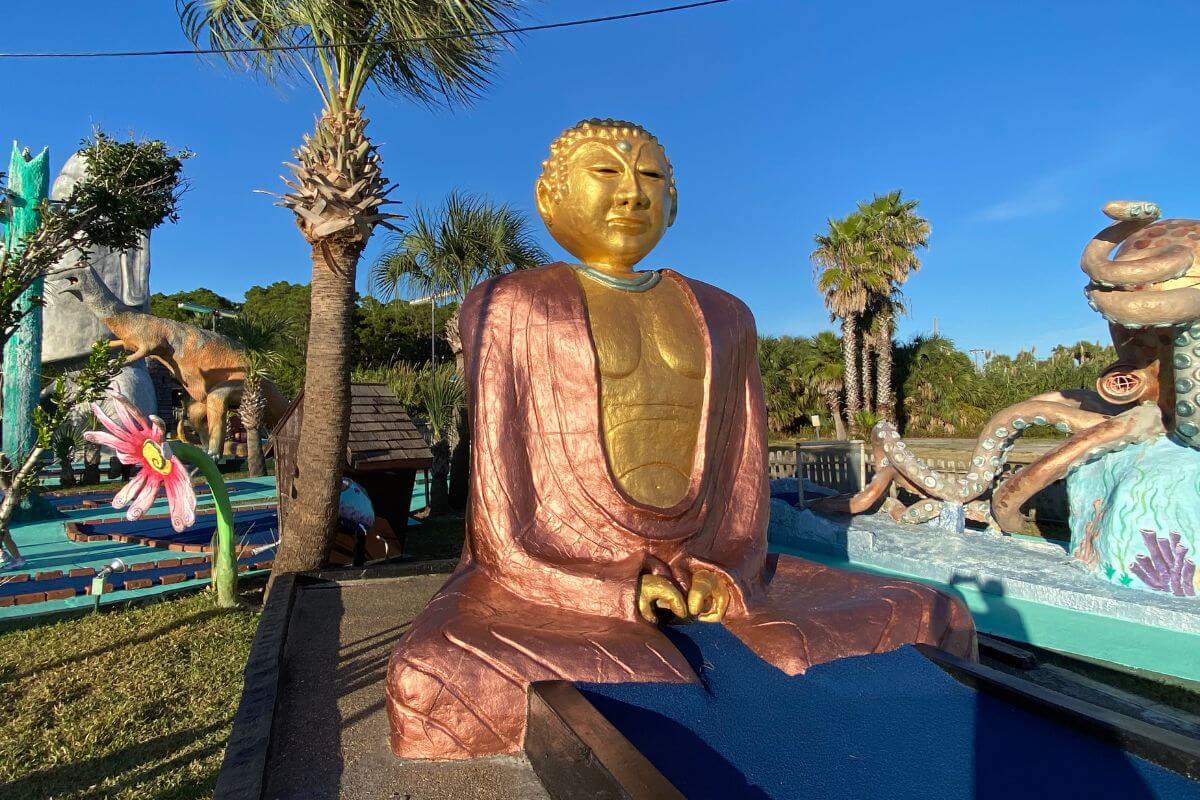
1958: The opening of the Goofy Golf facility in Fort Walton Beach established a permanent footprint for mid-century recreational design in the Florida Panhandle. Featuring oversized fiberglass sculptures and open, accessible layouts, it set the standard for roadside attractions of the era.
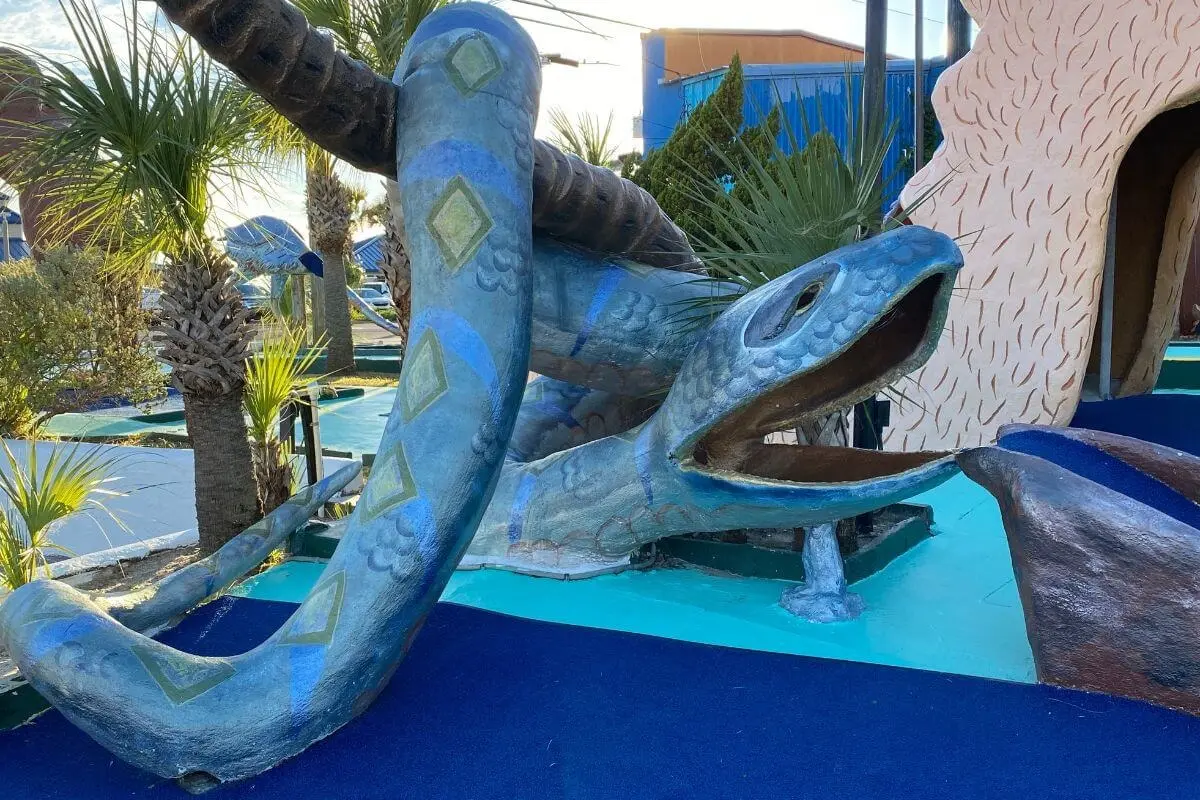
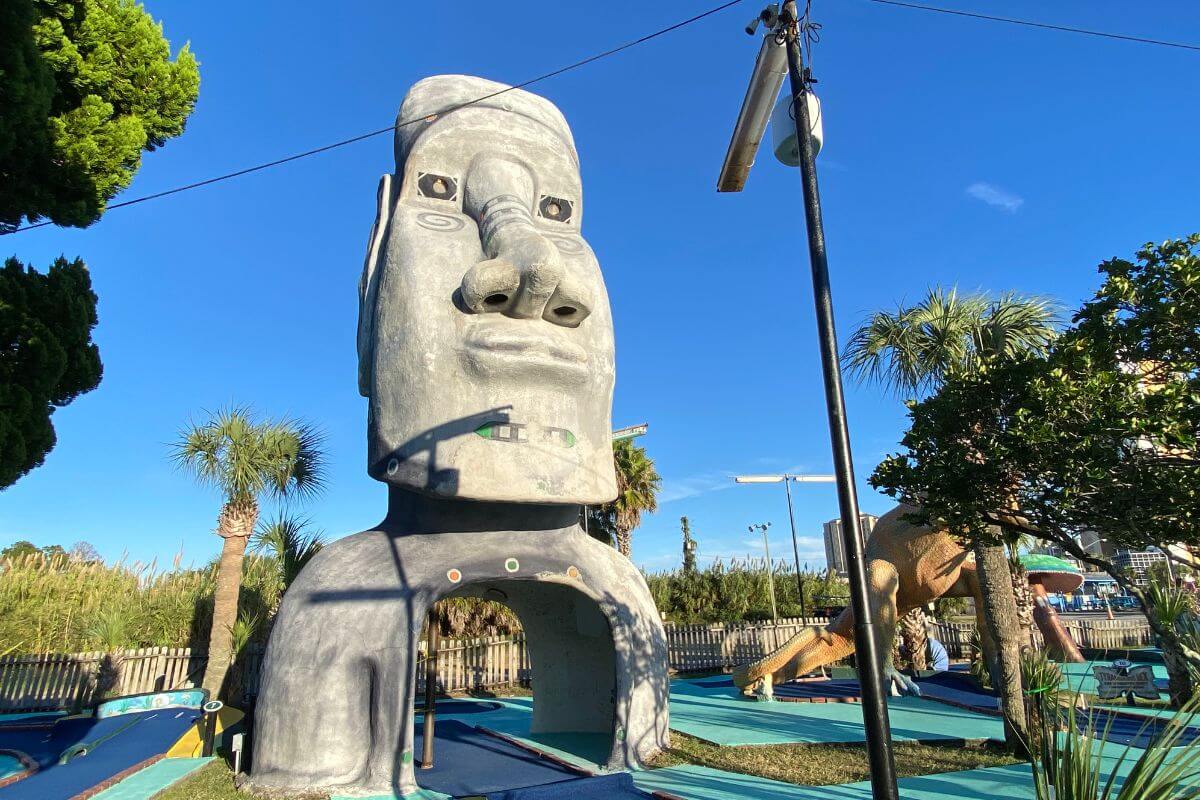
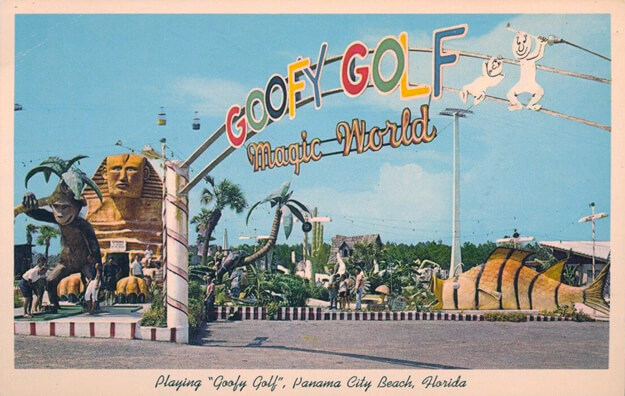
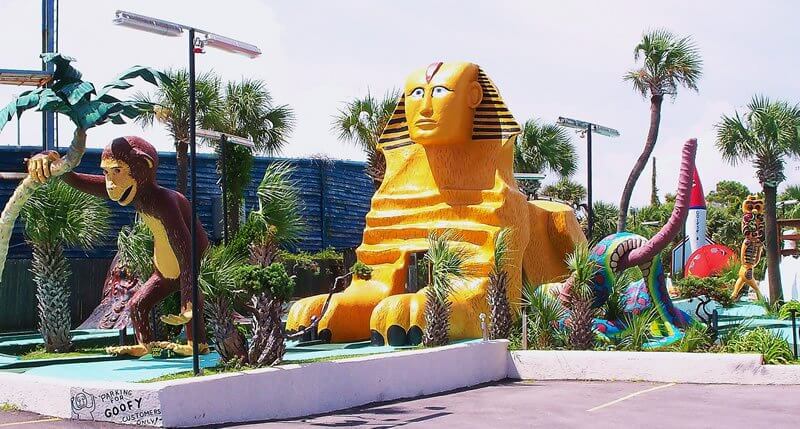
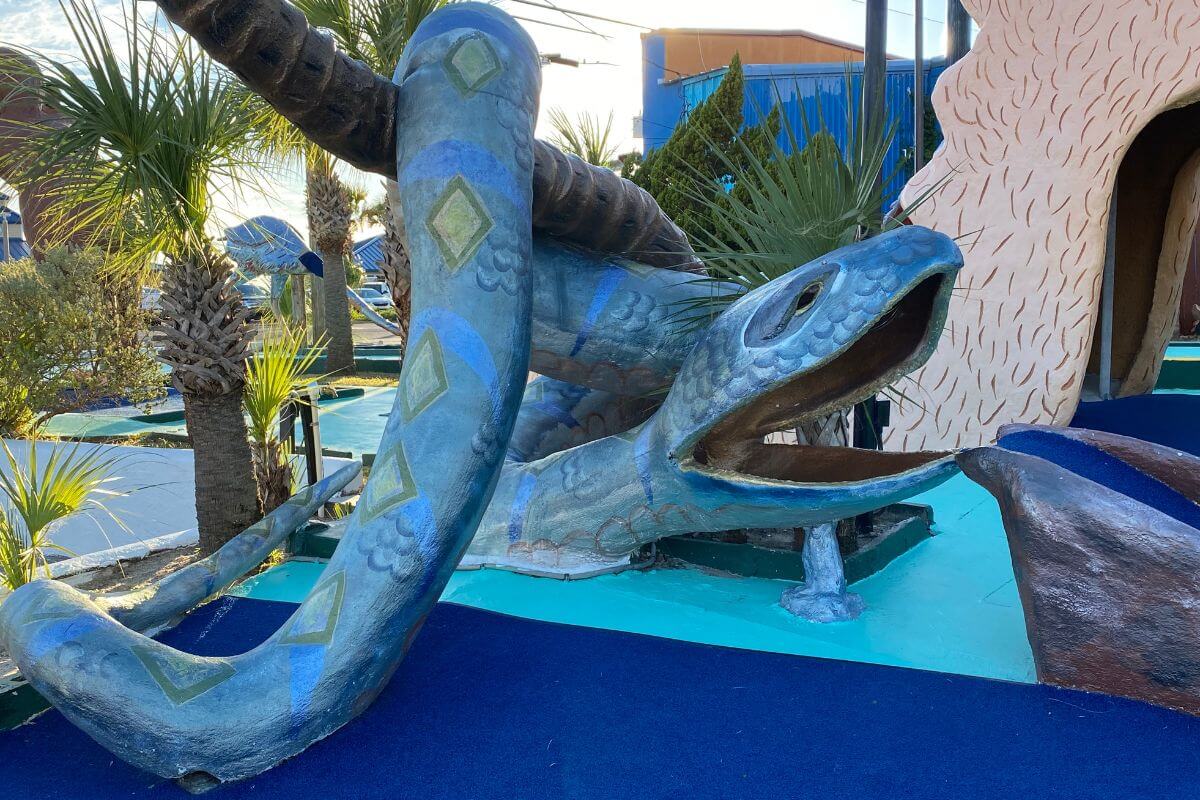
1959: The iconic Goofy Golf in Panama City Beach opened its gates to the public. Operating continuously for over six decades, this family-owned establishment cemented the archetype of "mini golf with a bonus play-land," featuring monumental structures that patrons could physically climb through or interact with.
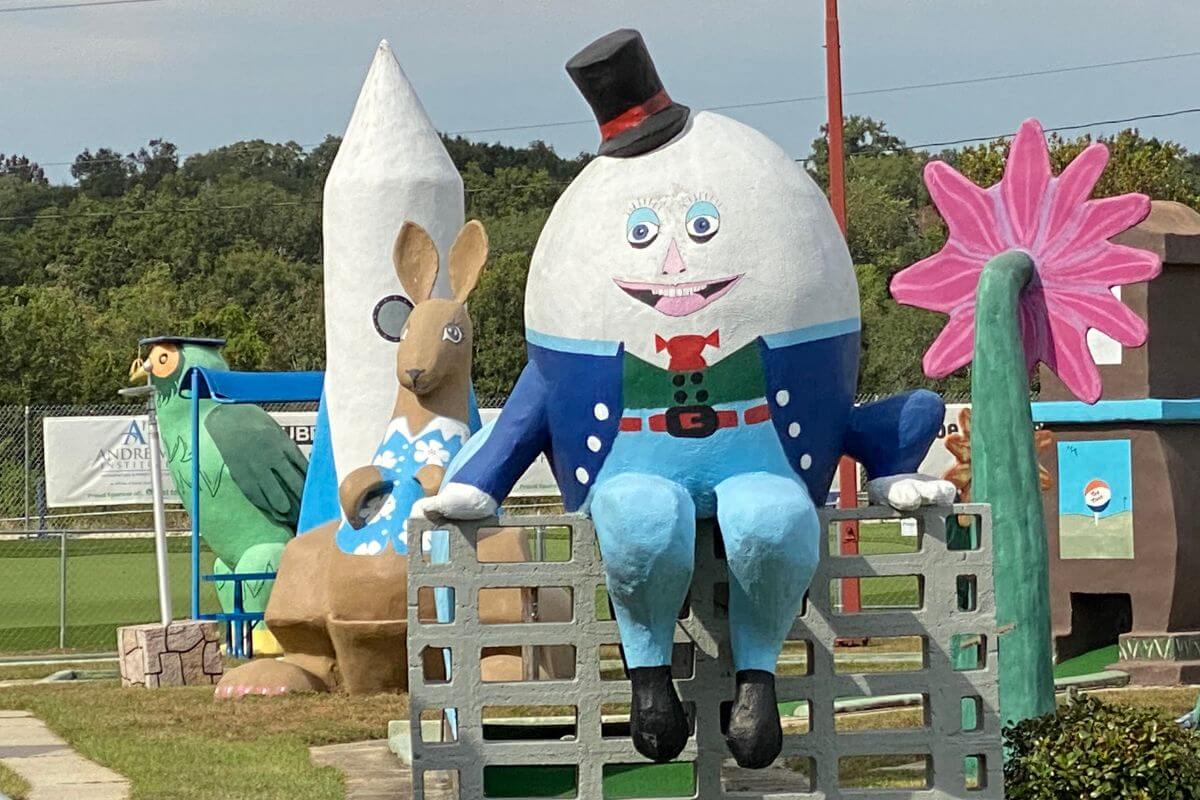
1958: The historic Goofy Golf facility in Pensacola (now operating under the First Tee Gulf Coast umbrella) opened, bringing whimsical, oversized characters—ranging from dinosaurs and brown bears to nursery rhyme figures like Humpty Dumpty—to the western edge of the Panhandle.
The Immersive Theme Park Expansion (1980s–1990s)
As Central Florida transformed into the theme park capital of the world, standalone attractions and major entertainment corporations elevated miniature golf from simple backyard-style setups to theatrical, high-production-value experiences.
1980s: Destinations like Bonanza Golf & Gifts in Kissimmee opened their doors, capitalizing on the booming tourism market surrounding Walt Disney World by introducing expansive, narrative-driven environments (such as Wild West mining towns and rugged canyons).
1994–1999: Walt Disney World Resort entered the miniature golf arena in earnest, opening Fantasia Gardens and Fairways (1996) and Winter Summerland (1999). These developments proved that high-concept architectural design and meticulous landscaping could coexist with traditional putting mechanics.
2011: Universal Orlando Resort launched Hollywood Drive-In Golf at Universal CityWalk, introducing fully interactive, cinematic 18-hole courses themed around 1950s sci-fi and classic horror films, complete with state-of-the-art lighting and sound design.
Supporting Context & Metrics: Regional Breakdowns and Operational Data
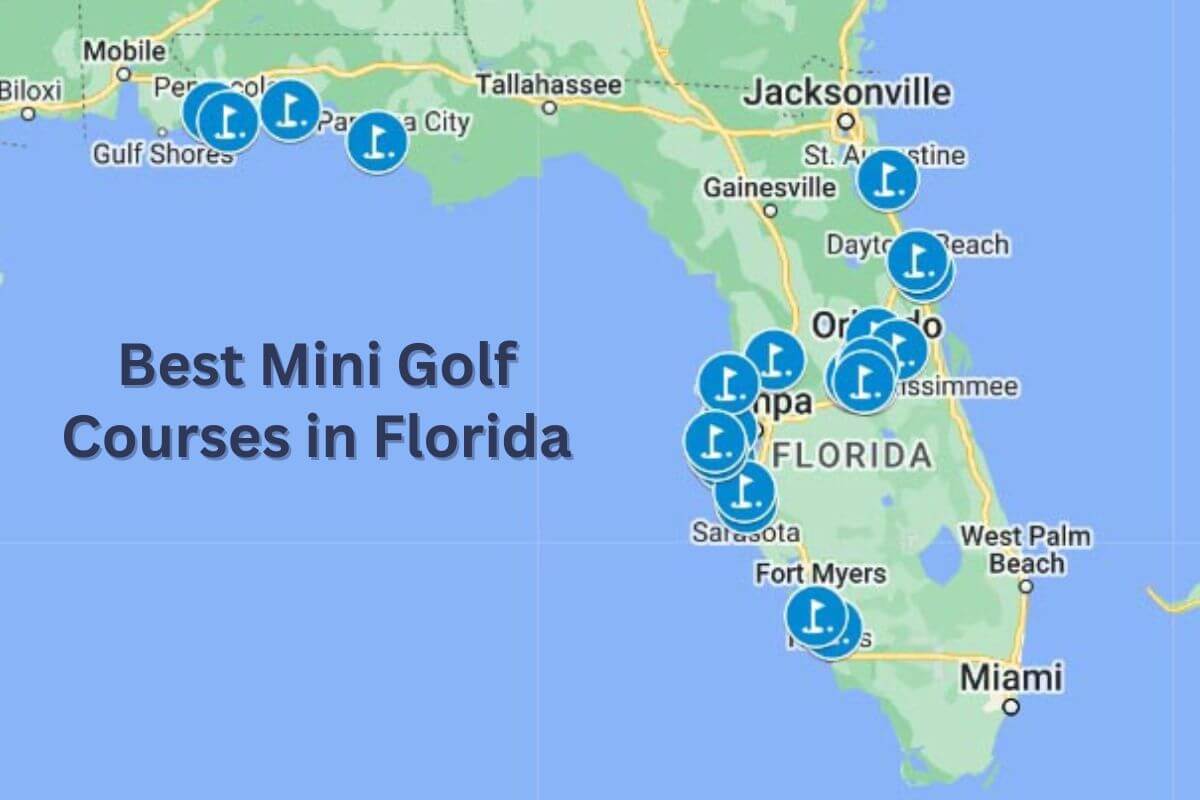
Navigating Florida’s vast geography requires strategic planning. The state’s miniature golf destinations are organized below by region, complete with operational insights, architectural highlights, and structural details.
The Florida Panhandle & Northwest Florida
1. Goofy Golf – Panama City Beach
Established: 1959
Layout: Two distinct 18-hole courses featuring giant playable statues.
Pricing: $12.00 per 18-hole round.
Hours: Daily, 10:00 AM – 10:00 PM.
Address: 12206 Front Beach Rd, Panama City Beach, FL 32407.
2. Goofy Golf – Fort Walton Beach
Established: 1958 (The oldest surviving Goofy Golf location).
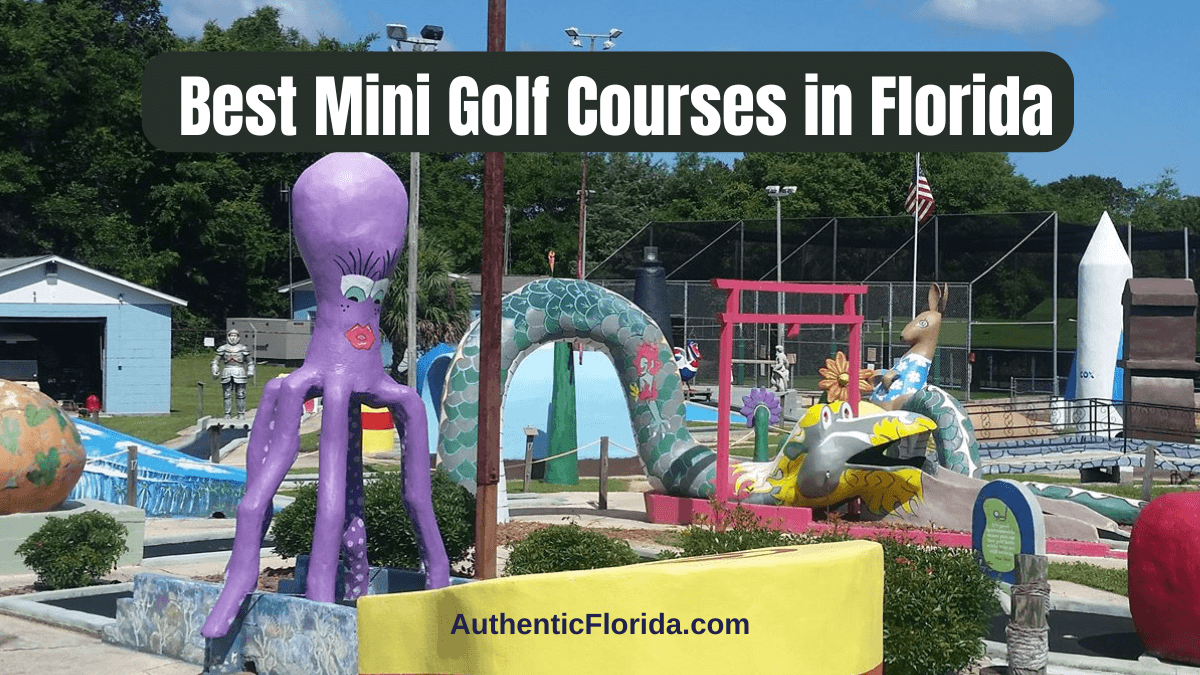
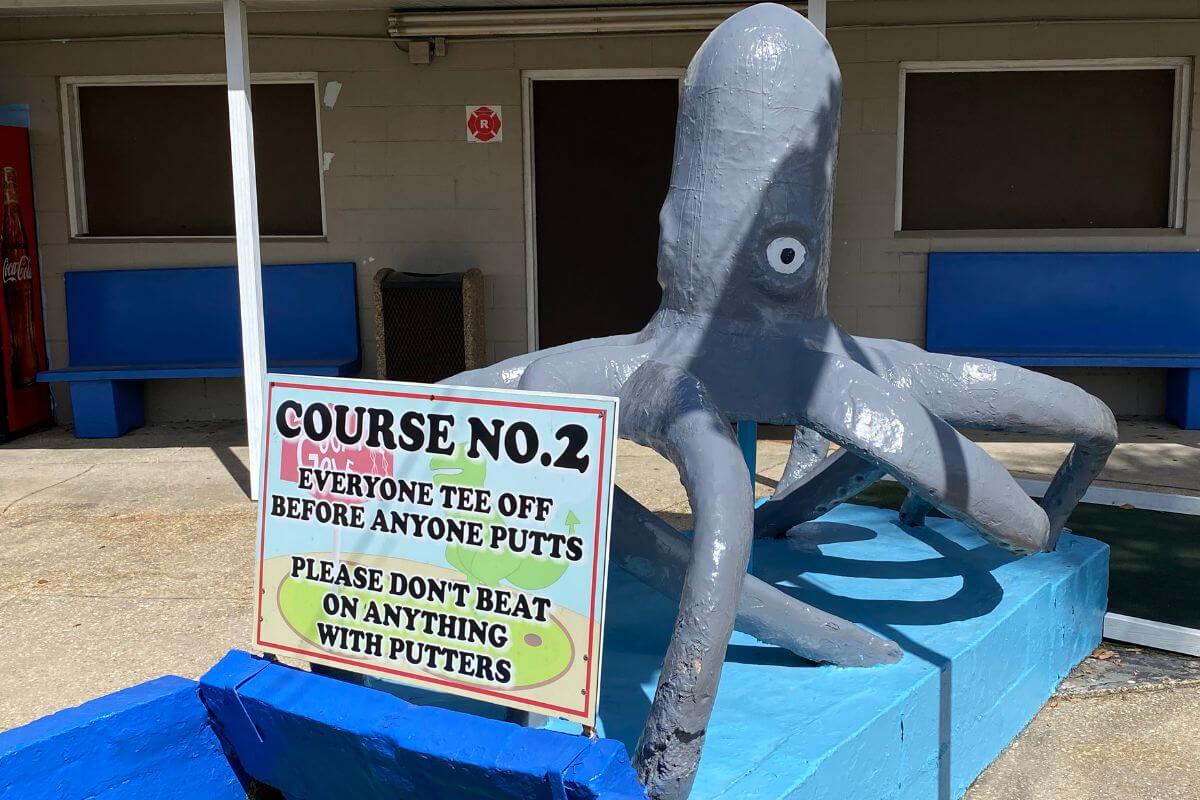
Layout: Classic mid-century retro course featuring iconic figures like the giant octopus.
Layout: Cosmic-themed 18-hole course with diverse terrain, variable difficulty, and misting fans for summer climate control.
Pricing: $13.00 per person.
Hours: Daily, 9:00 AM – 9:00 PM.
Address: 2 Via De Luna Dr, Pensacola Beach, FL 32561.
Central Florida & The Theme Park Corridor
5. Boyett’s Citrus Attraction Mini Golf – Brooksville
Context: Originating as a 1960s roadside fruit stand on Florida’s Adventure Coast, this location has expanded into a multi-faceted compound featuring a wildlife park, dinosaur cave, aviary, aquarium, and ice cream parlor.
Layout: 18-hole indoor-outdoor hybrid course.
Pricing: $11.99 admission.
Hours: Daily, 10:00 AM – 5:00 PM.
Address: 4355 Spring Lake Hwy, Brooksville, FL 34601.
6. Bonanza Golf & Gifts – Kissimmee
Established: 1980s
Layout: Wild West-themed complex featuring two 18-hole courses ("Prospector" and "Gold Nugget") winding through simulated mines, cliffs, and cascading water features.
Pricing: $13.95 per single-feature 18-hole round.
Hours: Daily, 9:00 AM – 11:00 PM.
Address: 7761 W Irlo Bronson Memorial Hwy, Kissimmee, FL 34747.
7. Walt Disney World Resort: Fantasia Gardens & Fairways – Orlando
Layout: Two distinct 18-hole experiences themed after Disney’s Fantasia. Fantasia Gardens is a whimsical, family-friendly course featuring interactive musical elements and character sculptures. Fairways is a miniature traditional golf course complete with sand traps, bunkers, water hazards, and long, sloping greens designed for purists.
Pricing: Adults: $19; Children (Ages 3–9): $12 (plus tax).
8. Walt Disney World Resort: Winter Summerland Miniature Golf – Orlando
Layout: Located near Blizzard Beach Water Park, this facility offers two Santa-themed 18-hole courses: one styled around a winter wonderland and the other celebrating a tropical Florida summer.
Pricing: Standard Disney mini-golf rates apply.
Address: Walt Disney World Resort, FL 32830.
9. Hollywood Drive-In Golf – Universal CityWalk, Orlando
Layout: Two interactive 18-hole courses: Invaders from Planet Putt (1950s sci-fi theme with aliens and UFOs) and The Haunting of Ghostly Greens (classic horror film theme). Enhanced with specialized theatrical lighting for night play.
Layout: Atlantic-adjacent and coastal pirate-themed courses featuring caves, streams, and multi-tier gameplay with optional smartphone-based digital scoring.
Pricing: Standard rates average $15.50 (Adult) and $11.50 (Child), with 36-hole and unlimited play packages available.
Hours: Daily, 10:00 AM – 10:00 PM.
Addresses: 226 Cardinal Dr, Ormond Beach, FL 32176 / 3420 South Atlantic Ave, Daytona Beach Shores, FL 32118.
Locations: Fort Myers, Madeira Beach, Indian Shores, Sarasota, and Bradenton.
Layout: 18-hole adventure-style courses complemented by an Educational American Alligator Exhibit housing 20 to 30 live specimens, offering interactive feeding opportunities.
Pricing & Hours: Variable by location; consult official municipal listings.
Official Statements & Industry Perspectives
Industry analysts and preservationists frequently emphasize the cultural and economic importance of maintaining both retro and modern miniature golf installations.
Dr. Aris Thorne, a cultural historian specializing in American roadside leisure, notes:
"Miniature golf is a physical manifestation of mid-century optimism and escapism. When patrons navigate a 1950s Goofy Golf course in the Florida Panhandle or a high-concept cinematic course in Orlando, they are engaging in a shared American ritual. These spaces preserve vernacular architecture and tactile play in an increasingly digital world."
Furthermore, operators of historic family-owned venues underscore the community-centric nature of their businesses. Facility directors at historic venues like the Pensacola Goofy Golf (First Tee Gulf Coast) emphasize that affordable pricing tiers ensure these recreational outlets remain accessible to local families, bridging generational divides through low-barrier athletic entertainment.
Future Outlook: Preservation, Innovation, and Sustainability
As Florida continues to experience rapid population growth and commercial real estate development, the future of its miniature golf infrastructure hinges on a delicate balance between historical preservation and environmental modernization.
Preservation of Mid-Century Architecture: Historic preservation groups are increasingly recognizing mid-century roadside attractions—such as the surviving Goofy Golf locations and remnants of closed icons like Tiki Gardens—as cultural landmarks worthy of documentation and protection against urban sprawl.
Technological Integration: Modern facilities are integrating digital scorekeeping apps, augmented reality (AR) elements, and energy-efficient LED lighting systems to reduce operational footprints while enhancing visitor engagement.
Eco-Friendly Landscaping: Newer installations across Southwest and Central Florida are prioritizing native flora, sustainable water-recirculation systems for cascading waterfalls, and eco-friendly artificial turf solutions to withstand Florida’s intense subtropical climate while minimizing environmental impact.
Ultimately, whether seeking the nostalgic kitsch of a 1958 Panhandle landmark, the competitive rigor of an EPCOT fairway, or the high-stakes thrills of a pirate-infested adventure course on International Drive, Florida’s miniature golf ecosystem remains an enduring, vibrant cornerstone of the Sunshine State’s leisure economy.



0 Comments