

Executive Overview
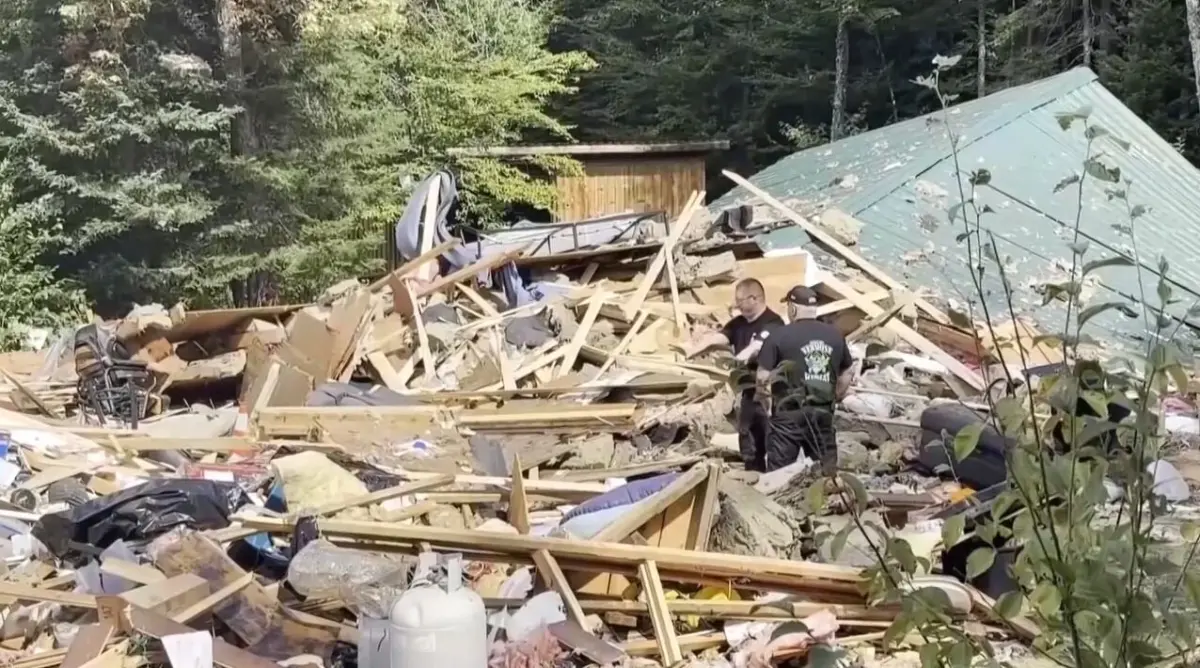
GRANVILLE, Vt. — What was meant to be a joyous family milestone turned into an unimaginable catastrophe on a quiet Saturday evening in the heart of rural Vermont. A catastrophic residential explosion—triggered by an accidental propane leak, investigators later confirmed—ripped through a Granville home on the evening of September 5, 2026. The blast claimed the lives of a mother and her adult son, left three others seriously injured, and sent shockwaves through a tight-knit mountain community unaccustomed to such profound devastation.
According to the Vermont State Police (VSP), the explosion occurred at approximately 7:45 p.m. local time during an active birthday celebration being hosted at the residence. The blast instantly shattered the evening calm of the small town, leaving debris scattered across the property, shaking neighboring homes, and drawing a massive, multi-agency emergency response.
Authorities formally identified the deceased victims as 46-year-old Sarah O’Sullivan and her 20-year-old son, Liam O’Sullivan. Liam O’Sullivan was pronounced dead at the scene by first responders, while his mother succumbed to her catastrophic injuries shortly after being rushed to a regional medical facility.
In the wake of the tragedy, investigators from the Vermont State Police, working alongside state and local fire marshals, launched a rigorous inquiry to determine the exact mechanics of the disaster. Following extensive forensic analysis of the scene, authorities announced that the blast was entirely accidental, pinpointing a propane leak linked to a grill being utilized for the birthday gathering.
This comprehensive report examines the sequence of events leading up to the explosion, the immediate community and emergency response, official statements from regulatory and law enforcement bodies, and the broader implications regarding propane safety in residential settings.
Detailed Chronology: From Celebration to Catastrophe
The Setting: A Quiet Saturday Evening Interrupted
Granville, a sparsely populated town nestled along the White River in Addison County, Vermont, is known for its rugged topography, heavily forested landscapes, and a strong sense of community where neighbors look out for one another. On Saturday, September 6, residents were enjoying the late-summer weather.
At the O’Sullivan residence, family and friends had gathered to celebrate a birthday. By all accounts, the evening began as a festive occasion, featuring food, conversation, and the customary trappings of a family gathering, including the use of an outdoor grill. However, beneath the surface, an invisible and highly volatile hazard was quietly developing.
7:45 PM: The Blast
At precisely 7:45 p.m., the celebration was instantaneously cut short. A massive accumulation of leaked propane gas—which had likely migrated into an enclosed space or reached an ignition source—detonated with devastating force.
The resulting shockwave obliterated portions of the home, instantly altering the landscape of the property. The sound of the explosion was not a muffled pop, but a concussive roar that carried across the valley, reverberating through the surrounding hills and instantly alerting residents miles away that something catastrophic had occurred.
Immediate Aftermath and First Responder Arrival
Emergency dispatch centers in Addison County were immediately inundated with 911 calls from terrified neighbors reporting a deafening blast, billowing smoke, and structural collapse. Within minutes, units from the Granville Volunteer Fire Department, mutual aid fire companies from neighboring towns, Vermont State Police troopers, and emergency medical services (EMS) converged on the scene.
First responders confronted a chaotic and dangerous environment. Part of the primary structure was compromised, and fire suppression teams had to quickly secure the area to mitigate the risk of secondary explosions or lingering gas pockets.
Emergency personnel located Liam O’Sullivan inside the blast zone, where he was pronounced dead at the scene. Sarah O’Sullivan was found suffering from critical, life-threatening trauma. Paramedics immediately initiated advanced life support protocols and transported her via emergency ambulance to a nearby hospital. Despite the aggressive efforts of medical personnel, she later passed away from her injuries.
The Injured and Hospitalized
In addition to the two fatalities, three other adults sustained severe injuries in the explosion. Among them was 69-year-old Sheila Hammond, who suffered critical, life-altering trauma. Due to the specialized nature of her injuries, Hammond was subsequently transferred to an out-of-state burn and trauma center, where she remained hospitalized under intensive medical care days after the incident. The identities and current conditions of the remaining two injured adults have not been fully disclosed by authorities out of respect for family privacy, though VSP has confirmed they are receiving ongoing medical treatment.
Supporting Context & Metrics: The Neighbors’ Perspective and Environmental Impact
The Sound That Shook the Valley
The sheer kinetic force of the Granville explosion left an indelible psychological mark on nearby residents. Brenda Buker and her husband live down the hill from the ill-fated residence. At the time of the blast, they were hosting friends for a quiet Saturday evening dinner.
"We heard a loud boom and stopped mid-sentence, didn’t know what had happened," Buker recounted in an interview following the incident. "It was really loud. It shook the house. My husband was in the kitchen, and things fell off the walls. He came out and said, ‘What was that?’"
Adding to the initial confusion, Buker noted that earlier in the evening, she had heard holiday-style fireworks being discharged in the general vicinity. In the immediate aftermath of the shockwave, her mind naturally gravitated toward pyrotechnics rather than structural catastrophe.
"We really thought it was related to the fireworks, had no idea that it had been a house explosion. We didn’t find that out until the morning, unfortunately," Buker explained.
Sensory Remnants and Property Damage
While Buker’s specific property managed to escape structural damage, the physical footprint of the blast was undeniable. Other residents closer to the epicenter reported shattered windowpanes, cracked drywall, and displaced siding.
"It was of an impact that you knew something had — that it was a really serious explosion," Buker stated, describing the sensory aftermath. "And I could smell something in the air as well about five minutes after it happened."
That distinct chemical scent—a heavy, lingering odor—was the hallmark of liquefied petroleum gas (LPG) dissipating into the mountain air, an olfactory reminder of the volatile forces present in everyday modern living.
Official Statements and Investigation Findings
The Investigation Process
The investigation into the Granville explosion was spearheaded by the Vermont State Police Fire and Explosion Investigation Unit, working in tandem with the Department of Public Safety’s Division of Fire Safety and local emergency management officials.
Determining the origin and cause of a structural explosion requires meticulous forensic engineering. Investigators sift through pulverized debris, map blast vectors, analyze burn patterns, and examine gas lines, valves, and appliances to isolate the exact point of failure.
The Root Cause: Propane and Grilling
Following days of meticulous excavation and technical analysis at the scene, state officials released their definitive findings regarding the incident’s mechanics.
According to VSP investigators, the explosion was classified as accidental. The root cause was traced to a propane leak within the residential system, which investigators determined was likely connected to the operation of a grill being used for the birthday celebration.
Propane (C3H8) is a heavily relied-upon energy source in rural New England, where natural gas utility lines do not reach many mountain communities. While generally safe when utilized according to strict safety guidelines, propane is heavier than air. When a leak occurs, the gas does not easily dissipate upward; instead, it can pool at ground level or inside enclosed crawlspaces and rooms. When this invisible vapor encounters an ignition source—such as a pilot light, an electrical spark, or an open flame—the results can be catastrophic, as demonstrated in Granville.
Future Outlook: Safety Awareness and Community Healing
The Ripple Effect on Rural Communities
As the shock of the tragedy begins to settle, the town of Granville faces a long and painful healing process. The loss of a mother and her young adult son—coupled with severe injuries sustained by beloved community members—has cast a heavy pall over Addison County. Local religious leaders, community support networks, and municipal officials have mobilized to offer grief counseling and logistical support to the surviving family members and neighbors affected by the blast.
Propane Safety Campaigns in New England
In the wake of this disaster, safety advocates, fire marshals, and energy providers are renewing calls for heightened vigilance regarding residential propane systems, outdoor grilling equipment, and auxiliary gas appliances.
Fire safety experts emphasize several critical precautions for homeowners utilizing propane:
- Regular Leak Checks: Homeowners should routinely check gas connections, hoses, and tanks using soapy water solutions to detect bubbling, which indicates escaping gas.
- Odor Recognition: Commercial propane is treated with ethyl mercaptan, giving it a distinct, unpleasant smell often compared to rotten eggs. Anyone who detects this odor should immediately evacuate the area and contact emergency services.
- Outdoor Grilling Distances: Gas grills should always be operated in well-ventilated areas, kept a safe distance away from exterior walls, windows, and flammable building materials, and thoroughly inspected for worn lines or damaged regulators after periods of disuse.
- Installation of Gas Detectors: Just as smoke detectors save lives from fire, dedicated propane and explosive gas detectors can provide an early auditory warning system, potentially averting disaster before a volatile concentration can accumulate.
Conclusion
The Granville explosion stands as a stark, heartbreaking reminder of the fragility of life and the hidden hazards present in everyday environments. As the O’Sullivan family, friends, and the broader Vermont community mourn the tragic loss of Sarah and Liam, the legacy of this event will undoubtedly spur renewed educational efforts surrounding propane safety, ensuring that public awareness rises to meet the very real dangers posed by household energy systems.
Copyright © 2026 WCAX via Gray Local Media, Inc. All rights reserved. Enriched news reporting and analysis compiled for archival and informational purposes.

0 Comments