

Executive Overview
On September 9, 2026, the dangerous realities of wildland firefighting claimed another life in the rugged terrain of Oregon’s Mount Hood National Forest. A wildland firefighter, deployed as part of the suppression efforts on the active Austin Fire, sustained critical injuries during frontline operations. Despite the rapid deployment of emergency medical countermeasures and immediate evacuation to a regional trauma center, the firefighter succumbed to their injuries.
The incident has sent shockwaves through the wildland firefighting community and renewed critical discussions regarding the safety, operational oversight, and structural reliance on private contracting firms in federal wildfire management. The deceased was employed by a private contracting company operating under a federal agreement with the United States Forest Service (USFS).
Out of respect for the family’s privacy and in adherence to standard administrative protocols, federal officials have withheld the identity of the fallen firefighter, as well as specific details regarding the exact nature of the fatal injuries. As a multi-agency investigation begins to piece together the sequence of events that led to this tragedy, the incident highlights the compounding hazards faced by wildland crews. These personnel navigate increasingly volatile fire behavior, steep Cascade topography, and a shifting labor model that heavily leverages private-sector contractors to combat the nation’s escalating wildfire crises.
Detailed Chronology
The Outbreak of the Austin Fire
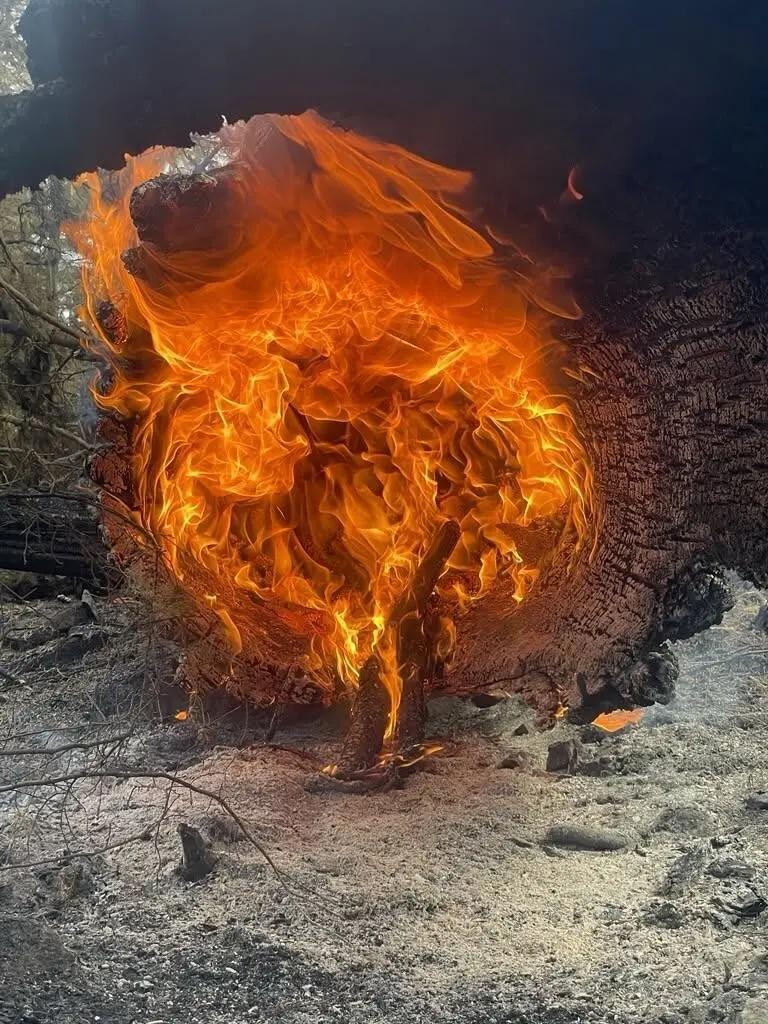
The Austin Fire, burning within the dense canopy and steep, debris-laden slopes of the Mount Hood National Forest, had presented significant challenges to local fire managers since its ignition. Characterized by thick stands of Douglas fir, heavy understory fuels, and complex topography, the fire area required aggressive direct and indirect suppression tactics to prevent it from encroaching on critical infrastructure and nearby wildland-urban interfaces.
September 9, 2026: The Critical Incident
On the morning of Wednesday, September 9, suppression efforts were underway on the active flanks of the Austin Fire. Hand crews and engine crews were tasked with establishing containment lines, clearing hazardous fuels, and mitigating the risk of spot fires across established boundaries.
- Mid-Day Operations: Crews were working in remote sectors of the forest where communication can be hindered by deep ravines and dense forest canopy. The terrain in this portion of the Cascade Range is notorious for unstable footing, rolling rocks, and weakened "snags" (dead standing trees) that pose a constant threat to ground personnel.
- The Accident: During these active suppression efforts, an unforeseen incident occurred, resulting in severe trauma to the firefighter. While federal investigators have not yet disclosed whether the injury resulted from a falling tree, a rolling debris strike, an equipment malfunction, or a sudden change in fire behavior, the incident immediately triggered emergency medical protocols.
- The Emergency Response: Nearby crew members, trained in wilderness first aid and tactical combat casualty care, immediately initiated life-saving measures. A "medical emergency" radio call was broadcast, mobilizing regional air and ground medical assets.
- Evacuation and Transport: Due to the ruggedness of the Mount Hood terrain, extracting injured personnel often requires specialized wilderness rescue techniques, including high-angle rope rescues or helicopter hoist operations. The injured firefighter was successfully stabilized on-site, extracted from the active fireline, and transported via emergency medical services to a regional hospital.
- Pronouncement: Despite the exhaustive efforts of first responders, flight medics, and hospital trauma staff, the firefighter was pronounced dead.
Supporting Context & Metrics
The tragedy on the Austin Fire does not occur in a vacuum; rather, it reflects broader trends and systemic vulnerabilities within the United States’ wildland firefighting infrastructure.
The Role of Private Contractors in Federal Firefighting
Over the past two decades, the United States Forest Service and the Bureau of Land Management (BLM) have increasingly relied on private contractors to supplement federal hand crews, engine crews, and aviation assets.
Federal Wildland Firefighting Force Composition (Approximate)
┌──────────────────────────────────────────────────────────┐
│ [████████████████████████] Federal Crews (USFS/BLM/NPS)  │
├──────────────────────────────────────────────────────────┤
│ [████████████████████] Private Contract Crews (Type 2)   │
└──────────────────────────────────────────────────────────┘
These private entities provide critical surge capacity during peak fire seasons, particularly when national preparedness levels reach PL4 or PL5 (the highest levels of resource mobilization).
- Type 2 Hand Crews: Private contractors frequently supply Type 2 and Type 2 Initial Attack (IA) hand crews. These crews are responsible for grueling manual labor, including constructing firelines with hand tools, conducting burnout operations, and performing extensive mop-up duties.
- Regulatory Oversight: While private crews must meet training and physical fitness standards set by the National Wildfire Coordinating Group (NWCG), they operate under different administrative frameworks, pay scales, and benefit structures than their federal counterparts. This dual-system approach has drawn scrutiny from labor advocates and safety auditors who question whether contract crews receive equivalent long-term support and standardized safety oversight.
Wildland Firefighter Fatality Metrics
According to data compiled by the National Interagency Fire Center (NIFC) and the U.S. Fire Administration, wildland firefighting remains one of the most hazardous occupations in the United States.
| Primary Cause of Fatality | Historical Percentage (Approx.) | Key Contributing Environmental Factors |
|---|---|---|
| Aviation Accidents | 25% | Low-altitude maneuvers, smoky conditions, rugged terrain |
| Vehicle Collisions | 20% | Driver fatigue, poor mountain road conditions, transport of heavy equipment |
| Medical Emergencies | 20% | Heat stroke, sudden cardiac arrest, extreme physical exertion |
| Entrapment / Burnover | 15% | Sudden wind shifts, extreme fire behavior, fuel load anomalies |
| Hazardous Tree Strikes | 15% | "Widowmakers," root-burned snags, wind-thrown timber |
| Other (Falls, Rocks) | 5% | Steep slopes, unstable scree fields, poor visibility |
The Pacific Northwest, with its towering timber and complex mountain weather systems, presents a particularly high concentration of hazard trees (snags). These dead trees can fall without warning, especially when roots are consumed by subterranean fire, earning them the moniker "widowmakers" among seasoned crews.
Official Statements
Following the confirmation of the firefighter’s death, federal agencies and local representatives released statements expressing condolences while emphasizing their commitment to a transparent investigation.
United States Forest Service (USFS)
In a formal press release, the U.S. Forest Service expressed profound sorrow over the loss:
"We are deeply saddened by the loss of a brave wildland firefighter who made the ultimate sacrifice while working to protect our public lands and communities on the Austin Fire. Our thoughts and prayers are with the firefighter’s family, friends, and co-workers during this incredibly difficult time. We are working closely with the private contracting company and local authorities to ensure the family receives the support they need."
The Contracting Agency
Though the name of the private contractor has not been publicly disclosed to protect the identity of the deceased, a spokesperson for the firm issued a brief statement:
"Our hearts are broken by the loss of one of our dedicated crew members. Our focus right now is entirely on supporting the family of our fallen colleague and cooperating fully with federal safety investigators to understand how this tragedy occurred."
Investigative Oversight
Because the incident involved a private employee working under a federal contract on federal land, the investigation will be multi-jurisdictional. Key agencies involved include:
- The Occupational Safety and Health Administration (OSHA): Tasked with determining if workplace safety regulations and contract standards were adhered to.
- The USFS Serious Accident Investigation Team (SAIT): A specialized unit deployed to conduct a comprehensive safety review, identify root causes, and publish a "factual report" and "coordinated response plan" aimed at preventing future occurrences.
Future Outlook
Addressing the Contractor Safety Gap
As the investigation into the Austin Fire fatality progresses, it is likely to reignite legislative debates regarding the welfare and safety of contract wildland firefighters. Advocacy groups, such as the Grassroots Wildland Firefighters, have long argued that contract crews deserve the same federal protections, hazard pay, and comprehensive mental health support as civil service firefighters.
The investigation will scrutinize whether the training, equipment, and supervision provided by the private contractor met federal safety thresholds, and whether the communication protocols between federal incident management teams and private assets were seamless.
Climate Change and the Escalation of Risk
The tragedy also highlights the shifting baseline of wildland firefighting in the Pacific Northwest. Climate-induced drought, rising average temperatures, and historical fuel accumulations have transformed Oregon’s forests into highly volatile ecosystems. Fire seasons are no longer confined to summer months; they start earlier, last longer, and feature more unpredictable fire behavior.
Escalating Wildfire Season Complexity
┌───────────────────────────┐
│ Longer Dry Seasons        │ ──┐
└───────────────────────────┘   │
┌───────────────────────────┐   │ ┌───────────────────────────┐
│ Higher Fuel Load Density  │ ──┼─> Extreme Fire Behavior   │
└───────────────────────────┘   │ └───────────────────────────┘
┌───────────────────────────┐   │
│ Extreme Weather Events    │ ──┘
└───────────────────────────┘
This evolution in fire behavior means that firefighters are exposed to extreme environments for longer periods, compounding physical fatigue and increasing the probability of operational errors or vulnerability to environmental hazards.
The Search for Solutions
To mitigate these compounding risks, the wildland firefighting community is exploring several technological and operational shifts:
- Increased UAS (Drone) Utilization: Using unmanned aerial systems to scout active firelines and identify hazardous snags before ground crews enter an area.
- Real-Time Personnel Tracking: Implementing GPS-enabled transponders on all personnel—including contract crews—to improve situational awareness and expedite search-and-rescue operations.
- Structural Reforms in Contracting: Revising federal procurement policies to incentivize private contractors who maintain high safety standards, low incident rates, and robust employee retention programs.
The loss of a firefighter on the Austin Fire is a somber reminder of the human cost associated with managing wildland fires in an era of unprecedented environmental change. As the Mount Hood National Forest continues to heal from the scars of the Austin Fire, the firefighting community remains resolved to honor their fallen colleague by pursuing a safer, more equitable future for all who stand on the frontlines.

0 Comments