
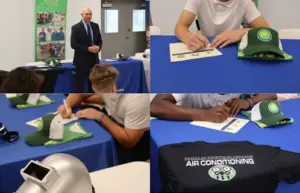

ST. PETERSBURG, Fla. — In a powerful demonstration of institutional collaboration and second chances, the Florida Department of Juvenile Justice (DJJ), in partnership with Pinellas Technical College (PTC) and key community stakeholders, recently hosted a high-profile Signing Day event. The ceremony celebrated students from the Britt Technical Youth Academy who have chosen to embark on a transformative educational journey through the Florida Youth College initiative—a pioneering workforce education and credentialing program formerly known as Project Anchor.
Designed to bridge the gap between residential commitment programs and sustainable, high-wage careers, this initiative empowers justice-involved youth to pursue rigorous post-secondary education and earn industry-recognized credentials. By shifting the paradigm from purely punitive measures to comprehensive rehabilitation and empowerment, the DJJ and PTC are setting a new national standard for how juvenile justice systems can successfully reintegrate youth into society as productive, self-sufficient citizens.
Executive Overview: A Paradigm Shift in Juvenile Rehabilitation
The traditional narrative surrounding the juvenile justice system has historically focused on containment and basic schooling. However, modern educational reform within Florida’s juvenile justice infrastructure prioritizes upward mobility, economic independence, and lifelong skill development. The recent Signing Day event at Pinellas Technical College encapsulates this progressive philosophy.
At its core, the collaboration connects students residing at the Britt Technical Youth Academy—a specialized career and technical education (CTE) residential commitment program—with the extensive academic and vocational resources of Pinellas Technical College. Upon completing their secondary education or meeting specific readiness milestones, these students can enroll in specialized certificate and credentialing tracks.
The stakes are high, but the rewards are transformative. By acquiring high-value workforce credentials, participants bypass many of the socioeconomic barriers that traditionally plague formerly incarcerated individuals. Instead of entering the workforce with limited options, these students step onto direct pathways leading to stable careers in high-demand fields.
Key stakeholders view this partnership not merely as an educational program, but as a critical community investment. By transforming the trajectory of young lives, the DJJ and its educational partners are actively reducing recidivism, strengthening the local labor market, and fostering generational change within families across Pinellas County and the broader state of Florida.
Detailed Chronology: From Concept to Classroom and the Path of Project Anchor
To fully understand the significance of the recent Signing Day event, one must examine the deliberate evolution of the program that made it possible.
The Genesis: Launching Project Anchor
In August 2022, the Florida Department of Juvenile Justice recognized a critical vulnerability in its continuum of care: while residential commitment programs provided basic educational instruction, many youth exited the system without marketable job skills or post-secondary credentials. To combat this systemic gap, the DJJ launched Project Anchor, an ambitious workforce education and career readiness initiative originally established in partnership with Tallahassee State College.
Project Anchor was designed to serve two primary demographics: youth currently residing in residential commitment facilities and those transitioning back into their home communities. The overarching objective was simple yet radical—embed higher education and vocational training directly into the juvenile justice curriculum, ensuring that a past mistake would not dictate a future career ceiling.
Maturation and Rebranding: The Florida Youth College
As the program scaled, its scope expanded beyond its initial regional footprint, prompting a strategic rebrand to the Florida Youth College. This new moniker better reflects the collegiate rigor, professional standards, and comprehensive scope of the curriculum being offered to participating youth.
To date, the Florida Youth College has successfully admitted nearly 500 youth statewide. Each admission represents a deliberate step away from the revolving door of the justice system and toward stable employment. The program’s expansion into Pinellas County through the partnership with Pinellas Technical College represents a major milestone in this statewide rollout, bringing specialized, high-tech vocational training directly to students at the Britt Technical Youth Academy.
The Signing Day Ceremony
The culmination of this rigorous preparation is the annual Signing Day event—modeled after traditional athletic signing days, but honoring academic and professional commitment instead.
During the ceremony at Pinellas Technical College, participating students formally signed commitments to their chosen educational and career pathways. Surrounded by educators, family members, state officials, and community mentors, the students publicly committed to their futures. This ceremonial milestone serves a dual purpose: it validates the hard work the students have already put into their rehabilitation, and it establishes a formal psychological contract between the student, the institution, and their future career.
Supporting Context & Metrics: The Mechanics of Modern Vocational Rehabilitation
The success of the Florida Youth College is not accidental; it is built on a foundation of rigorous data analysis, strategic industry alignments, and evidence-based rehabilitative practices.
The Britt Technical Youth Academy Model
The Britt Technical Youth Academy operates on a specialized model that integrates intensive supervision with focused career and technical education. Unlike traditional detention facilities, Britt is intentionally structured to mirror a modern technical training environment.
Students are introduced to hands-on trades and technical disciplines long before they step foot on the PTC campus. This early exposure helps them identify personal interests, build mechanical and cognitive competencies, and develop the discipline required to master complex trades.
Bridging the Skills Gap
Florida’s economy, like that of the nation as a whole, faces an acute shortage of skilled labor in critical sectors such as construction, advanced manufacturing, automotive technology, information technology, and healthcare support. By aligning the curriculum of the Florida Youth College with regional labor market demands, the DJJ and Pinellas Technical College are addressing two pressing societal needs simultaneously:
- Providing marginalized and justice-involved youth with viable economic survival strategies.
- Supplying local industries with a steady pipeline of vetted, certified, and motivated entry-level professionals.
Measurable Outcomes and Recidivism Reduction
While the psychological and social benefits of programs like the Florida Youth College are immeasurable, the financial and societal returns can be quantified through reduced recidivism rates. Criminological research consistently demonstrates that meaningful employment and post-secondary educational attainment are the two most powerful deterrents against reoffending.
By equipping youth with credentials that command living wages, the program effectively dismantles the economic desperation that frequently drives individuals back into the criminal justice system. The investment made in these 500-plus students yields exponential savings for taxpayers by reducing future incarceration costs, lowering social service dependency, and transforming participants into tax-paying, contributing members of society.
Official Statements: Perspectives from State Leadership, Educators, and Families
The success of the Florida Youth College relies on the active cooperation of state lawmakers, agency directors, educational administrators, and, most importantly, the families of the participating youth.
State Leadership
DJJ Secretary Eric Hall emphasized the transformative nature of the public-private and inter-agency partnership:
"DJJ is proud to partner with Pinellas Technical College in providing transformative opportunities for Britt Technical Youth Academy students to pursue a college education. This partnership underscores DJJ’s commitment to accelerating academic achievement for the students we serve and helping them create lasting and meaningful change in their lives."
Legislative support has been equally vital in securing resources and championing systemic reform. State Representative Berny Jacques lauded the initiative during the proceedings:
"The educational opportunities at Pinellas Technical College that will be made available to these youth who have completed their secondary education will cultivate a foundation for their successful futures. I applaud the partnership between the Department of Juvenile Justice and Pinellas Technical College to find innovative ways to best serve the youth in the department’s care."
Educational Administration
On the ground level, institutional leadership plays a decisive role in welcoming and supporting these non-traditional learners. Pinellas Technical College St. Petersburg Campus Director Sylester “Boe” Norwood highlighted the community impact of the collaboration:
"The partnership between Pinellas Technical College and DJJ will result in success not only for the students but for our community. Our partnership will help students gain a competitive edge and give them a second chance at a better life and to make their families proud."
The Student Voice
The ultimate metric of the program’s value is found in the lived experiences and aspirations of the participants themselves. One student from the Britt Technical Youth Academy shared a perspective grounded in personal accountability and familial responsibility:
"This program will benefit me in the future by helping me to provide for myself and my family. It will help me make better decisions and become a positive role model."
Family and Community Impact
Rehabilitation does not occur in a vacuum; it requires a strong support system anchored by family. The parent of a Britt Technical Youth Academy student offered a moving testament to the redemption and growth witnessed throughout the program:
"My son was doing stuff he shouldn’t have been doing, but he’s witty and wise. When he came to the program, I could see that he was learning and changing. I know he’s in good hands. I’m thankful he’s getting another chance, and I hope he continues doing the same when he comes back home."
Future Outlook: Scaling Success and Expanding Horizons
As the Florida Youth College celebrates its latest cohort of signing students, leadership within the Florida Department of Juvenile Justice and Pinellas Technical College are already looking toward the future. The roadmap ahead involves several key strategic initiatives aimed at scaling the program’s impact across the state.
Expanding Institutional Partnerships
Following the successful integration of Tallahassee State College and Pinellas Technical College, the DJJ is actively exploring partnerships with additional state colleges and technical centers throughout Florida. By creating a statewide network of participating technical institutions, the department aims to ensure that no matter where a youth is committed or where they return home, a seamless pathway to higher education and workforce certification remains available.
Curriculum Modernization and Industry Alignment
As technological advancements reshape the global economy—particularly with the rapid integration of automation, artificial intelligence, and advanced digital tools—the vocational curriculum must continuously adapt. Future iterations of the Florida Youth College framework will incorporate emerging industry sectors, ensuring that students are not merely trained for today’s jobs, but are prepared to adapt to the workforce demands of tomorrow.
Strengthening Post-Release Mentorship and Placement
Earning a credential is a monumental achievement, but the transition from a structured residential facility back into society remains a critical vulnerability. Future programmatic expansions will place an increased emphasis on robust post-release support systems, including job placement assistance, housing stability resources, and continuous mentorship. By maintaining a support bridge well beyond the initial signing day, the initiative can drastically minimize the risk of attrition during the vulnerable transition phase.
Conclusion
The partnership between the Florida Department of Juvenile Justice and Pinellas Technical College stands as a beacon of progressive reform in the realm of youth rehabilitation. By replacing stigma with skill development and isolation with integration, the Florida Youth College proves that past mistakes do not have to define a young person’s destiny. Through rigorous education, unwavering institutional support, and fierce personal determination, these students are not only signing away their pasts—they are authoring a prosperous, self-sufficient future.

0 Comments