

Executive Overview
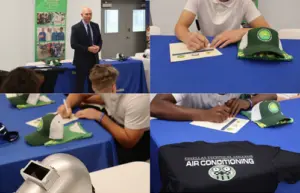
In an era where the traditional paradigms of juvenile justice are undergoing a profound philosophical and operational evolution, the State of Florida is establishing a compelling benchmark for rehabilitative success. Recently, the Florida Department of Juvenile Justice (DJJ), in collaboration with Pinellas Technical College (PTC) and key community stakeholders, hosted a landmark signing day event in St. Petersburg, Florida. This celebratory occasion marked a critical milestone for students enrolled in the Florida Youth College—a dynamic workforce education and credentialing initiative formerly recognized as Project Anchor.
By bridging the gap between residential juvenile commitment programs and higher education, this partnership offers a life-changing second chance to vulnerable youth. Specifically, students residing at the Britt Technical Youth Academy—a specialized residential commitment facility centered on career and technical education (CTE)—are now afforded the opportunity to attend classes through Pinellas Technical College. The ultimate objective is clear and ambitious: to equip these young individuals with high-value workforce credentials that serve as a direct, unhindered pathway into sustainable, high-demand careers.
This initiative transcends the standard boundaries of vocational training. It represents a paradigm shift from punitive models to restorative, empowerment-based methodologies. By investing in the intellectual and professional capital of youth who have encountered the justice system, Florida is not only mitigating recidivism rates but also actively fortifying its local workforce and economy. This comprehensive report explores the genesis of the program, the structural dynamics of the DJJ-PTC collaboration, the broader socioeconomic implications of workforce education in juvenile justice, and the profound personal transformations experienced by the students and families at the heart of this initiative.
Detailed Chronology: From Project Anchor to the Florida Youth College
To fully comprehend the significance of the recent signing day event at Pinellas Technical College, one must examine the evolutionary trajectory of the underlying program. The initiative’s roots trace back to August 2022, when the Florida Department of Juvenile Justice launched Project Anchor. Conceived as a pioneering partnership with Tallahassee State College, Project Anchor was designed to systematically address the educational and vocational deficits frequently observed among youth residing in residential commitment programs, as well as those transitioning back into their home communities.
Recognizing that conventional educational tracks often fail to engage at-risk youth, DJJ leadership envisioned a system where vocational training was not merely an ancillary activity, but a core component of rehabilitation. Project Anchor sought to establish direct pipelines from juvenile facilities to collegiate-level technical instruction, ensuring that youth could earn recognized certifications before completing their terms of commitment.
As the program demonstrated measurable success—capturing the attention of educators, legislators, and community leaders alike—it underwent a strategic rebranding to reflect its broader geographical scope and collegiate ambitions. Reintroduced as the Florida Youth College, the program expanded its institutional partnerships, most notably integrating with premier technical institutions such as Pinellas Technical College in the Pinellas County school district.
To date, the Florida Youth College has successfully admitted nearly 500 youth across its participating sites. The recent signing day event at PTC St. Petersburg is the latest and one of the most visible milestones in this ongoing expansion. By formalizing their commitment to higher education through a traditional "signing day"—an event typically reserved for high school athletes committing to universities—these students experience a psychological shift. They are validated not by their past mistakes, but by their future potential, stepping up to a podium not as offenders, but as scholars and future professionals.
Supporting Context & Metrics: The Mechanics of Rehabilitative Education
The intersection of juvenile justice and technical education is rooted in empirical research demonstrating that education is one of the most potent deterrents against recidivism. According to various criminal justice and educational studies, youth involved in the juvenile justice system who obtain a high school diploma, General Educational Development (GED) certificate, or a recognized vocational credential are significantly less likely to re-offend compared to their peers who receive no post-secondary preparation.
The Britt Technical Youth Academy Model
At the epicenter of the St. Petersburg partnership is the Britt Technical Youth Academy. As a career and technical education-focused residential commitment program, the academy operates under the philosophy that every resident possesses marketable talents waiting to be unlocked. Rather than isolating students from the realities of the modern workforce, the facility immerses them in rigorous academic and technical preparation.
Through the Florida Youth College framework, students who have successfully completed their secondary education can seamlessly transition into certificate programs at Pinellas Technical College. These programs are meticulously aligned with regional labor market demands, ensuring that upon program completion, graduates possess skills that are actively sought after by employers in fields such as:
- Information Technology and Computer-Support
- Automotive Service Technology
- Heating, Ventilation, and Air Conditioning (HVAC)
- Welding and Advanced Manufacturing
- Culinary Arts and Hospitality Management
Scalability and Economic Impact
The scalability of the Florida Youth College model addresses a critical vulnerability in the American correctional landscape: the "cliff effect." Historically, when youth exited residential commitment programs, they faced a void of institutional support, often returning to impoverished environments without the credentials or financial resources necessary to secure gainful employment. This economic desperation frequently drove them back into criminal networks.
By enrolling nearly 500 youth into collegiate technical programs, the DJJ is effectively short-circuiting this destructive cycle. The investment yields a high return not only for the individual participants—who gain the agency to earn a living wage and support their families—but also for society at large. Taxpayers save millions of dollars in averted incarceration costs, while local economies benefit from a newly minted pool of skilled, reliable labor.
Official Statements and Stakeholder Perspectives
The success and momentum of the partnership between the Florida Department of Juvenile Justice and Pinellas Technical College are driven by a coalition of dedicated state officials, educational administrators, and the families whose lives are directly touched by the program.
State and Institutional Leadership
DJJ Secretary Eric Hall emphasized the transformative nature of the collaboration, noting that it reflects the department’s overarching mission to foster genuine rehabilitation:
"DJJ is proud to partner with Pinellas Technical College in providing transformative opportunities for Britt Technical Youth Academy students to pursue a college education. This partnership underscores DJJ’s commitment to accelerating academic achievement for the students we serve and helping them create lasting and meaningful change in their lives."
Legislative support has been equally vital in securing resources and political backing for innovative juvenile justice initiatives. State Representative Berny Jacques praised the synergy between the state agency and local educational institutions:
"The educational opportunities at Pinellas Technical College that will be made available to these youth who have completed their secondary education will cultivate a foundation for their successful futures. I applaud the partnership between the Department of Juvenile Justice and Pinellas Technical College to find innovative ways to best serve the youth in the department’s care."
From an operational standpoint, institutional leaders recognize the profound community dividends that stem from educating justice-involved youth. Sylester “Boe” Norwood, Pinellas Technical College St. Petersburg Campus Director, highlighted the mutual benefits for both the students and the broader community:
"The partnership between Pinellas Technical College and DJJ will result in success not only for the students but for our community. Our partnership will help students gain a competitive edge and give them a second chance at a better life and to make their families proud."
The Human Element: Students and Families Speak Out
While administrative and legislative visions provide the framework, the true measure of the Florida Youth College’s efficacy is found in the voices of the students and parents navigating this journey.
For a student at the Britt Technical Youth Academy, the program represents an escape from cyclical adversity and an opportunity to redefine personal legacy:
"This program will benefit me in the future by helping me to provide for myself and my family. It will help me make better decisions and become a positive role model."
This sentiment is powerfully echoed by the families who have witnessed firsthand the behavioral and psychological evolution of their children within the DJJ system. One parent reflected on their son’s journey from delinquency to focused ambition:
"My son was doing stuff he shouldn’t have been doing, but he’s witty and wise. When he came to the program, I could see that he was learning and changing. I know he’s in good hands. I’m thankful he’s getting another chance, and I hope he continues doing the same when he comes back home."
Future Outlook: Sustaining and Scaling Educational Equity in Juvenile Justice
As the Florida Department of Juvenile Justice and Pinellas Technical College look toward the future, the signing day event serves not as a culmination, but as a springboard for broader systemic reforms. The success of nearly 500 youth admitted to the Florida Youth College provides a robust empirical foundation for future expansion.
Strategic Priorities for Growth
- Curriculum Diversification: Plans are underway to expand the catalog of available technical certificates at PTC and other partner colleges, ensuring that academic offerings keep pace with emerging technological and industrial sectors.
- Enhanced Re-Entry Support: Strengthening the post-release mentorship and job-placement infrastructure to ensure that students successfully transition from their educational programs into long-term employment upon returning to their home communities.
- Replication Across Jurisdictions: Serving as a statewide and national model, the DJJ aims to encourage similar collaborative frameworks between juvenile facilities and technical colleges across all Florida counties and beyond.
Conclusion
The partnership between the Florida Department of Juvenile Justice and Pinellas Technical College exemplifies what is possible when public agencies reject cynicism in favor of targeted, compassionate, and pragmatic innovation. By redefining juvenile rehabilitation through the lens of higher education and workforce credentialing, Florida is proving that a stumble in youth does not have to dictate a life sentence of limitation. Through initiatives like the Florida Youth College, students at the Britt Technical Youth Academy are not just signing up for classes—they are signing up for a renewed future, economic independence, and a permanent place as contributing members of society.

0 Comments