

Executive Overview
Two and a half decades after the tragic events that fundamentally altered the geopolitical landscape of the modern world, the memories of September 11, 2001, remain raw, vivid, and deeply etched into the collective consciousness of those who lived through them. While history books, documentaries, and presidential addresses often frame the tragedy through the dry lens of policy changes, intelligence failures, and military interventions, the human cost is best understood through the eyes of those who stood in the choking dust of lower Manhattan.
For a group of Associated Press (AP) journalists—reporters and photographers who expected to cover routine local politics, fashion events, or sports—that Tuesday morning began like any other. Instead, they found themselves thrust into the epicenter of the worst terrorist attack on American soil. Armed with notebooks, film cameras, and emergency instincts, these professionals were forced to navigate a harrowing dual reality: they were simultaneously terrified civilians trying to protect their families and frontline chroniclers of a historical catastrophe that claimed nearly 3,000 lives.
Looking back across the span of twenty-five years, these journalists share a common burden. Their accounts offer an intimate, harrowing window into the shock, confusion, and profound psychological endurance required to document a national nightmare. From empty hospital gurneys waiting for survivors who never arrived, to the heavy emotional filter of a camera lens acting as a psychological shield, their stories illuminate the enduring psychological scars of a day that divided modern American history into a rigid binary: before and after.
Detailed Chronology: The Morning the World Changed
Dawn and Initial Confusion: 8:46 AM
In the hours leading up to the tragedy, lower Manhattan was bustling with the typical energy of a late-summer weekday. Karen Matthews, an AP reporter living just blocks from the World Trade Center, was busy getting her three-year-old daughter ready for preschool. Her professional agenda for the day included dropping her child off at school and later heading out to cover New York’s municipal primary elections.
At 8:46 AM, that routine was shattered. A deafening, unprecedented boom echoed through the canyon of downtown skyscrapers. Grabbing her daughter, Matthews stepped outside into a scene of surreal shock. Civilians stood frozen on the sidewalks, staring upward at a massive, jagged gash torn into the steel frame of the North Tower, from which thick, roiling plumes of black smoke billowed into the clear blue sky.
"What did you see? What did you see?" pedestrians asked one another in a panic. Operating on pure journalistic instinct, Matthews began asking the exact same questions, fumbling to pull out her notebook and record witness accounts while cradling her young daughter in her arms. In the building’s lobby, she had passed a neighbor weeping uncontrollably. Like many in those initial minutes, rumors swirled that a small, private aircraft had suffered a catastrophic mechanical failure and accidentally veered into the tower.

The Second Impact and the Realization of War: 9:03 AM
The illusion of a tragic accident was violently dispelled at 9:03 AM, when United Airlines Flight 175 slammed directly into the South Tower in a massive explosion of fire and aviation fuel.
For Amy Sancetta, an AP photographer who had traveled from Ohio to cover the U.S. Open tennis tournament—and who happened to have the day off before her scheduled return—the morning started with a frantic phone call from her desk editor. Told that a small plane had clipped one of the towers, she was instructed to get downtown immediately. Unfamiliar with the geography of the financial district, she hailed a taxicab and ordered the driver to push as close to the burning complex as possible.
When Sancetta arrived just blocks away, the second tower erupted in a colossal fireball. At that precise moment, Matthews’s three-year-old daughter dissolved into tears, crying, "I want to go to school, I want to go to school!"
It was the chilling punctuation mark everyone dreaded. "That’s when we all knew that we were under attack," Matthews recalled.
The Collapses and the Sound of the Unearthly
As reality set in, the city’s infrastructure began to fracture. Matthews attempted to push toward the preschool anyway, only to find teachers weeping as they desperately gathered children and sprinted northward. Realizing the immense danger, she rushed her daughter back upstairs to their apartment, sat her down in front of the television to watch Barney, and tried to create a protective bubble against the chaos outside.
Moments later, the fabric of lower Manhattan seemed to tear apart entirely. Two impossibly loud, subterranean roars echoed through the streets—the progressive, catastrophic structural failures of the South and North Towers.
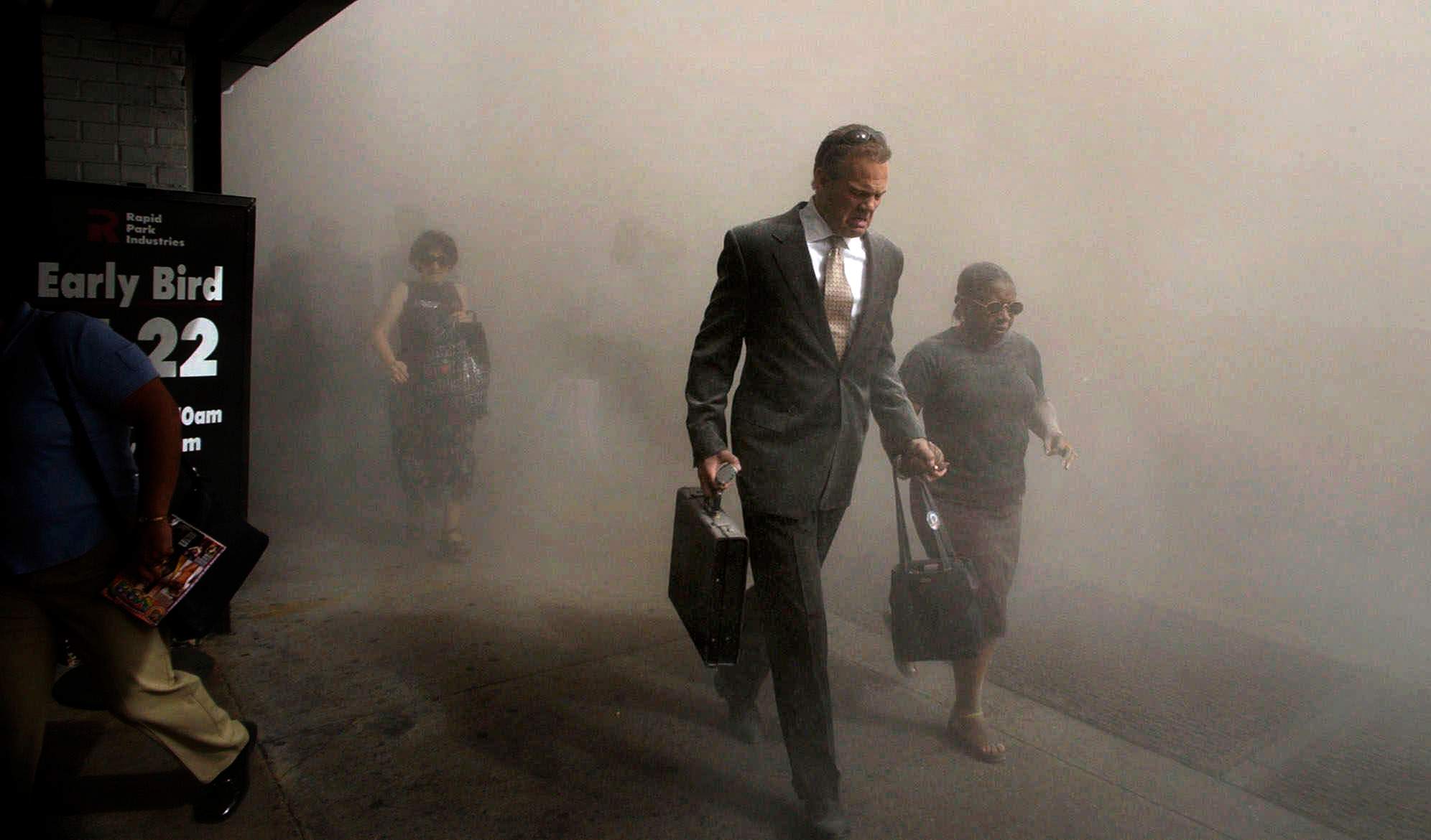
For Richard Drew, a veteran AP photographer whose original assignment for that morning was to cover the glamour and high-fashion models of the opening day of New York’s Fashion Week, stepping off the subway at Chambers Street brought him face-to-face with an absolute inferno. Armed with his camera, Drew began capturing the horror as gray ash and pulverized concrete rained down, blanketing his clothes, skin, and equipment in a ghostly white shroud.
Supporting Context & Metrics: The Human and Physical Toll
The statistics of September 11, 2001, are staggering, yet they often fail to capture the suffocating atmosphere of ground zero.
- The Loss of Life: A total of 2,977 victims lost their lives in the coordinated attacks orchestrated by al-Qaida. This figure includes 2,753 people killed at the World Trade Center site in New York, 184 people killed at the Pentagon, and 40 passengers and crew members aboard United Flight 93, who bravely fought back and forced the plane down in a field in Shanksville, Pennsylvania.
- Emergency Responders: The tragedy resulted in the single largest loss of emergency responder lives in American history, including 343 firefighters from the Fire Department of New York (FDNY), 71 law enforcement officers from various agencies, and 8 private emergency medical service personnel.
- The Medical Reality: AP reporter Larry Neumeister headed toward a hospital situated dangerously close to ground zero that afternoon. What he witnessed encapsulated the stark, binary horror of the disaster. Doctors and nurses stood outside in tense clusters. Long lines of empty wheelchairs, gurneys, and trauma stretchers lined the entrance, prepared to receive an overwhelming influx of injured survivors—potentially numbering in the thousands.
As the hours bled into evening, however, those lines of wheelchairs remained conspicuously vacant. Around midnight, Neumeister walked near the smoking ruins of the World Trade Center site, where a grim-faced physician delivered a chilling summation of the event’s lethality: "You either walked away from the site or ran away from the World Trade Center buildings when they fell, or you were gone. There was no in-between."
Journalistic Duty vs. Psychological Trauma
For the journalists on the ground, the preservation of history demanded a suppression of personal trauma. Operating in environments of unprecedented horror, these professionals relied on rigorous muscle memory and psychological defense mechanisms to do their jobs.
"The Falling Man" and the Burden of the Lens
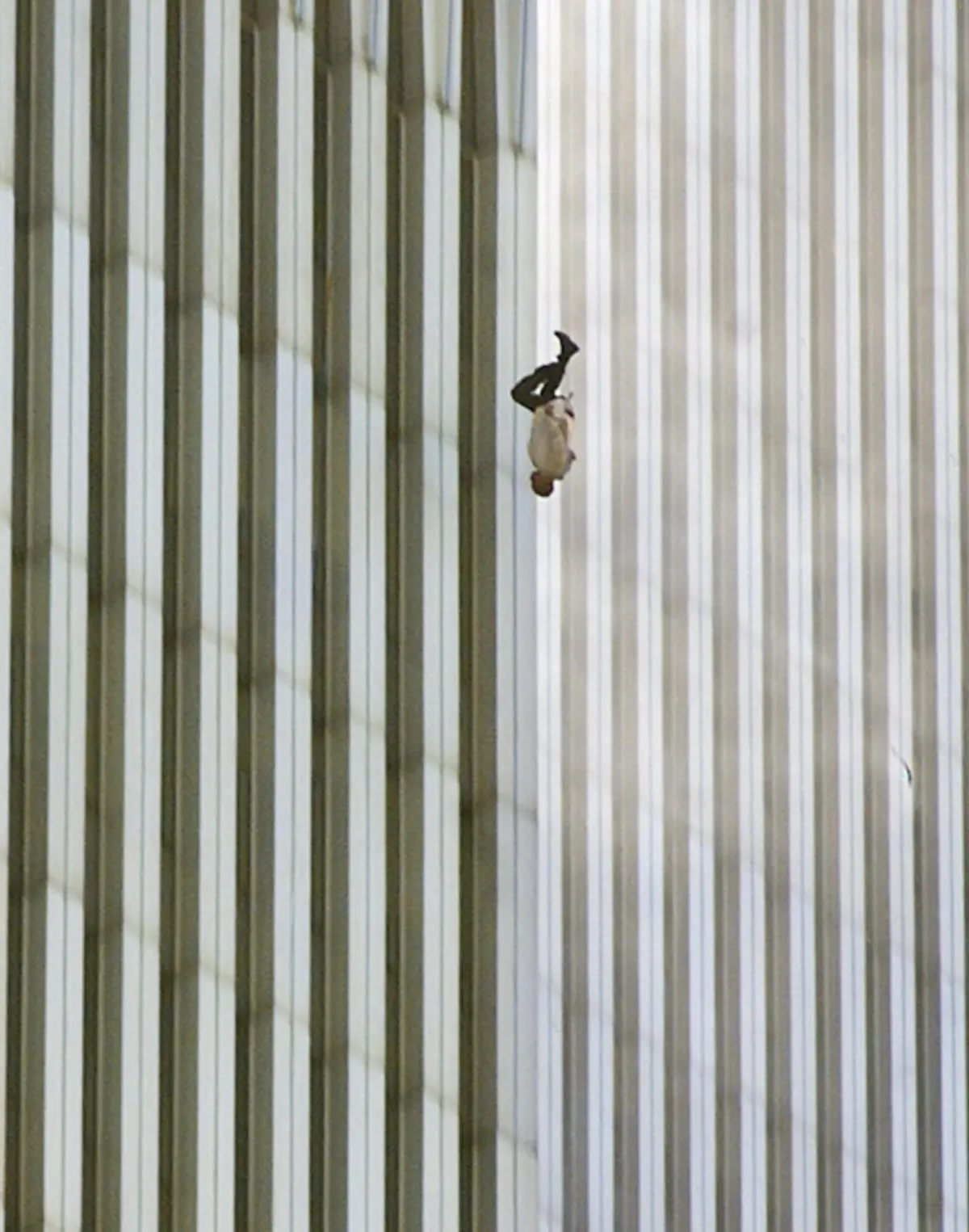
Standing near the base of the towers with emergency medical personnel, Richard Drew’s camera captured a series of harrowing images that would spark intense ethical debates across the nation. An emergency worker pointed upward, crying out, "Look at that." People were leaping and falling from the upper stories of the burning skyscrapers, trapped by insurmountable heat and smoke.
Drew photographed them. Among those frames was an image that would be permanently seared into the annals of photojournalism: The Falling Man. The composition depicts an unidentified individual plunging headfirst, his body tracing a terrifyingly straight vertical line parallel to the architectural columns of the collapsing North Tower.
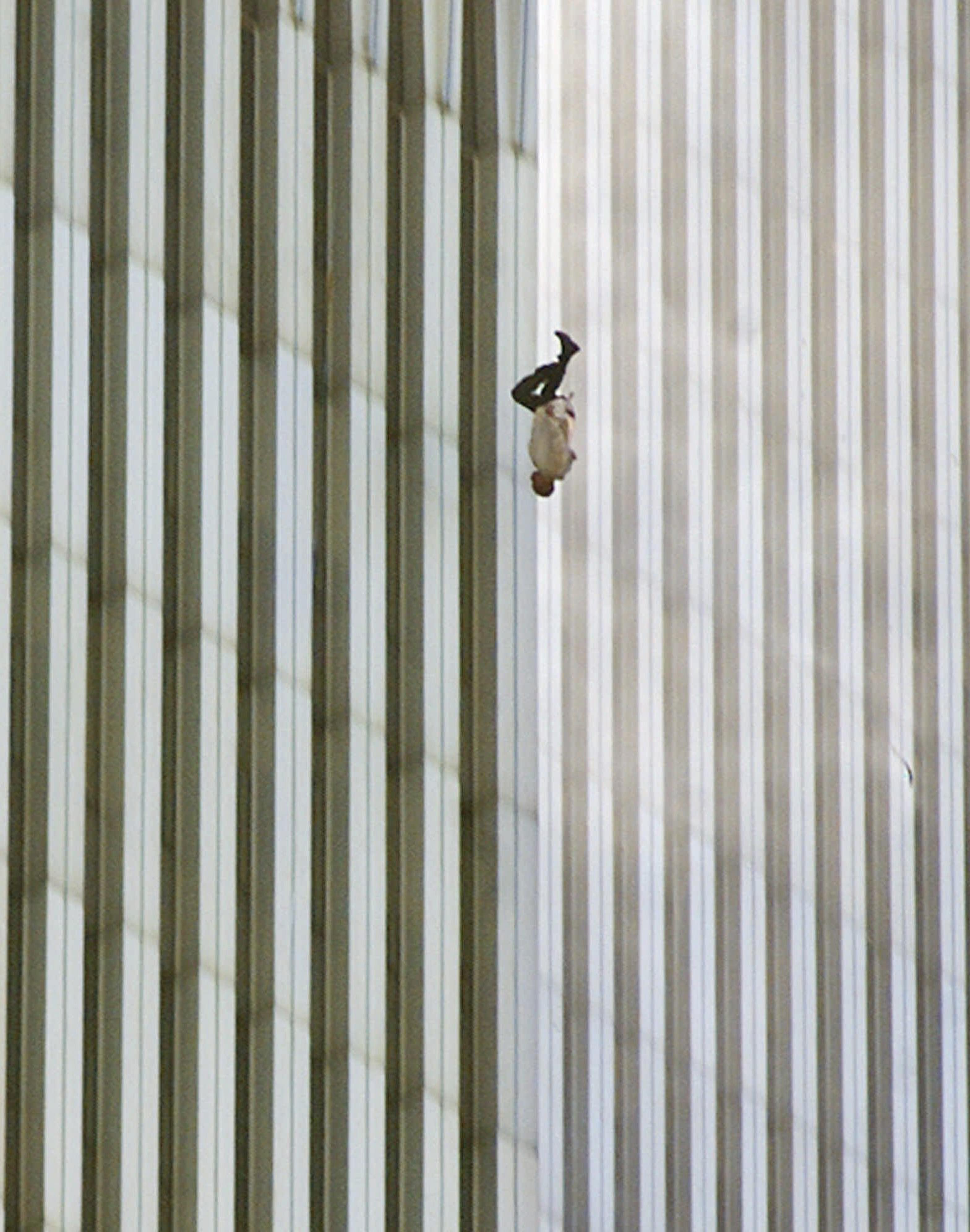
While some newspapers published the image the following day as an unvarnished depiction of the disaster’s absolute despair, others rejected it, fearing it was far too graphic and distressing for breakfast-table viewing. Two and a half decades later, Drew admits that the unidentified man in the photograph still visits his thoughts at least once a week.
Reflecting on his coping mechanism, Drew noted that his wife often refers to his camera as a "wall"—a psychological filter separating the documentarian from the raw, unbearable reality unfolding before his eyes. "I guess I’m in denial about whether those things really affected me," Drew reflected. When crisis strikes, professional training takes over, narrowing the world down to the frame of the viewfinder.
Muscle Memory in the Dust Storm
Similarly, Amy Sancetta described her reaction to the collapse of the South Tower as a surreal exercise in athletic muscle memory. "The weirdest thing that went through my head at the time was, it was kind of muscle memory, like shooting a basketball game," she noted.
When the monumental wall of debris and ash surged toward her, Sancetta fled into the subterranean safety of a concrete parking garage. In a stairwell, she encountered a distraught woman who had narrowly escaped the collapsing tower and was desperate to contact her son. Sancetta wrapped her in a reassuring hug, pulled out her personal flip phone, and attempted to dial. Her hand shook violently, and cellular signals were entirely jammed. Memorizing the son’s number, she promised she would find a way to make the call.
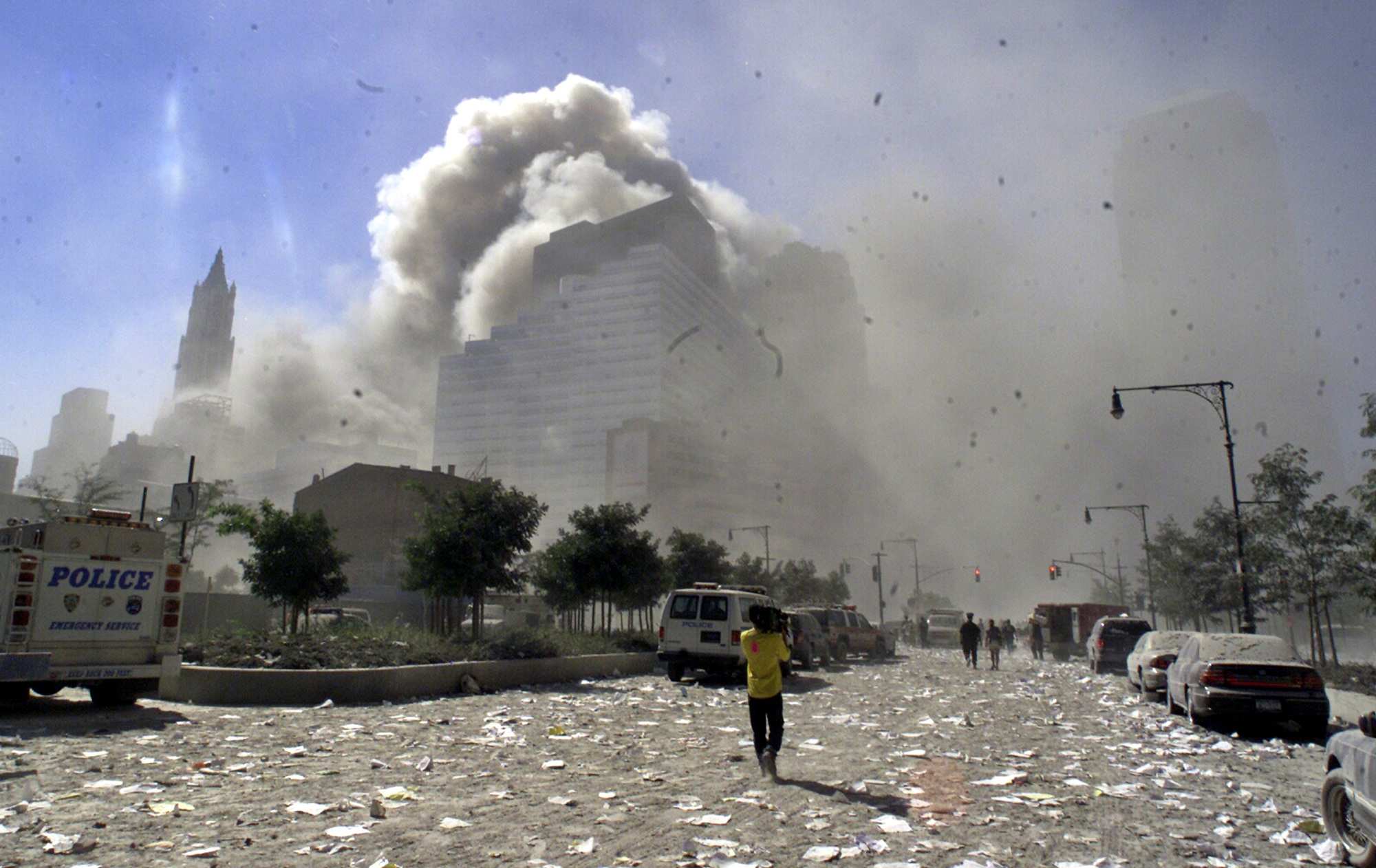
Emerging back onto the street, Sancetta found a landscape completely stripped of color. Everything was covered in a thick layer of white pulverized drywall and concrete dust—"like covered with snow, but not snow." The frantic screams and pounding footsteps of the morning had devolved into a muted landscape of weeping and whimpering, while loose-leaf office paper drifted lazily through the autumn sky like flocks of disoriented birds.
Reflecting on the totality of the experience, Sancetta balances professional pride with human regret. "As a journalist, I’m glad I was there," she admitted. "Pero como human being, I wish I’d gone home on Monday."
Future Outlook: A Generation Living in the Aftermath
Twenty-five years after the smoke cleared from lower Manhattan, the ripple effects of September 11 continue to define American society, foreign policy, and individual psychology. For those who witnessed the events firsthand, the psychological demarcation remains absolute. Karen Matthews, now retired from journalism, still divides her life strictly into two distinct epochs: before September 11 and after.
"I’m not a really fearful person," Matthews reflected, "but you lose a sense of security when something like that happens." That loss of fundamental security became a cornerstone of the modern American experience, altering everything from commercial aviation security and government surveillance laws to the daily anxieties of ordinary citizens.
Yet, amidst the lingering trauma and the permanent scars left on the nation’s psyche, the journalists who documented the horror share a quiet conviction. By holding up their cameras, typing out dispatches on shaking cell phones, and recording the final testimonies of a fractured city, they ensured that the magnitude of that day would never be minimized or forgotten.
As the world moves further into the 21st century, the generation that remembers the clear blue skies of that September morning grows older. The physical scars of ground zero have long since been replaced by the soaring glass and steel of the One World Trade Center. Yet, the testimonies of Karen Matthews, Richard Drew, Larry Neumeister, and Amy Sancetta serve as a timeless reminder: history is not merely written in textbooks; it is forged in the resilient, traumatized memories of those who stood in the dust and refused to look away.

0 Comments