

Executive Overview
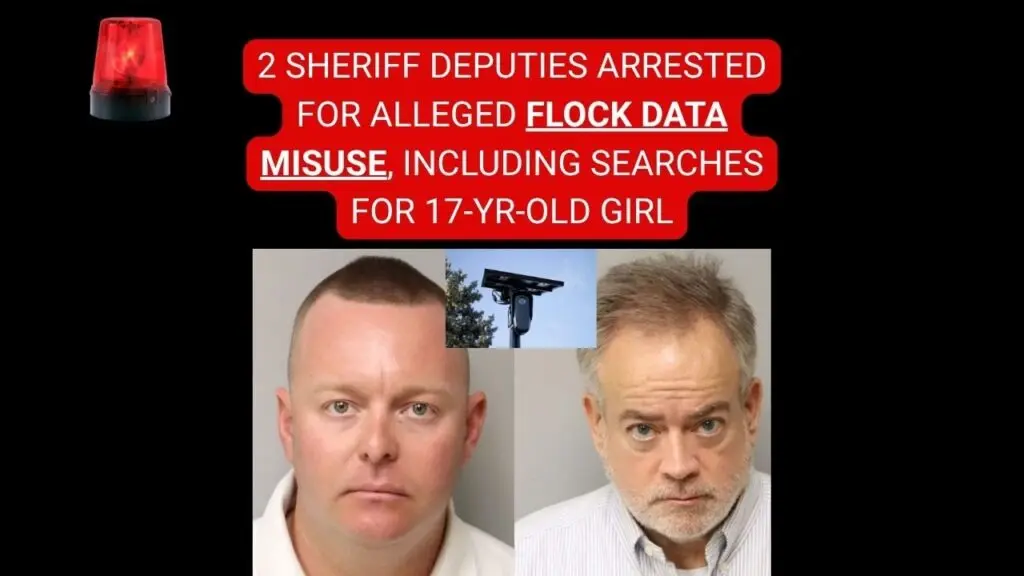
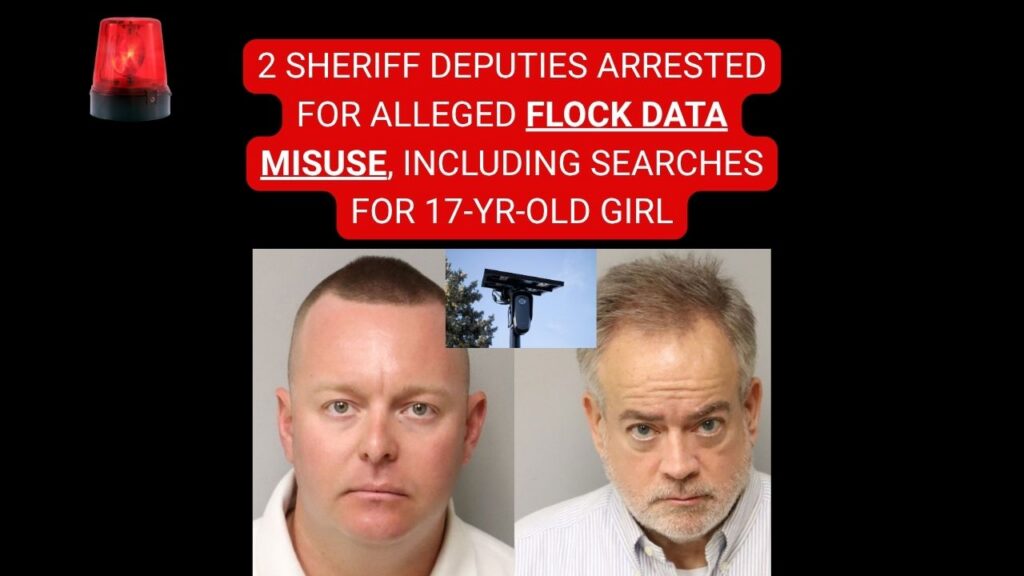
PINELLAS COUNTY, Fla. — In a sweeping blow to internal accountability and public trust, two former Pinellas County Sheriff’s Office (PCSO) deputies have resigned and now face serious criminal charges. The arrests, announced publicly by Sheriff Bob Gualtieri, stem from two entirely unrelated investigations that uncovered a disturbing trend of law enforcement personnel abusing their access privileges.
According to internal investigators, the former deputies used secure, state, and local law enforcement databases to track and gather personal information on private citizens for personal, non-law enforcement reasons. The accused individuals have been identified as 33-year-old Travis Stanton and 57-year-old Carl Gwynn.
The scandal has forced the Pinellas County Sheriff’s Office to critically evaluate its internal oversight mechanisms. While investigators were able to uncover the illicit database queries, the length of time these violations went unnoticed exposed significant blind spots in the agency’s monitoring protocols. In response to the fallout, Sheriff Gualtieri has committed to overhauling the department’s auditing procedures, partnering with software developers to introduce real-time anomaly detection, and implementing stricter accountability guardrails.
This developing story underscores the persistent tension between modern law enforcement surveillance capabilities—such as automated license plate readers (ALPRs)—and the fundamental right to privacy. While critics of police technology frequently point to the potential for abuse, Sheriff Gualtieri staunchly defended the tools themselves, laying the blame squarely on human misconduct.
Detailed Chronology of the Investigations
The Travis Stanton Case: Pursuit of a Minor and Inappropriate Surveillance
The investigation into Travis Stanton, 33, began following a formal complaint filed on August 26. The grievance was brought forward by a 17-year-old girl who worked at a local fast-food restaurant that Stanton frequented during his patrols.
According to agency findings, Stanton grew infatuated with the teenager, making repeated visits to her workplace where coworkers described him as "a little flirty." Despite recently marrying, Stanton’s fixation escalated from casual conversation to intrusive surveillance. Colleagues later reported that Stanton openly referred to the minor as his "queen" when speaking with fellow deputies, with one coworker noting that Stanton’s interest in the underage girl was clearly romantic in nature.
Investigators discovered that Stanton utilized secure law enforcement databases from the computer inside his patrol vehicle to run the teenager’s license plate and pull personal records. Seeking to track her movements further, Stanton even drove to Seminole High School—where the teenager was enrolled as a student—specifically to locate her vehicle and allegedly run her license plate a second time.
The harassment extended beyond digital tracking and workplace visits. During one encounter at the restaurant, Stanton reportedly asked the teenage employee if she wanted to view a graphic photograph of a deceased body from an unrelated police call. The girl declined the morbid offer.
The physical proximity and invasive behavior culminated when a department-issued mobile phone carried by Stanton inadvertently recorded a 17-minute conversation between the two. The teenager told investigators that Stanton’s advances and persistent interest made her deeply uncomfortable, prompting her to formally alert the department.
Confronted with the accumulating evidence, Stanton ultimately acknowledged to investigators that "curiosity got the better of him." He resigned from the agency on September 25. Stanton was subsequently arrested and charged with the unlawful access of secure systems. A judge set his bond at $10,000.
The Carl Gwynn Case: 381 Unlawful Queries Targeting a Former Arrestee
While the Stanton case involved predatory behavior toward a minor, the second investigation laid bare an extraordinary pattern of obsessive digital stalking. Carl Gwynn, a 57-year-old former deputy, was found to have repeatedly targeted a 35-year-old woman whom he had arrested years prior.
According to Sheriff Gualtieri, Gwynn harbored a desire to initiate a personal relationship with the woman. Having no legitimate professional or legal basis to monitor her, Gwynn launched an astonishing campaign of digital surveillance.
An internal audit revealed that Gwynn queried information connected to the victim a staggering 381 times. The vast majority of these searches—roughly 300 queries—were conducted through the sheriff’s office’s automated license plate reader (ALPR) network between January 2025 and July 2026.
The comprehensive scope of Gwynn’s database misuse extended across multiple platforms:
- 300 queries via the automated license plate reader (ALPR) system.
- 32 queries of the Florida driver’s license database.
- 18 queries through statewide law enforcement records systems.
- 29 queries via the Pinellas County Sheriff’s Office internal records management system.
- 2 queries through the Florida Crime Information Center (FCIC) network.
"There were no legitimate reasons for Gwynn to make these queries," Sheriff Gualtieri stated firmly during the press conference announcing the arrests. Following the completion of the internal probe, Gwynn resigned from the department. He was arrested and formally charged with four counts of unlawfully accessing secure systems without an official business purpose, with his bond set at $25,000.
Supporting Context & Metrics: The Anatomy of Database Misuse
The simultaneous exposure of Stanton and Gwynn has placed the Pinellas County Sheriff’s Office under a microscope, sparking intense scrutiny regarding how sensitive law enforcement data is protected and audited.
Law enforcement databases—such as the Florida Crime Information Center (FCIC), the National Crime Information Center (NCIC), and local computer-aided dispatch (CAD) and records management systems (RMS)—contain highly sensitive personal data. This includes social security numbers, home addresses, criminal histories, driving records, and real-time location histories gathered by surveillance technology. While access to these tools is a routine necessity for police work, strict statutory guidelines dictate that they may only be used for legitimate official business.
The Blind Spots of Internal Auditing
Historically, internal affairs and IT compliance divisions within law enforcement agencies have struggled to monitor massive volumes of daily database interactions. Millions of queries are executed statewide every month, making manual oversight virtually impossible.
Sheriff Gualtieri candidly admitted that while the agency maintained baseline auditing procedures, those checks were fundamentally flawed. Prior oversight mechanisms focused heavily on compliance anomalies of a different nature, entirely overlooking unusual search volumes or targeted, repetitive queries by individual users.
"The audits were there, but we aren’t focusing on high quantity. We are now," Gualtieri conceded.

The sheriff explained that legitimate police work frequently requires repeated searches of the same license plate or individual. High-frequency queries are standard practice in complex narcotics investigations, counter-terrorism operations, and active threat assessments. Consequently, algorithms designed to flag suspicious activity must be sophisticated enough to differentiate between a detective tracking a cartel suspect and a rogue deputy fixated on a former arrestee or a local teenager.
Official Statements and Accountability
The arrests of Travis Stanton and Carl Gwynn prompted a direct, unvarnished response from the top leadership of the Pinellas County Sheriff’s Office. Sheriff Bob Gualtieri did not attempt to shield the actions of his former employees, choosing instead to lean into transparency and institutional reform.
Addressing the media, Gualtieri did not mince words regarding Stanton’s behavior:
“Running the plate of a 17-year-old girl with whom you are interested in is clearly inappropriate and clearly unlawful… What Stanton was doing with a 17-year-old girl was horrible.”
Reflecting on the broader cultural implications of the scandal, the sheriff acknowledged the frailties inherent in human personnel while affirming the agency’s zero-tolerance policy for badge abuse:
“There’s no perfect in this world, and cops aren’t perfect either. But when they mess up, we’re going to hold them accountable.”
Gualtieri also addressed the ongoing national debate surrounding automated surveillance technologies. Civil liberties advocates and privacy groups have long criticized the proliferation of automated license plate readers (ALPRs)—often manufactured by companies like Flock Safety—arguing that the passive mass collection of travel data creates a de facto surveillance state ripe for abuse.
Gualtieri forcefully separated the technology from the bad actors utilizing it:
“It’s not just Flock cameras; there’s more to it. 100% it’s not the camera, it’s the people.”
Rather than condemning the technology, Gualtieri advocated for heavier legislative restrictions, enhanced penalties for database misuse, and systemic technological safeguards.

“I wholeheartedly support having a discussion and greater guardrails on this and making sure that there are harsh consequences for misuse,” Gualtieri added.
Future Outlook: Strengthening Safeguards and Rebuilding Trust
In the wake of these twin scandals, the Pinellas County Sheriff’s Office has initiated a comprehensive institutional overhaul designed to prevent similar breaches of public trust from occurring in the future.
Technological Upgrades and Real-Time Flagging
Recognizing that human audits alone are insufficient to police sprawling digital networks, the agency is actively collaborating with software manufacturers and system developers. The goal is to integrate advanced algorithmic filters directly into the infrastructure of the sheriff’s office database systems.
These upcoming software enhancements are engineered to automatically flag anomalous behavior in real time. Rather than waiting weeks or months for periodic audits to catch repeated queries, the new protocols will immediately alert internal affairs when an employee exhibits unusual search patterns—such as executing hundreds of queries on a single private citizen or running plates associated with personal acquaintances outside of an assigned dispatch call.
Policy Revisions and Legislative Support
Beyond software patches, the department is rewriting internal directives to explicitly outline the boundaries of database access, emphasizing that casual curiosity, personal grievances, and romantic pursuits constitute severe breaches of departmental policy and state law.
Furthermore, Sheriff Gualtieri’s vocal support for stricter state-level penalties sends a clear message to law enforcement personnel across Florida. By welcoming legislative scrutiny and pushing for harsher statutory punishments for database misuse, the sheriff hopes to deter future violations and signal to the community that unauthorized surveillance by those sworn to uphold the law will be met with swift criminal prosecution.
As the legal proceedings against Travis Stanton and Carl Gwynn progress through the Pinellas County court system, the department faces the long-term challenge of repairing its relationship with the community. Restoring absolute trust will require sustained transparency, rigorous enforcement of the newly minted technological safeguards, and a clear demonstration that the badge does not grant immunity from the law.

0 Comments