

Executive Overview
For Angelina M., a high school senior hailing from Fort Lauderdale, the dream of pursuing a career in neuroscience once felt tethered entirely to a financial question mark. Like countless students standing on the threshold of higher education, she worried less about her academic readiness and more about the prohibitive costs of tuition, lab fees, and textbooks. That apprehension evaporated the moment she sat down to complete the Free Application for Federal Student Aid (FAFSA).
To her surprise, the entire process took less than 20 minutes—far simpler and more streamlined than the bureaucratic hurdle she had envisioned. Within weeks, she qualified for over $7,000 in federal Pell Grants, crucial financial assistance that she will never have to pay back.
"Without FAFSA, there would have been additional unnecessary stress," Angelina reflects, now actively navigating college applications with the confidence of someone whose educational trajectory is secure.
Angelina’s story is a triumphant vignette of what is possible when financial aid barriers are dismantled, yet it also highlights a systemic challenge facing the Sunshine State. While Florida consistently earns national accolades for its top-ranked higher education system, its performance in FAFSA completion rates has historically lagged behind. Thousands of Florida students leave hundreds of millions of dollars in federal Pell Grants on the table year after year, largely due to informational gaps, lingering intimidation regarding paperwork, and misplaced assumptions about financial eligibility.
However, the tide is turning. Driven by a coalition of grassroots community networks, legislative champions, and sweeping state policy reforms, Florida is experiencing a remarkable resurgence in FAFSA engagement. This comprehensive report examines the current state of financial aid in Florida, the strategies fueling recent progress, the economic imperative of closing the attainment gap, and the policy levers required to cement Florida’s status as an undisputed education powerhouse.
Detailed Chronology: Turning the Tide on FAFSA Completion
To understand where Florida stands today, one must examine the timeline of advocacy, legislative action, and community mobilization that has reshaped the state’s educational landscape over recent years.
Historical Underperformance and the Bottom-Third Reality
For years, Florida languished in the bottom third of states regarding FAFSA completion rates among high school seniors. Even as tuition costs climbed and the demand for postsecondary credentials intensified, historical data showed that roughly 45% of Florida’s graduating seniors failed to submit the form by late summer. This inertia resulted in an estimated annual forfeiture of hundreds of millions of federal dollars—funds specifically allocated to help low- and middle-income students bridge the affordability gap.

The 2026 Surge and Community Mobilization
Momentum began to shift dramatically. In 2026, Florida recorded a historic year-to-year FAFSA completion rate increase of 15 percentage points, vaulting the state into the upper echelon of national improvers.
This leap was no accident. It was catalyzed by an unprecedented statewide mobilization. More than 500 schools actively participated in the Florida College Access Network’s (FCAN) FAFSA Challenge, an initiative designed to foster friendly competition and resource-sharing among high schools aiming to boost their completion numbers. Working in tandem with local college access networks and community-based organizations, these schools demystified the financial aid process for students and parents alike.
Simultaneously, political leadership stepped up. Thirty state legislators actively championed FAFSA completion within their respective districts, hosting information nights, partnering with school boards, and utilizing their platforms to raise awareness about the availability of federal aid.
The Legislative Turning Point
Recognizing that systemic change requires structural integration, the Florida Legislature passed a milestone bill mandating that FAFSA and financial aid education be embedded directly into the state’s high school financial literacy course, effective for the 2026–2027 school year. This ensures that every public high school student in Florida receives direct, actionable instruction on how to navigate financial aid before they receive their diploma.
Supporting Context & Metrics: The Economic Imperative of Postsecondary Education
The push to increase FAFSA completion is not merely an administrative exercise; it is an economic imperative tied directly to the future vitality of Florida’s labor market.
The Postsecondary Education Deficit
The modern economy demands advanced training. According to projections from the Georgetown University Center on Education and the Workforce, 64% of all jobs in Florida will require some form of postsecondary education by the year 2031. Similarly, the Florida Chamber Foundation forecasts that nearly all high-demand, family-sustaining careers in the state will require a degree or specialized workforce credential by 2033.
Yet, a glaring chasm exists between market demand and workforce readiness. Currently, only 54.8% of working-age Floridians hold a postsecondary degree or credential. Closing this ten-percentage-point gap is essential if Florida is to supply homegrown talent to its expanding technology, aerospace, healthcare, and finance sectors.

The Power of the FAFSA Gateway
Completing the FAFSA is the single most effective catalyst for bridging this gap. According to data from the National College Attainment Network (NCAN), high school seniors who complete the FAFSA are 84% more likely to enroll in postsecondary education immediately following graduation compared to their peers who do not fill out the form.
Furthermore, the scope of federal financial aid has evolved to meet modern workforce needs. Recent updates mean that Pell Grants no longer apply exclusively to traditional four-year academic degrees. Today, these funds can be utilized for high-quality, short-term workforce training programs—some lasting as little as eight weeks—that immediately prepare students for high-demand technical and trade professions.
The Multibillion-Dollar Economic Dividend
The financial returns of increasing postsecondary enrollment reverberate across the entire state economy. Estimates from the Helios Education Foundation indicate that increasing Florida’s college enrollment rate by a modest 10% would generate staggering economic gains of over $8 billion annually. These gains manifest through:
- Higher individual lifetime earnings and increased consumer spending.
- Expanded state and local tax revenues to fund public infrastructure and services.
- Reduced societal reliance on public assistance programs.
Official Statements & Expert Perspectives
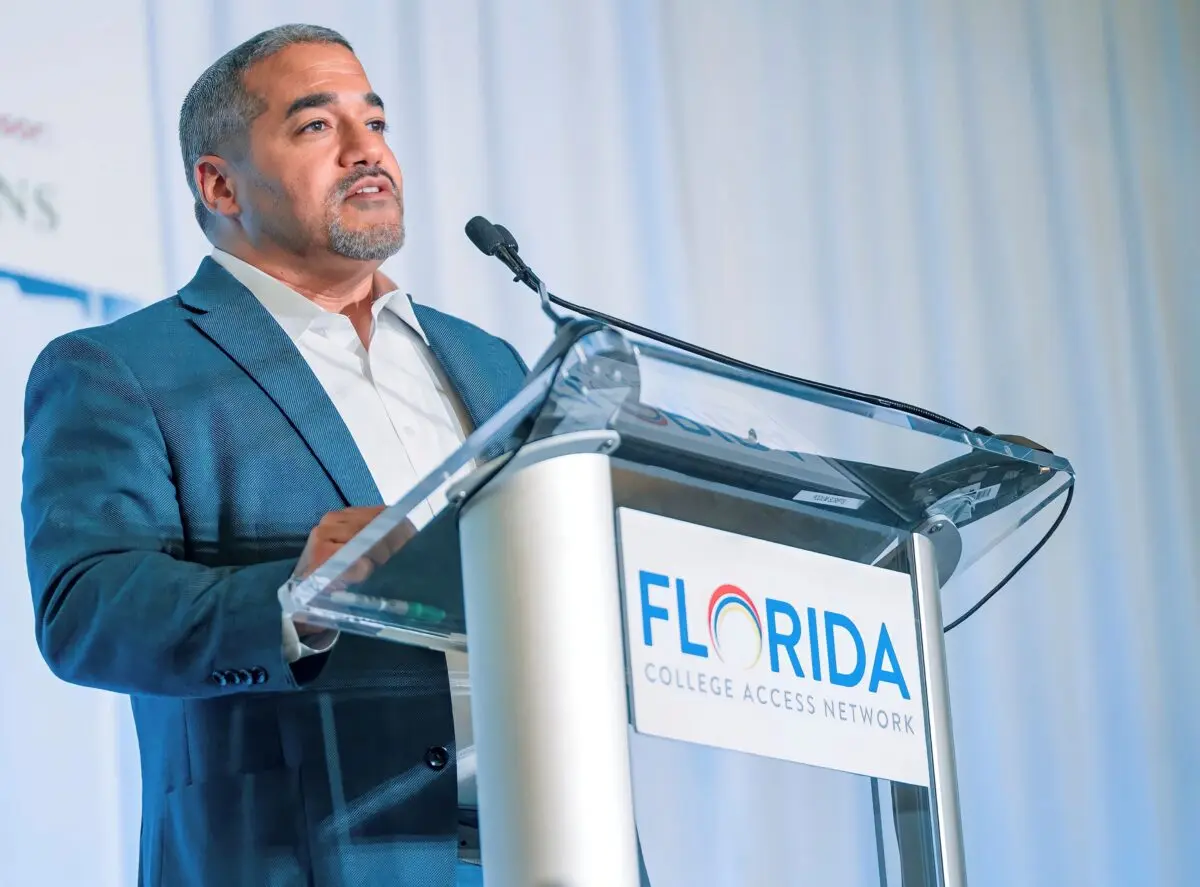
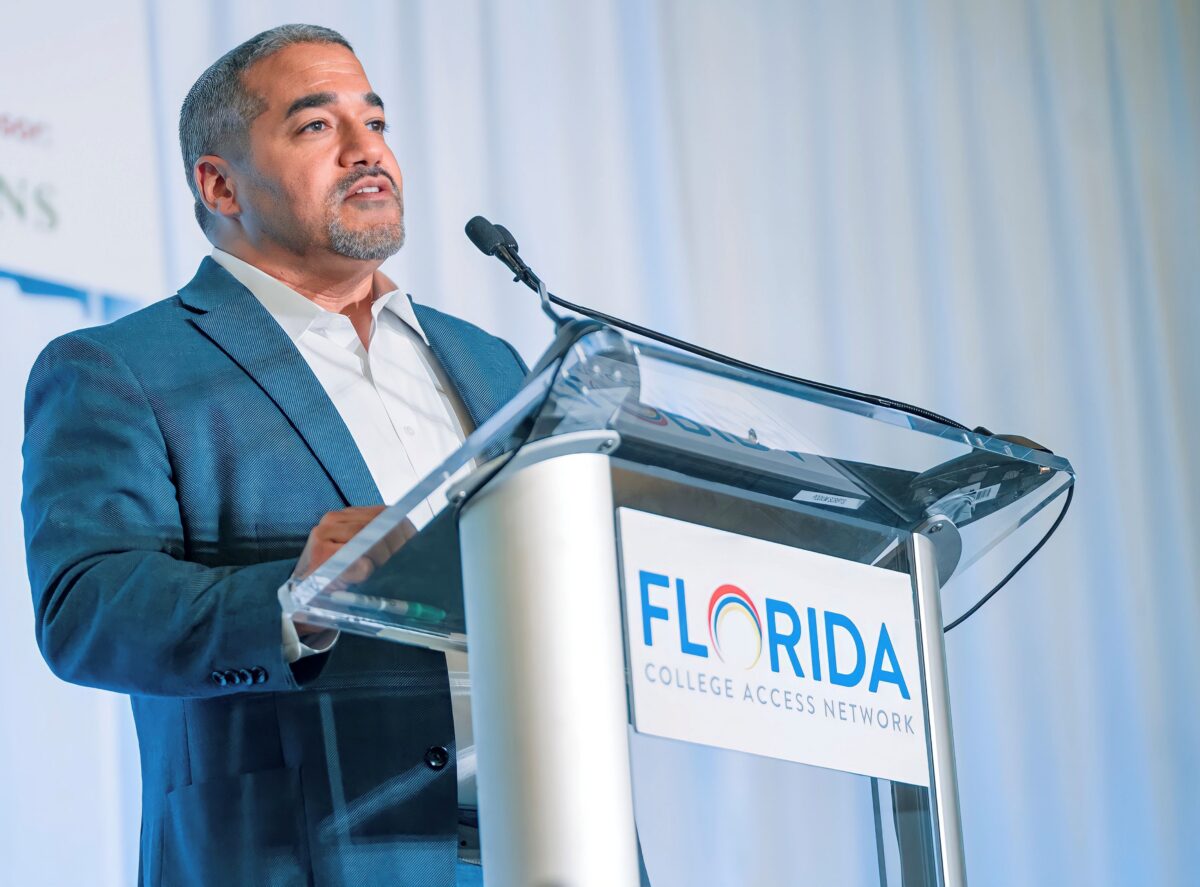
Education leaders and policy experts have been vocal about the urgency of institutionalizing FAFSA support across the state. Braulio Colón, co-founder and executive director of the Florida College Access Network, has been at the forefront of this advocacy. With over two decades of professional experience leading education policy, philanthropy, and community collaborative initiatives, Colón has consistently championed strategies that connect educational access to economic mobility.
Reflecting on the recent progress and the road ahead, Colón emphasizes that Florida’s ambition must match its economic potential.
"Florida proudly ranks number one in the nation for higher education," Colón notes. "Our FAFSA completion rates should unequivocally reflect that powerhouse status. By ensuring that every student understands how to unlock federal and state resources, we remove the financial blindfolds that prevent talented young people from pursuing their ambitions."
Education advocates also point to successful models implemented in other states. Texas, for example, adopted a policy requiring high school seniors to either complete the FAFSA or submit an official opt-out form as a graduation requirement. This simple, flexible policy—which costs the state virtually nothing to administer—sparked an immediate 26% spike in Texas FAFSA completions during its first year.
Advocates argue that implementing a similar mandatory-completion framework in Florida would provide the structural push necessary to move from incremental gains to universal coverage, ensuring that no student misses out on thousands of dollars in free college funding simply due to paperwork oversight.
Future Outlook: Securing Florida’s Position as an Educational Powerhouse
As Florida looks toward the remainder of the decade, the trajectory of its educational and economic systems depends on intentional, sustained action. The convergence of streamlined federal application forms—which now allow most families to complete the FAFSA in under 30 minutes—and proactive state policies has created a rare window of opportunity.
To capitalize on this momentum, educational institutions, policymakers, and community stakeholders must pursue a three-pronged agenda over the coming years:
- Deepening Community Integration: Local school districts must continue partnering with community organizations to host dedicated FAFSA completion nights, providing hands-on assistance to families navigating the digital portal for the first time.
- Leveraging Financial Literacy Curricula: As the newly mandated financial literacy coursework rolls out across Florida high schools, educators must treat FAFSA instruction not as a peripheral topic, but as a core graduation milestone.
- Exploring Structural Policy Enhancements: Lawmakers must evaluate best practices from peer states, considering whether universal completion policies could permanently eliminate the completion gap and ensure equitable access for low-income and first-generation students.
For students like Angelina M., the FAFSA was the key that unlocked a future in neuroscience, transforming abstract career aspirations into an achievable reality. By scaling these opportunities and clearing the financial hurdles standing between students and their dreams, Florida can ensure that its educational excellence is accessible to every ambitious mind, safeguarding the state’s economic vitality for generations to come.

0 Comments