
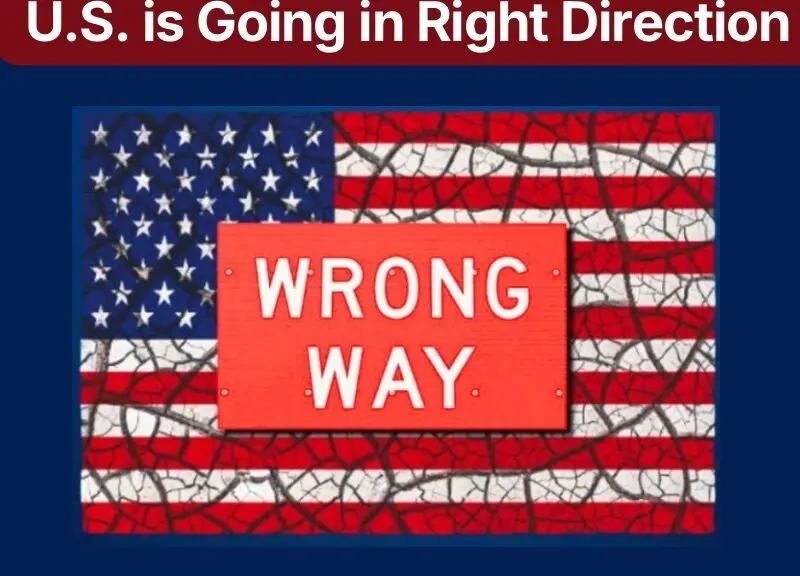

WASHINGTON, D.C. — With fewer than 40 days remaining until the high-stakes 2026 midterm elections, the political pulse of the United States is beating with unprecedented urgency. A newly released national survey by Rasmussen Reports injects fresh data—and fresh debate—into the electoral arena, revealing that nearly two-thirds of likely American voters express concerns about the country’s trajectory.
According to the comprehensive poll, exactly 37% of likely U.S. voters believe the nation is currently on the "right track." While this figure demonstrates that a solid core of the electorate remains optimistic about current national policies and leadership, it also highlights a distinct year-over-year contraction. The current metric marks a notable five-percentage-point drop compared to the exact same period in 2025, pointing to a subtle yet significant cooling of public enthusiasm as voters prepare to cast their ballots for control of Congress and key statehouses nationwide.
Conducted between September 20 and September 24, 2026, the national telephone survey sampled 1,847 U.S. likely voters. As political campaigns enter their final, high-intensity sprint, metrics such as the "right track/wrong track" indicator serve as critical barometers for incumbent politicians, challenging challengers, and political strategists mapping out their final get-out-the-vote (GOTV) strategies.
Executive Overview
The release of the September 2026 Rasmussen Reports survey arrives at a precarious juncture in modern American politics. Midterm elections traditionally function as a referendum on the party in power, and the current political ecosystem is no exception. With inflation, energy independence, national security, and economic stability dominating kitchen-table conversations, public sentiment is a volatile asset.
The finding that 37% of voters view the country as heading in the right direction provides a foundational baseline for understanding the mood of the electorate. Simultaneously, the reality that roughly 63% hold a contrasting view underscores the deep-seated anxieties and divisions that define the contemporary American voter.
For the governing party, a 37% right-track figure presents a formidable communications challenge as they attempt to frame the midterms around legislative achievements, infrastructure investments, and job growth. For the opposition, the two-thirds skepticism metric serves as validation of their narrative that current policies are misaligned with the economic and social needs of everyday citizens.
As campaigns across the country enter the final month, both major political parties are dissecting these numbers to fine-tune their messaging. The subtle downward trend—slipping five points from last year—suggests that patience among independent and undecided voters may be wearing thin, creating a fluid environment where late-breaking events, debate performances, and localized issues could decisively swing close congressional contests.
Detailed Chronology: The Road to the 2026 Midterms
To fully understand the weight of the September 2026 Rasmussen poll, it is necessary to examine the cascading events and shifting economic and political milestones that have shaped the electorate over the past twenty-four months.
Early 2025: Post-Inauguration Realities and Economic Stabilization
Following the political realignment of the previous election cycle, early 2025 was characterized by legislative maneuvering in Washington. The administration and congressional leaders focused heavily on fiscal policy, attempting to curb lingering inflationary pressures while sustaining post-pandemic economic momentum. During this period, early-year polling showed slightly higher optimism regarding national direction, buoyed by initial legislative compromises and stabilizing supply chains.
Summer 2025: The Legislative Battles and Energy Debates
By the summer of 2025, partisan friction intensified. Debates over energy independence, federal spending packages, and regulatory reforms took center stage. Environmental policies, traditional fossil fuel production, and the rapid expansion of clean energy initiatives became flashpoints between Capitol Hill lawmakers and state executives. Public sentiment began to experience minor fluctuations as consumers navigated fluctuating fuel prices and localized cost-of-living adjustments.
Late 2025: The Approach of the Electoral Cycle
As 2025 drew to a close, political organizations began shifting from governance mode to campaign footing. National tracking polls, including regular intervals by Rasmussen Reports, noted the first signs of voter fatigue. While core partisans remained entrenched in their respective corners, independent voters began expressing growing ambivalence about the pace of federal reform, setting the stage for a polarized political climate entering the new year.
Spring 2026: Primary Season and Policy Realignment
The first half of 2026 was defined by a rigorous primary election season. Across dozens of states, voters winnowed down candidate fields, frequently favoring nominees who ran on populist, anti-establishment, or sharply focused economic platforms. The right-track metrics during this phase hovered in the upper 30s to low 40s, reflecting a nation deeply divided over federal stewardship.
September 2026: The Final 40-Day Sprint
Bringing us to the current moment, the late-September Rasmussen survey captures the electorate with less than 40 days until Election Day. Fieldwork executed between September 20 and 24 reflects an electorate that has largely crystallized its views on national leadership, yet remains acutely sensitive to last-minute campaign developments, economic indicators, and televised debates.
Supporting Context & Metrics: Methodology and Data Breakdown
Understanding public opinion data requires a rigorous examination of the methodology behind the numbers. In polling, transparency is paramount to ensuring that datasets accurately reflect the population they seek to represent.
Survey Methodology and Statistical Rigor
The national telephone survey of 1,847 U.S. likely voters was conducted by Rasmussen Reports from September 20 through September 24, 2026. Fieldwork for all Rasmussen Reports surveys is professionally executed by Pulse Opinion Research, LLC, adhering to strict industry standards for random-digit dialing, cell phone and landline integration, and demographic weighting.
Key technical parameters of the survey include:
- Sample Size: 1,847 Likely U.S. Voters.
- Sampling Error: +/- 2 percentage points.
- Confidence Level: 95% level of confidence.
- Data Collection Method: Telephone-based polling executed by Pulse Opinion Research, LLC.
Analyzing the 37% Right-Track Figure
A 37% right-track metric carries distinct implications depending on historical context and demographic slicing. While historical precedent shows that right-track numbers below 40% typically spell trouble for the political party holding the White House, political scientists caution that hyper-polarization has altered traditional electoral models.

When nearly two-thirds of the electorate expresses dissatisfaction with the national direction, it creates an opening for opposition candidates to channel that discontent into turnout energy. However, it also prompts a critical question: Dissatisfied with what?
Qualitative analysis accompanying broader tracker data suggests that voter dissatisfaction is multifaceted. While some respondents point to macroeconomic concerns such as inflation and housing affordability, others cite cultural debates, federal overreach, or international security concerns. Consequently, candidates cannot rely on a blanket message of discontent; they must offer targeted solutions that resonate with specific voter anxieties in competitive congressional districts.
Official Statements and Political Reactions
As is customary with significant polling drops ahead of a national election, national party committees, congressional leadership, and independent political analysts have weighed in on the implications of the latest Rasmussen data.
Perspectives from the Opposition
Spokespersons for opposition campaign committees seized upon the five-point year-over-year decline in the right-track metric, framing it as an indictment of current governance.
"When nearly two-thirds of American voters look at the state of the nation and conclude we are on the wrong track, it is a resounding rejection of failed economic and domestic policies," said a senior campaign strategist speaking on condition of anonymity. "Voters are feeling the squeeze on their household budgets, and they are demanding a course correction. These numbers confirm that the American people are ready for new leadership in Congress to restore fiscal sanity and accountability."
Opposition leaders have signaled that they will center their closing arguments on economic relief, border security, and legislative oversight, aiming to harness the pervasive mood of dissatisfaction among independent voters.
Perspectives from the Governing Party
Conversely, defenders of the administration and allied congressional candidates emphasized that polls are merely snapshots in time, pointing to tangible local achievements and long-term investments that they argue are beginning to bear fruit.
"National mood indicators often lag behind the actual positive impacts of legislative investments," noted a national campaign spokesperson. "While voters naturally feel the daily pressures of a rapidly evolving economy, our candidates are actively engaging communities with a clear vision: protecting fundamental freedoms, lowering healthcare costs, and building infrastructure that creates sustainable, good-paying jobs. The election will not be decided by generalized sentiment alone, but by which candidates offer concrete solutions for working families."
Independent political analysts have offered a more cautious interpretation, noting that while the 37% right-track figure poses a hurdle for incumbents, individual House and Senate races will ultimately be determined by local candidate strength, campaign infrastructure, and state-specific dynamics rather than national mood alone.
Future Outlook: What to Watch in the Final Weeks of the 2026 Midterms
With the countdown clock ticking down through the final 40 days, political observers are monitoring several key indicators that will dictate the outcome of the 2026 midterm elections.
1. Independent Voter Behavior
The decisive battleground in almost every competitive midterm election is the independent voter bloc. While committed partisans have already made up their minds, unaligned voters remain fluid. The fact that right-track sentiment has dipped by five points over the past year suggests that independent voters are increasingly critical of the national status quo. How these voters break in the final weeks—and whether they lean toward maintaining legislative checks and balances or supporting sweeping change—will dictate the balance of power in Washington.
2. Economic Indicators and Consumer Confidence
In the closing days of the campaign, upcoming reports on inflation, employment, consumer spending, and energy costs will serve as daily scorecards for both parties. Any unexpected economic volatility could rapidly shift public sentiment, providing fresh ammunition to opposition challengers or offering relief to incumbent defenders.
3. Regional Dynamics and Localized Issues
While national polls capture broad macro-trends, elections are won block-by-block and district-by-district. Issues ranging from water rights and agricultural policy in the West to industrial revitalization in the Midwest and cost-of-living pressures in coastal metropolitan areas will frequently supersede national right-track narratives. Candidates who successfully localize their campaigns and address regional concerns will be best positioned to defy national headwinds.
4. Turnout Infrastructure and Early Voting
As states begin opening early voting windows and mailing absentee ballots over the coming weeks, campaign operations are transitioning from persuasion to mobilization. The efficacy of ground games, digital mobilization efforts, and data-driven voter contact operations will prove far more decisive than public opinion polls alone.
Conclusion
The latest Rasmussen Reports survey, capturing the perspectives of 1,847 likely U.S. voters between September 20 and 24, 2026, paints a vivid picture of an anxious and deeply engaged electorate. With 37% of voters believing the country is on the right track—a five-point decline from this time last year—and nearly two-thirds expressing alternative views, the political stage is set for a fiercely contested final 40-day sprint to the 2026 midterm elections.
As campaigns enter their most intensive phase, both political parties face the formidable challenge of converting broad public sentiment into targeted electoral momentum. Whether voters choose to maintain the current legislative trajectory or mandate a sharp political course correction will be decided at the ballot box on election day, sealing the fate of the 119th Congress and shaping the American political landscape for years to come.

0 Comments