

Executive Overview
In the pantheon of classic menswear and womenswear, few garments command the immediate, universal recognition of the Oxford cloth button-down—fondly abbreviated by sartorialists as the OCBD. Born in nineteenth-century Scottish textile mills and named to evoke the prestigious halls of elite academia, the traditional Oxford shirt has long served as a cornerstone of preppy, timeless style. Its signature details—an unlined, softly rolling collar designed to stay put during rigorous polo matches, a utilitarian box pleat for ease of movement, and a functional single chest pocket—have anchored wardrobes for generations.
Yet, fashion’s relationship with heritage pieces is rarely static. Over more than a century of evolution, the Oxford has seen countless iterations, shifting from a loose, utilitarian athletic garment to a tightly tailored corporate uniform. Today, however, a profound recalibration is underway.
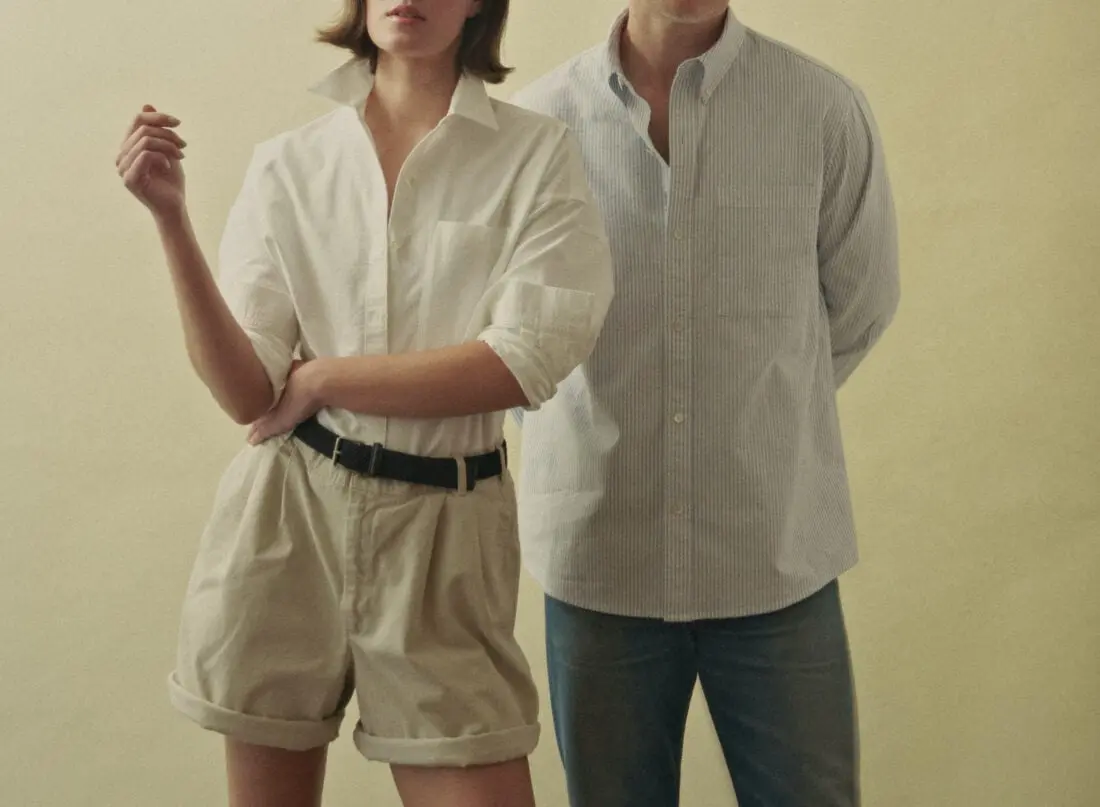
At the forefront of this movement is E.M. Reitz, an independent Charleston-based label helmed by industry veteran Erin Reitz. By fusing century-old Japanese textile heritage with meticulous American manufacturing, E.M. Reitz has reimagined the OCBD for the modern era. The result is a garment that addresses the historic shortcomings of traditional Oxford cloth—chiefly its heavy, stifling weight during sweltering Southern summers—while introducing a modern, relaxed silhouette that prioritizes tactile luxury, durability, and effortless drape.
Priced at $480 and positioned as the pinnacle of domestic craftsmanship, the brand’s flagship pieces—A Steady Hand for women and Scout’s Honor for men—are sparking a quiet revolution in how we think about luxury everyday wear.
Detailed Chronology: From Scottish Mills to Charleston Studios
To understand the magnitude of what E.M. Reitz is achieving today, it is essential to trace the arc of the Oxford shirt’s history and the specific trajectory of the brand itself.
- 19th Century: The fabric originates in Scotland, where innovative weavers construct a sturdy, basketweave cotton designed to be durable yet breathable. The cloth is marketed under the collegiate moniker "Oxford," cementing its place in the academic and athletic lexicon.
- Early 20th Century: The garment is adopted by polo players who require a collar that can be buttoned down to prevent it from flapping in the wind during matches. This practical athletic wear gradually transitions into ivy league style and broader civilian fashion, characterized by a generous, comfortable cut.
- Late 20th Century: As tailoring trends shift toward slim-fit silhouettes, the Oxford shirt undergoes a dramatic transformation. The fit becomes increasingly snug, rigid, and tailored, drifting away from its breezy, athletic origins.
- 2022: Designer Erin Reitz—drawing upon an impressive resume that includes high-profile stints at major fashion houses like Ann Taylor, Anne Klein, and artisanal pioneer Alabama Chanin—launches her namesake label, E.M. Reitz, initially focusing on women’s shirting out of her Charleston, South Carolina studio.
- October 2025: Responding to demand for gender-fluid comfort and classic menswear reimagined, Reitz expands her catalog to officially introduce the men’s line, anchoring the collection with the Scout’s Honor shirt.
- August 2026: E.M. Reitz expands its seasonal offerings to include lightweight swim cover-ups and effortless shirtdresses, all utilizing the signature butter-soft Japanese basketweave. The brand also announces plans to open an exclusive, appointment-based studio space later in the year within the newly renovated historic King Simons building in Charleston.
Supporting Context & Metrics: The Anatomy of a Masterpiece
The secret to the E.M. Reitz Oxford lies in a meticulous, global supply chain that bridges the artisanal traditions of Japan with the storied manufacturing heritage of New York City’s Garment District.
The Japanese Connection: Banshu-Ori Weaving
Traditional American and European Oxford cloth often relies on heavy, thick yarns that can feel punishingly hot and stiff in humid climates like the American South. E.M. Reitz bypasses this limitation by sourcing its fabric from a century-old mill nestled in Japan’s Hyogo Prefecture.
The mill utilizes a specialized, labor-intensive regional technique known as banshu-ori. In this process:
- Fine, high-grade cotton threads are yarn-dyed before the weaving process takes place.
- The woven fabric is subsequently washed, causing the tight basketweave to "open up" and bloom.
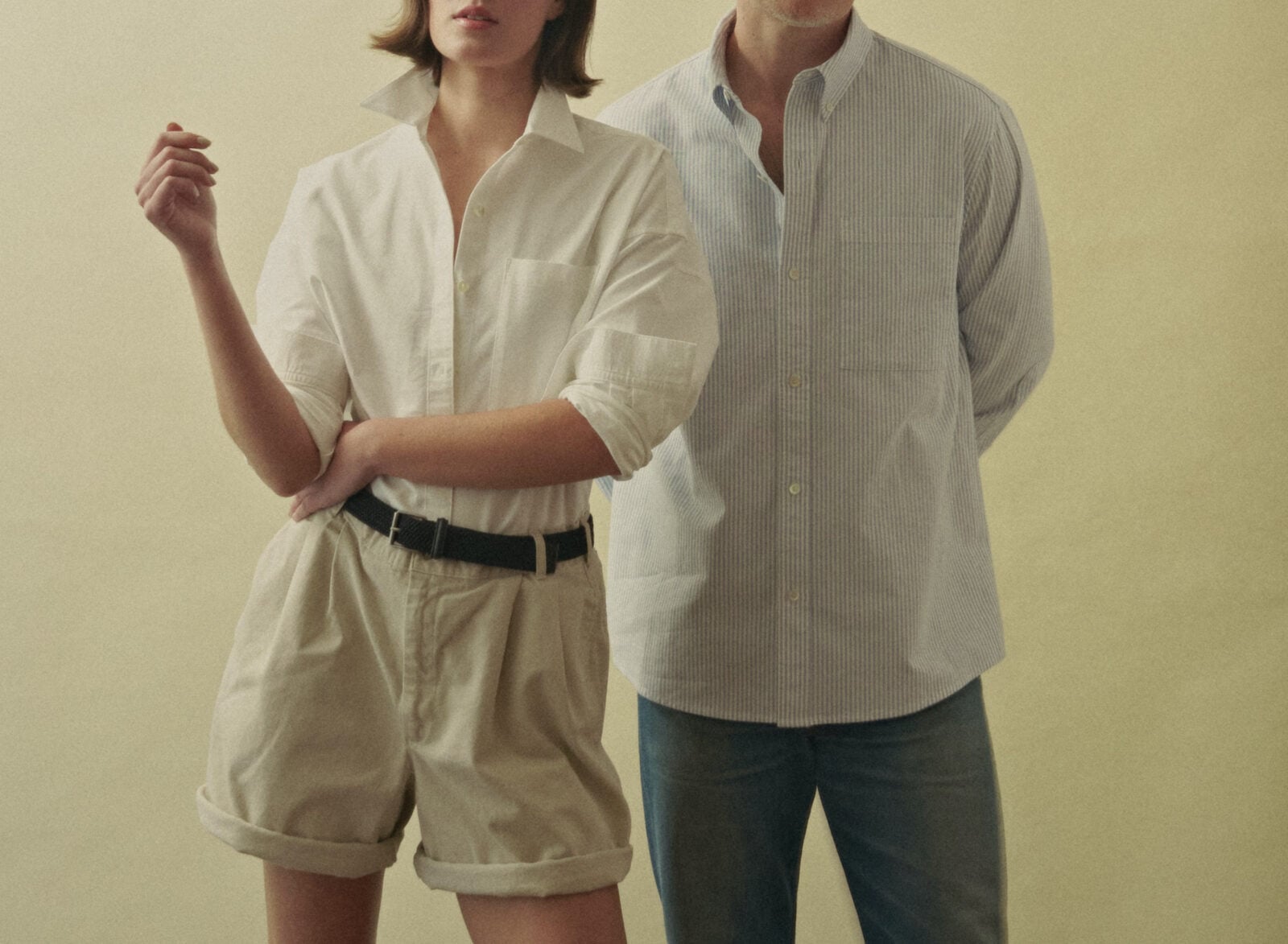
- The result is a fabric with a distinctive, powdery, heathered look and a buttery, "pillowy" texture that feels instantly vintage and broken-in from the very first wear.
American Craftsmanship and Architectural Fit
Erin Reitz handles the foundational design and draping directly from her Charleston studio. However, production is executed in partnership with elite patternmakers and small, specialized sewing workrooms in Manhattan’s Garment District.
[ Charleston Studio ] ---> Design, Draping & Concept
         |
         v
[ Hyogo Prefecture ]  ---> Banshu-Ori Cotton Weaving (Japan)
         |
         v
[ Manhattan Garment District ] ---> Expert Production & Assembly (USA)
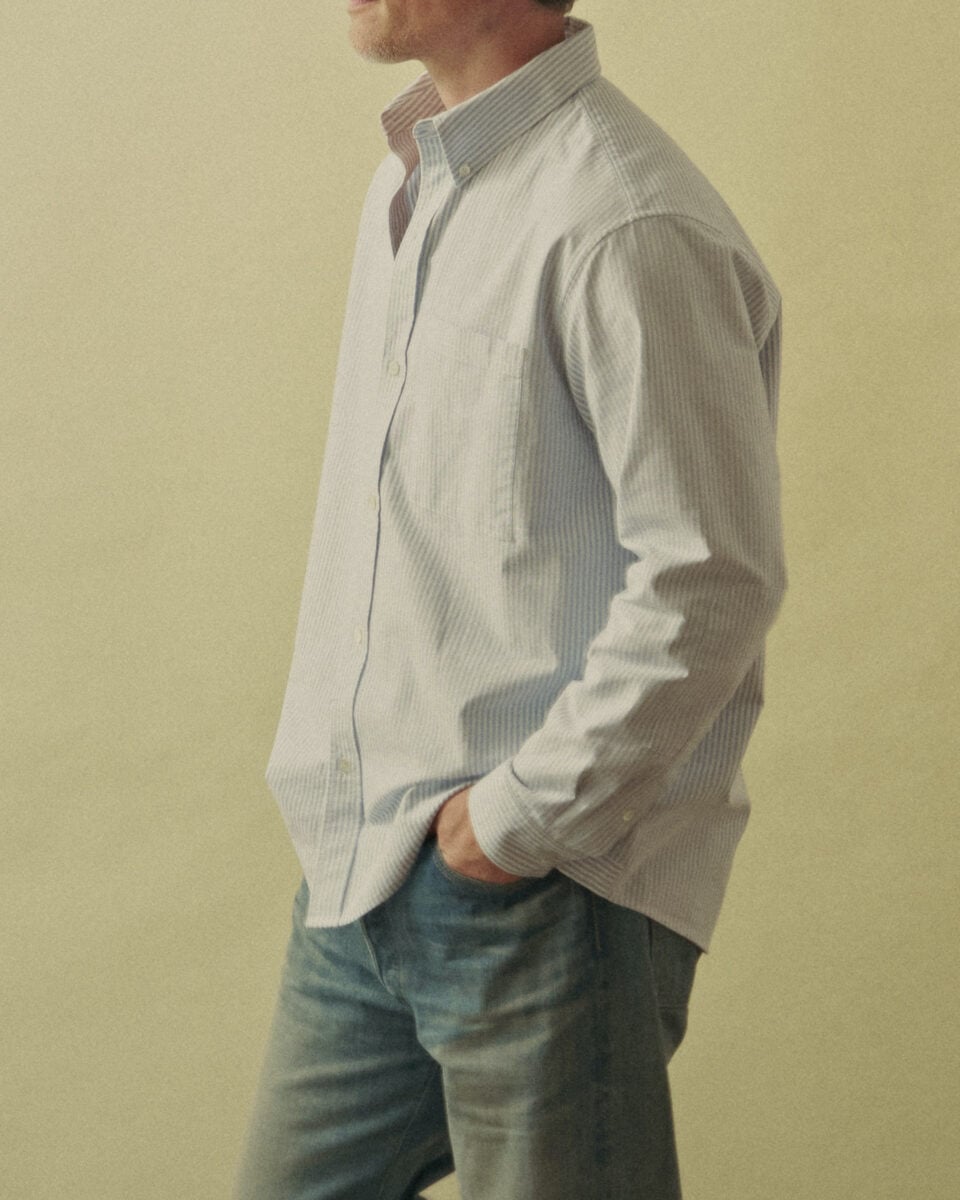
The fit of the garments—A Steady Hand for women and Scout’s Honor for men—rejects the ultra-slim tailoring of the past decade in favor of a relaxed, "cocoony" perspective. It features a subtle drop shoulder that offers a modern twist on the classic cut.
- Untucked: The garment flows gracefully, creating a relaxed, casual aesthetic.
- Tucked: The fabric billows softly, adding visual depth and architectural interest to a tailored outfit.
Durability Metrics & Hardware
At a price point of $480, the shirt is designed to be an enduring investment rather than a precious, fragile luxury item. Every stress point is heavily reinforced:
- Elbow Patches: Function as both a classic, vintage-inspired aesthetic detail and robust structural reinforcement against wear and tear.
- Side Seam Reinforcement: A horizontal patch is integrated into the side seam to alleviate high-tension stress points.
- Buttons: Genuine, natural trochus-shell buttons are hand-sewn onto the garment.
- Stitching: Each button is secured with a shank using 18 stitches of high-quality Gütermann thread, ensuring it withstands years of laundering and heavy daily use.
- Utility: Includes a traditional locker loop, making it practical for hanging in casual environments like the gym, beach, or pool.
Official Statements & Design Philosophy
The driving force behind the brand is Erin Reitz’s uncompromising dedication to craft. Her philosophy is rooted in material honesty and an obsessive attention to detail.

"It has almost a heathered, powdery look, with enough space between the yarns for the fibers to bloom, and you get this pillowy feel," explains founder Erin Reitz, describing the sensory experience of the Hyogo-woven fabric. "It’s lightweight and drapey—you almost feel like you’re in bed or something."
This commitment to sensory comfort is matched only by her dedication to structural integrity. When discussing the production realities of manufacturing in the United States, Reitz is unequivocal about her standards:
"My goal is to make the best shirt made in America," Reitz states. "I am maniacal about three things: quality of fabric, fit, and construction."
Addressing the broader macro-trends in contemporary fashion, Reitz points out that the pendulum of menswear and womenswear has officially swung away from restrictive tailoring and back toward fluid comfort:
"We’re seeing more volume in menswear in general, and it definitely applies to the Oxford," she notes, emphasizing that today’s consumer values ease of movement just as much as sharp tailoring.
Future Outlook: Charleston, Expansion, and Beyond
As E.M. Reitz approaches the final quarter of 2026, the brand is transitioning from a digital-first and trunk-show-dependent model into a physical retail experience rooted deeply in Charleston’s architectural history.
Later this year, the label will open its doors to an exclusive, appointment-based studio space located within the meticulously renovated historic King Simons building. This intimate salon setting will allow clients to experience the tactile luxury of the fabrics firsthand and receive personalized fittings directly from the brand’s creators.
Furthermore, the brand’s product ecosystem continues to broaden organically. Building upon the success of the core OCBD collections, recent seasonal drops have introduced complementary resort-wear pieces—including refined swim cover-ups and effortless shirtdresses—all cut from the same sublime, century-old Japanese basketweave cotton.
By marrying the relaxed elegance of Southern lifestyle sensibilities with world-class international textile sourcing and unapologetically rigorous domestic manufacturing, E.M. Reitz has successfully transformed a basic preppy staple into a modern heirloom. In doing so, the Charleston label is not just participating in the conversation around American luxury shirting—it is authoring its next chapter.

0 Comments