

Executive Overview
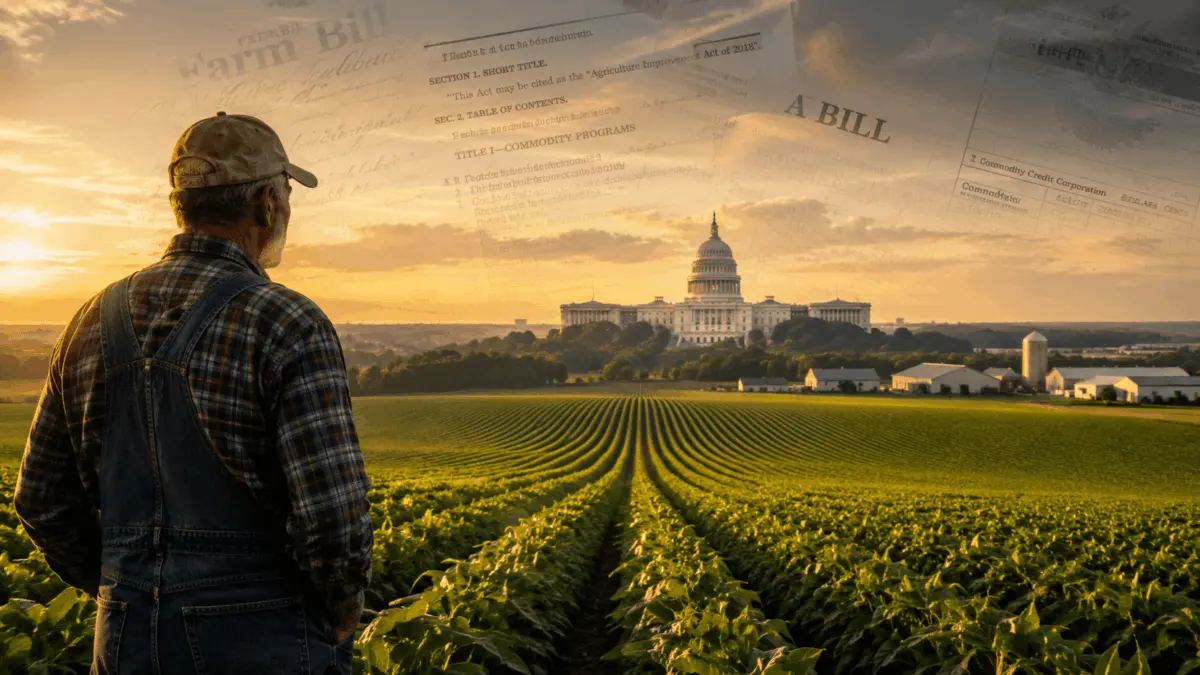
In a stunning political defeat that has sent ripples of uncertainty across America’s agricultural heartland, the Senate Agriculture Committee has failed to advance the much-anticipated Agricultural Act of 2026—widely referred to as Farm Bill 2.0. In a razor-thin 10-to-11 vote, the committee adjourned for its legislative recess without approving the landmark multi-year legislative package designed to govern federal agricultural, conservation, and nutrition programs.
The setback leaves producers, industry stakeholders, and rural communities in a state of extended limbo. The comprehensive legislation, officially tracked as House Resolution 7567 (H.R. 7567), had been viewed by many as a vital legislative vehicle to address soaring input costs, unpredictable global trade dynamics, and severe climate-driven weather anomalies impacting domestic crop yields.
With the committee deadlocked along sharply contested political lines and key absences sealing the bill’s temporary defeat, negotiations have officially been pushed back to September 7. As policymakers scatter to their home states for the district work period, agricultural economists, commodity groups, and anti-hunger advocates are locked in intense lobbying efforts, setting the stage for what promises to be a high-stakes legislative showdown when Capitol Hill reopens.
Detailed Chronology of the Committee Deadlock
The road to the August recess was paved with high-stakes negotiations, frantic committee amendments, and intense pressure from both agribusiness lobbies and nutrition advocates. Over the past several months, Senate Agriculture Committee Chairman John Boozman (R-AR) worked alongside bipartisan counterparts to craft a comprehensive draft of the Agricultural Act of 2026. The objective was clear: forge a legislative compromise that could pass both chambers of Congress before the expiration or further extension of the previous farm bill framework.
However, as the markup session progressed into its final hours, mounting tensions over funding priorities, safety net mechanics, and nutrition assistance spending began to fracture the fragile bipartisan consensus.
The Final Roll Call and Key Absences
When the gavel fell for the recorded vote on the committee draft, the tally stood at 10 votes in favor and 11 against. Procedural analysts immediately zeroed in on the critical margins and attendance anomalies that decided the fate of Farm Bill 2.0:
- The Absentee Factor: Kentucky Republican Senator Mitch McConnell was notably absent from the proceedings, a absence that carried significant weight given his historic influence on agricultural policy and federal resource allocation.
- The Disappearing Vote: Alabama Republican Senator Tommy Tuberville was physically present during the earlier phases of the committee hearing and debate. However, at the critical moment when the roll call vote was executed, Senator Tuberville was unaccounted for, failing to register an affirmative vote that could have potentially broken or tied the deadlock.
- Defections Across the Aisle: The legislative arithmetic ultimately collapsed when opposition solidified on the Democratic side, spearheaded by members who argued the framework failed to strike an equitable balance between producer supports and nutrition safety nets.
The Partisan and Policy Fault Lines
The debate preceding the vote laid bare the deep philosophical divisions plaguing modern omnibus farm legislation. On one side, rural-state Republicans championed the bill as an urgent lifeline for producers grappling with compressed profit margins, inflated fertilizer and fuel expenses, and severe localized droughts. On the other side, progressive and urban-suburban Democrats argued that the bill’s concessions to commodity supports came at an unacceptable cost to domestic welfare and anti-hunger initiatives.
With the 10-11 defeat officially recorded, Chairman Boozman had no procedural path forward other than to adjourn the committee, leaving the multi-trillion-dollar legislative package suspended in political purgatory.
Official Statements and Stakeholder Reactions
The failure to pass the committee draft triggered an immediate and impassioned wave of responses from Capitol Hill lawmakers, agricultural associations, and anti-hunger coalitions.
Chairman Boozman Condemns the Deadlock
In a strongly worded statement following the vote, Senate Agriculture Committee Chairman John Boozman did not mask his frustration regarding the committee’s inability to reach a consensus.
"I’m deeply disappointed by the outcome," Senator Boozman stated. "We have the ultimate responsibility to stand for America’s farmers, ranchers, and rural communities. Everyone recognizes the serious, compounding challenges that they continue to face on a daily basis. Blocking the Farm Bill at this juncture does nothing to solve these problems—it only adds dangerous layers of uncertainty and financial hardship to an already strained agricultural economy."
Supporters of Boozman’s draft pointed out that the legislation included critical updates to crop insurance frameworks, expanded disaster relief mechanisms, and enhanced market access initiatives tailored to modern supply chain realities.
Democratic Opposition: The SNAP Controversy
The decisive swing vote against the package came from key Democratic committee members, including Senator Raphael Warnock (D-GA). Senator Warnock voiced sharp criticism regarding how the legislation handled federal nutrition assistance, specifically targeting the Supplemental Nutrition Assistance Program (SNAP).
"We cannot in good conscience support a legislative package that attempts to balance the agricultural ledger on the backs of vulnerable families," Senator Warnock noted during the committee proceedings. "While our farmers and agricultural producers unquestionably deserve robust protections, this bill simply did not go far enough to mitigate harmful structural cuts and restrictive compliance measures within SNAP. Food security and farm security must go hand-in-hand."
The friction between nutrition funding—which historically accounts for roughly 80% of total farm bill outlays—and traditional commodity and crop insurance programs remains the single most volatile chasm in contemporary agricultural policymaking.
Supporting Context & Economic Metrics
To fully understand the gravity of the Senate Agriculture Committee’s deadlock, one must examine the macroeconomic environment confronting American agriculture in 2026. Producers are navigating a uniquely challenging landscape defined by fluctuating commodity prices, stubborn inflation, and escalating climate vulnerabilities.
The Financial Pressures on Producers
According to recent economic data released by the United States Department of Agriculture (USDA) Economic Research Service (ERS), net farm income has experienced sustained volatility following historic highs earlier in the decade. Key cost drivers include:
- Production Input Inflation: Expenses related to synthetic fertilizers, agricultural chemicals, heavy machinery, and replacement parts remain elevated well above pre-pandemic baselines.
- Interest Rate Burdens: Elevated federal interest rates have made operating loans significantly more expensive for multi-generational family farms and beginning agriculturalists alike.
- Global Trade Competitiveness: American grain, oilseed, and livestock producers face fierce international competition, particularly from South American exporting nations benefiting from expanded infrastructure and lower production overhead.
The Role of the Agricultural Act of 2026 (H.R. 7567)
The proposed Agricultural Act of 2026 was architected to address these structural pressures through several primary titles:
- Commodity Programs and Price Loss Coverage (PLC): Updating reference prices to reflect modern costs of production, ensuring that baseline safety nets trigger when market prices experience sharp downturns.
- Crop Insurance Modernization: Expanding buy-up options, reducing administrative hurdles for specialty crop producers, and integrating advanced precision agriculture data into risk management calculations.
- Conservation and Environmental Stewardship: Streamlining working-lands conservation programs (such as EQIP and CSP) to empower farmers to voluntarily implement regenerative agriculture practices without sacrificing productivity.
- Nutrition Programs (SNAP): Balancing program integrity measures with adequate benefit calculations to address food insecurity across both urban and rural demographics.
When the committee vote failed, all of these proposed policy modernizations were effectively frozen, leaving stakeholders reliant on existing statutory baselines and temporary stopgap measures.
Future Outlook: The Path to September 7 and Beyond
With the Senate Agriculture Committee formally adjourned for the district work period, all eyes now turn to the calendar and the resumption of negotiations scheduled for September 7.
Strategic Maneuvering During the Recess
The weeks leading up to September 7 will not be quiet. Lobbyists, trade associations, and grassroots agricultural organizations are mobilizing member bases to pressure undecided lawmakers.
- Agricultural Cooperatives and Commodity Groups are ramping up messaging campaigns emphasizing that further delays risk sowing chaos ahead of the autumn harvest and the upcoming 2027 planting cycle planning phases.
- Anti-Hunger and Nutrition Coalitions are standing firm in their opposition to any legislative text that reduces SNAP benefit efficacy or imposes burdensome work-reporting requirements that they argue disproportionately harm low-income households.
Legislative Scenarios Moving Forward
Political analysts tracking the Farm Bill process have identified three primary pathways following the September 7 reconvening:
- Bipartisan Compromise and Markup Revision: Chairman Boozman and ranking members may seek to amend specific titles of H.R. 7567—most notably adjustments to nutrition program formulas or commodity reference price triggers—to peel off enough dissenting votes to secure an 11-10 or broader majority.
- Further Extension of the 2018 Farm Bill: Should the ideological gulf prove unbridgeable ahead of the legislative calendar deadlines, Congress may be forced to pass another formal extension of the previous farm bill framework, delaying structural reforms for yet another fiscal year.
- Floor Maneuvering: Leadership in either chamber could attempt alternative legislative maneuvers, though omnibus farm bills traditionally require robust, bipartisan committee consensus to survive the amendment-heavy environment of the full Senate floor.
Conclusion
The stalled vote on the Agricultural Act of 2026 underscores the profound difficulty of passing comprehensive omnibus legislation in a deeply polarized political climate. While farmers, ranchers, and families relying on federal nutrition assistance await clarity, the coming weeks of recess diplomacy will determine whether Congress can bridge its divisions. When the Senate Agriculture Committee reconvenes on September 7, the pressure will be immense to deliver a stable, forward-looking farm bill that safeguards the future of American agriculture.

0 Comments