
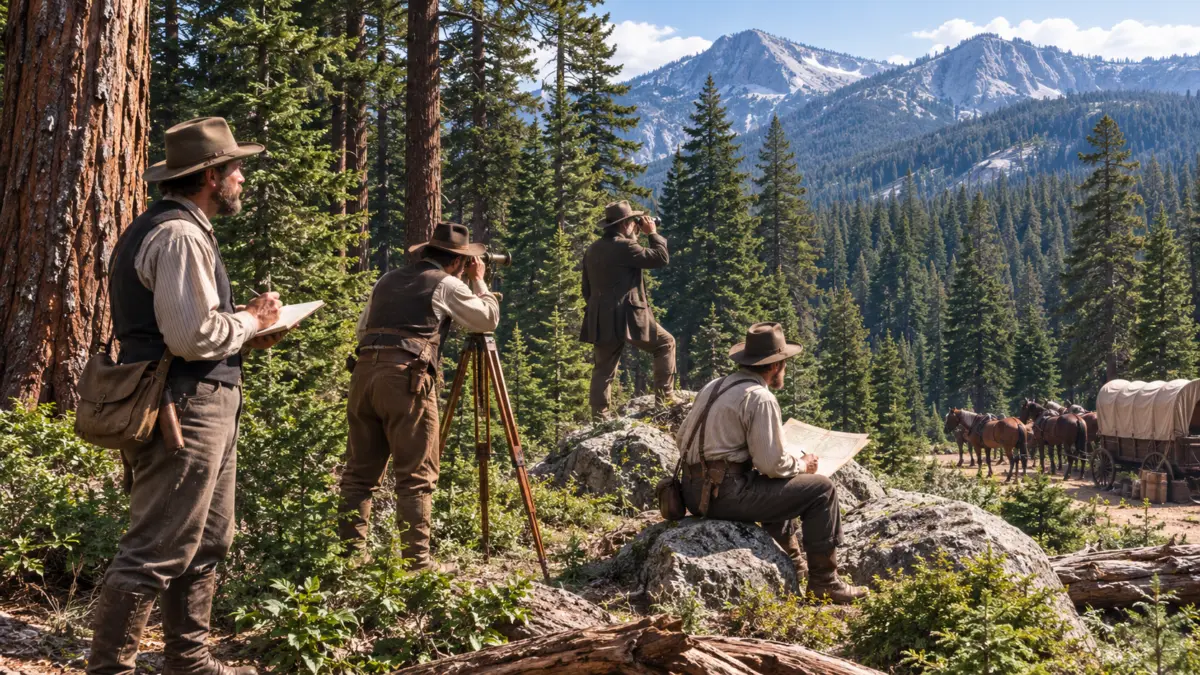

Executive Overview
Long before the acronyms of contemporary environmental agencies dominated policy debates, the destiny of America’s vast woodlands hung in the balance. The trajectory of the United States through the 18th and 19th centuries was inextricably tied to an unyielding mandate: clear the land to build a nation. As early American settlers carved out homesteads, established fledgling farming communities, and laid down the iron arteries of a transcontinental railway system, millions of acres of old-growth timber fell to the axe and the match.
For generations, the prevailing economic philosophy viewed the North American continent’s natural wealth as limitless. Forests were an impediment to agricultural progress, an inexhaustible fuel source, and an endless bank of timber waiting to be drawn upon. However, by the post-Civil War era, a radical paradigm shift began to take root within the halls of federal governance and scientific societies. Rapid industrialization, unchecked commercial logging, and alarming rates of deforestation forced a reluctant government to confront a sobering reality: nature’s bounty had boundaries.
The institutionalization of American forest management—sparked by the creation of a modest investigative office in 1876, accelerated by the 1881 Division of Forestry, and cemented by the landmark Forest Reserve Act of 1891—represents one of the most critical evolutions in the nation’s history of public policy. This historical journey transformed how the United States interacted with its wild landscapes, replacing the chaotic free-for-all of pioneer exploitation with structured scientific stewardship, conservation, and federal oversight. Presented through the lens of agricultural and environmental history, this is the story of how foresight, science, and politics merged to protect America’s timber heritage.
Detailed Chronology: The Milestone Eras of Early Conservation
Understanding the birth of American forestry requires examining the specific legislative and administrative steps that shifted the nation’s philosophy from unbridled development to strategic preservation.
1876: The Genesis of Federal Inquiry
The foundation of organized federal forest management was laid in 1876, a pivotal year that marked the nation’s centennial and sparked a quiet revolution in resource administration. Recognizing the mounting pressures on timberlands, Congress authorized the creation of a specialized office within the U.S. Department of Agriculture (USDA).
Charged with investigating and reporting on the quality, condition, and consumption rates of the nation’s forests, this embryonic agency did not possess regulatory authority or land to manage. Instead, its primary weapon was data. By sending researchers into the field to quantify timber reserves and analyze ecological damage, the office shattered the myth of the "inexhaustible forest." This early investigative body signaled a cultural awakening: the federal government formally acknowledged that timber was not merely a raw material, but a complex, exhaustible resource requiring dedicated scientific observation.
1881: The Rise of the Division of Forestry
As the country sprinted toward the 20th century, fueled by massive population growth and westward expansion, the pressures on natural ecosystems multiplied exponentially. To keep pace with these escalating demands, the federal government elevated its administrative footprint in 1881 by establishing the Division of Forestry within the USDA.
This new division expanded significantly upon the work of its 1876 predecessor. It moved beyond simple data collection to actively research timber properties, silviculture, and the optimal uses of various wood species for industrial and domestic purposes. During this era, forests were the literal backbone of American infrastructure. Wood built the homes, fueled the locomotives, shored up underground mines, and powered factories.
Yet, the Division of Forestry introduced a broader socio-ecological perspective to the conversation. Its leaders and affiliated scientists argued that forests performed vital, non-timber ecosystem services. They regulated regional water cycles, protected vulnerable watersheds from catastrophic erosion, sheltered wildlife, and sustained rural economies. The establishment of the division proved that federal officials were beginning to look past immediate commercial interests toward the long-term viability of the nation’s natural capital.
1891: The Watershed Forest Reserve Act
Despite the growing body of scientific knowledge and public concern, the Division of Forestry still lacked the legal teeth to protect public lands from wholesale exploitation. That changed dramatically on March 3, 1891, when President Benjamin Harrison signed the Forest Reserve Act as a rider to an omnibus land-revision bill.
Section 24 of this landmark legislation granted the President unilateral authority to set aside and reserve public lands bearing forests—wholly apart from agricultural settlement or commercial development—as public reservations. This monumental shift broke with a century of federal land policy, which had prioritized the rapid transfer of public domains into private hands.
For the first time, the federal government asserted that certain lands possessed intrinsic and long-term public value that superseded immediate private enterprise. Within days of the act’s passage, President Harrison exercised his new authority, establishing the White River Plateau Timber Land Reserve in Colorado. This kicked off a cascade of executive reservations that temporarily halted the rampant degradation of Western watersheds and laid the geographical bedrock for the future National Forest System.
Supporting Context & Metrics: The Scale of 19th-Century Transformation
To fully grasp the urgency that drove 19th-century policymakers toward conservation, one must examine the staggering scale of land-use transformation occurring across the United States.
The Demographics of Deforestation
Between the end of the Civil War and the turn of the 20th century, the American landscape underwent an unprecedented physical makeover. The population of the United States surged from roughly 38.5 million in 1870 to over 76 million in 1900. This massive demographic boom, paired with millions of European immigrants arriving daily, generated an insatiable demand for housing, fuel, and agricultural acreage.
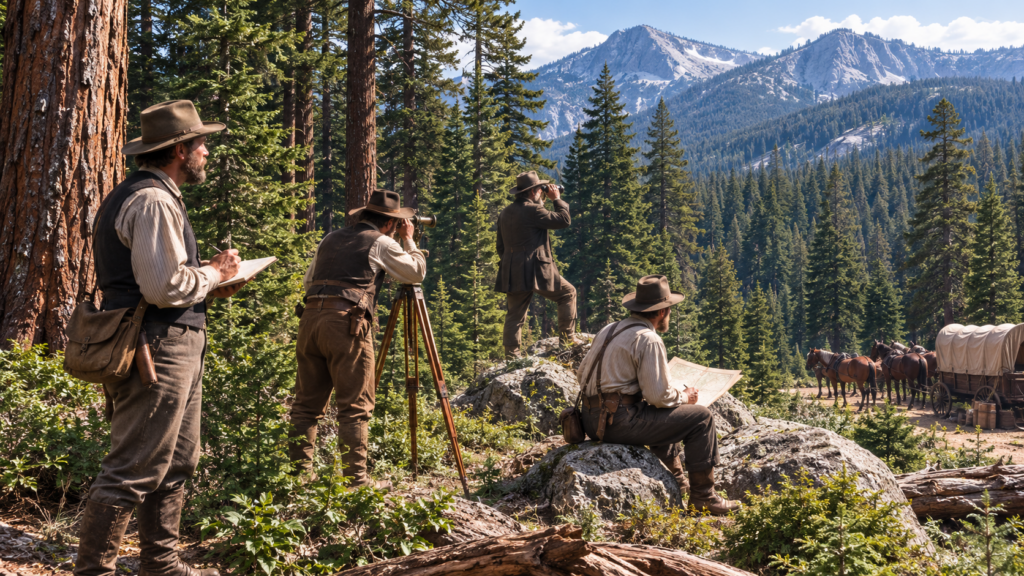
- Agricultural Expansion: Millions of acres of eastern hardwood forests and midwestern oak savannas were cleared to make way for mechanized farming. Under policies like the Homestead Act of 1862, settlers claimed over 80 million acres of public domain by 1900, much of it requiring aggressive clearing.
- The Timber Bonanza: In the Great Lakes states—Michigan, Wisconsin, and Minnesota—lumber barons operated with industrial efficiency. During the peak of the white pine logging era (roughly 1870–1900), loggers harvested an estimated 160 billion board feet of timber from Michigan alone. Entire forests were clear-cut, leaving behind vast landscapes of dry slash that frequently fueled catastrophic wildfires, such as the infamous Peshtigo Fire of 1871.
- Industrial Fuel and Infrastructure: Before coal and petroleum dominated American energy grids, wood was the primary fuel source for domestic heating, industrial steam engines, and riverboats. Furthermore, the expansion of the railroads consumed millions of acres of timber annually simply to supply cross ties and trestle bridges.
The Intersection of Agriculture and Forestry
The historical nexus between agriculture and forestry was deep and often contentious. Early farmers viewed dense forests as harboring predators, blocking sunlight, and concealing fertile soil. However, as the 19th century progressed, agricultural scientists began to realize that indiscriminate clearing was destroying local microclimates, accelerating soil erosion, and causing erratic river flows that threatened downstream crops.
The early forestry offices within the USDA were uniquely positioned to bridge this gap. They demonstrated to the American farmer that woodlands were not enemies of agriculture, but vital partners. Shelterbelts could protect crops from wind erosion; managed farm woodlots could provide a sustainable, lifelong source of fencing and fuel; and healthy upland forests could ensure steady irrigation waters for arid western valleys.
Official Statements & Historical Perspectives
The ideological battle lines of late 19th-century resource management pitted unbridled utilitarianism against emerging conservation ethics. The voices of contemporary scientists, policymakers, and forestry pioneers reveal the tension and vision that shaped early American environmental policy.
In his early annual reports, the pioneering Chief of the Division of Forestry, Dr. Bernhard E. Fernow—often regarded as one of the founding fathers of American professional forestry—warned against the reckless depletion of timber stocks:
"The unthinking public looks upon the forest as an obstacle to civilization, something to be eradicated, or at best as an inexhaustible storehouse of timber provided by nature for the unrestricted use of man. We fail to recognize that the forest is not a mere storehouse, but a crop—a slow-maturing crop that, if harvested without regard for its renewal, leaves behind an ecological and economic desert."
Similarly, advocates for the Forest Reserve Act emphasized the imperative of safeguarding public watersheds. In congressional debates leading up to the 1891 legislation, proponents argued that protecting the mountain timberlands of the West was essential to the survival of downstream agrarian economies. Without forest cover to absorb snowmelt and anchor mountain soils, valleys would alternate between devastating spring floods and catastrophic summer droughts.
President Benjamin Harrison’s quiet signing of the Forest Reserve Act in 1891—initially passed with little public fanfare—unwittingly established one of the most powerful conservation legacies in modern history. By quietly delegating the power to protect public domain forests, the federal government pivoted from a passive landlord to an active, custodial steward of the American wilderness.
Future Outlook: The Enduring Legacy of 19th-Century Stewardship
The evolution from a modest investigative desk in 1876 to the sweeping authorities of the 1891 Forest Reserve Act laid the foundational framework for modern environmentalism. The principles established during this turbulent era continue to resonate across contemporary land management paradigms in the United States and globally.
From Reserves to the U.S. Forest Service
The mechanisms forged in the late 19th century directly paved the way for the creation of the U.S. Forest Service (USFS) in 1905 under President Theodore Roosevelt and Chief Forester Gifford Pinchot. The forest reserves established by Harrison and his successors were transferred to the Department of Agriculture, becoming the core of America’s National Forests.
Pinchot championed the philosophy of "wise use"—the idea that natural resources should be managed sustainably so they could provide the greatest good for the greatest number of people for the longest time. This utilitarian conservation model balanced active timber harvesting, grazing, and mining with rigorous scientific oversight, fire suppression, and watershed protection.
Modern Challenges in Historical Context
Today, the legacy of these 19th-century pioneers faces complex, 21st-century challenges. Modern forest managers grapple with:
- Catastrophic Wildfires: Driven by decades of aggressive historical fire suppression and exacerbated by changing climate conditions, contemporary forests often experience high-intensity crown fires that threaten rural communities and ecosystems alike.
- Biodiversity and Habitat Conservation: Modern forestry has expanded far beyond timber yields, incorporating complex ecological science to protect endangered species, preserve old-growth carbon sinks, and maintain forest health under climate stress.
- Urban-Wildland Interface: As suburban sprawl pushes deeper into historical forestlands, federal, state, and private foresters must navigate conflicting demands for recreation, property protection, and commercial resource extraction.
Despite these modern pressures, the core tenets established between 1876 and 1891 remain intact. The recognition that wildlands require professional study, legal protection, and long-term planning remains the bedrock of American environmental policy.
As curated through the American Agriculture History Minute by agricultural historian Mark Oppold, this history reminds contemporary citizens that the lush public forests enjoyed today were not accidents of nature. They are the deliberate, hard-fought result of 19th-century visionaries who looked past the horizon of industrial expansion and chose to plant the seeds of enduring conservation.

0 Comments