

By the Agricultural News Desk
Published: September 2026
Reporting contributed by Tyron Spearman for Southeast AgNet
Executive Overview
As agricultural operations transition into the intense autumn harvest season, the latest federal and regional crop reports reveal a slight downward revision in national peanut yield forecasts. Despite challenging weather patterns and fluctuating localized conditions through the late summer, the overall health of the nation’s peanut acreage remains predominantly stable, though divergent trends are emerging across key producing states in the American Southeast.
According to data compiled through the end of August, approximately 63% of the total U.S. peanut acreage was categorized in good-to-excellent condition. While this figure reflects a minor one-percentage-point dip week-over-week and trails the performance of the previous year’s crop by eight percentage points, agronomists note that the harvest is proceeding at a steady pace. Approximately 3% of the total crop has been successfully dug out of the ground, marking the official kickoff of what producers hope will be a profitable, albeit tightly margined, harvest window.
Nationwide, the average yield estimates have seen a modest downward correction. In August, the projected national average stood at 3,956 pounds per acre. Following September’s updated assessments, that projection has been trimmed to 3,879 pounds per acre. This national adjustment is not uniform, however; localized weather events, regional moisture levels, and varying pest pressures have created a patchwork of localized successes and setbacks, particularly when comparing the distinct output metrics of Alabama, Florida, and Georgia.
Detailed Chronology of the 2026 Season
To understand the trajectory of the 2026 peanut harvest, agricultural economists examine the timeline of crop development, weather disruptions, and successive adjustments made by federal reporting agencies from spring planting through late summer.
Spring Planting and Early Summer Establishment
The 2026 season commenced under generally favorable soil preparation conditions across the primary production regions of the coastal plains and parts of the lower Southeast. Growers capitalized on adequate early-season moisture to establish deep taproots. However, as the calendar turned toward mid-summer, erratic precipitation patterns began to test dryland farmers, while irrigated operations relied heavily on managed water systems to maintain canopy development.
Late-August Crop Condition Benchmarks
By August 30, field evaluations captured a critical snapshot of crop vigor just weeks ahead of harvest. National metrics indicated that 6% of the peanut crop was performing at an "excellent" level, while 55% was rated "good." Combined, this accounted for the 63% good-to-excellent baseline.
Simultaneously, stress indicators began to surface:
- Fair Condition: 29% of acreage showed signs of stress, often attributed to localized dry spells or excessive heat units during pod fill.
- Poor Condition: 9% of the crop faced significant yield-limiting factors.
- Very Poor Condition: 1% of acreage was deemed a total or near-total write-off due to localized flooding, severe disease incidence, or irreversible drought stress.
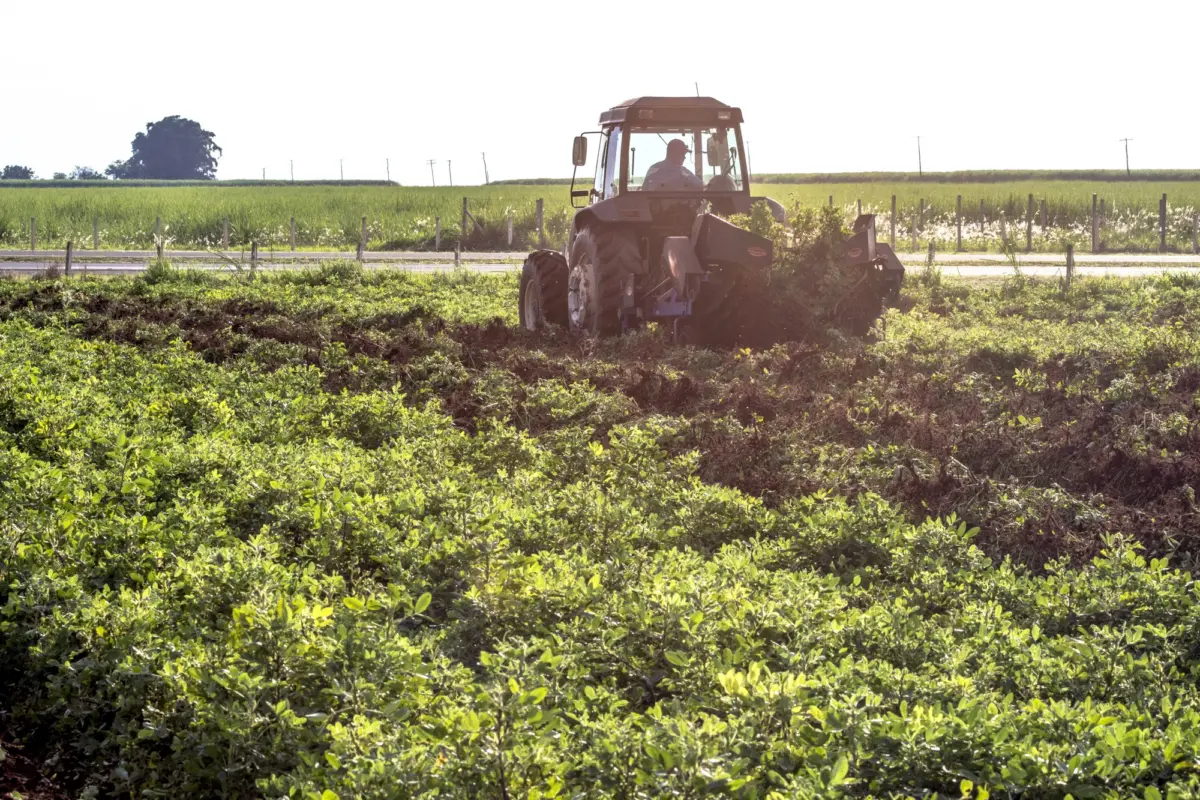
By this benchmark date, roughly 3% of producers had initiated digging operations—the vital first phase of peanut harvesting where specialized machinery lifts the vines, turns them upside down, and exposes the pods to the sun to dry before combining.
September Adjustments and Projections
As federal and state agricultural statisticians processed field samples, pod counts, and weight checks entering September, the national outlook required recalibration. The downward adjustment from the August estimate of 3,956 pounds per acre down to the September figure of 3,879 pounds per acre reflected realized losses in specific non-irrigated sectors and lower-than-expected pod weights in localized pockets of the Southeast.
Supporting Context & Regional Metrics
The overarching national average masks significant regional variations. Peanut production in the United States is heavily concentrated in a handful of southeastern states, with Georgia, Florida, and Alabama leading the charge in total volume and acreage.
+-------------------------------------------------------------------------+
|                2026 REGIONAL PEANUT YIELD ESTIMATES                     |
|                                                                         |
| State       | Prior / Last Year      | September 2026 Projected         |
|-------------------------------------------------------------------------|
| Alabama     | 3,200 lbs / acre       | 3,100 lbs / acre (Down)          |
| Florida     | Stable Baseline        | 3,800 lbs / acre (Steady)        |
| Georgia     | 4,050 - 4,150 lbs/ac   | 4,200 lbs / acre (Up)            |
|-------------------------------------------------------------------------|
| NATIONAL    | 3,956 lbs / acre (Aug) | 3,879 lbs / acre (Sept)          |
+-------------------------------------------------------------------------+
Alabama: Facing Downward Pressure
Producers in Alabama are confronting a tougher-than-expected season. Earlier projections anticipated an average yield of 3,200 pounds per acre. However, updated September estimates dropped that figure down to 3,100 pounds per acre. Agricultural extension agents in the state point to pockets of erratic summer rainfall and localized disease pressures—such as white mold and leaf spot—as primary drivers for the reduction. Consequently, Alabama will be bringing in a smaller total volume of peanuts than initially penciled into early-season financial forecasts.
Florida: Holding Steady Amid Variability
Florida’s peanut belt has displayed notable resilience. Despite navigating tropical moisture events and high ambient temperatures that typically accelerate disease development, Florida growers have maintained their footing. The state’s average yield projection holds firm at a respectable 3,800 pounds per acre. Timely fungicide applications and strategic irrigation management by Sunshine State farmers have successfully mitigated the environmental stressors that impacted neighboring states.
Georgia: The Powerhouse Flexes Higher
As the nation’s leading producer of peanuts, Georgia’s performance dictates the direction of the national market. Fortunately, Georgia growers have reason to be optimistic. Following a strong showing last year—where average yields hovered between 4,050 and 4,150 pounds per acre—initial expectations for 2026 have been surpassed. Recent September assessments bumped the state’s projected average yield up to 4,200 pounds per acre. This impressive output reflects superior pod set in key southwestern Georgia counties, offsetting the production deficits recorded in states like Alabama.
Official Statements and Industry Insights
Agricultural analysts and field reporters have emphasized the importance of adaptability as farmers navigate the complexities of the 2026 harvest.
Tyron Spearman, reporting for Southeast AgNet, noted during his late-September broadcast updates that while the headline figures show a contraction in national yield averages, the reality on the ground is characterized by intense localized effort.
"The adjustment from nearly 4,000 pounds down to the upper 3,800s reflects the fine margins modern peanut farmers operate within," agricultural economists noted in post-report briefings. "When you balance out Alabama’s drop with Georgia’s upward bump, the market finds a functional equilibrium, but individual farm gate returns will vary wildly depending on whether a grower had access to reliable irrigation."
Agronomists stress that the 2026 crop highlights the widening gap in productivity between dryland farming and irrigated land. In years marked by erratic summer precipitation, producers equipped with center-pivot irrigation systems have consistently protected their yield potential, while dryland fields remain entirely at the mercy of unpredictable atmospheric moisture.
Future Outlook: Harvesting and Market Implications
As September draws to a close and October approaches, the focus for thousands of farming families shifts entirely from crop management to mechanical harvesting. The transition from digging to combining is a high-stakes race against autumn weather patterns.
Key Factors to Watch in the Coming Weeks:
- Weather Windows: Continuous dry weather is essential for the curing process once peanuts are dug. Prolonged autumn rains can severely degrade peanut quality, lower grade scores, and invite fungal rots that decimate market value.
- Shelling and Grading Facilities: Local buying points and shellers are ramping up operations to receive incoming truckloads. Early grade reports from the initial 3% of harvested acreage will set the pricing tone for the broader commercial market.
- Global Market Dynamics: Domestic supply figures directly influence U.S. peanut butter, confectionary, and export markets. With Georgia posting strong 4,200-pound averages, total U.S. supply remains robust enough to meet domestic consumption demands, though export competitiveness will depend heavily on final grading outcomes.
Ultimately, while the 2026 peanut crop has experienced downward revisions in overall yield averages, the perseverance of growers across the Southeast ensures that a substantial, high-quality harvest is well underway. Farmers are now working around the clock, moving equipment into the fields to "bring home" a crop that, despite its challenges, remains a cornerstone of southern agriculture.

0 Comments