

Executive Overview
The ongoing global battle against one of the most devastating livestock pests known to agriculture—the New World Screwworm (Cochliomyia hominivorax)—has entered a transformative technological era. Researchers at the United States Department of Agriculture’s Agricultural Research Service (USDA-ARS), working in tandem with international biosecurity partners, have readied an advanced genetic strain of sterile flies known as NovoFly for active operational deployment.
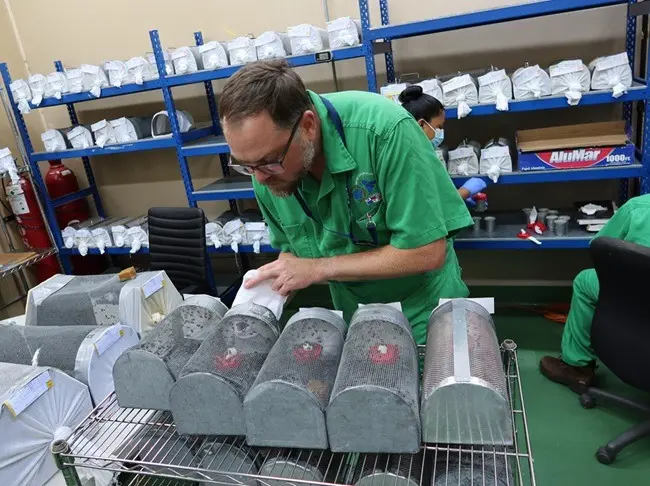
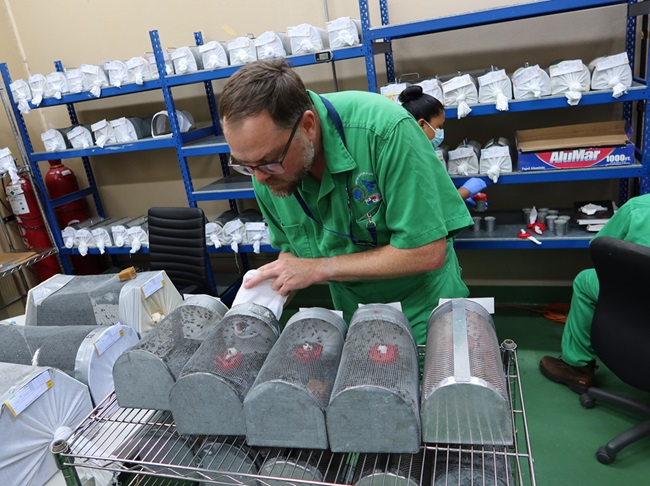
Developed by scientists at the ARS Knipling-Bushland U.S. Livestock Insects Research Laboratory in Kerrville, Texas, in coordination with facilities such as the Panama–United States Commission for the Eradication and Prevention of Screwworm Infestation in Livestock (COPEG), the NovoFly strain represents a monumental leap forward in the application of the Sterile Insect Technique (SIT).
For decades, SIT has served as the gold standard for biological pest control, successfully driving the New World Screwworm out of North America and Central America up to the Darién Gap. However, legacy production models faced inherent biological and logistical inefficiencies: mass-rearing facilities were forced to produce, transport, and irradiate billions of female flies that played no direct role in population suppression. Furthermore, the presence of females complicated the radiation sterilization process, necessitating high radiation doses that inadvertently compromised the physical vitality and mating competitiveness of the male flies upon release.
NovoFly solves these foundational hurdles by introducing a genetic sexing system that selectively eliminates female embryos while allowing facilities to maintain breeding colonies. By removing females from the production pipeline entirely, researchers can apply lower, species-optimized radiation doses exclusively to males. The resulting "super-males" possess significantly greater vigor, longevity, and mating competitiveness in the field. This breakthrough promises to drastically amplify the efficacy of regional eradication programs without requiring expensive expansions to current manufacturing infrastructure.
Detailed Chronology: From Historic Eradication to Genetic Innovation
The Historical Foundation of SIT
The deployment of the Sterile Insect Technique against the New World Screwworm is widely heralded as one of the greatest triumphs in veterinary entomology. Pioneered in the mid-20th century by USDA scientists Edward F. Knipling and Raymond C. Bushland—whose names are proudly borne by the Kerrville research laboratory today—SIT disrupted the reproductive cycle of a parasite that once cost the livestock industry hundreds of millions of dollars annually.
Female screwworm flies deposit their eggs in the open wounds or mucous membranes of warm-blooded animals. Upon hatching, the ravenous larvae (maggots) burrow directly into living tissue, causing severe suffering, secondary infections, and, if left untreated, death. Traditional chemical treatments and wound management proved largely ineffective across vast, rugged ranges. Knipling and Bushland’s radical alternative was elegantly simple: overwhelm the wild population with millions of sexually sterile male flies. Because female screwworm flies typically mate only once in their lifetimes, mating with a sterile male results in non-viable eggs, causing the wild population to collapse over successive generations.
The Evolution of Mass Production and COPEG
Throughout the latter half of the 20th century, USDA-ARS and its regional partners scaled up SIT operations, pushing the screwworm barrier steadily southward through Mexico and Central America. Establishing secure biosecurity buffers, such as the barrier managed by COPEG in Panama, required the continuous, massive aerial distribution of sterile insects across dense jungles and remote pastures.
Despite its undeniable success, the classical SIT model remained constrained by the biological reality of bisexual rearing. Facilities had to sustain equal numbers of male and female flies through the larval, pupal, and adult stages. Because females consume resources, require housing, and take up valuable payload space in distribution aircraft, a substantial percentage of facility output and operational expenditure was tied up in non-contributory insects.
The Genesis of NovoFly
Recognizing the limitations of bisexual processing, USDA-ARS geneticists spearheaded research into genetic sexing mechanisms. Over years of meticulous strain development, testing, and refinement, the team engineered the NovoFly strain.
NovoFly incorporates a conditional genetic system that acts as a biological switch. Speaking on the mechanics of the new strain, Alex Arp, a Research Geneticist with the ARS Knipling-Bushland U.S. Livestock Insects Research Laboratory, outlined the core operational shift:
"We’ll mass produce a lot of screwworm flies, sterilize them with gamma radiation, and then release them over a large area. And continuously over time, this will kill off the population. Only the male flies are actually contributing to that population suppression. But historically, with New World Screwworm SIT, we’ve released males and females."
Arp further emphasized the resource recovery achieved by the new strain:
"So a lot of the resources that go into the sterile insect production are kind of wasted, producing these female flies that don’t help us much. To develop a strain that we call NovoFly that kills the females as embryos. And this is a selective system, so we can turn it on and off."
By maintaining a baseline colony capable of producing both sexes for generational propagation while simultaneously triggering male-only output for field release, NovoFly maximizes biological efficiency at every link in the supply chain.
Supporting Context & Technical Metrics
To fully appreciate the breakthrough represented by NovoFly, one must examine the physiological hurdles associated with insect irradiation and field competition.
The Radiation Dilemma
In traditional SIT programs, bisexual pupae or emerging adults are subjected to ionizing radiation (typically gamma radiation or X-rays) to induce dominant lethal mutations in their germ cells. However, insect physiology varies significantly between sexes.
Female screwworm pupae exhibit higher radio-resistance than males. Consequently, to ensure 100% sterility across a mixed-sex batch, facility managers were forced to calibrate radiation equipment to the higher threshold required by females.
Arp detailed the physiological fallout of this legacy constraint:
"Right now, all the males we’re producing are getting sterilized at this really high female dose, and it’s reducing their health a little bit in the field and reducing their capabilities for mating females."
The "Super-Male" Advantage
By eliminating females prior to the irradiation phase, the NovoFly protocol allows technicians to dial back radiation exposure to a level optimized exclusively for male biology.
"So with NovoFly, since there’s not any females going through the radiation system, we can give an appropriate dose to the males, and we’ll get a healthier male out into the field that’s going to perform a lot better for us," Arp stated.
The technical implications of this optimization are profound:
- Enhanced Longevity: Lower radiation doses minimize somatic tissue damage, extending the lifespan of released males in tropical or subtropical field conditions.
- Superior Dispersal: Vigorous males fly farther, navigate complex canopies more effectively, and cover wider territories in search of wild females.
- Increased Mating Competitiveness: Healthy males outcompete wild counterparts in courtship rituals, vastly increasing the mathematical probability of sterile matings per drop.
- Infrastructure Conservation: Because male-only production yields higher functional output per square foot of rearing facility, agencies can achieve greater biological impact without expanding physical building footprints or increasing feed-stock expenditures.
Official Statements and Stakeholder Perspectives
The readiness of the NovoFly strain for active duty marks a watershed moment for agricultural research agencies and livestock associations alike. Regulatory bodies, including the USDA’s Animal and Plant Health Inspection Service (APHIS), view advanced SIT protocols as frontline defense mechanisms against transboundary animal diseases.
Dr. animal health specialists and international commissioners have repeatedly stressed that vigilance against the New World Screwworm cannot lapse. Recent historical resurgences of the pest in parts of Central and South America have served as stark reminders that the parasite remains an ever-present threat to hemispheric biosecurity.
The implementation of NovoFly is viewed by COPEG and USDA leadership not merely as an incremental upgrade, but as a strategic force multiplier. Field entomologists note that transitioning international barrier zones to male-only releases will stretch tight operational budgets further, allowing biosecurity teams to maintain tighter, more aggressive sterile fly blankets across vulnerable geographic bottlenecks.
Future Outlook: The Road Ahead for Pest Eradication
As the NovoFly strain transitions from controlled laboratory environments to active operational deployment, researchers are already looking toward the next horizon of entomological biotechnology.
Scaling Up Production and International Deployment
The immediate priority for the ARS Kerrville laboratory and its partners in Panama is the systematic integration of NovoFly into existing mass-rearing workflows. This involves fine-tuning the genetic switch mechanisms to ensure absolute reliability across millions of production cycles, validating transport logistics for male-only pupae, and monitoring field performance metrics against historical baselines.
Broader Applications in Veterinary Entomology
The successful engineering of a switchable, female-embryo-lethal genetic sexing system in Cochliomyia hominivorax serves as a powerful proof-of-concept. Researchers believe that the foundational principles behind NovoFly could potentially be adapted for other agricultural pests managed via SIT, paving the way for next-generation interventions across diverse insect orders.
Protecting Global Livestock Economies
For cattle ranchers, sheep producers, and livestock enterprises across the Americas, the stakes could not be higher. The prevention of screwworm outbreaks preserves animal welfare, prevents multi-million-dollar production losses, and ensures the uninterrupted flow of agricultural trade.
As Alex Arp and his colleagues at USDA-ARS prepare NovoFly for active duty, the livestock industry stands on the precipice of a new era in biosecurity—one where genetic precision, operational efficiency, and biological innovation unite to keep a devastating parasite at bay.

0 Comments