
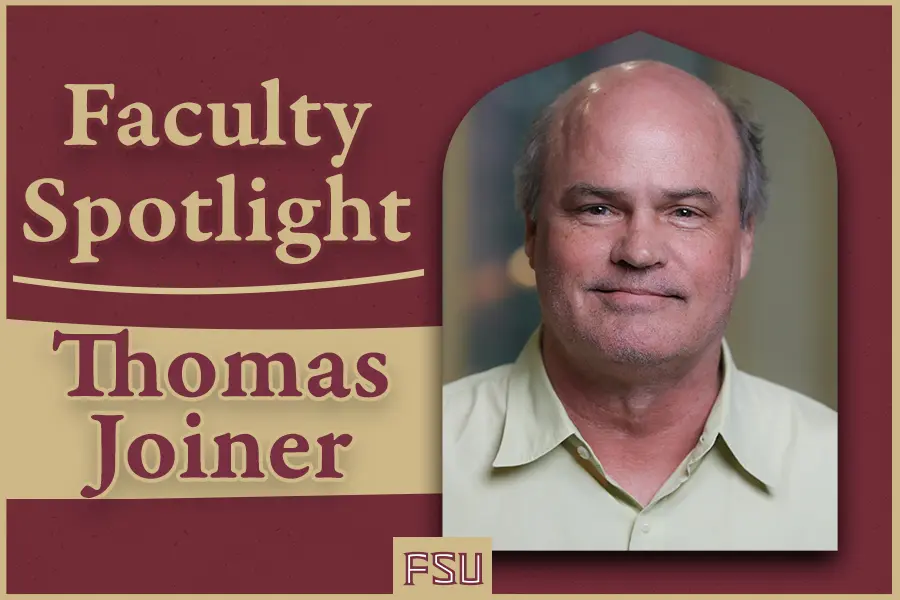

As Suicide Prevention Month brings renewed national attention to the critical state of mental health across the United States, the conversation inevitably turns to the researchers, clinicians, and institutions driving life-saving breakthroughs. Among the most influential figures in this vital field stands Dr. Thomas Joiner, a Robert O. Lawton Distinguished Professor of Psychology at Florida State University (FSU). For more than three decades, Joiner has dedicated his professional and personal life to answering the most harrowing and fundamental questions of human existence: Why do people die by suicide, and what can communities do to stop it?
Joiner’s contributions to modern suicidology are profound. In 2005, he fundamentally altered the psychological landscape by formulating the Interpersonal Theory of Suicide—a landmark framework that pinpointed the specific cognitive and social mechanics driving suicidal behavior. Beyond his theoretical breakthroughs, Joiner directs FSU’s esteemed Laboratory for the Study and Prevention of Suicide-Related Conditions and Behaviors and has spearheaded massive, federally funded initiatives aimed at protecting vulnerable populations, including military service members and first responders.
This comprehensive report examines Joiner’s extraordinary three-decade career, explores the foundational mechanics of his Interpersonal Theory, highlights the institutional leadership of Florida State University, and addresses the evolving societal attitudes toward mental health literacy that offer a beacon of hope in an otherwise challenging public health landscape.
Detailed Chronology: A Life’s Work Rooted in Tragedy and Intellectual Rigor
To understand Thomas Joiner’s unwavering commitment to suicide prevention, one must look beyond the academic papers and clinical trials to a deeply personal origin story.
The Catalyst: Early Beginnings and Personal Loss
When Joiner first entered the field of psychology, his initial interest was purely academic. The sheer complexity of self-directed violence presented an intellectual puzzle that demanded rigorous analysis. However, that abstract fascination quickly transformed into a lifelong, intensely personal mission.
"I found it intellectually fascinating at first," Joiner recalls. "It basically gets to a really fundamental question of the meaning of life. And then it got very personal, because my dad died in that fashion when I was a young person. I think it’s driven me ever since; that was 30 plus years ago, and I’m still at it."
This profound loss imbued his scientific pursuits with an urgent sense of empathy and accountability. Over the next three decades, Joiner immersed himself in empirical research, clinical observation, and theoretical development, steadily rising through the academic ranks to become one of the most cited and respected suicidologists in the world.
The Formulation of the Interpersonal Theory of Suicide (2005)
Prior to the mid-2000s, clinical approaches to assessing suicide risk were often fragmented, relying heavily on generalized symptoms of distress rather than specific behavioral mechanics. That changed definitively in 2005 when Joiner published the Interpersonal Theory of Suicide.
The theory provided a cohesive, testable framework explaining why individuals transition from passive suicidal ideation to active, lethal self-harm. According to Joiner, three specific, concurrent factors must be present for a person to engage in a fatal or near-fatal suicide attempt:
- Perceived Burdensomeness: The agonizing belief that one’s existence heavily burdens family, friends, or society ("My death is worth more than my life to my loved ones").
- Thwarted Belongingness: A deep, psychological state of social disconnection, loneliness, and the painful sense of not belonging to a valued group or community.
- Acquired Capability for Suicide: The gradual habituation to fear and physical pain. Because self-preservation is a powerful, deeply ingrained human instinct, individuals must develop a psychological and physiological tolerance to pain and fear over time—often through repeated exposure to painful experiences—before they can overcome that natural barrier to commit a suicide attempt.
By mapping these dimensions, Joiner provided clinicians worldwide with a diagnostic roadmap, shifting the paradigm of suicide prevention from guesswork to targeted intervention.
Supporting Context & Metrics: The Scale of the Crisis and FSU’s Leadership
The urgency of Joiner’s work cannot be overstated. Mental health statistics in the United States remain stark, underscoring the critical need for continued research, destigmatization, and accessible care.
The Scope of the Crisis
According to data from the National Alliance on Mental Illness (NAMI), approximately 5.5% of all U.S. adults experience serious thoughts of suicide each year. This translates to millions of Americans grappling with profound psychological distress annually. Public health leaders emphasize that addressing this crisis requires a two-pronged approach: immediate, highly responsive crisis intervention infrastructures (such as the 988 Suicide & Crisis Lifeline) and long-term community-building initiatives that foster deep human connection and belonging.
Joiner’s research directly bridges these two worlds. His framework demonstrates that suicide risk is fundamentally tied to a breakdown in human relating. "It really casts suicide as largely a disruption, a dysregulation, in relating and social relating, feeling like you matter to others, feeling like you’re connected to others," Joiner explains.
Protecting Those Who Serve: Military and First Responder Initiatives
Recognizing that certain populations face disproportionately higher risks, Joiner has dedicated significant portions of his career to protecting military members, veterans, and first responders. Through federally funded initiatives—most notably the Department of Defense-funded Military Suicide Research Consortium (MSRC)—Joiner and his colleagues have worked tirelessly to identify unique risk factors within military environments and translate those findings into actionable, life-saving protocols for the armed forces.
Florida State University as a National Epicenter
Joiner’s home institution, Florida State University, has emerged as a powerhouse in psychological research, largely due to the sustained investment in his laboratory and faculty colleagues. FSU’s Laboratory for the Study and Prevention of Suicide-Related Conditions and Behaviors serves as a national training ground for the next generation of clinical psychologists, researchers, and mental health advocates.
Reflecting on his decades at FSU, Joiner remains deeply grounded in the land-grant mission of public higher education. "This is a state university. I really believe that we’re beholden to the citizens of the state of Florida," Joiner says. "They’ve been so supportive of this university and in turn, this university has been so supportive of me. I’m so glad I came here."
Official Statements & Expert Insights: Chasing the "Holy Grail" of Psychology
Despite decades of monumental progress, Joiner approaches his ongoing research with intellectual humility and relentless curiosity. When asked about the driving forces behind his current work, he points to two enduring mysteries.
"Why would somebody choose that? And secondly, what can we do to prevent it? Those, to me, are the kind of holy grail questions of the field."
— Dr. Thomas Joiner, FSU Robert O. Lawton Distinguished Professor of Psychology
Dismantling Dangerous Misconceptions
A major barrier to effective suicide prevention, according to Joiner, is the persistence of harmful cultural myths. These misconceptions not only perpetuate social stigma but also prevent friends, family members, and colleagues from recognizing warning signs and offering timely support.
Among the most damaging myths are:
- The myth of cowardice: The archaic and cruel notion that suicide is an act of weakness or cowardice, rather than the tragic result of a severe, overwhelming psychological injury.
- The myth of intoxication: The oversimplification that suicide is merely a byproduct of acute drug or alcohol use, ignoring the deep-seated cognitive precursors beneath the surface.
- The myth of the "out-of-the-blue" event: The belief that suicide always occurs without any prior warning signs.
"One [misconception] is that it comes out of the blue and hits people without much warning," Joiner notes. "It can seem that way, certainly from the outside, but I’m just not convinced that ever really happens in their true selves." By educating the public to look for subtle shifts in behavior, expressions of burdensomeness, or social withdrawal, communities can catch distress signals long before a crisis peaks.
The Evolution of Mental Health Literacy
On an encouraging note, Joiner observes a profound cultural shift in how society discusses psychological distress. When he was a young man, mental health was largely relegated to the shadows, shrouded in shame and silence. Today, thanks to public awareness campaigns, digital connectivity, and the tireless advocacy of researchers and survivors, a new era of mental health fluency has emerged.
"I think an openness about mental health in general is really important," Joiner emphasizes. "I’m encouraged that we’re making progress societally in that mental health fluency way, the kind of openness and literacy and fluency about mental health that simply didn’t exist when I was a young person."
This societal shift makes it easier for individuals experiencing suicidal thoughts to reach out to healthcare providers, family members, and trusted support networks without fear of judgment.
Future Outlook: A Hopeful Vision for Prevention
As Suicide Prevention Month galvanizes communities across the nation to break the silence, reduce stigma, and forge deeper social bonds, Dr. Thomas Joiner’s life’s work stands as an enduring testament to the power of compassionate science.
The future of suicidology, as shaped by scholars at institutions like Florida State University, lies in proactive, community-embedded prevention. It requires moving beyond reactive crisis management to cultivate environments where every individual feels valued, genuinely needed, and securely connected to those around them.
Joiner’s message is ultimately one of profound hope: suicide prevention begins long before a moment of crisis. Through rigorous research, dedicated public service, and an ongoing commitment to open, compassionate conversations, science and community can unite to ensure that fewer families experience the devastating loss that set Dr. Joiner on his path over thirty years ago. Understanding, indeed, saves lives.
If you or someone you know is struggling or in crisis, help is available. You are not alone. You can call or text 988 or chat at 988lifeline.org in the United States and Canada, or contact your local emergency services.

0 Comments