

Executive Overview
The intersection of live sports and digital content creation has officially reached a critical crossroads. For years, sports organizations have eagerly rolled out the red carpet for social media influencers, digital creators, and content entrepreneurs. The math has always seemed simple: trade baseline access for viral reach, capturing coveted younger demographics who consume their highlights through TikTok, YouTube Shorts, and Instagram Reels rather than traditional linear broadcasts.
However, the cultural tension between maintaining the sanctity of athletic competition and servicing the insatiable demands of the digital feed boiled over at the recent U.S. Open. When a cluster of influencers in a luxury suite deployed ring lights, continuous chatter, and disruptive recording gear during Naomi Osaka’s high-stakes first-round match, it prompted the chair umpire to explicitly intervene. The resulting commotion was more than a localized etiquette breach; it served as a flashing red light for the global sports industry.
The incident has ignited a fierce, polarized debate regarding the boundaries of fan engagement. While historic institutions like Wimbledon have responded with punitive measures—banning influencer credentials outright for their upcoming 2027 tournament and outlawing disruptive equipment—others are seeking a more sustainable middle ground.
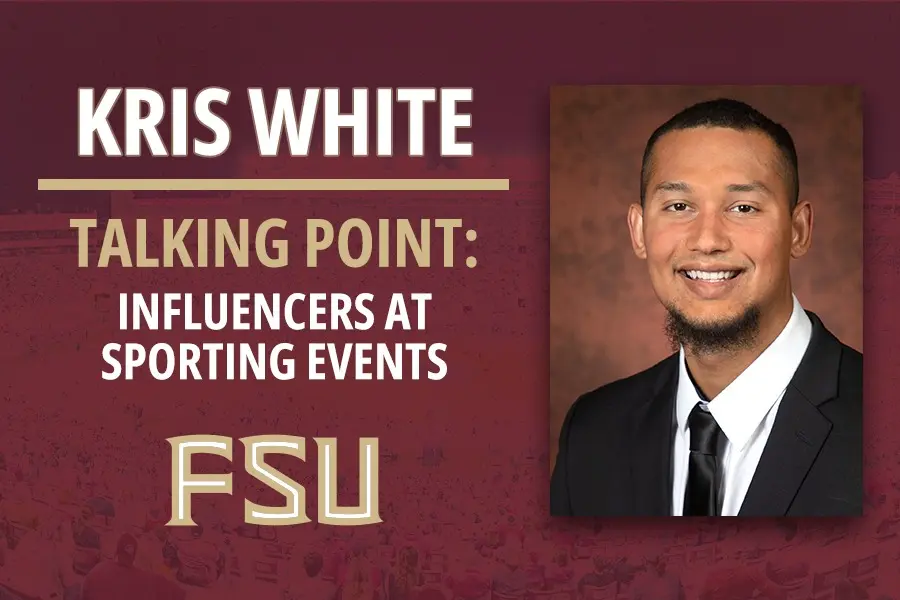
Enter experts like Dr. Kristopher White, a specialized teaching professor in the Department of Sport Management at Florida State University. Drawing from his academic research, teaching frameworks regarding Name, Image, and Likeness (NIL), and his background as a former Division I wide receiver at Kent State, White argues that the industry’s panic should not result in shutting creators out. Instead, sports organizations must master "activation management."
As the sports business landscape navigates the post-NIL era, where athletes themselves are morphing into independent media entities, stakeholders face an urgent question: How can organizations harness the undeniable marketing power of digital creators without letting the ring lights overshadow the athletic arena?
Detailed Chronology: From Digital Welcome Mats to the U.S. Open Flashpoint
To understand how sports properties arrived at this tipping point, one must examine the evolution of access. For generations, traditional sports media—print journalists, network television crews, and accredited photographers—operated under a strict code of professional conduct. They were observers who documented the narrative without altering it.
When social media platforms exploded over the past decade, sports leagues initially viewed content creators as an eccentric subset of fans. Gradually, that perspective shifted. Organizations recognized that these digital operators wielded direct, highly monetizable influence over millions of loyal followers. Consequently, leagues began establishing dedicated "creator corners," handing out VIP media credentials to lifestyle vloggers, and rolling out red carpets.
The United States Tennis Association (USTA) leaned heavily into this trend for the 2026 U.S. Open, credentialing approximately 100 content creators—nearly double the 54 who received official access the previous year, according to data compiled by ESPN. The goal was clear: infuse New York’s traditional Grand Slam with the electric, youthful, celebrity-fueled energy that has long defined its unique cultural footprint.
Yet, this influx of digital energy collided violently with the deeply ingrained, hyper-focused etiquette of professional tennis. Unlike football or basketball, where ambient stadium noise is a constant, tennis demands absolute silence and intense concentration from competitors during points.
During Naomi Osaka’s high-profile first-round match, the cultural friction became tangible. Individuals stationed in a premium luxury suite treated the historic court as a backdrop for personal branding. The flashing glow of ring lights, persistent movement, and audible disturbances prompted the chair umpire to halt proceedings and demand quiet from the suite.
The backlash was swift. Tennis players across the tour voiced support for the creators’ right to exist within the sporting ecosystem, but drew a hard line at interference. They emphasized that while digital expansion is vital, the court must remain sacred.
The immediate fallout was dramatic. While the USTA navigated the immediate PR challenge, All England Lawn Tennis Club officials monitoring the broader ecosystem took a much harsher stance. Wimbledon announced it would completely ban influencer credentials for the 2027 tournament, explicitly outlawing disruptive equipment such as ring lights that interrupt play.
This divergent response—ranging from the USTA’s managed integration to Wimbledon’s hardline prohibition—has transformed a routine etiquette complaint into an industry-wide existential crisis over how sports properties should govern modern attention economies.
Supporting Context & Metrics: The Mechanics of the NIL and Creator Marketplace
To grasp why content creators are so deeply entrenched in modern sports, one must look downstream to the fundamental restructuring of collegiate athletics. The catalyst arrived in July 2021, when the NCAA officially adopted Name, Image, and Likeness (NIL) legislation, dismantling decades of amateurism rules and transforming college athletes into commercial brand ambassadors.
This legislative earthquake did not merely allow athletes to make money; it created an entirely new economic sector dedicated to documenting, packaging, and distributing their personal stories. Suddenly, universities, agencies, and individual athletes needed a dedicated army of videographers, editors, social media strategists, and branding experts.
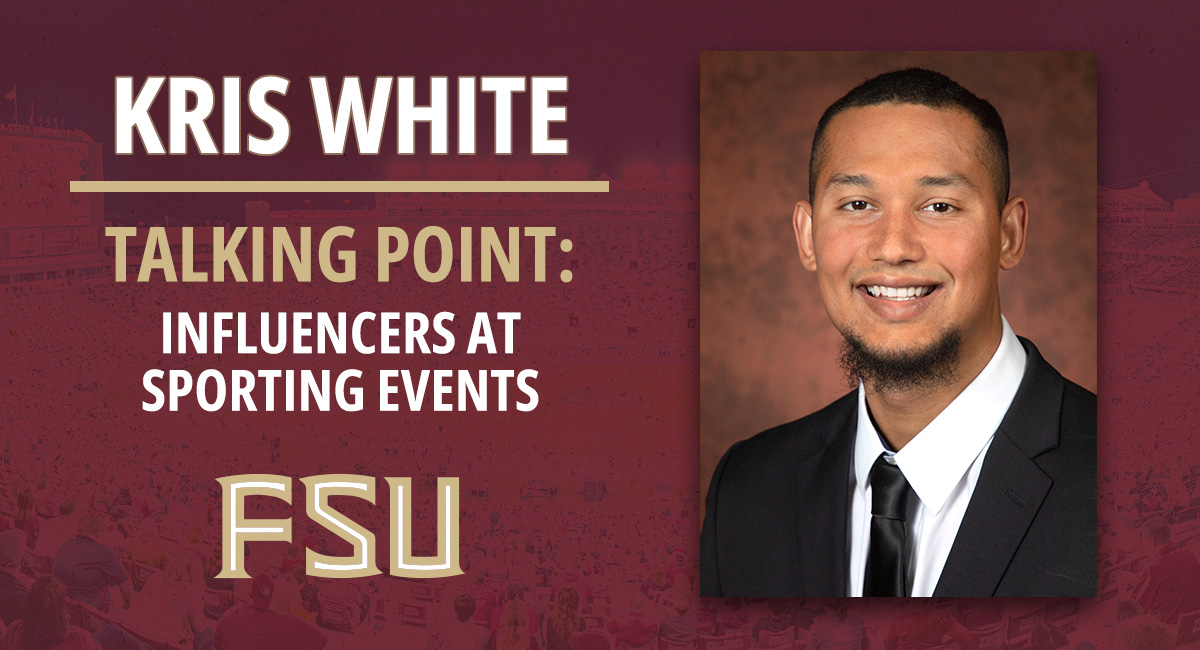
Dr. Kris White has observed this transformation from a uniquely informed vantage point. A native of Clermont, Florida, White played wide receiver at Kent State University from 2013 to 2017—an era of college athletics that now feels ancient compared to today’s hyper-commercialized, content-driven landscape. Transitioning from the gridiron to academia, White now teaches specialized courses at Florida State University that bridge athlete branding, NIL monetization, and strategic content creation.
"When you opened up the market to athletes, in terms of NIL, you also opened up a marketplace around creating that content," White explains. "Now there is value for athletes to have content created all around them, and the people who are able to create that value, now there’s a marketplace for that."
This marketplace operates on the principle that modern athletes are no longer just competitors representing an institution; they are individualized media properties. Their value on the open market is directly tied to their digital footprint, audience engagement, and narrative reach.
However, this hyper-focus on digital output introduces systemic risks. According to recent discussions at events like the FSU Future of NIL Sports Summit—where current FSU football punter Daniel Hughes emphasized the necessity of genuine branding—authenticity is frequently sacrificed for algorithmic performance. When creators prioritize viral metrics over organic storytelling, the line between supporting an athlete and exploiting them begins to blur.
The metrics driving this ecosystem are staggering. Sports organizations are competing against an endless array of digital distractions for Generation Z and Generation Alpha eyeballs. According to sports marketing analytics, digital creators boast engagement rates on short-form video platforms that routinely outpace traditional broadcast spots among demographics under the age of 25. For properties like the U.S. Open, doubling creator credentials from 54 to roughly 100 was not an arbitrary decision; it was a calculated financial and demographic imperative designed to maintain cultural relevance.
Official Statements & Expert Analysis
The debate surrounding the role of content creators at elite sporting events has drawn sharp commentary from athletes, academic leaders, and tournament administrators alike. The core tension revolves around a single principle: maintaining the integrity of the competition while embracing the realities of modern media consumption.
Dr. Kris White diagnoses the U.S. Open incident not as an indictment of content creators as a whole, but as a classic failure of operational governance. In his view, sports properties have frequently invited digital influencers into high-stakes environments without providing the necessary structural guardrails.
"It is an activation management issue," White states forcefully. "How are you making sure these creators are adding and enhancing to this experience, rather than taking away from it and making their thing the actual spotlight? You want to keep the main thing the main thing."
White’s philosophy challenges both the careless operational laissez-faire of leagues that hand out credentials without oversight and the knee-jerk protectionism of tournaments imposing total bans. He argues that content creators serve a vital democratic function in modern sports, acting as cultural bridges for communities that may never watch a traditional three-hour broadcast.
"You don’t want to move the tent," White notes, employing a vivid metaphor for sports governance. "You want to make sure that you expand the tent to allow more people in."
This sentiment is echoed by many athletes who recognize that digital creators are instrumental in building their personal brands and expanding the overall pie of sports fandom. However, player advocacy groups have maintained a unified stance: accessibility must never supersede competitive fairness. When a ring light reflects in a player’s peripheral vision during a championship point, or when a vlogger’s commentary drowns out the tactical calls on the field, the entertainment value has crossed the line into competitive interference.
Conversely, tournament organizers face mounting pressure from traditionalists who view the encroachment of influencer culture as an assault on sporting heritage. The decision by Wimbledon officials to revoke influencer credentials for 2027 signals that historic properties are willing to sacrifice short-term digital metrics to preserve institutional dignity. This schism highlights a growing philosophical divide in sports management: Do you cater to the digital-first viewer in the suite, or the purist in the grandstand?
Future Outlook: Building a Sustainable Framework for Sports Content
As the sports industry looks toward the remainder of the decade, the lessons learned from the U.S. Open uproar and the subsequent regulatory divergence at Wimbledon will shape how live entertainment is packaged, consumed, and governed.
A blanket ban, such as the one implemented by Wimbledon, may offer immediate relief to traditionalists, but it is unlikely to become an industry-wide standard. In an era where sports leagues are locked in a fierce battle for attention against video games, streaming platforms, and independent creators, voluntarily severing ties with high-reach digital influencers is commercially unsustainable.
Instead, the future of sports content creation will likely depend on sophisticated Activation Management Frameworks, mirroring the operational insights championed by academic and industry experts like Dr. Kris White. To achieve long-term harmony, sports properties must implement several strategic pillars:
1. Audience and Brand Alignment
Leagues and tournaments must move past the era of handing out credentials purely based on follower counts. Creators must be vetted not just for their reach, but for their understanding of—and respect for—the specific sport they are covering. A creator accustomed to the high-octane, chaotic environment of an NFL tailgate cannot operate under the exact same parameters at a quiet golf tournament or a tennis major.
2. Designated Content Zones and Technical Boundaries
Just as photographers are restricted to specific photo wells and media personnel are barred from the field of play during action, content creators must be subjected to clear spatial and technical limits. Banning disruptive gear like portable ring lights, heavy gimbals, and live-streaming setups in active seating bowls during play is a baseline necessity. Venues will need to invest in designated "creator suites" or interactive content zones that offer dynamic angles without threatening the competitive environment.
3. Clear Upfront Expectations and Accountability
Content creators must sign explicit codes of conduct as a condition of their credentialing. Violations—such as disrupting athletes, ignoring officials, or interfering with ticket-holding fans—must carry immediate consequences, including the revocation of access for future events. When creators understand that they are guests permitted to document the spectacle rather than performers meant to be the spectacle, behavior adjusts accordingly.
4. Integration with Athlete-Led Media
As NIL continues to mature, collegiate and professional athletic departments will increasingly institutionalize their own internal media teams. By partnering directly with trusted creators who work with the athletes and teams rather than operating as rogue independent agents, sports properties can maintain editorial control while still capturing the authentic, behind-the-scenes energy that fans crave.
Ultimately, the friction at the U.S. Open should be viewed not as a permanent fracture, but as a necessary growing pain. The marriage between live sports and digital content creation is irreversible. By establishing clear boundaries, respecting the sanctity of competition, and demanding professionalism from the digital workforce, sports organizations can successfully expand their tents—ensuring that the main event always remains the undisputed star of the show.

0 Comments