

Executive Overview
As the crisp air of the autumn semester ushers in a new academic term at Florida State University (FSU), students and faculty are settling back into campus life in Tallahassee. Yet, the energy of the campus remains deeply intertwined with the memories, professional breakthroughs, and personal transformations forged far beyond the borders of the United States. During the summer of 2026, hundreds of FSU students and faculty members traded traditional lecture halls for international study centers, remote research vessels, high-altitude alpine trails, and bustling metropolitan hubs across the globe.
Whether earning credits through FSU’s proprietary International Programs, immersing themselves in partner institutions via Global Exchanges, or conducting high-level scientific research through prestigious fellowships, FSU scholars engaged in authentic global citizenship. From addressing overtourism in Renaissance-era Italian cities to building sustainable structures using UNESCO-recognized indigenous techniques in Panama, the university’s summer programming demonstrated a profound commitment to experiential, cross-cultural learning. This report offers a comprehensive look at FSU’s summer global initiatives, highlighting the academic achievements, community engagements, and personal journeys that defined an unforgettable season of international education.
Detailed Chronology: A Global Summer in Review
FSU’s 2026 summer cohort spanned multiple continents, engaging with deeply localized challenges and academic disciplines tailored to the unique ecosystems of their host regions.
Italy: Shaping Sustainable Narratives in Florence
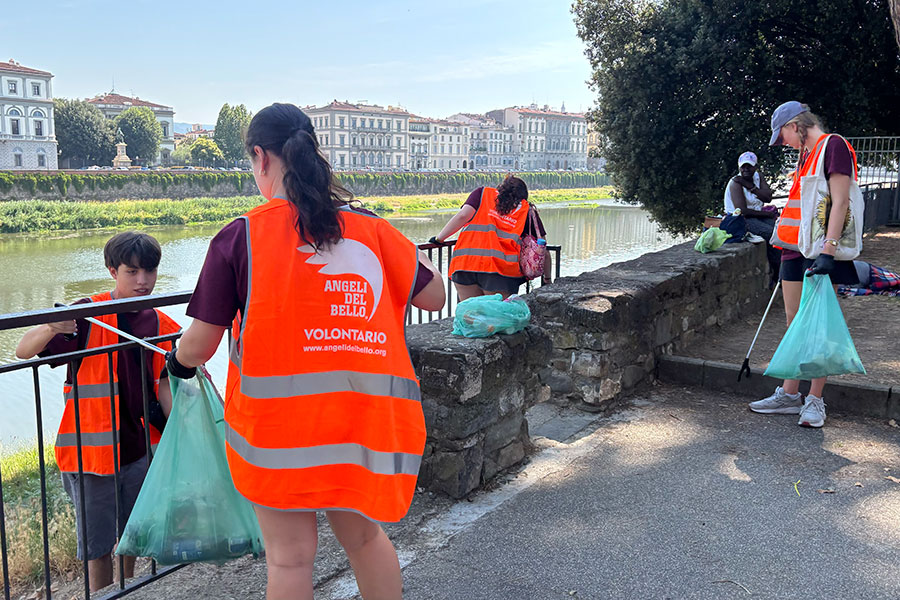
At the historic FSU Florence Study Center, students enrolled in the intensive Communication and Media in Florence program embarked on a transformative five-week journey. Operating under the umbrella of FSU International Programs, the cohort was tasked with producing the summer issue of Il Ponte, an established digital and print magazine designed to bridge the gap between the university program and the local Florentine community.
The curriculum is structured to provide undergraduates with rigorous, hands-on experience in publishing, spanning editorial writing, graphic design, strategic communication, and social media management. Each summer, the student cohort collaborates with faculty to select a contemporary theme that reflects the socio-cultural realities of their temporary home. For the summer 2026 edition, the editorial team selected a poignant and urgent topic: "Reducing Overtourism and Promoting City Beautification."
“We want our magazine to go beyond simply showcasing Florence as a beautiful spot for tourists,” explained Jaejin Lee, a professor at FSU’s College of Communication and Information who served as the faculty instructor for the program. “Instead, I encouraged students to think critically about how visitors can enjoy and appreciate the city while respecting its residents, environment, and cultures.”
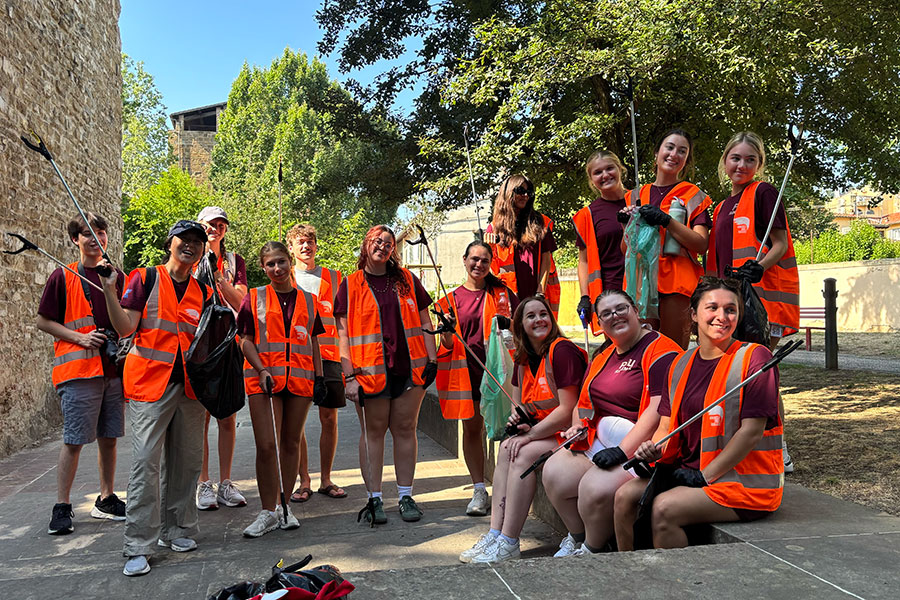
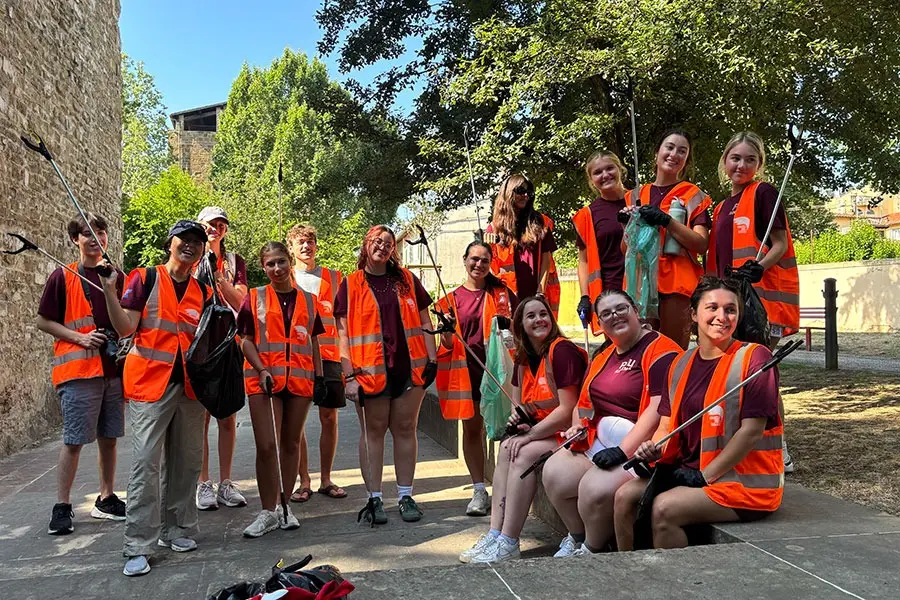
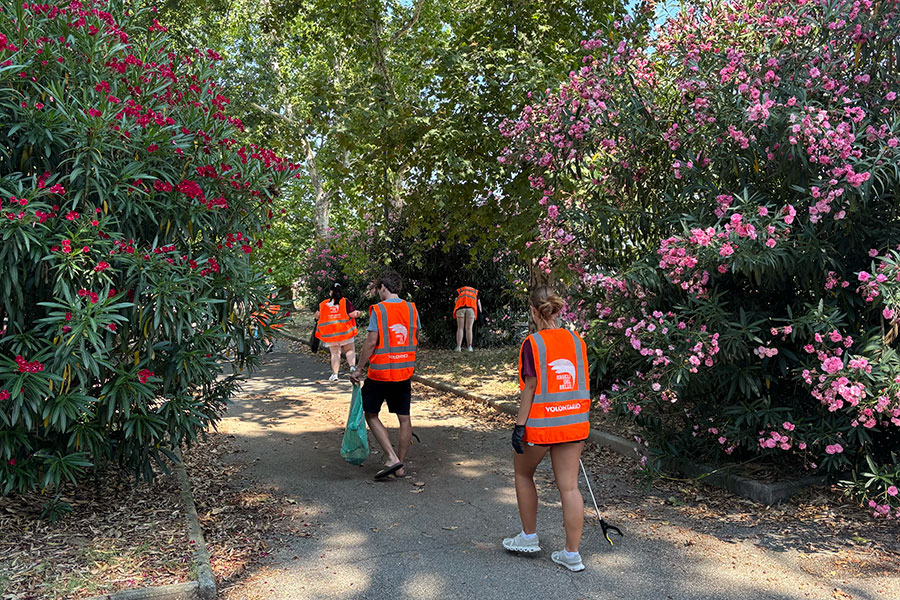
To ground their journalistic endeavors in civic responsibility, the student cohort partnered with Fondazione Angeli del Bello (“The Angels of Beauty Foundation”), a prominent local nonprofit dedicated to environmental protection and the preservation of Florence’s urban spaces. Students rolled up their sleeves alongside local volunteers, engaging in neighborhood cleanup and beautification projects. This civic engagement shifted the students’ paradigms, transforming them from passive tourists into conscious temporary citizens of Italy.
Rachel Wynn, a senior business administration and management major in the Herbert Wertheim College of Business, reflected on the profound impact of the dual academic and civic experience. “I hope that future students of FSU Florence continue to strive to keep the city beautiful by properly discarding their waste and volunteering with foundations like Angeli del Bello to fully participate as a temporary citizen of Italy,” Wynn noted.
South Korea: Bridging Heritage and Modernity in Seoul
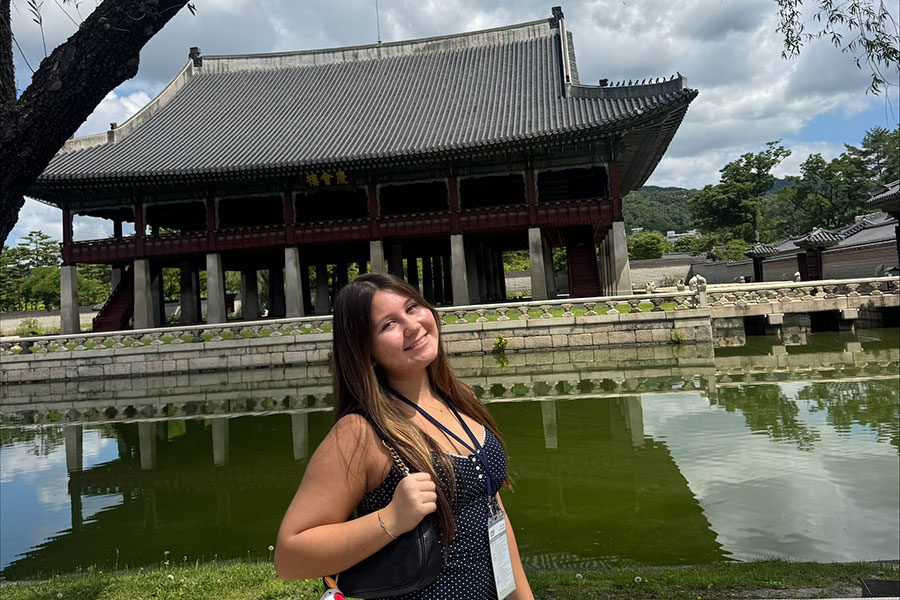
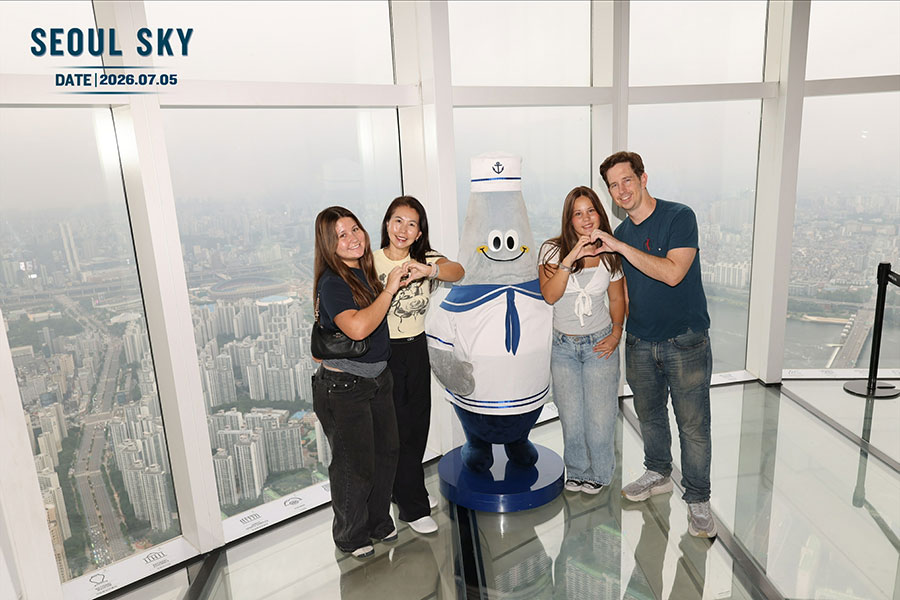
For Amelia Beanland, a junior majoring in management information systems, her summer in Seoul, South Korea, was both an academic milestone and a deeply personal pilgrimage. Beanland participated in the International Summer Program (ISP) at Seoul National University (SNU), discovering the opportunity through FSU’s Global Exchange programs website managed by the Center for Global Engagement (CGE).
FSU’s Global Exchanges allow students to attend elite international partner universities for a semester or academic year while maintaining their financial aid eligibility and paying standard FSU tuition. Additionally, many partner institutions offer direct-enroll summer transient programs—such as SNU’s ISP—where credits transfer seamlessly back to FSU.
“Since I’m half Korean, I always wanted a chance to be able to explore the country my mom is from, and I never got the chance to go growing up,” Beanland shared. After reviewing the extensive directory of global partners, SNU quickly became her dream destination. Eager to study abroad during the summer term, she applied immediately, becoming one of FSU’s pioneer participants in the expanded partnership.
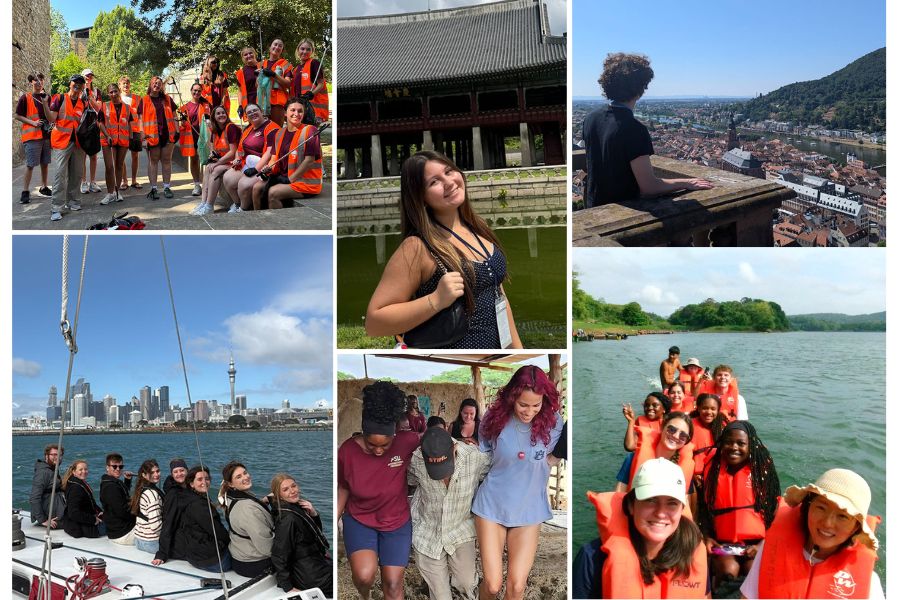
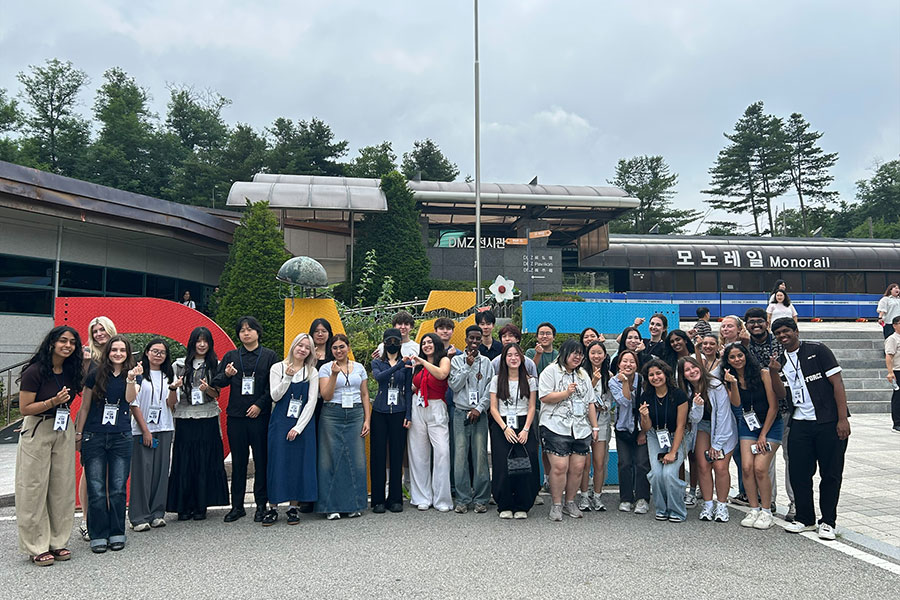
During her time in Seoul, Beanland balanced rigorous coursework with cultural immersion. Her academic itinerary was complemented by excursions to historical landmarks, including the Gyeonghoeru Pavilion at Gyeongbokgung Palace, and educational site visits such as a cohort trip to the Korean Demilitarized Zone (DMZ). “My favorite part was being able to meet people from all over the world and being able to travel freely around the country and experience new sites,” she said.
Japan: Cultural Immersion at Waseda University
In Tokyo, Japan, Liam Kerner, a sophomore majoring in cellular and molecular neuroscience, spent six weeks immersed in one of the world’s most dynamic urban environments. Studying through Waseda University’s Summer Program—another premier direct-enroll option facilitated through FSU’s network of international partnerships—Kerner sought to combine his scientific studies with deep cultural engagement.
While Tokyo’s sprawling metropolis and advanced infrastructure offered endless intellectual stimulation, Kerner noted that his most cherished memories arose from the quiet, everyday moments of cross-cultural connection. Late-night excursions to neighborhood convenience stores, reflective walks through historic districts, and late-night conversations with peers from FSU and across the globe left an indelible mark on his worldview.
“Not only did I get to meet so many lifelong friends who gave me new perspectives on life outside of the U.S., but being able to learn about Japanese society and live it firsthand was very eye-opening,” Kerner reflected. He plans to leverage these intercultural insights in his future medical and research pursuits, recognizing that effective scientific communication requires deep empathy and cultural literacy.
Panama: Launching the Global Public Health Frontier
The summer of 2026 marked a historic milestone for FSU’s regional branch campus, FSU Panama, with the inaugural launch of the Global Public Health program. Developed collaboratively by FSU International Programs and the university’s Public Health Program within the College of Social Sciences and Public Policy, the curriculum immerses students in the pressing public health dynamics of Central America.
Based in the City of Knowledge—an international complex dedicated to education, research, and innovation—the inaugural cohort enjoyed direct access to premier institutions, including the United Nations World Food Program in Panama and the newly established Regional Center for Innovation in Vaccines and Biopharmaceuticals (CRIVB-AIP).
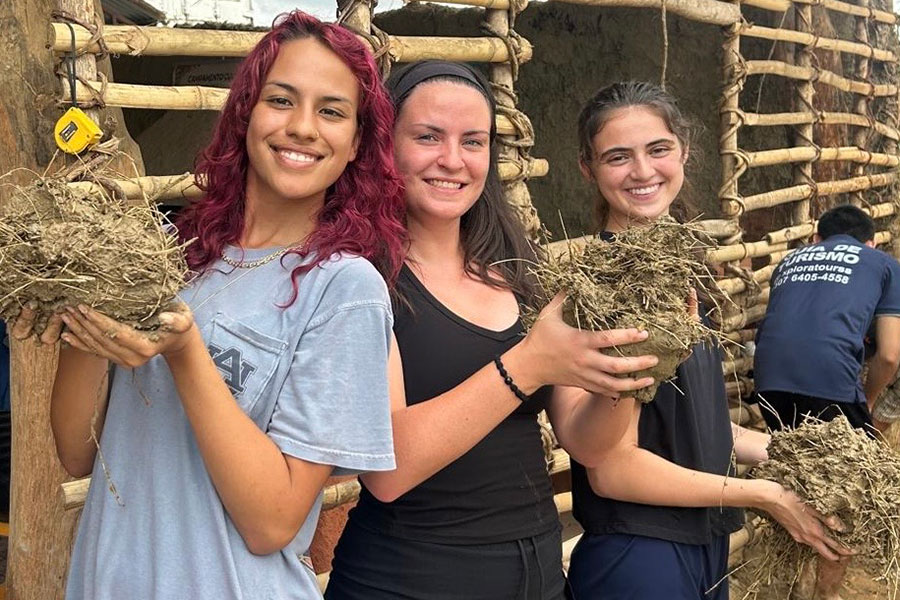
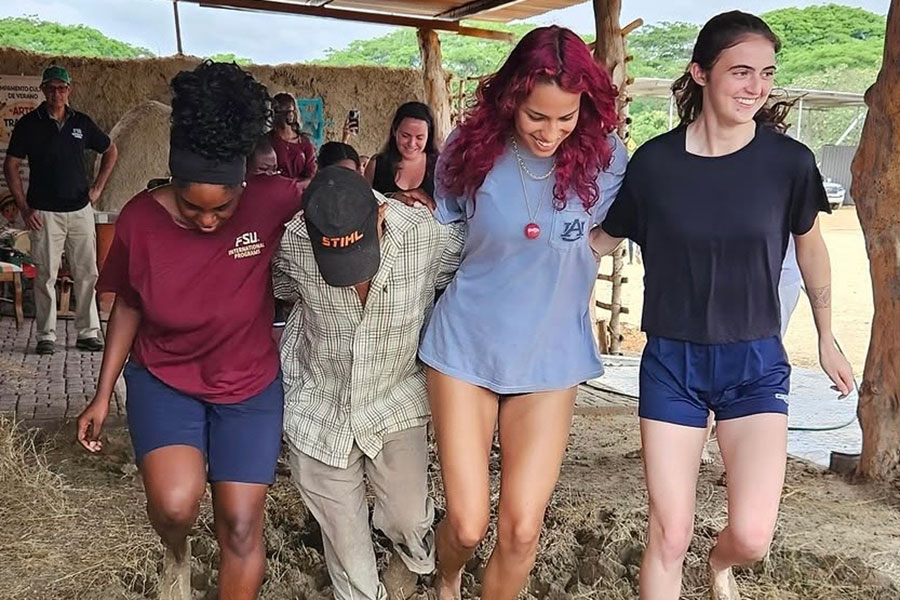
Abbey Jackson, a sophomore majoring in dietetics and exercise physiology, was among the trailblazing students in this inaugural cohort. For Jackson, the academic highlight of the summer was participating in a traditional junta de embarre, a communal construction method utilizing local clay, straw, and natural timber for eco-friendly insulation. This ancient practice was recently inscribed on UNESCO’s Urgent Safeguarding List for Intangible Cultural Heritage.
“This experience will heavily influence my career by reminding me to look at the bigger picture,” Jackson said. “I will not just see nutrition as an individual health choice, but as a vital public health tool that is shaped by culture, environment, and community solidarity.”
Cambodia: Political History and Diplomacy in Siem Reap
Shovik Saha, a recent spring 2026 graduate with a degree in interdisciplinary social sciences and an alumnus of FSU’s Global Citizenship Certificate, spent his summer in Siem Reap, Cambodia, participating in the competitive Junior Resident Fellows Program hosted by the Center for Khmer Studies.
Designed for undergraduate and graduate scholars from the United States, France, and Cambodia, the fellowship offers intensive coursework in Cambodian history, political science, and Southeast Asian international relations. Alongside historical field seminars, Saha underwent rigorous language instruction in Khmer, the nation’s official language. The program also facilitated professional networking with regional nongovernmental organizations operating in human rights, investigative journalism, and sustainable community development.
“I am glad I found this program because it offered the chance to step outside of my comfort zone more than my previous study abroad experiences,” Saha noted. As he prepares to transition to law school, Saha emphasizes that cross-cultural immersion is indispensable for future legal practitioners navigating an increasingly interconnected global society.
New Zealand: Adventure Tourism and Indigenous Hospitality
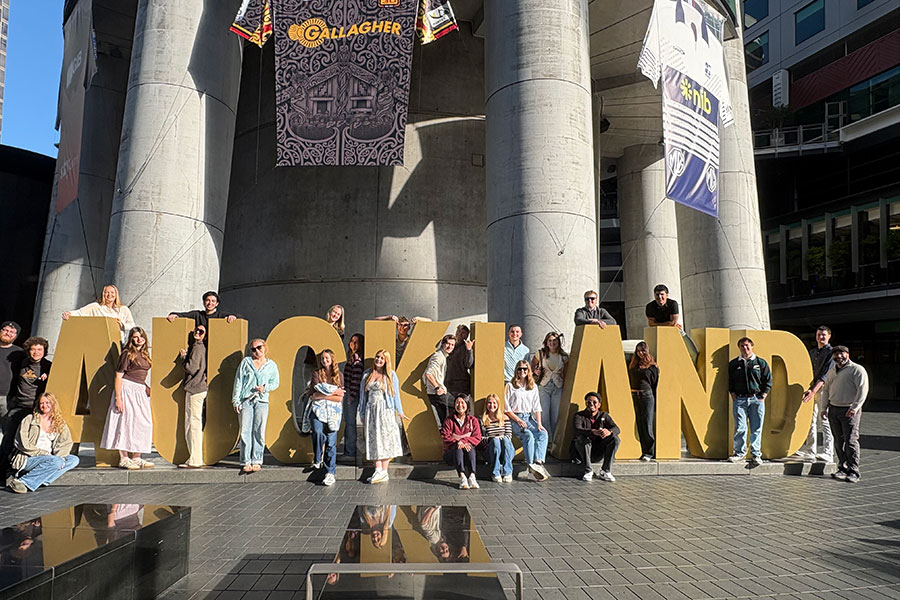
FSU International Programs expanded its portfolio this summer with the debut of the Adventure Tourism program in Auckland, New Zealand. Housed primarily through the Dedman College of Hospitality, the curriculum offers students an immersive exploration of the intersections between sustainable tourism, environmental conservation, and indigenous culture.
The program was spearheaded by Sean McGinley, associate professor and director of International Studies at the Dedman College of Hospitality, alongside Jieun Song, teaching faculty and director of Recreation and Tourism Management. For McGinley, leading the inaugural cohort was a deeply personal endeavor; earlier in his career, he worked as a hospitality manager at the Crowne Plaza Auckland, located just blocks from where the FSU student cohort was housed.
“The experience really changed my life for the better, and I wanted to share that with FSU students,” McGinley shared. “New Zealand is a special place in the world, and I had the unique ability to open doors to our students that would otherwise have remained closed, even if they had traveled there independently.”
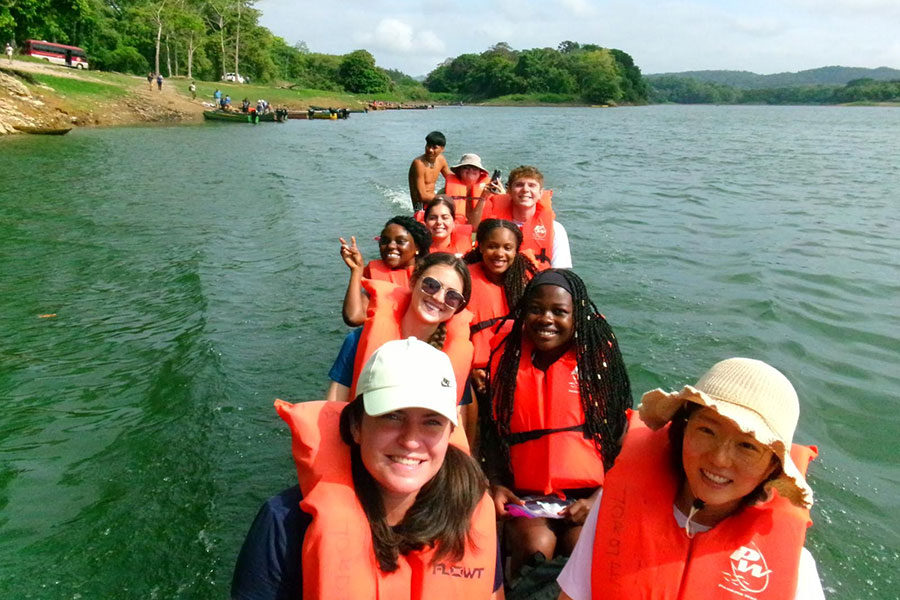
Students engaged in experiential learning that transcended traditional classroom boundaries. Activities ranged from navigating Auckland Harbor on sailing vessels and exploring geothermal mud baths to participating in a traditional Māori feast (Hāngī) and examining the country’s world-renowned wine industry.
“At its heart this is a hospitality and tourism program, and New Zealand is uniquely positioned to provide excellent learning opportunities to students on the topic,” McGinley added. “It’s an exciting place that allows for deep cultural exchange and experiential learning, and does it all with some of the most beautiful views and flavors you can imagine.”
Germany: Cutting-Edge Polar Research in Bremerhaven
In Northern Germany, Jake Scalabrin, a senior computational sciences major with a minor in mathematics, spent his summer contributing to cutting-edge climate science. Scalabrin secured a competitive research internship at the prestigious Alfred Wegener Institute for Polar and Marine Research (AWI) in Bremerhaven, facilitated by the German Academic Exchange Service (DAAD).
Participating through the DAAD’s Research Internships in Science and Engineering (RISE) Germany program—which matches elite North American, British, and Irish undergraduates with premier German research laboratories—Scalabrin worked within AWI’s Sea Physics section. His primary responsibility involved testing, expanding, and optimizing a complex machine learning framework designed to improve sea-ice classification using satellite radar altimeter data.
“Because I have worked with remote sensing data before, I had familiarity with its data structure, which definitely allowed me to do my job better,” Scalabrin explained. Reflecting on the collaborative research environment, he noted, “The researchers at AWI come from vastly different backgrounds, and they conduct amazing research. Seeing and being a part of that has made me even more of an advocate for international collaboration in scientific inquiry than I already was.”
Supporting Context & Metrics: The Mechanics of FSU Global Education
The breadth and depth of FSU’s 2026 summer offerings underscore the university’s institutional dedication to global engagement. Operating through multiple administrative units—including International Programs, the Center for Global Engagement (CGE), and specialized academic colleges such as the Dedman College of Hospitality and the College of Communication and Information—FSU provides structured pathways that make international education accessible, academically rigorous, and financially viable.
Key Program Frameworks at FSU:
- Study Centers Abroad: Dedicated university-run hubs (such as Florence, London, Panama, and Valencia) that provide immersive coursework taught by FSU faculty and international adjunct professors.
- Global Exchanges: Bilateral partnership agreements with over 45 international universities, allowing students to pay home-institution tuition while earning direct transfer credit.
- Direct-Enroll Summer Programs: Strategic partnerships that allow students to access specialized summer courses and research institutes abroad with streamlined credit transfer.
- Prestigious External Fellowships: Institutional support for competitive national awards, such as the DAAD RISE fellowships and Center for Khmer Studies grants, elevating FSU’s profile in global research.
Official Statements and Institutional Vision
University leaders emphasize that global education is no longer an extracurricular luxury but a fundamental component of a comprehensive 21st-century degree. By embedding cross-cultural competencies, civic responsibility, and hands-on international research into undergraduate and graduate curricula, FSU continues to prepare its students to tackle complex, transnational challenges.
As articulated by faculty leaders across disciplines—from Jaejin Lee’s emphasis on ethical urban tourism in Florence to Sean McGinley’s passion for indigenous cultural exchange in New Zealand—the overarching goal of FSU’s international education is the cultivation of empathy, critical thinking, and global literacy.
Future Outlook: Looking Ahead to 2027 and Beyond
Building on the triumphant momentum of the 2026 summer initiatives, Florida State University’s International Programs and Center for Global Engagement are already looking toward the future. Plans are underway to expand course offerings in emerging fields such as artificial intelligence ethics in Europe, marine biodiversity conservation in the South Pacific, and public health infrastructure in Latin America.
Furthermore, university leadership is actively working to increase scholarship opportunities and financial aid portability for study abroad programs, ensuring that an increasingly diverse student body can access transformative international experiences. As FSU continues to broaden its global horizon, the summer of 2026 will be remembered as a pivotal chapter in the university’s ongoing mission to cultivate leaders who are truly at home in the world.

0 Comments