

Executive Overview
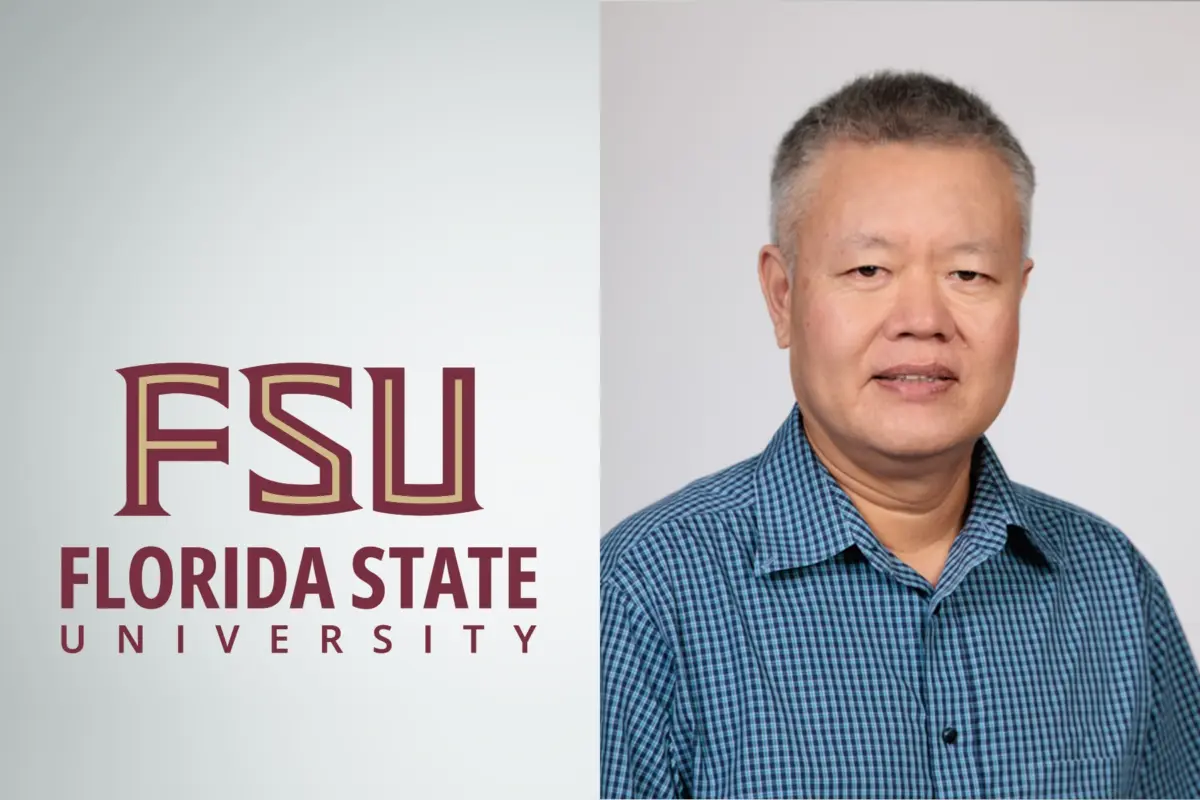
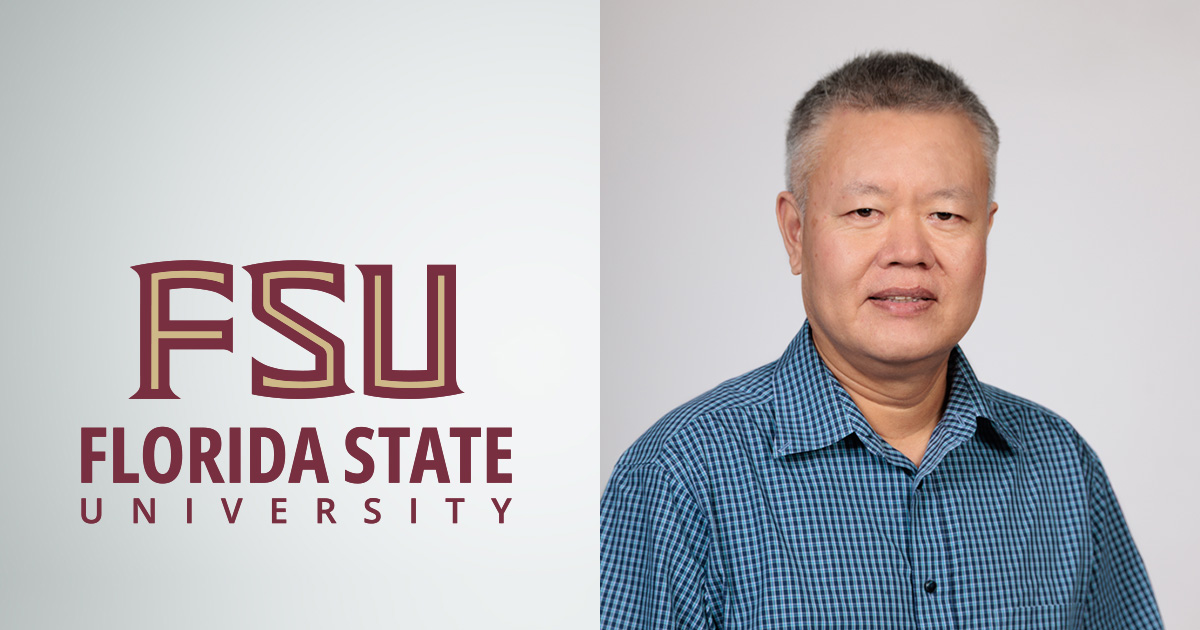
As artificial intelligence and high-performance computing redefine the boundaries of human knowledge, the infrastructure supporting these revolutionary technologies requires visionary leadership. In a major development highlighting the academic and scientific rigor of Florida State University (FSU), computer science professor Weikuan Yu has been appointed as a program director within the Office of Advanced Cyberinfrastructure at the National Science Foundation (NSF).
Commencing his tenure in Fall 2026 for a term of at least one year, Dr. Yu steps into a high-impact national leadership role at a critical crossroads in technological history. Operating through the federal Intergovernmental Personnel Act (IPA) rotator program—a mechanism designed to inject frontline academic expertise directly into federal agencies—Yu will help steer multi-million-dollar federal research investments. His portfolio will span the critical triumvirate of modern technology: advanced artificial intelligence, powerful computing systems, and large-scale data management infrastructure.
This prestigious appointment not only underscores Yu’s standing as an authority in high-performance computing and energy-efficient AI systems, but it also elevates Florida State University’s visibility on the national stage. For FSU, the collaboration promises invaluable institutional insights into federal funding priorities, strategic research trajectories, and the mechanisms of national science policy. As AI accelerates across every discipline from medicine to astrophysics, Yu’s work at the NSF will directly influence the computational backbone of the United States, ensuring that American researchers possess the software, networking, and processing power required to maintain global technological leadership.
Detailed Chronology: From Academic Innovation to National Leadership
The trajectory leading to Dr. Yu’s appointment at the National Science Foundation is built upon decades of rigorous academic research, administrative stewardship, and pioneering developments in systems software.
Foundation and Administrative Leadership at FSU
Dr. Weikuan Yu’s journey within the higher education landscape has been marked by deep commitments to institutional growth and cutting-edge research. Joining the faculty of Florida State University’s Department of Computer Science in 2015, Yu quickly established himself as a pillar of the department’s academic community. Over the years, his leadership qualities were recognized through pivotal appointments. He served as the associate chair for research, held the prestigious Mainline Information Systems Endowed Professorship, and spent three years leading the Department of Computer Science as its chair.
Throughout his tenure at FSU, Yu maintained an active, highly productive research lab focused on solving some of the most stubborn bottlenecks in modern computing: memory inefficiency, energy consumption, and data management bottlenecks in large-scale AI pipelines.
The Breakthrough of AURORA
Yu’s national prominence surged further with his recent development of AURORA, an advanced software framework engineered to monitor artificial intelligence systems in real time. AURORA’s primary function is to optimize AI operations, enabling models to execute tasks faster, utilize memory more efficiently, and draw significantly less electrical power—a critical consideration as data centers strain local power grids across the globe.
In recognition of its commercial and scientific potential, AURORA was selected for FSU’s 2026 ReliaQuest Innovation Challenge Fund. Administered through the FSU Office of Research, this fund specifically targets high-potential, proof-of-concept solutions in AI and cybersecurity, bridging the gap between theoretical computer science and practical, deployable technology.
Transition to the National Science Foundation
Building upon his academic breakthroughs and leadership credentials, Yu accepted the appointment as an NSF program director, slated to begin in Fall 2026. Rather than stepping down from his academic post, Yu participates via the IPA rotator program, which enables distinguished researchers from universities, laboratories, and non-profits to serve temporary tours of duty within federal agencies.
Upon arrival at the NSF’s Office of Advanced Cyberinfrastructure, Yu joins a cadre of elite scientists and engineers tasked with evaluating, funding, and sustaining the nation’s technological foundations. While strict federal ethics policies legally prohibit IPA rotators from participating in funding decisions related to their home institutions, the systemic knowledge gained during his tenure will flow back into FSU’s research ecosystem, enriching future grant proposals and institutional strategies.
Supporting Context & Metrics: The Architecture of Modern Cyberinfrastructure
To fully grasp the gravity of Dr. Yu’s new responsibilities, one must examine the staggering scale of modern computational demands and the strategic importance of the NSF’s Office of Advanced Cyberinfrastructure (OACI).
The Exponential Rise of Computational Demands
Modern scientific discovery is no longer confined to the physical laboratory; it is increasingly computational and data-driven. From sequencing complex genomes to modeling global climate change and training trillion-parameter artificial intelligence models, the volume of data generated daily has surpassed historical benchmarks by orders of magnitude.
However, raw processing power alone is insufficient. As Yu frequently points out, the future of technological progress relies just as heavily on the invisible infrastructure holding the digital world together:
- Data Management Systems: Managing petabytes and exabytes of information seamlessly across distributed networks.
- Software Optimization: Writing intelligent code that reduces latency and maximizes hardware efficiency.
- Energy Sustainability: Mitigating the massive carbon footprint and power consumption associated with large-scale data centers and AI model training.
Democratizing Access Through Regional AI Hubs
A core priority for Yu in his new role will be expanding access to high-performance computing (HPC) and national AI research resources. Historically, elite computational power was concentrated strictly within top-tier research universities and private technology conglomerates.
To bridge this digital divide, the NSF has spearheaded initiatives such as the State and Regional AI Infrastructure Hubs. These hubs provide essential computing resources, technical training, and educational frameworks to institutions that have historically lacked robust technological infrastructure—including small teaching colleges and rural universities. By expanding these programs, Yu and his colleagues at OACI aim to cultivate a diverse, nationwide STEM workforce equipped to build and utilize the next generation of national cyberinfrastructure.
Official Statements and Expert Perspectives
The announcement of Dr. Yu’s appointment has elicited widespread praise from academic leadership, who emphasize the mutual benefits of the IPA rotator program for both the federal government and Florida State University.
Dean Sam Huckaba of the FSU College of Arts and Sciences underscored Yu’s rare combination of administrative vision and technical expertise:
"Dr. Yu, who has a robust and broad research program of his own, is imminently well qualified to fulfill this role as a program director. Serving as director will provide value in both directions. The NSF will benefit from Dr. Yu’s knowledge and experience, and he will return with a better understanding of emerging federal research priorities and how the NSF arrives at funding decisions, particularly for its current highest priorities. While the funding agencies have strict policies against a program officer having anything to do with decision making relating to their home institution, the overall experience of Weikuan’s service will be beneficial to FSU."
Reflecting on the honor of representing Florida State University on a national platform, Dr. Weikuan Yu emphasized the historical significance of the current technological transition:
"It’s a great honor to represent FSU at the national level and contribute to federal investments in advanced cyberinfrastructure and national AI research resources. This opportunity comes at an especially exciting time, as AI is rapidly reshaping science, technology and society. The role gives me an opportunity to step back and look more broadly at where our research community is heading, particularly how national computing, AI and data infrastructure can enable scientific discovery and serve the larger research community."
Addressing the fundamental interdependence of hardware, software, and societal progress, Yu added:
"Computing has become fundamental to nearly every aspect of modern science and society, and AI is accelerating that transformation at an unprecedented pace. Continued progress depends not only on better AI models, but also on sustained advances in the computing, data, software and networking infrastructure behind them. Ultimately, investing in this foundation is essential to sustaining scientific discovery, technological innovation and our nation’s leadership in an increasingly AI-driven world."
Future Outlook: Navigating the Next Era of AI and Cyberinfrastructure
As Weikuan Yu assumes his responsibilities at the National Science Foundation, the broader scientific community stands at a pivotal historical junction. The decisions made by OACI program directors over the coming years will directly shape the United States’ technological competitiveness for the next decade.
Emerging Priorities in AI-Enabled Sciences
Looking forward, Yu’s agenda at the NSF will involve identifying and nurturing emerging paradigms where artificial intelligence intersects with traditional scientific fields—known broadly as AI-enabled sciences. Whether it is accelerating materials discovery for clean energy, decoding complex biological pathways, or securing national critical infrastructure against sophisticated cyber threats, the underlying cyberinfrastructure must evolve in lockstep with algorithmic breakthroughs.
Workforce Development and Collaborative Networks
Beyond hardware and software, Yu has expressed a passionate commitment to cultivating the human capital required to sustain America’s technological edge. By fostering collaborative networks across diverse academic institutions, the NSF aims to ensure that students and researchers from all backgrounds can contribute to and benefit from national cyberinfrastructure.
When Yu eventually completes his tenure at the NSF and returns full-time to Florida State University’s Department of Computer Science, he will bring back an insider’s view of federal science policy, an expanded network of elite researchers, and renewed insights into the macro-trends guiding technological innovation. For FSU, this appointment cements its reputation as an institution that not only participates in cutting-edge computer science research, but actively guides the national policies and frameworks that define it.

0 Comments