

Executive Overview
The landscape of modern American agribusiness is replete with corporate monoliths, yet few narratives reflect the grit, resourcefulness, and agrarian resilience quite like the origin story of Tyson Foods. Long before it became a global protein giant—processing and packaging millions of pounds of chicken, beef, and pork daily—the enterprise was rooted in the gritty, individual determination of a single Missourian navigating the depths of the Great Depression.
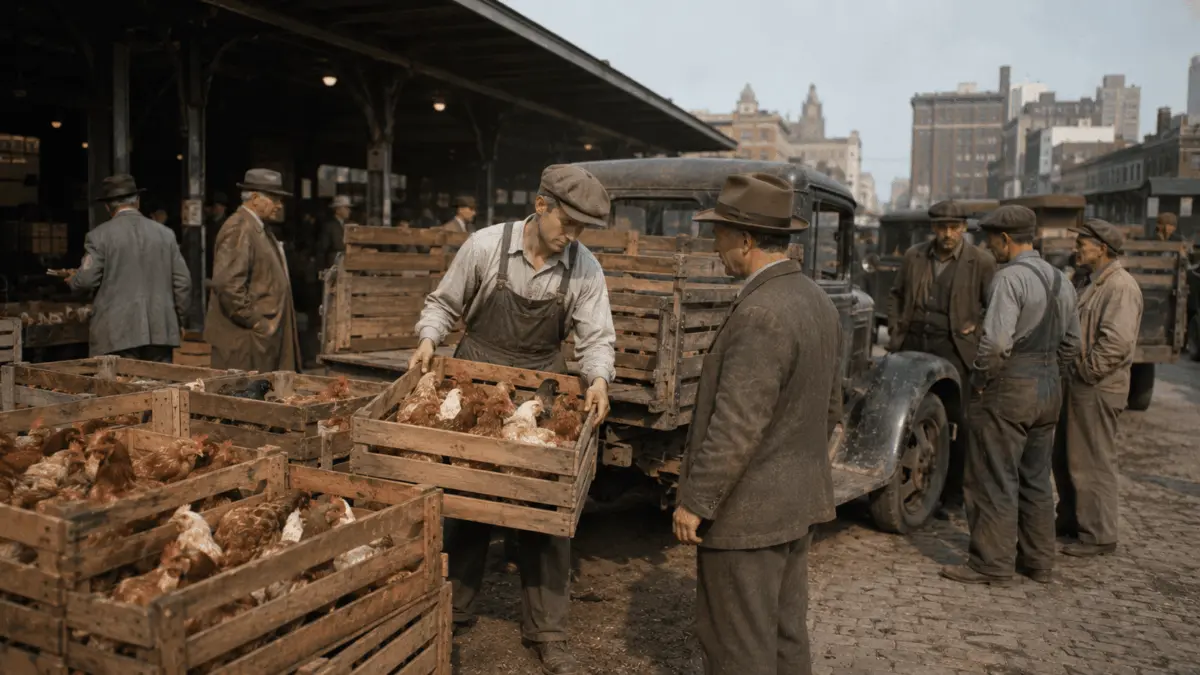
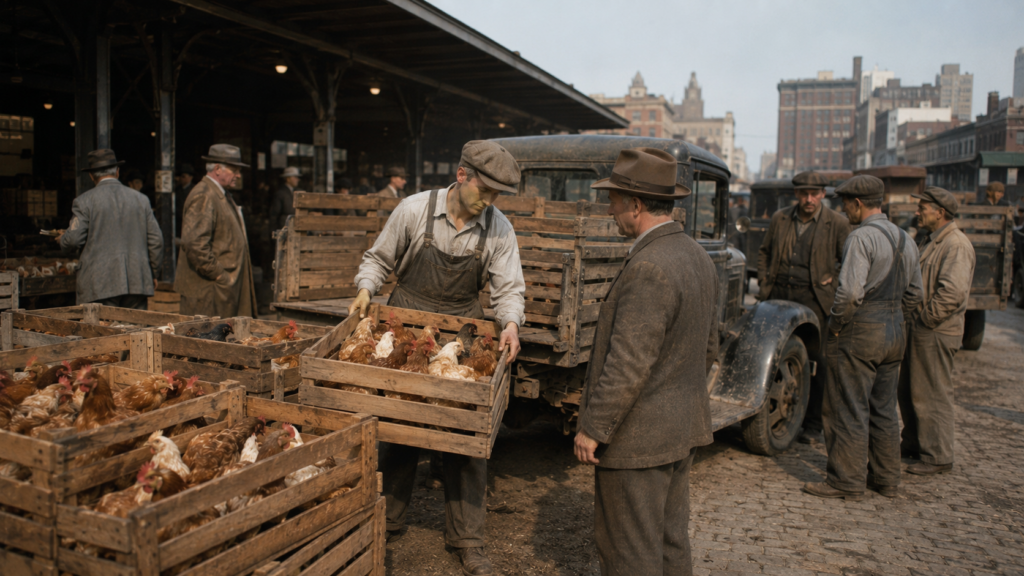
In 1931, John W. Tyson packed a truck with live poultry and drove out of southern Missouri, heading toward the bustling urban markets of the Midwest. What began as a modest, high-risk hauling venture would eventually transform into a foundational pillar of the modern poultry industry.
This retrospective examines the trajectory of John W. Tyson’s early enterprise, exploring how economic devastation, wartime rationing, and sheer entrepreneurial instinct laid the groundwork for a generational agricultural empire. Through a detailed chronology, economic context, and historical analysis, this piece highlights how a local farmer’s logistics solution evolved into a multinational titan, preserving its family-led legacy across multiple generations.
Detailed Chronology: From Depression-Era Hauling to Wartime Expansion
1931: The Genesis in the Dust and Deprivation
The 1930s opened with the most severe economic downturn in modern American history. The Great Depression devastated rural communities, collapsing commodity prices, shuttering banks, and leaving agricultural producers with surplus goods they could neither sell locally nor afford to ship to distant consumers.
John W. Tyson recognized a critical market inefficiency: while rural southern Missouri possessed an abundance of farm-raised chickens, rapidly growing Midwestern metropolitan centers faced food shortages and a high demand for fresh, affordable protein. Armed with little more than a truck, tenacity, and a willingness to brave poor roads, Tyson began purchasing chickens from local farmers and transporting them directly to urban markets.
This early model eliminated unnecessary middlemen, established vital supply chains between rural growers and city merchants, and provided much-needed cash flow to struggling farm families. It was the embryonic stage of what would later be recognized as integrated supply chain management in agriculture.
1941–1945: The Catalyst of World War II
As the United States mobilized for World War II, the federal government instituted sweeping rationing programs to conserve critical resources—including beef, pork, butter, sugar, and gasoline—to support troops overseas. These restrictions transformed American dietary habits and altered the agricultural landscape forever.
Notably, poultry was largely excluded from federal rationing. Because chickens could be raised relatively quickly and efficiently compared to cattle or swine, the government encouraged poultry production to feed the civilian population without straining wartime supply lines.
Tyson capitalized on this regulatory advantage. Moving beyond mere logistics and transportation, he expanded his operations vertically:
- Direct Production: He began raising his own flocks to guarantee a steady, reliable volume of poultry.
- Feed Milling: Recognizing that feed costs were the single greatest variable expense for poultry producers, Tyson established operations to grind and supply feed for local farmers. This ensured that regional growers could efficiently raise poultry, securing a loyal network of producers bound to Tyson’s burgeoning supply ecosystem.
By diversifying into feed production and primary production, Tyson insulated his business against market volatility and cemented his status as an indispensable regional agricultural hub.
The Post-War Era and Generational Succession
In the decades following World War II, American agriculture experienced a technological and structural revolution. Innovations in selective breeding, climate-controlled housing, and scientific nutrition transformed poultry from a seasonal farmyard luxury into an accessible, year-round dietary staple.
John W. Tyson’s operation evolved in tandem with these industry-wide shifts. By pioneering systematic coordination between hatcheries, feed mills, processing plants, and grow-out farms, the company helped author the blueprint for modern poultry integration.
Today, the enterprise remains a testament to continuity, guided by successive generations of the Tyson family. This leadership lineage has successfully steered the company through decades of regulatory evolution, shifting consumer preferences, and international expansion, while maintaining a cultural connection to the founding principles established in Depression-era Missouri.
Supporting Context & Metrics: The Economics of Survival and Scale
To fully appreciate John W. Tyson’s contribution, one must examine the macroeconomic realities of the American farm economy during the 1930s and 1940s.
The Great Depression Agricultural Shock
Between 1929 and 1932, net farm income in the United States plummeted by more than 50%. Prices for corn, wheat, cotton, and livestock dropped so precipitously that farmers often found it more economical to burn corn for fuel than to pay for its transport to market.
In this hostile economic climate, Tyson’s business model offered an economic lifeline. By paying cash for chickens and immediately transporting them to high-demand urban centers like St. Louis and Chicago, he injected liquid capital back into the rural Missouri economy.
The Evolution of Poultry Consumption
Historically, chicken was viewed primarily as a byproduct of egg production; older hens past their prime laying years were culled for the table, resulting in tough, stringy meat suited mostly for soups and stews.
During the 1930s and 1940s, agricultural researchers and pioneering entrepreneurs began breeding lines specifically for meat production (broilers). Tyson’s early involvement in raising and transporting poultry placed him on the ground floor of this biological and culinary revolution.
| Era / Milestone | Industry Characteristic | Tyson Enterprise Focus |
|---|---|---|
| Early 1930s | Fragmented local markets, surplus rural supply, urban protein deficits. | Long-distance transport and direct-to-market logistics. |
| World War II Era | Federal rationing of beef and pork; high demand for unrationed poultry. | Vertical expansion into feed milling and direct poultry rearing. |
| Post-War Period | Industrialization of agriculture, rise of contract farming and integration. | Scaling infrastructure, modernizing processing, and supply chain consolidation. |
| Modern Era | Globalized markets, technological innovation, strict food safety protocols. | Multi-protein multinational production guided by family-rooted leadership. |
Official Perspectives and Historical Legacy
Agricultural historians and industry analysts frequently cite the early history of Tyson Foods as a classic example of entrepreneurial adaptation. Rather than viewing economic distress as an insurmountable barrier, early pioneers like John W. Tyson exploited systemic inefficiencies to build enduring commercial enterprises.
In reflections shared through agricultural history initiatives—such as the American Agriculture History Minute presented by broadcast personality Mark Oppold—experts emphasize the human element behind corporate evolution:
"Agricultural innovation does not exclusively originate within corporate boardrooms or institutional laboratories. Often, it begins at the grass-roots level—with a farmer who observes a glaring market need, accepts calculated risks, and devises a superior method to connect rural producers with growing consumer populations."
This philosophy underpins the enduring legacy of the Tyson name. The transition from a single man hauling crates of live chickens out of Missouri to an international food production network illustrates the scaling potential inherent in American agricultural enterprise.
Future Outlook: Sustaining a Century-Legacy in Modern Agribusiness
As the agricultural sector looks toward the remainder of the 21st century, the foundational tenets established by John W. Tyson remain remarkably relevant. Today’s agribusiness leaders face a new set of unprecedented challenges:
- Climate Variability: Adapting feed production and livestock management to shifting weather patterns and environmental sustainability mandates.
- Supply Chain Resilience: Navigating global logistical bottlenecks, geopolitical disruptions, and fluctuating input costs akin to—though vastly more complex than—the transportation hurdles of the 1930s.
- Consumer Transparency: Meeting rising demands for traceable, ethically produced, and sustainable protein sources.
Despite these modern complexities, the core formula identified by John W. Tyson nearly a century ago—efficiency, responsiveness to consumer demand, structural integration, and strong local partnerships—remains the bedrock of success in the food and agriculture sector.
The trajectory from a Missouri dirt road to the global stage stands as an enduring monument to American enterprise. It serves as a reminder that even during eras of profound economic uncertainty, ingenuity and resilience can sow the seeds of legacies that endure for generations.

0 Comments