

Executive Overview
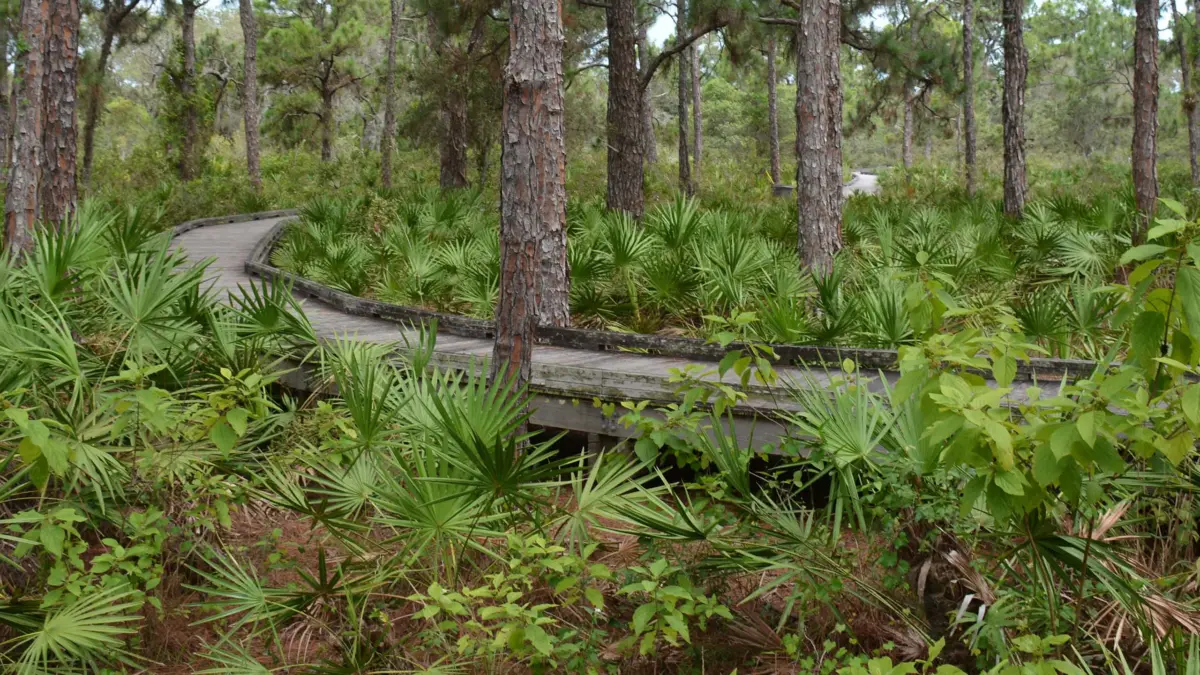
Nestled immediately north of downtown Naples, Florida, the 9.5-acre Naples Preserve stands as a masterclass in urban ecological conservation. Measuring roughly a block long and a third of a block wide, this densely vegetated urban forest represents an increasingly rare biological sanctuary within a heavily urbanized coastal landscape. Owned and managed by the City of Naples, the preserve protects a fragile sliver of native pine flatwoods, oak hammocks, dry scrub, and scrubby flatwoods that once dominated Southwest Florida.
Long-time residents and regular visitors may fondly remember this corner as the historic gateway to Caribbean Gardens, famously marked by a giant toucan perched atop a sign pointing the way. Today, while the bustling energy of the modern city presses against its boundaries, the preserve fulfills a vastly different, vital ecological purpose. It provides a secure, protected habitat for endangered and threatened flora and fauna—most notably the vulnerable gopher tortoise (Gopherus polyphemus), a keystone species whose survival depends heavily on intact upland tracts.
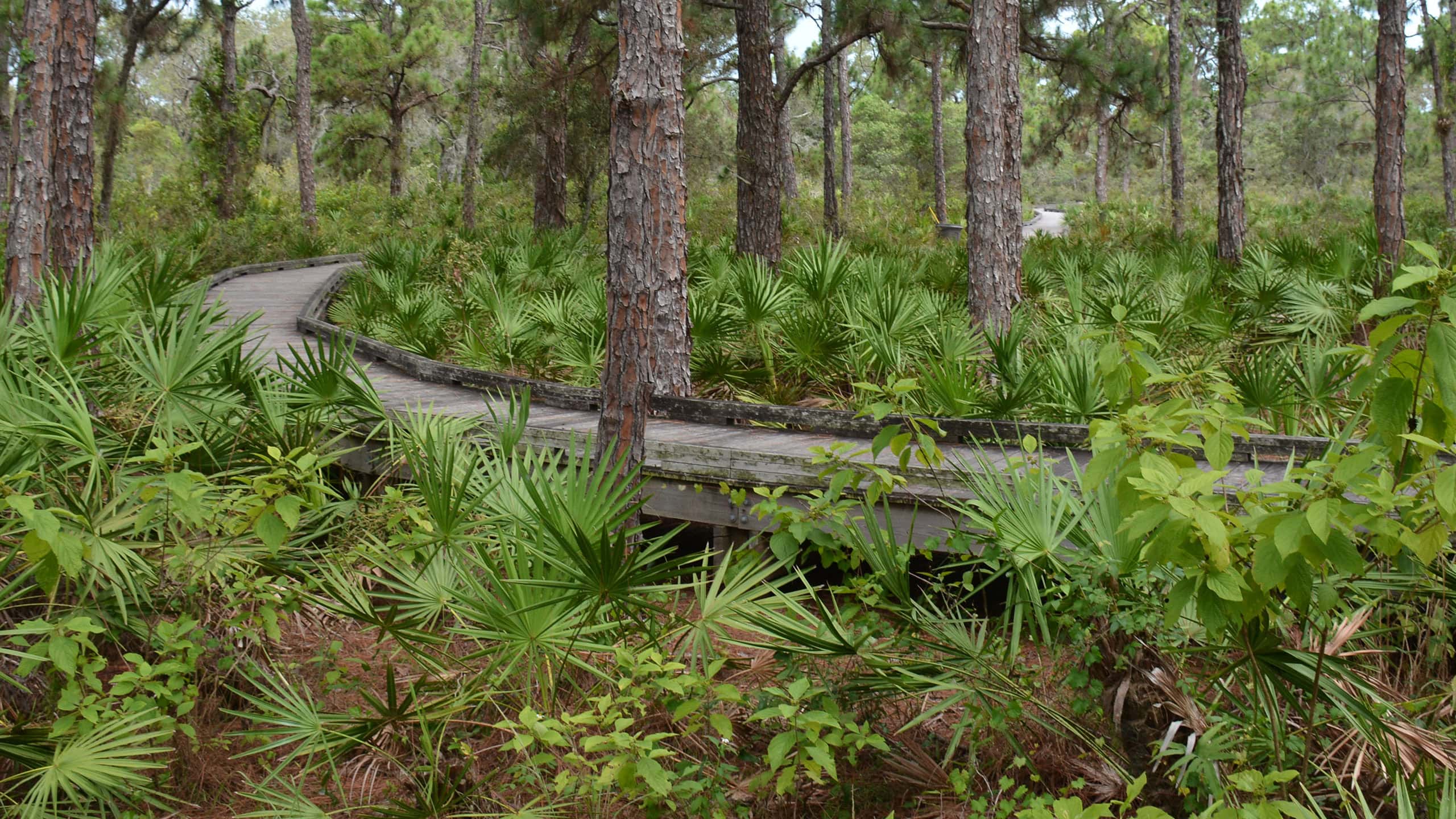
Featuring an impeccably maintained 0.4-mile elevated boardwalk, the Hedges Family Eco-Center, and meticulously restored native gardens, the Naples Preserve offers an accessible, zero-cost environmental education venue. It bridges the gap between urban development and natural preservation, inviting residents, children, and eco-tourists to step off the concrete and into a functioning, protected subtropical ecosystem.
Detailed Chronology & Trail Guide
For the visitor, navigating the Naples Preserve is an immersive, highly structured journey designed to minimize human impact on the delicate understory while maximizing wildlife observation opportunities. The experience is best understood as a chronological progression, beginning before stepping foot on the trail and culminating in the deep interior of the pine flatwoods.

Arrival and the Hedges Family Eco-Center
The journey begins at the Hedges Family Eco-Center, an architecturally distinct Mid-Century Modern structure located at 1690 Tamiami Trail, Naples. Open daily from 9:00 AM to 5:00 PM, the Eco-Center serves as the administrative, educational, and interpretive heart of the preserve. Inside, visitors can explore rotating displays that highlight regional natural areas, local conservation history, and ecological interconnectedness.
Just outside the building lies the Pollinator Garden, a carefully cultivated habitat bursting with native plants specifically chosen to attract butterflies, bees, and hummingbirds. Here, families and younger visitors are encouraged to participate in the "Promise Globe" initiative—an interactive feature where children can leave a written promise detailing how they personally plan to protect and care for the Earth.

Entering the Trail: Gardens and the Chickee
Flanking the approach to the boardwalk are two distinct, beautifully manicured native plant installations:
- The Dry Scrub Garden: Framed by a limestone-outlined footpath to the left, this section showcases drought-tolerant scrub species adapted to sandy, high-sun environments. It features a shaded picnic table ideal for quiet contemplation.
- The Flatwoods Garden: Positioned to the right, this pathway highlights species native to Florida’s sprawling pine flatwoods ecosystem and terminates at a secondary picnic area.
Both paths converge at the base of the accessibility ramp leading to the main boardwalk. Ascending the ramp brings visitors to an open-air thatched-roof chickee outfitted with built-in benches. Prominently displayed here is a white tracking board updated daily with recent wildlife sightings, offering hikers a predictive glimpse of what active species they might encounter along the route. It was from this elevated perch that researchers and naturalists frequently spot their first gopher tortoise of the day.

The Boardwalk and Deck 1: History and Habitats
Leaving the chickee, hikers transition onto the wooden boardwalk. Engineered to hover just inches above the natural landscape, the walkway’s specific elevation is a critical design feature; it allows gopher tortoises and other ground-dwelling wildlife to pass safely underneath without obstruction.
The trail winds gently into an oak hammock characterized by a thick, busy understory of saw palmetto, American beautyberry, and twisting native grapevines. At roughly the first major curve, hikers arrive at Deck 1, which features a built-in bench for resting.

Historically, this exact location held profound ecological significance: directly behind Deck 1 stood Florida’s National Champion myrtle oak (Quercus myrtifolia). Standing an impressive 41 feet tall with a crown spread spanning 38 feet, this botanical titan was a local landmark. Tragically, the champion tree was felled during the catastrophic winds of Hurricane Irma in 2017, though its legacy remains part of the narrative told by local conservationists.
The Pine Flatwoods Loop and Deck 3
Continuing past Deck 1, the boardwalk pierces deeper into the pine flatwoods. At the 0.1-mile mark, hikers reach a loop junction where they are advised to bear left, passing Deck 2. This section demands attentive observation: scanning the amber pine duff reveals the subtle movements of crawling and hopping wildlife, while scanning the rough, charred trunks of the slash pines often uncovers industrious woodpeckers and flickers foraging for insects.

As the loop presses forward, the dense pine canopy begins to thin. The wiregrass carpeting the forest floor gradually yields to expanses of bright, open white sand. At the 0.2-mile mark, a short boardwalk spur leads to Deck 3—the southernmost point of the loop. Situated within scrubby flatwoods, this corner of the preserve explodes with color during the autumn months, when native wildflowers bloom in abundance.
Completing the loop brings hikers back to the 0.3-mile mark, where a left turn initiates the final return leg. Traversing this stretch slowly allows visitors to double-check the underbrush for lingering tortoises and affords an opportunity to note their own discoveries on the trailhead whiteboard for incoming guests. The 0.4-mile journey concludes as the boardwalk descends gracefully back toward the parking area.

Supporting Context & Metrics
Understanding the scope of the Naples Preserve requires evaluating its physical, operational, and ecological specifications. While 9.5 acres may seem modest compared to sprawling state parks or national preserves, its urban positioning magnifies its ecological output.
+-----------------------------------+---------------------------------------------------+
| Metric Category                   | Data Specification                                |
+-----------------------------------+---------------------------------------------------+
| Total Acreage                     | 9.5 acres                                         |
| Trail Length                      | 0.4 miles (elevated boardwalk loop)               |
| Geographic Location               | North of downtown Naples, FL                      |
| Physical Address                  | 1690 Tamiami Trail, Naples, FL                    |
| GPS Trailhead Coordinates         | 26.16733, -81.79848                               |
| Land Manager                      | City of Naples                                    |
| Administrative Phone              | 239-261-4290                                      |
| Admission Fees                    | Free to the public                                |
| Restroom Facilities               | Available at the Hedges Family Eco-Center         |
| Primary Ecological Residents      | Gopher tortoises, woodpeckers, native pollinators |
+-----------------------------------+---------------------------------------------------+
Environmental Regulations and Visitor Code of Conduct
To protect the fragile flora and fauna inhabiting this urban island, strict regulatory frameworks are enforced by the City of Naples:

- Boardwalk Confinement: Once visitors step onto the boardwalk, they must remain on it at all times. Stepping off the wood damages the delicate cryptogamic soil crusts and disturbs burrowing wildlife.
- Prohibited Items: To preserve the pristine condition of the habitat and prevent wildlife habituation to human food sources, pets, bicycles, and all food items are strictly prohibited on the boardwalk.
- Operating Hours: The boardwalk is accessible strictly during daylight hours. The Hedges Family Eco-Center operates from 9:00 AM to 5:00 PM, aligning with scheduled municipal environmental programs.
Official Statements & Administrative Insights
City officials and environmental advocates frequently emphasize the unique dual role that the Naples Preserve plays as both a municipal park and an urban wildlife refuge.
Local urban planners note that as Southwest Florida continues to experience rapid commercial and residential development, green spaces like the Naples Preserve are vital for maintaining urban canopy cover, mitigating the urban heat island effect, and managing stormwater runoff. Municipal landscape architects have highlighted the success of the elevated boardwalk design, pointing out that minimizing physical footprint expansion has allowed resident gopher tortoise populations to maintain natural foraging behaviors without catastrophic habitat fragmentation.

Furthermore, educational coordinators staffing the Hedges Family Eco-Center stress the importance of early childhood environmental literacy. By positioning the preserve as a welcoming, low-intensity hiking experience, the city successfully fosters a sense of stewardship in younger generations. Educational talks hosted at the Eco-Center routinely focus on the interdependence of native flora, the critical role of keystone species like the gopher tortoise (whose burrows shelter over 350 other species), and practical steps homeowners can take to support local biodiversity in their own backyards.
Future Outlook & Regional Context
Looking forward, the Naples Preserve serves as an anchor point within a broader, interconnected network of conservation and recreation areas across the greater Naples region. Its long-term viability relies heavily on adaptive management strategies implemented by the City of Naples, particularly regarding post-storm habitat recovery (such as managing the ecological shifts caused by the loss of the historic myrtle oak after Hurricane Irma) and ongoing control of invasive non-native plant species.

For explorers looking to expand their Southwest Florida adventures beyond the boundaries of the Naples Preserve, the surrounding area offers several world-class natural and educational attractions:
- Naples Zoo at Caribbean Gardens: Located just down the road—accessible via Fleischmann Boulevard—this historic zoological park was established in 1919 by pioneering botanist Henry Nehrling. Over a century of thoughtful expansion has transformed it into an accredited institution blending exotic wildlife preservation with mature tropical botanical displays.
- Gordon River Greenway: Situated just south of the preserve, this linear park allows hikers, cyclists, and paddlers to traverse the city’s vital urban mangrove forest, offering an elevated perspective of local estuarine ecosystems.
- Fred W. Coyle Freedom Park: Located in northeast Naples, this expansive park features an impressive network of accessible paved pathways and boardwalks meandering across a diverse mosaic of freshwater ponds and wetlands teeming with wading birds and alligators.
- Conservancy of Southwest Florida (Naples Nature Center): Edging the mangrove-lined Gordon River immediately south of the zoo, this 21-acre complex pairs cutting-edge environmental education with interactive exhibits, wildlife rehabilitation centers, and tranquil mangrove nature trails.
As urban density across coastal Florida intensifies, micro-sanctuaries like the Naples Preserve prove that conservation does not always require thousands of acres of remote wilderness. Through careful municipal oversight, community engagement, and strict habitat protection, this 9.5-acre urban forest will continue to stand as a resilient natural oasis—safeguarding Florida’s wild heritage for generations of hikers, learners, and gopher tortoises to come.

0 Comments