

Executive Overview
For generations, outfitting a boat with marine electronics meant navigating a tangled web of proprietary cables, incompatible interfaces, and isolated hardware silos. A depth sounder spoke its own obscure language; a GPS receiver struggled to communicate with the autopilot; and monitoring engine vitals required a dedicated, single-purpose gauge for every metric. Today, that analog labyrinth has been replaced by a singular, elegant standard: NMEA-2000 (widely known as N2K).
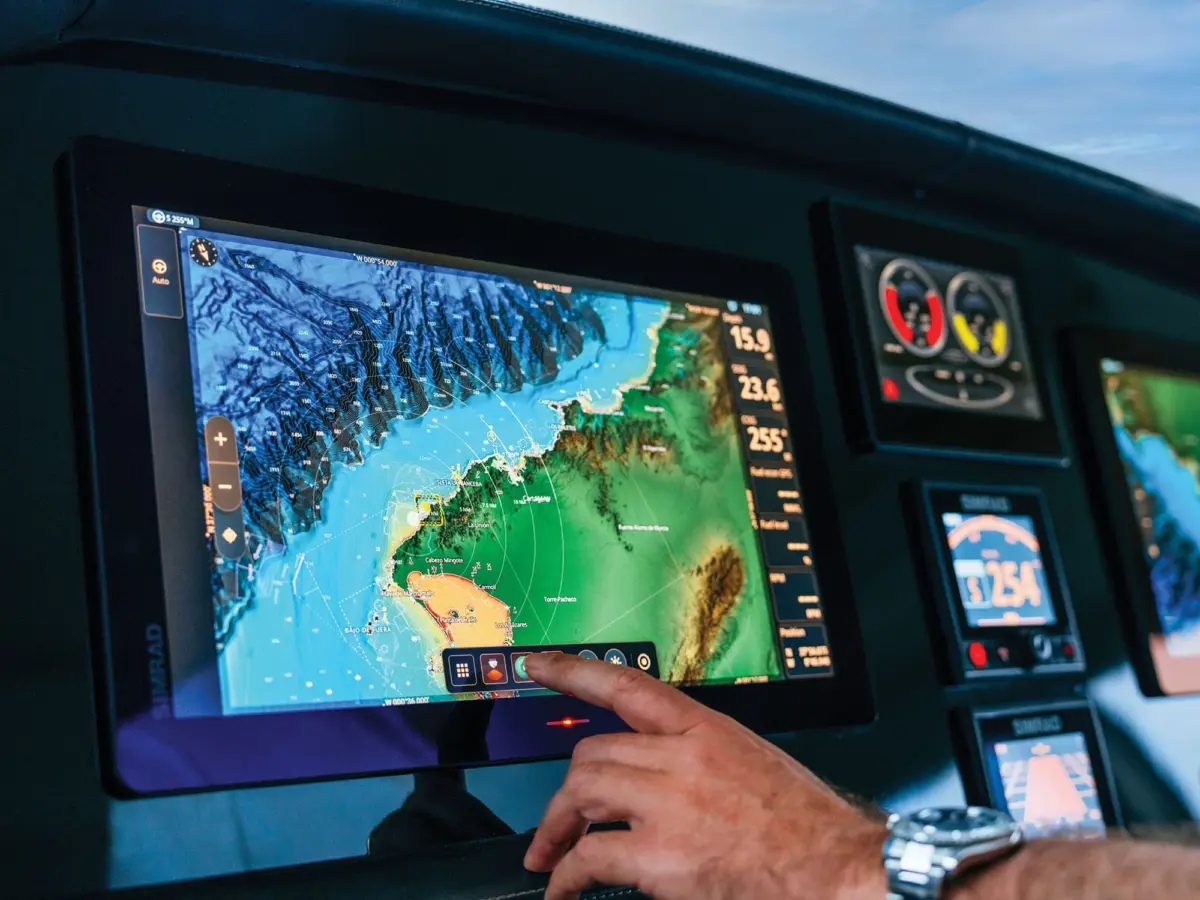
Developed by the National Marine Electronics Association and introduced to the market in 2001, NMEA-2000 is the premier digital networking standard for marine electronics and onboard systems. Far more than a simple wire, N2K functions as the central nervous system of modern watercraft. By establishing a standardized, high-speed communication protocol, it allows everything from multifunction displays (MFDs) and high-definition radars to autopilots, outboards, and digital switching systems to talk to one another seamlessly.
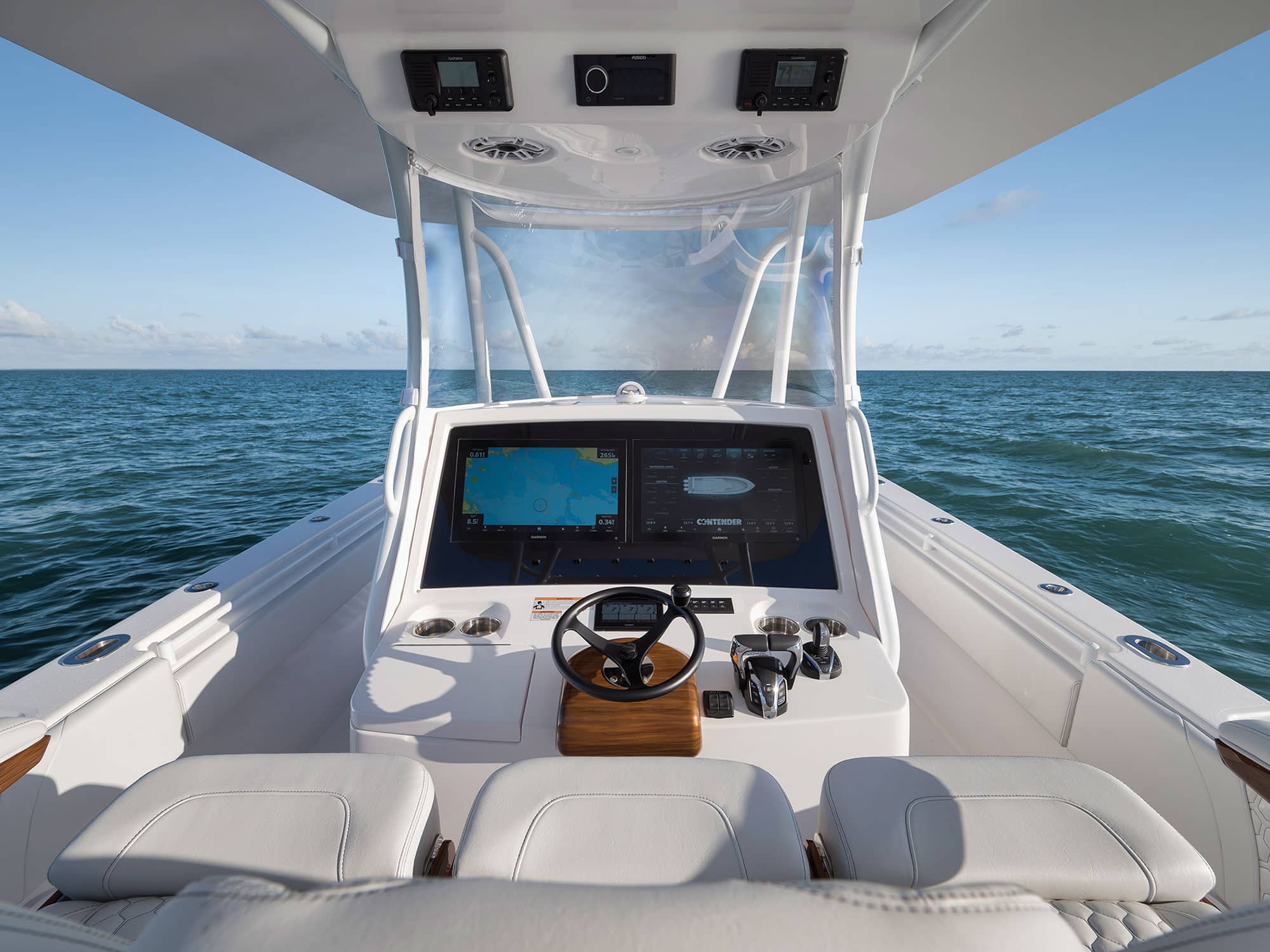
The transformative impact of N2K on recreational and commercial boating cannot be overstated. It has revolutionized how mariners run their vessels, navigate to remote angling hotspots, and track gamefish. Behind the sleek, glass-bridge helms of today’s center consoles and sportfishers lies a sophisticated, plug-and-play digital network that enhances safety, optimizes performance, and drastically reduces the complexity of marine installations. This report examines the evolution of N2K networking, its core operational architecture, the immense practical benefits it brings to the helm, and best practices for designing and expanding a robust marine network.
Detailed Chronology: The Evolution of Marine Networking
To fully appreciate the elegance and capability of N2000 systems today, it is essential to look back at the historical progression of marine data communication. Before digital networks existed, marine electronics communicated via a patchwork of analog signals and primitive serial data protocols.
The Era of Point-to-Point Isolation (Pre-2001)
Throughout the 1980s and 1990s, marine electronics were largely self-contained units. If a boater wanted to display speed-over-ground data from a GPS unit onto a separate radar screen, it required a manual, point-to-point wire connection using the NMEA 0183 standard.
Introduced in 1983, NMEA 0183 was a step forward, utilizing an older serial data transmission method (RS-422) that sent ASCII sentences sequentially over a single pair of wires. While it allowed basic data sharing—such as coordinates or heading information—it had severe limitations:
- The "Talker/Listener" Bottleneck: NMEA 0183 typically allowed for only one "talker" (transmitting device) per circuit, meaning complex setups required multiplexers to pool data.
- Low Speeds: Operating at a sluggish 4,800 baud (later increased to 38,400 baud in some applications), the protocol choked when asked to transmit heavy data loads like radar imagery, high-resolution bathymetry, or real-time sonar sweeps.
- Fragile Architecture: Wiring errors, impedance mismatches, and ground loops were common headaches for do-it-yourself installers and professional marine technicians alike.
The Birth of a Standard: 2001
Recognizing the impending gridlock as marine electronics advanced, the National Marine Electronics Association spearheaded the creation of a vastly superior standard. Based on the Controller Area Network (CAN bus) technology—originally engineered for the rugged, high-reliability demands of the automotive industry—NMEA-2000 was officially released in 2001.
N2K introduced a radical paradigm shift:
- High-Speed Data Sharing: Operating at 250 kbps—roughly 50 times faster than standard NMEA 0183—it could effortlessly transmit multiple data streams simultaneously.
- Multi-Master Architecture: Unlike older serial setups, any device on an N2K network can act as both a talker and a listener, broadcasting information to the entire network or pulling data from any other compatible component.
- Standardized Plug-and-Play Design: By utilizing standardized connectors and multi-conductor cabling, N2K laid the groundwork for simplified installations that hobbyists could manage without an engineering degree.
Mainstream Adoption and Expansion (2010–Present)
By 2010, the boating industry reached a tipping point. Do-it-yourself installers were beginning to link basic GPS antennas to head units using simple N2K drop cables. Over the ensuing decade and a half, the scope of N2K expanded exponentially.
Today, N2K spans virtually every major marine electronics brand—including Furuno, Garmin, Humminbird, Lowrance, Raymarine, and Simrad. What once connected a single GPS to a single screen now bridges complex suites of hardware. A modern mid-sized center console or offshore sportfisher features an N2K network that integrates:
- Multifunction displays (MFDs) and remote digital keypads
- High-definition radar arrays and heading sensors
- Advanced CHIRP sonar modules and multi-frequency transducers
- AIS (Automatic Identification System) transponders
- Marine VHF radios with integrated DSC (Digital Selective Calling)
- High-performance autopilots and automated attitude control systems (such as Seakeeper Ride)
- Electronic outboard engine gateways monitoring fuel burn, RPMs, and diagnostic codes
- Digital switching, onboard security monitoring, and marine audio systems
Supporting Context & Metrics: Why N2K Integration Matters
What is the practical value of knitting all of these disparate electronics into a single digital fabric? The answer lies in data democratization: once a piece of information enters the N2K network, it is instantly available to any compatible device that needs it.
Enhanced Safety and Situational Awareness
Safety at sea is fundamentally tied to reaction time and situational awareness. N2K networking radically improves both:
- GPS and VHF Synergy: When an emergency arises, a VHF radio integrated into an N2K network instantly pulls precise latitude, longitude, and time coordinates from the boat’s dedicated GPS antenna. Activating a DSC distress alert automatically transmits these vital coordinates to the Coast Guard and nearby vessels without manual input.
- AIS and Radar Overlay: AIS target data received over the air is distributed across the network, allowing the MFD and radar display to overlay collision-avoidance vectors directly onto the navigational chart and radar sweep.
- Heading and Radar Stabilization: Radar displays require accurate heading data to overlay target returns accurately onto a chart. By feeding high-speed heading sensor data directly into the network, radars eliminate target smearing and provide true motion stabilization, even in heavy seas.
Precision Angling and Streamlined Operations
For anglers, time spent configuring equipment is time lost catching fish. N2K eliminates friction on the water:
- Cross-Display Sonar and Mapping: Sonar data, bathymetric charts, and waypoint lists can be shared across multiple MFDs at the helm, tower, or cockpit. An angler marking a ledge on a forward-facing sonar can instantly view and save that waypoint across all networked screens.
- Smart Attitude and Speed Integration: Advanced ride-control systems, such as Seakeeper Ride, pull real-time boat speed and pitch data from the N2K backbone to dynamically adjust trim and mitigate hull roll, optimizing fuel efficiency and smoothing out the ride to the fishing grounds.
Technical Blueprint: Designing and Maintaining an N2K Network
While N2K systems are designed around a user-friendly, plug-and-play philosophy, building a robust, reliable network requires strict adherence to network architecture rules. Overlooking these guidelines can lead to intermittent data drops, device non-recognition, or catastrophic system failure miles offshore.
1. Power Delivery and Backbone Integrity
An N2K network relies on a stable 12-volt DC power supply injected directly into the system’s main communication channel, known as the backbone.
- The Injection Point: Power cables containing positive and ground wires (equipped with an inline fuse on the positive lead) should be connected near the center of the linear backbone to ensure balanced voltage distribution across the network.
- Voltage Constraints: N2K networks are engineered specifically for 12-volt systems. Never connect an N2K backbone to a 24-volt DC power source unless utilizing a specialized voltage-reducing step-down converter designed for marine applications.
- Extended Runs: If a backbone extension or drop cable exceeds 20 feet in total length, voltage drop can compromise data integrity. In such cases, an additional power injection tee must be integrated into the network.
2. T-Crossings and Network Topology
The N2K backbone is constructed using a linear series of T-connectors (or multi-port junction blocks).
- The Backbone Chain: Digital information flows along this linear path. T-connectors serve as the communication intersections: the horizontal ports link the backbone segments together, while the bottom port acts as the gateway for individual electronic devices.
- Modular Expansion: As a boat’s electronics suite grows, technicians can easily expand the backbone by inserting additional T-connectors or linking multiple backbones together via extension cables.
3. Managing Drop Cable Lengths
Each marine electronics unit connects to the bottom port of a T-connector via a drop cable.
- Keep Them Short: Drop cables should be kept as short as practical. Long drop cables introduce electrical resistance, leading to voltage drops that can disrupt the transmission of high-speed data packets.
- Mitigating Long Runs: If a sensor—such as a specialized transducer or sea-surface temperature probe—requires a long cable run to reach the backbone, installers should place a T-junction near the device to tie in local 12-volt power, thereby neutralizing voltage drop issues.
4. The Critical Role of Terminators
An N2K linear backbone must be capped at both physical ends with specialized terminators—specifically, one male threaded terminator cap and one female threaded terminator cap.
- Signal Reflection Prevention: These small, unassuming caps contain specialized internal resistors that absorb data signals at the ends of the cable run. Without them, data signals bounce back down the line, causing catastrophic signal interference ("packet corruption") that shuts down the entire network. Ensuring both terminators are securely installed is the single most important troubleshooting step for any N2K network.
Future Outlook: The Horizon of Marine Networking
As impressive as NMEA-2000 networking is today, the marine electronics industry is standing on the precipice of another monumental technological leap. While N2K remains the gold standard for connecting sensors, gauges, and navigation hardware, the massive influx of heavy, high-bandwidth data—such as high-definition streaming sonar, ultra-clear digital video surveillance feeds, and advanced IP-based radar data—is pushing CAN-bus technology to its limits.
Enter NMEA OneNet, the next-generation marine networking standard built upon Internet Protocol (IP) technology. Designed to coexist alongside NMEA-2000 rather than immediately replace it, OneNet utilizes standard Ethernet cabling and high-speed connectors. It promises gigabit-speed data transfer rates, allowing boaters to network heavy-bandwidth sensors, entertainment systems, security cameras, and navigation suites with unprecedented efficiency.
Yet, even as OneNet paves the way for the smart boats of tomorrow, the foundational principles of N2K will remain deeply embedded in marine engineering. The plug-and-play philosophy, the emphasis on cross-brand interoperability, and the drive toward centralized helm control were all born from the NMEA-2000 standard. For the modern mariner, understanding and properly maintaining an N2K network is no longer optional—it is the prerequisite for safe, efficient, and successful seamanship in the digital age.

0 Comments