For over thirty years, the 90-acre South Tract of the LEAFS Preserve has served as a benchmark for ecological restoration and longleaf pine flatwoods management in North Central Florida. Established in 1993 by the Longleaf Ecology and Forestry Society (LEAFS) and subsequently donated to the Alachua Conservation Trust (ACT) in 2022, this protected parcel exemplifies the ongoing commitment to safeguarding Florida’s vanishing natural heritage. Situated just east of U.S. Route 301 on higher ground than its northern counterpart, the preserve offers the public an intimate look at a restored ecosystem through the easily navigable, one-mile Longleaf Trail.
The site’s management history reflects a dedication to science-based conservation. Longleaf pine flatwoods—once a dominant ecosystem spanning millions of acres across the southeastern United States—have historically been threatened by land-clearing, fire suppression, and agricultural conversion. Through decades of careful burning, invasive species management, and replanting efforts, the South Tract has transformed from a degraded landscape into a thriving, resilient habitat. Today, under the stewardship of the Alachua Conservation Trust, the property balances public recreation with rigorous ecological preservation, offering hikers, nature enthusiasts, and conservationists a living laboratory of successful environmental stewardship.
Detailed Chronology
1993: Establishment and Vision
The history of the LEAFS Preserve South Tract began in 1993 with the formation of the Longleaf Ecology and Forestry Society. Recognizing the rapid decline of native longleaf pine ecosystems due to commercial development and fire exclusion, local conservationists established LEAFS to purchase and restore the land. From its inception, the organization operated with a singular mission: to return the property to its historical ecological baseline using active management techniques that mimic natural processes, such as frequent, low-intensity prescribed fires.
2010s–2021: Maturation and Stewardship
Throughout the 2000s and 2010s, the South Tract evolved into a showcase for successful ecological restoration. Volunteer groups, forestry professionals, and naturalists worked hand-in-hand to clear choked underbrush, reintroduce native groundcover, and foster the growth of young longleaf pines. The establishment of the one-mile Longleaf Trail, complete with numbered interpretive posts and mowed footpaths, allowed the public to witness firsthand the stages of habitat recovery. During this era, the property gained a reputation among regional hikers as a peaceful, highly educational destination that vividly demonstrated the complex beauty of a managed flatwoods ecosystem.
2022: Transition to the Alachua Conservation Trust
A significant milestone in the preserve’s history occurred in 2022, when the Longleaf Ecology and Forestry Society officially donated the 90-acre South Tract to the Alachua Conservation Trust. This strategic transition ensured the property’s long-term protection and integration into a broader regional network of conserved lands in Alachua County. ACT assumed full management responsibilities, committing to uphold the rigorous conservation standards established by LEAFS while maintaining public access for educational and recreational pursuits.
Supporting Context & Metrics
Ecological Profile and Geography
The LEAFS Preserve South Tract is characterized by its distinct topographical and botanical features:
Total Acreage: 90 acres of protected upland and transitional flatwoods.
Elevation: Situated on higher, drier ground relative to the neighboring North Tract, minimizing prolonged standing water while maintaining diverse micro-habitats.
Trail Specifications: A 1-mile counterclockwise loop utilizing mowed footpaths, forest roads, and well-maintained firebreaks.
Geographic Coordinates: Located at latitude 29.76513, longitude -82.13623, with a physical address of 11985 NE CR 1471, Waldo, Florida.
Flora and Fauna Dynamics
The trail experience immerses visitors in a dynamic vegetative community. Traversing the loop reveals distinct ecological layers:
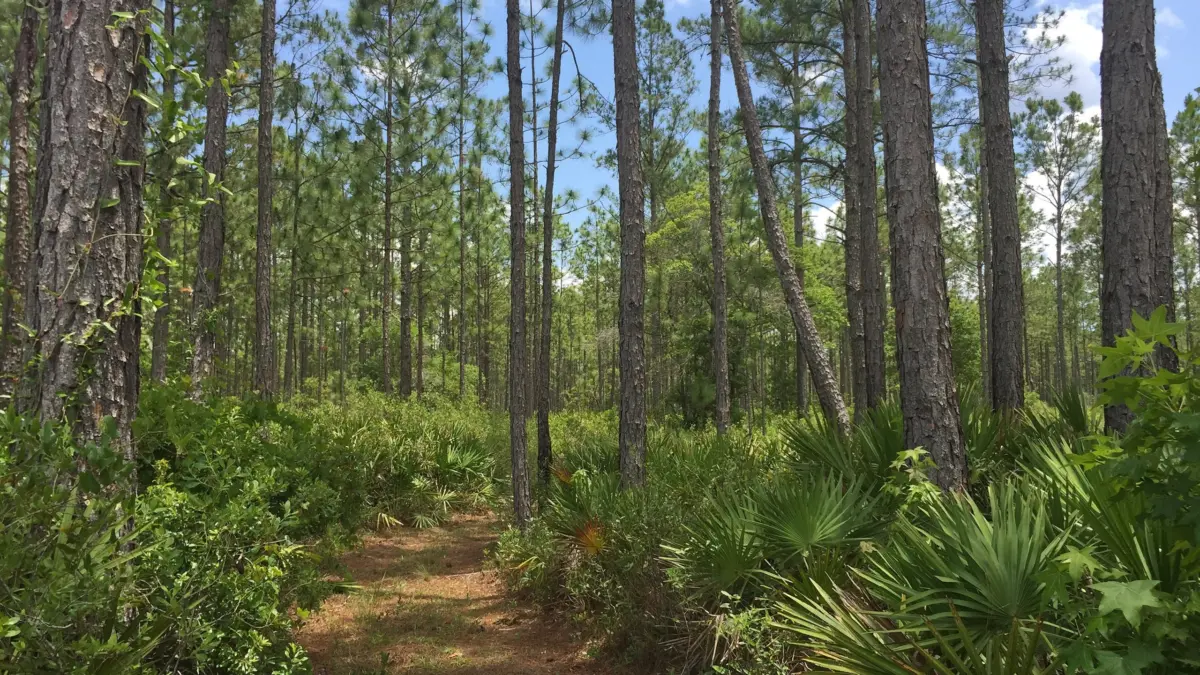
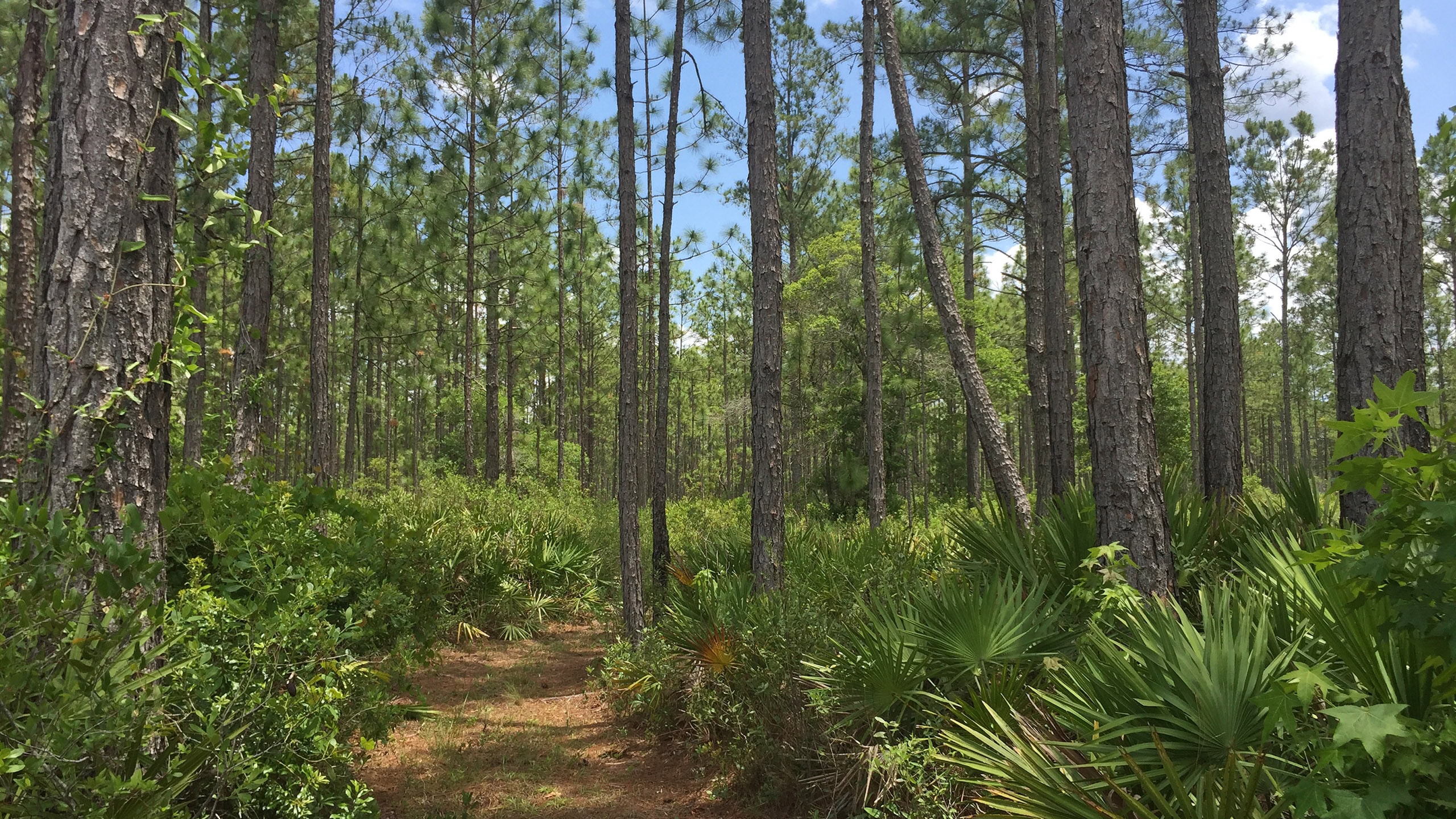
Canopy and Regeneration: Young longleaf pines dominate the overstory, with candle-stage saplings rising like green bottlebrushes through the understory.
Understory Composition: A dense mix of saw palmetto (Serenoa repens) and gallberry (Ilex glabra) creates a robust structural foundation, periodically punctuated by low-bush blueberry and seasonal blooms of dwarf pawpaw (Asimina incana).
Groundcover: Soft layers of pine duff alternate with native grasses, including clumps of chalky bluestem (Andropogon virginicus var. glaucus) emerging along the footpath edges.
Transitional Zones: Near the northern edges of the loop, subtle drops in elevation introduce bay trees, signaling the transition into lower, moister hydrological regimes.
Official Statements
The preservation and ongoing stewardship of the LEAFS Preserve South Tract are guided by a collaborative ethos uniting local landowners, conservation non-profits, and the regional community. While operational updates are managed directly through ACT, regional conservation leaders frequently emphasize the critical importance of private-public land transitions.
"The acquisition and continued care of parcels like the LEAFS Preserve South Tract represent the gold standard of grassroots conservation evolving into permanent, institutional protection," notes regional land management literature published by conservation advocates. "When organizations like LEAFS dedicate decades to healing a landscape, passing the torch to established entities like the Alachua Conservation Trust guarantees that future generations will inherit a living, breathing ecosystem rather than a fragmented memory of what once was."
Furthermore, land managers continually stress that public access to such preserves is contingent upon safety and ecological health. Official advisories consistently remind visitors:
"Preserves managed for longleaf pine flatwoods rely heavily on periodic fire to maintain their biological integrity. Temporary closures for prescribed burns and habitat maintenance are essential tools that ensure the long-term survival of the flora and fauna calling these tracts home."
Future Outlook
As the LEAFS Preserve South Tract looks toward the coming decades under the stewardship of the Alachua Conservation Trust, its role as both a public amenity and a vital ecological corridor remains secure. Future management objectives focus on bolstering climate resilience through adaptive forestry practices, expanding educational outreach programs for local schools and universities, and maintaining seamless connectivity with nearby protected lands such as the LEAFS Preserve North Tract, Lake Alto Preserve, and Little Lake Santa Fe Preserve.
Long-term monitoring programs will continue to track the recovery of native understory species, soil health, and avian populations that depend on open canopy pine flatwoods. By balancing low-impact public recreation—such as hiking and leashed-dog walking—with uncompromising ecological management, the LEAFS Preserve South Tract stands as a testament to what dedicated conservation can achieve. It remains an inviting, educational sanctuary where the rhythmic crunch of pine duff underfoot connects modern visitors to the timeless natural history of Florida’s wild interior.






0 Comments