

Executive Overview
In the high-stakes theater of offshore big-game angling, efficiency separates the casual weekend sportsman from the tournament-winning professional. Among the most lethal tactics in the modern offshore arsenal is pitch-baiting—a dynamic, highly visual discipline that transforms passive oceanic spectators into aggressive hookups. Whether deployed behind a meticulously orchestrated spread of dredges, daisy chains, and staggered ballyhoo, or utilized in a "teaser-only" configuration with zero trolling lines in the water, pitch-baiting dramatically shifts the odds in the angler’s favor.
By presenting a frantic, free-swimming offering precisely where predatory pelagics least expect it—close to the transom and trailing high-action teasers—anglers exploit the competitive instincts of fish like white marlin, sailfish, blue marlin, and yellowfin tuna. Beyond boosting hookup ratios, this technique minimizes line stretch, provides a front-row seat to heart-pounding surface strikes, and ensures shorter fight times that yield healthier releases for conservation-minded crews. This comprehensive analysis explores the mechanics, tackle selections, tactical execution, and advanced maneuvers that define master-level pitch-baiting in premier fisheries from the Mid-Atlantic canyons to the Bahamas and beyond.
Detailed Chronology: Anatomy of a Mid-Atlantic White Marlin Blitz
To truly understand the rhythm and velocity of pitch-baiting, one must examine a live-action deployment on the water. August and September offshore runs off the coasts of Virginia and Maryland provide the ultimate proving ground, where nutrient-rich upwellings converge to create a life-rich swath of ocean.
[Trolling Spread Active]
       │
       ▼
[Fish Spotted on Dredge/Teaser]
       │
       ▼
[Angler Free-Spools Pitch Bait]
       │
       ▼
[Teaser Pulled / Bait Skipped]
       │
       ▼
[Instantaneous Visual Strike & Hookset]
The Setup and the Strike
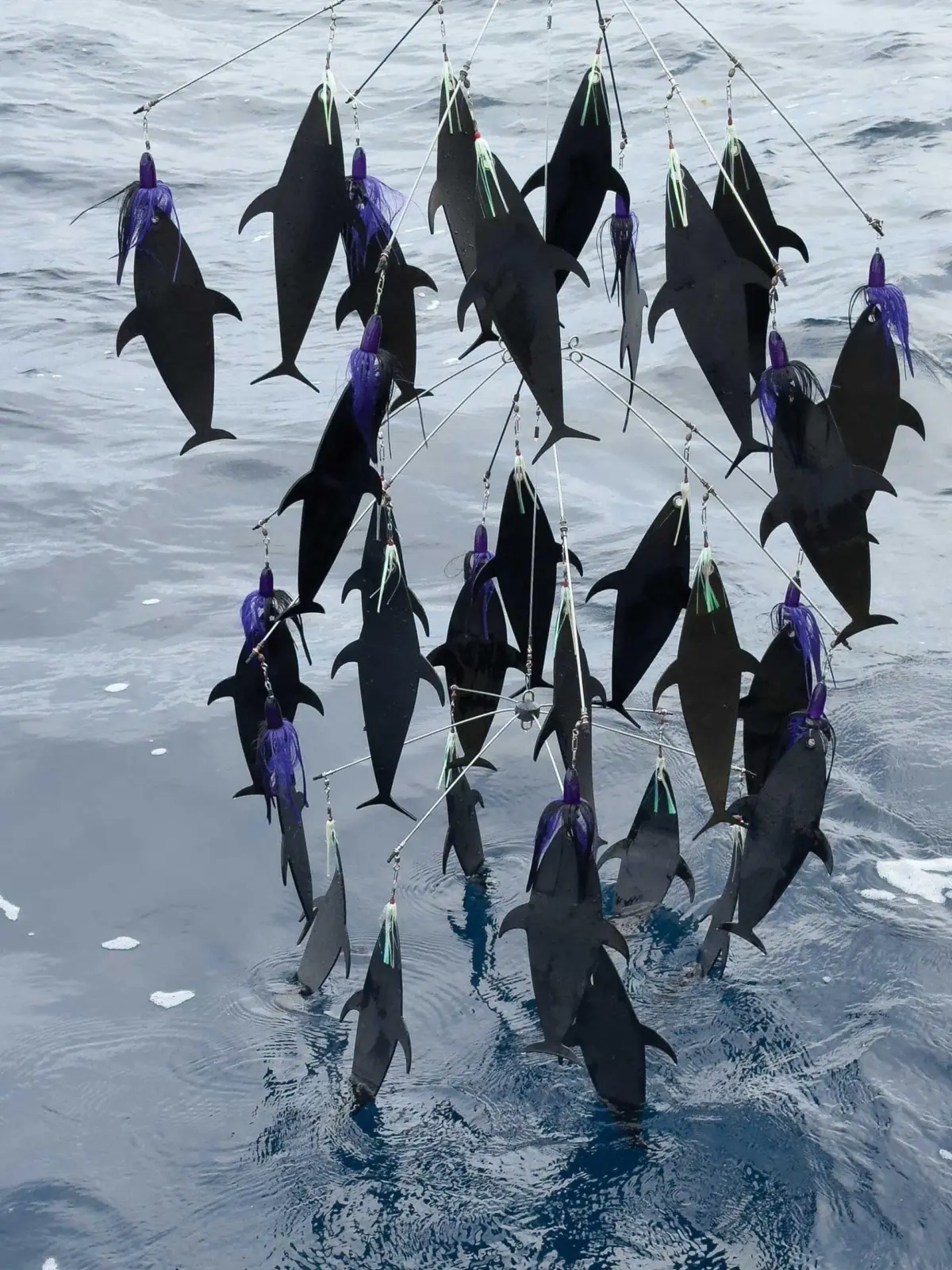
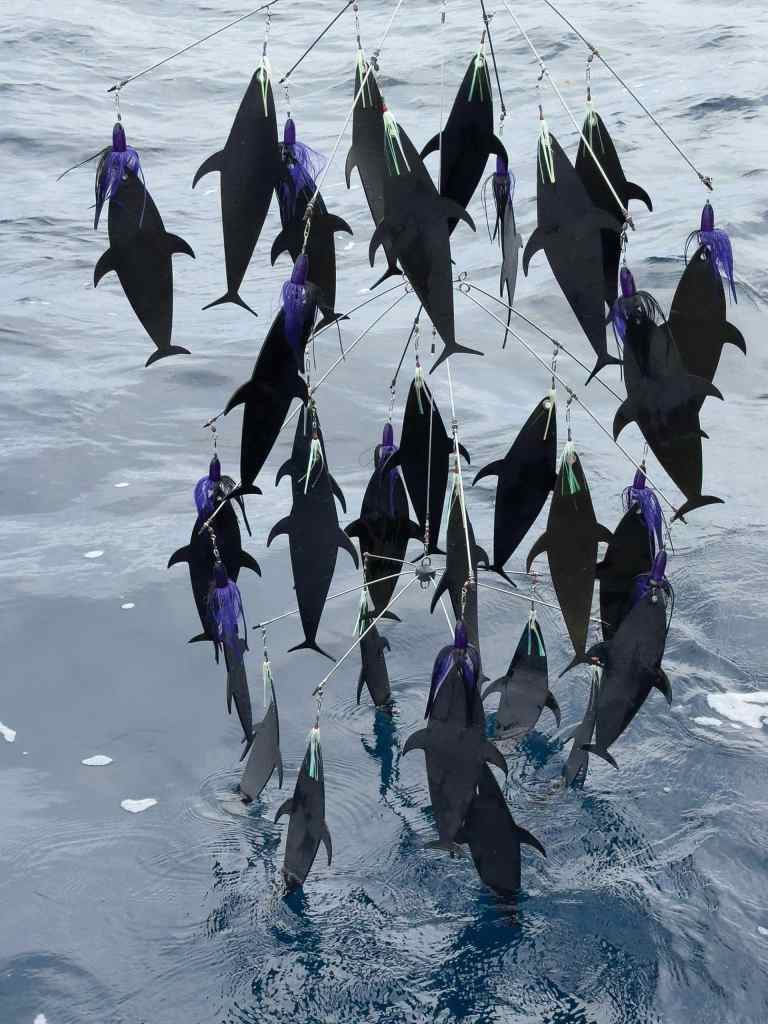
Aboard Capt. Russ Kostinas’s sportfisher Top Notch, the morning began with a classic, high-attraction trolling display. A mix of heavy dredges, daisy chains, and a staggered ballyhoo spread dug through the blue water, creating the convincing illusion of a frantic, fleeing school of baitfish.
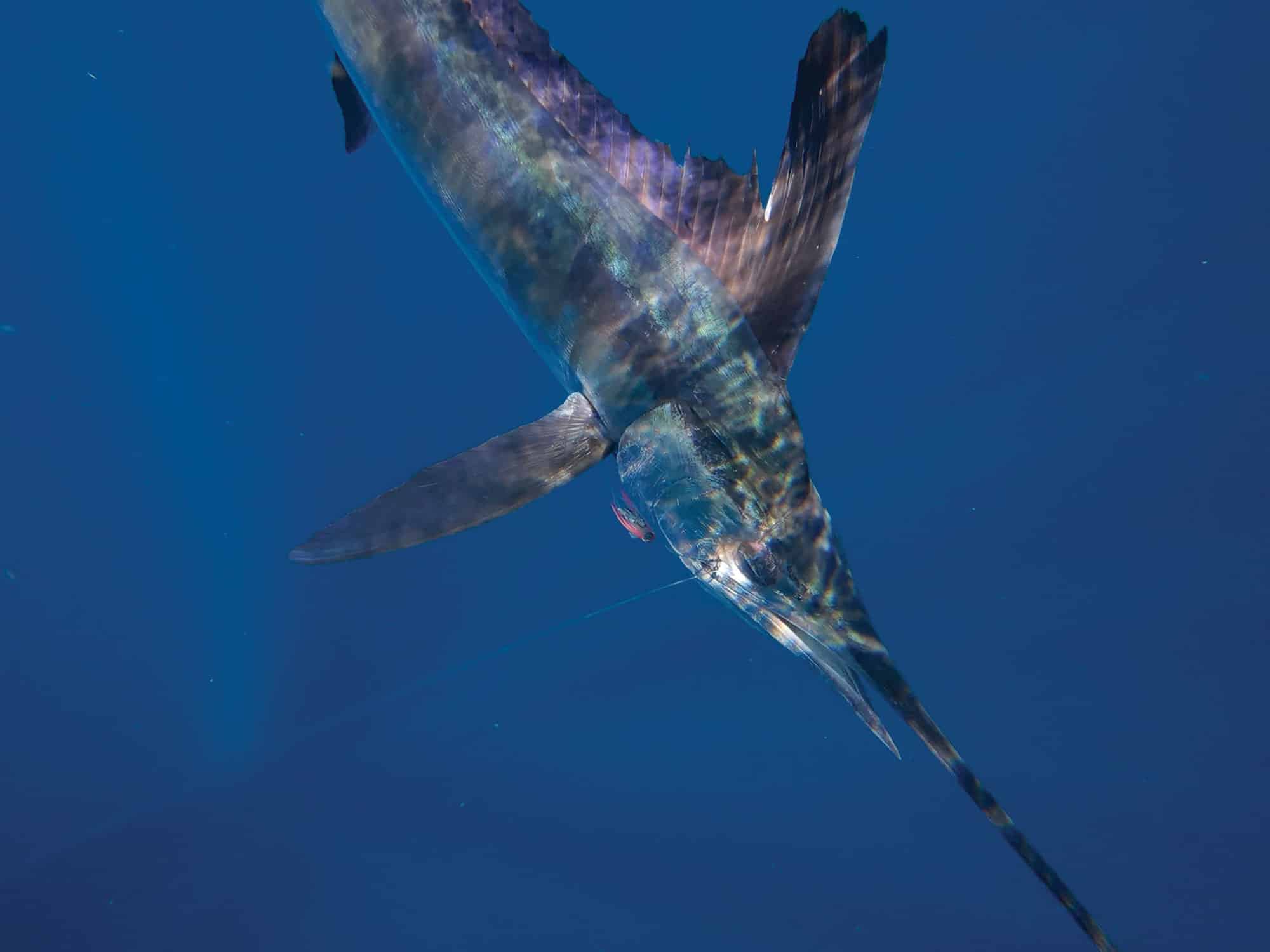
The strategy paid off immediately. Dr. Ken Neill III locked into the first target of the day—a striking round-scale spearfish that fell for a long-rigger ballyhoo. But as Neill began working his fish toward the boat, the ocean truly came alive. A pod of white marlin materialized directly behind the starboard daisy chain, drawn in by the commotion and the presence of their hooked companion.
Recognizing the opportunity, an agile angler on the cockpit line free-spooled a ballyhoo, got the bait skipping erratically across the surface, and teased the trailing white marlin into a blinding, predatory rush. Within seconds, the strike was converted, turning a solitary hookup into a chaotic, adrenaline-fueled double-header.
From Migration to Migration
This scene is far from an isolated incident; it is part of a predictable migratory highway. The exact same white marlin biomass that crowds the Mid-Atlantic in late summer begins its lifecycle moving through far eastern corridors, such as the offshore waters surrounding Green Turtle Club in the Abacos, Bahamas, during April and May. As these pelagics transition northward, Northeastern offshore fleets adopt the exact same "tease-and-pitch" routine. From sailfish in South Florida to aggressive blue marlin patrolling the edge of the continental shelf, pitch-baiting remains the undisputed king of conversion during peak seasonal migrations.
Supporting Context & Metrics: Why Pitch-Baiting Outperforms Traditional Trolling
While traditional dead-bait trolling and lure-dragging have their place in offshore exploration, pitch-baiting offers distinct biomechanical and tactical advantages that elevate catch-per-unit-effort (CPUE) metrics significantly.
1. Eliminating "Window Shoppers"
In a standard trolling spread, fish often inspect baits or lures, linger out of range, and ultimately lose interest without committing. When integrated with dredges and teasers, pitch-baiting weaponizes this curiosity. The longer a teaser remains just out of a fish’s reach, the more agitated and competitive the predator becomes. By the time the pitch bait is introduced, the fish is typically fully "charged up," resulting in explosive, committed strikes rather than tentative nibbles.
2. The Physics of Hookup Geometry
Hooking a billfish on a 150-yard dropback introduces immense variables: belly in the line, water resistance, stretch in monofilament lines, and delayed reaction times. Pitch-baiting condenses the battlefield. Because baits are deployed mere feet from the transom, line stretch is virtually eliminated. Direct contact allows the angler to instantly read the fish’s orientation, striking only when the animal is swimming sideways to or heading directly away from the vessel, optimizing the mechanics of circle-hook placement.
3. Tournament Efficiency and Conservation
For competitive tournament anglers, time is the ultimate currency. Up-close hookups drastically reduce fight times, limiting lactic acid buildup in the fish. This ensures a healthy, vigorous release—a critical metric for modern catch-and-tag conservation programs—while allowing the crew to reset their spread and resume fishing faster than crews tethered to long-line setups.
Tackle and Rigging Specifications by Target Species
Success in pitch-baiting hinges on matching your tackle profile precisely to the target species and regional biomass. Over-gunning results in rejected baits, while under-gunning leads to catastrophic line failure.
| Target Species | Rod & Reel Class | Line / Leader Configuration | Hook Size & Style | Preferred Pitch Bait |
|---|---|---|---|---|
| Sailfish & White Marlin | 20- to 30-lb class conventional or heavy spinning | 20- to 30-lb main line / 50- to 80-lb fluorocarbon | Small- to medium-size circle hook | Rigged ballyhoo or strip bait |
| Blue Marlin | 50-lb class conventional | 50-lb main line / 200-lb fluorocarbon | Large circle hook | Horse ballyhoo or "Quick Pin" Mahi |
| Mahi-Mahi / School Tuna | 20-lb class spinning or light conventional | 30-lb main line / 40- to 50-lb fluorocarbon | Mustad/circle assist setup | Small live bait or cut strip |
The "Quick Pin" Rig for Opportunistic Blue Marlin
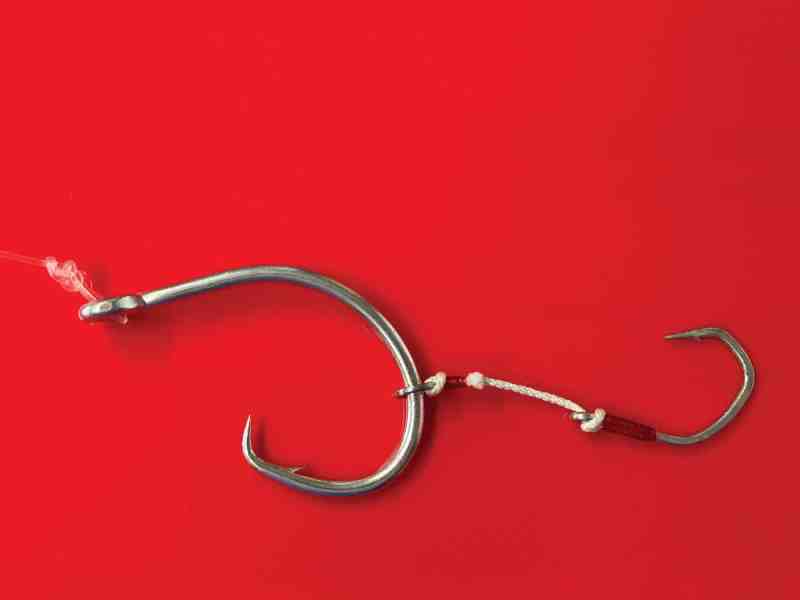
When targeting white marlin or sailfish, crews must always maintain a heavy-duty contingency. A dedicated 50-pound class outfit equipped with a large circle hook and a "quick pin" rig is mandatory.
The quick pin system utilizes a large primary circle hook paired with a flutter-jig assist hook attached to its eye. When a massive blue marlin suddenly crashes the surface spread—or when the boat slides into an aggressive school of feeding mahi—an angler can simply pin the small assist hook into a small mahi’s upper jaw and instantly free-spool it astern. The primary circle hook remains unobstructed in front of the bait, ready to lock into the corner of the jaw the moment the predator inhales the offering.
Tactical Execution: Skills, Presentation, and the Art of the Hook Set
Executing a successful pitch requires cat-like reflexes, spatial awareness, and absolute precision. Aboard packed center consoles or multi-tiered sportfishing yachts riddled with hardtops, outriggers, and rocket launchers, casting mechanics must be flawless.
The Underhand Advantage
Overhand casting in a cockpit full of tension, rods, and crewmates is a recipe for disaster. Anglers must master the underhand flip or pendulum cast. This keeps the pitch bait low, avoids overhead hardware, and ensures the offering lands softly on the surface rather than crashing awkwardly and spooking a wary billfish.
Dredge vs. Surface Teaser Tactics
- Dredge Presentation: When a fish charges a deep dredge, the angler must pitch the bait just ahead of the metallic unit and immediately engage free-spool. The visual objective is to mimic an injured, fluttering baitfish that has been knocked loose and is drifting back and down from the school. The strike should be instantaneous. If the fish hesitates, a quick crank of the reel skips the bait back in front of the dredge to repeat the illusion.
- Surface Teaser Presentation: For fish attacking surface teasers (such as daisy chains or spreader bars), the teaser must be rapidly retrieved toward the boat while the pitch bait is skipped across the surface directly behind it. Coaxing a lit-up sailfish or marlin away from a teaser and onto a swimming bait is one of the most visually stimulating spectacles in all of sportfishing.
The Circle-Hook Doctrine
With circle hooks now standard practice for sustainable billfish angling, the traditional "drop-back-and-strike" methodology has evolved.
- Point the rod tip directly at the running fish.
- Slowly and progressively advance the drag lever.
- Begin a steady, fluid lift of the rod as line peels away.
Crucial Rule: Avoid aggressive, fast hook sets. If an angler swings too early and misses, a fast strike sends the bait flying yards away from the fish. A slow, measured sweep ensures that even on a missed attempt, the bait remains within a few feet of the predator, keeping it locked in a prime secondary striking position.
Advanced Maneuvers: Doubling Down and "Prospecting"
Master-level captains do not wait for fish to appear by accident; they actively manufacture opportunities through aggressive tactics.
Doubling and Tripling Up
Pelagic predators such as white marlin and sailfish rarely travel alone; they hunt in pods and pairs. When an angler brings a hooked billfish close to the boat, a second crewmember should immediately ready a pitch bait and cast it behind the hooked fish—carefully avoiding line entanglements.
By actively "prospecting" the companion fish trailing the hooked specimen, crews regularly convert single hookouts into dramatic double- or even triple-headers. This tactic is exceptionally valuable during tournament play where every single release counts toward the leaderboard.
The "Pied-Piper" Mahi Strategy
School mahi present a unique operational challenge: after tearing through a trolling spread, they often vanish beneath the boat. Rather than cutting throttles and shutting down engines, top-tier captains engage the autopilot, maintain a slow forward idle, and let the trolling gear do the work.
In a Pied-Piper fashion, school mahi will often follow active daisy chains and teasers in a trance-like state. An angler can pitch a bait behind the trailing chain, hook a fish, and walk it to mid-ship. Once secured, the angler returns to the stern, recasts, and repeats the process. This continuous momentum keeps the school glued to the transom without sacrificing drift time.
Future Outlook: The Evolution of Offshore Efficiency
As marine electronics, sonar technology, and bait-rigging precision continue to advance, the gap between commercial-grade efficiency and recreational sportfishing narrows. The future of offshore fishing will likely see an increased reliance on pitch-baiting as fisheries management enforces stricter catch-and-release protocols and circle-hook mandates.
By mastering the subtleties of the tease-and-pitch routine—understanding migratory timelines, refining tackle selections to match localized forage, and perfecting cockpit communication—anglers can drastically reduce their environmental footprint while maximizing their success on the water. Ultimately, pitch-baiting transcends mere fish-catching; it is a refined art form that honors the quarry, elevates the crew, and redefines what is possible in the deep blue.

0 Comments