
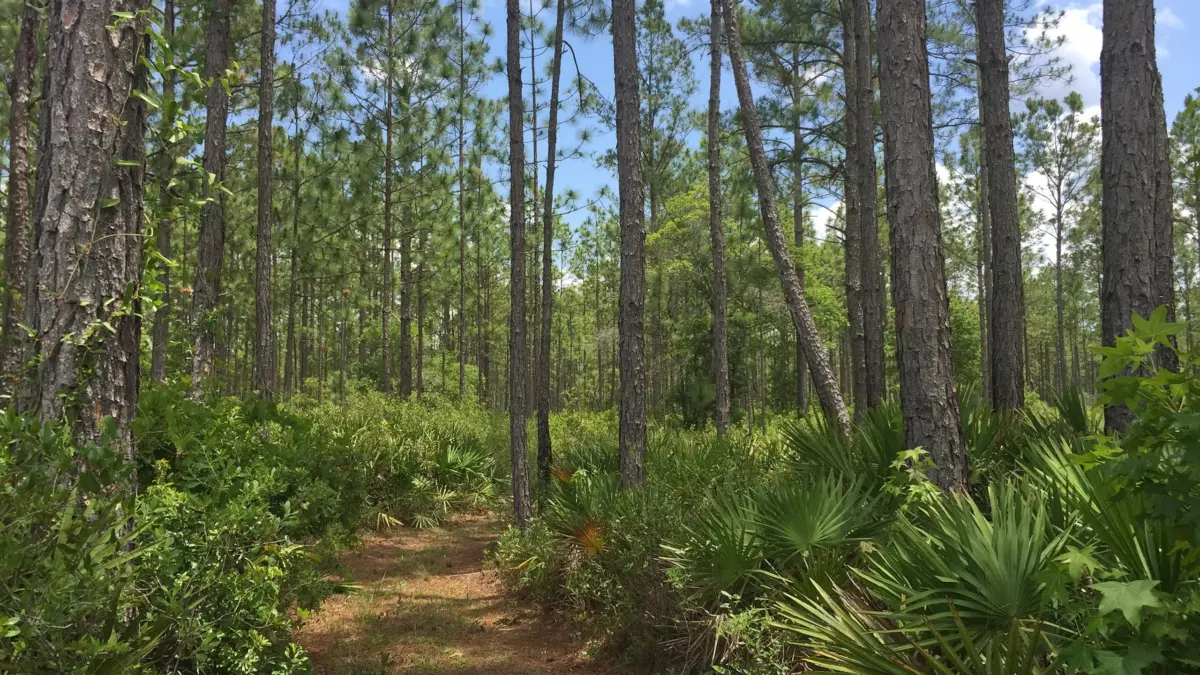

For over thirty years, the 90-acre South Tract of the LEAFS Preserve has stood as a sterling regional model for ecological restoration and long-term land management. Situated just east of US 301 on higher ground than its northern counterpart, this vital green space in Waldo, Florida, represents a masterclass in the revival of longleaf pine flatwoods. Originally established in 1993 by the Longleaf Ecology and Forestry Society (LEAFS), the property was formally transitioned into the stewardship of the Alachua Conservation Trust (ACT) in 2022. Today, the South Tract welcomes nature enthusiasts, hikers, and conservationists along the easy-to-walk, one-mile loop known as the Longleaf Trail.
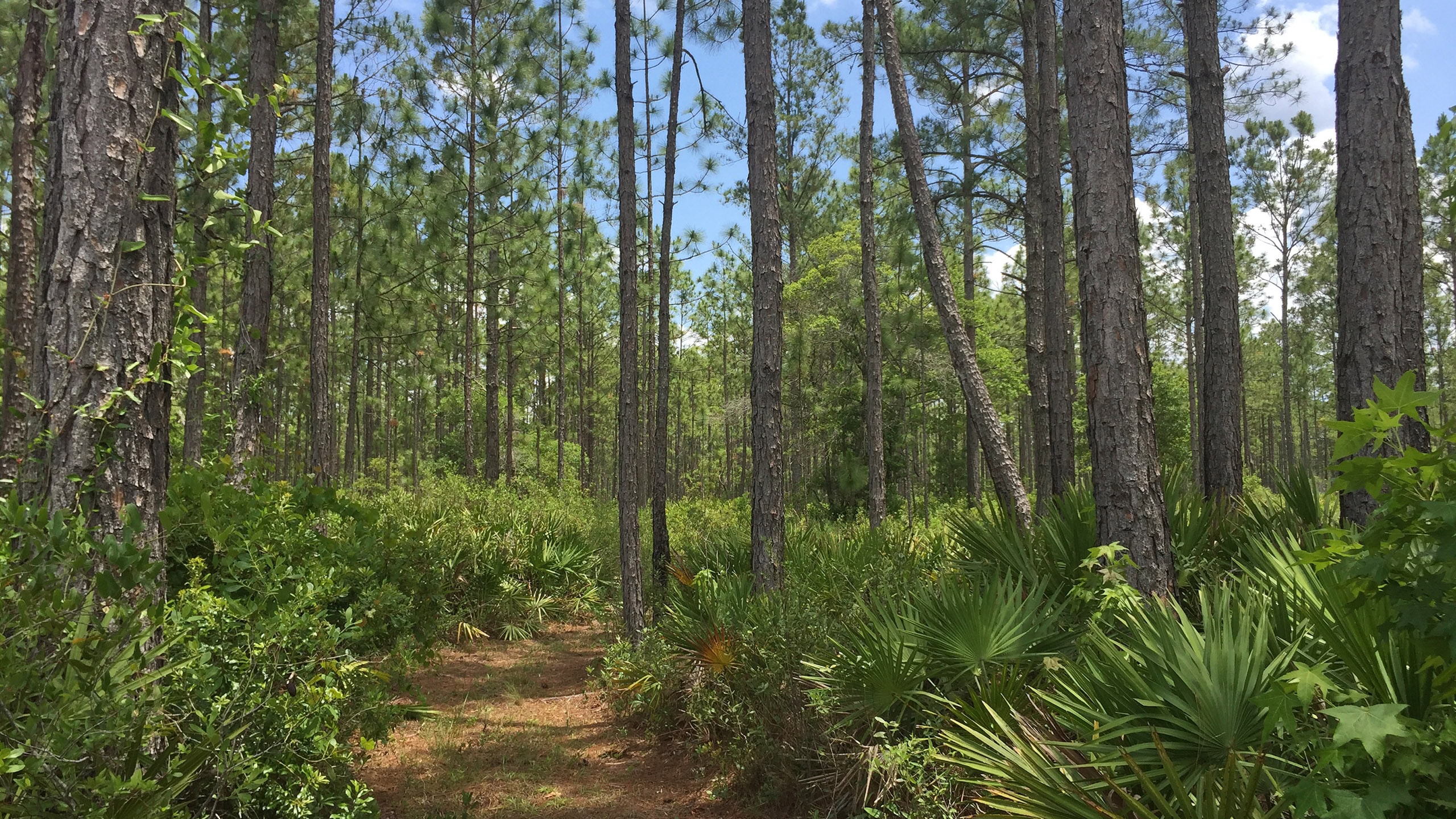
The significance of the LEAFS Preserve South Tract transcends its recreational utility; it serves as a living laboratory for habitat recovery. Decades of active management—featuring meticulous prescribed burns, non-native species suppression, and careful canopy thinning—have breathed new life into an ecosystem that was once severely degraded. As development pressures continue to encroach on North Florida’s rural landscapes, protected parcels like the South Tract provide crucial ecological corridors and refuge for native flora and fauna. Managed under the watchful eye of the Alachua Conservation Trust, the preserve remains entirely free to the public, offering daily access from sunrise to sunset for hikers and their leashed canine companions.

Detailed Chronology
The Genesis: 1993 and the Founding Vision
The story of the LEAFS Preserve began in 1993, a time when proactive, grassroots conservation initiatives were desperately needed to stem the loss of Florida’s historic longleaf pine ecosystems. Historically, longleaf pine flatwoods covered vast expanses of the southeastern United States, maintained by frequent, low-intensity natural fires. By the late 20th century, centuries of logging, fire suppression, and agricultural conversion had reduced these magnificent forests to mere fragments of their former range.

Recognizing the urgent need for direct intervention, the Longleaf Ecology and Forestry Society founded the preserve to demonstrate that degraded timberlands could be systematically restored to a healthy, functioning condition. The founders focused on the South Tract’s elevated terrain, implementing management techniques that simulated natural ecological disturbances. Through carefully planned prescribed burns and the reintroduction of native understory species, LEAFS transformed the property into a showcase for modern forestry restoration.

The Transition of Stewardship: 2022
After nearly three decades of independent management by its founding organization, the long-term preservation of the LEAFS property entered a new era in 2022. To ensure that the ecological gains achieved over the previous thirty years would be permanently safeguarded from future commercial development or fragmentation, the property was formally donated to the Alachua Conservation Trust (ACT).

This pivotal transition brought the South Tract under the umbrella of one of the region’s most established and well-resourced land trusts. ACT assumed full responsibility for the preserve’s ongoing maintenance, public access infrastructure, and ecological health. The handover guaranteed that the rigorous science-based management practices established by LEAFS would continue uninterrupted, preserving both the North and South Tracts as permanent public natural assets.

Modern Trail Experience and Trailhead Logistics
Today, navigating the South Tract is an immersive exercise in North Florida flatwoods ecology. Visitors arriving at the trailhead—located at 11985 NE CR 1471 in Waldo—are greeted by an informational kiosk providing orientation maps and historical context. The trailhead serves as the gateway to the Longleaf Trail, a flat, one-mile loop that utilizes mowed footpaths and historic forest roads.

Upon setting out, hikers are immediately enveloped by a transitioning forest where younger longleaf pines tower over dense undergrowth. The trail system relies on numbered interpretive posts and explicit directional arrows to guide visitors safely through complex junctions with fire lines. At roughly one-tenth of a mile, hikers reach Marker 3, marking the official beginning of the counterclockwise loop. From here, the trail winds past robust saw palmetto thickets, low-spot depressions choked with gallberry, and occasional sandy clearings bursting with seasonal dwarf pawpaw blossoms. Navigating through Markers 7, 9, and 11, visitors experience the full ecological sweep of the restored flatwoods before completing the loop and returning to the trailhead.

Supporting Context & Metrics
Ecological Profile and Geography
The LEAFS Preserve South Tract encompasses approximately 90 acres of upland and transitional flatwoods. Geographically situated east of US 301 and south of Waldo, the property occupies a slightly elevated ridge compared to the adjacent North Tract, which borders Lake Alto. This topographic variation dictates the distribution of plant communities across the landscape, allowing dry-site longleaf pines to thrive alongside transitional moisture-loving species.

+-------------------------------------------------------------------------+
                    LEAFS PRESERVE SOUTH TRACT METRICS
+------------------------+------------------------------------------------+
| Metric                 | Detail                                         |
+------------------------+------------------------------------------------+
| Total Acreage          | 90 Acres                                       |
| Trail Length           | 1-Mile Counterclockwise Loop                   |
| Elevation Profile      | Higher ground relative to North Tract          |
| Primary Land Manager   | Alachua Conservation Trust (ACT)               |
| Establishment Year     | 1993 (Donated to ACT in 2022)                  |
| Operating Hours        | Sunrise to Sunset Daily                        |
| Admission Fee          | Free                                           |
| Canine Policy          | Leashed dogs welcome                           |
| Trailhead Coordinates  | 29.76513, -82.13623                            |
+------------------------+------------------------------------------------+
Flora and Fauna Dynamics
The botanical composition of the South Tract is a direct result of decades of active restoration. The dominant canopy species, the longleaf pine (Pinus palustris), exhibits multiple life stages throughout the preserve, ranging from grass-stage seedlings hugging the forest floor to candle-stage saplings resembling large green bottlebrushes, up to mature timber specimens.

The understory is heavily defined by a robust matrix of saw palmetto (Serenoa repens) and gallberry (Ilex glabra), which provide essential cover for local wildlife. In lower, damper depressions along the trail, gallberry and bay trees become more pronounced, signaling subtle shifts in hydrology. Groundcover plants include chalky bluestem grasses, low-bush blueberry (Vaccinium stamineum), and seasonal blooms of dwarf pawpaw (Asimina incana), which offer critical foraging resources for native pollinators and ground-dwelling fauna.

Access, Navigation, and Safety
Visiting the South Tract requires an understanding of standard North Florida conservation area protocols. While admission is entirely free and the site remains open daily from sunrise to sunset, visitors must remain vigilant regarding land management closures. Because prescribed burning is an essential tool for maintaining the health of longleaf pine flatwoods, the Alachua Conservation Trust periodically shuts down access for controlled burns and habitat maintenance. Hikers are strongly encouraged to consult the official ACT website prior to planning a trip.

For those traveling by automobile, accessing the trailhead is straightforward from neighboring towns:

- From Hawthorne: Follow US 301 North from the State Road 26 interchange for approximately 3 miles, turn right onto CR 1471, and proceed for 0.5 miles to the trailhead on the right.
- From Waldo: Travel south on US 301 for 2.5 miles from the State Road 24 junction, make a turnoff onto NE 114th Ave, take a quick left onto CR 1471, and continue 0.5 miles to the trailhead.
Official Statements
While the formal transition of the LEAFS property to the Alachua Conservation Trust in 2022 marked a major administrative milestone, local conservation leadership has consistently emphasized the broader philosophical mission behind the preserve’s existence.

Representatives from the Alachua Conservation Trust have repeatedly underscored that properties like the LEAFS Preserve South Tract are not merely recreational amenities, but critical ecological anchors for Alachua County. In previous statements regarding regional land acquisitions and stewardship handovers, ACT officials noted that safeguarding fragmented natural communities requires active community engagement, continuous scientific monitoring, and an unwavering commitment to prescribed fire management.

Founding members of the Longleaf Ecology and Forestry Society similarly emphasized during the transfer of ownership that the 30-year labor of love invested in the property was designed to yield enduring benefits. By passing the torch to a dedicated land trust, the founders ensured that future generations of naturalists, students, and hikers would continue to witness the resilience of a restored longleaf pine flatwoods ecosystem under professional, institutional care.

Future Outlook
Looking ahead, the long-term outlook for the LEAFS Preserve South Tract is exceptionally strong under the stewardship of the Alachua Conservation Trust. As regional population growth and urban sprawl continue to place heavy demands on North Florida’s remaining open spaces, protected public lands within the US 301 corridor will play an increasingly vital role in maintaining regional biodiversity and watershed health.

Future management priorities for the South Tract will likely center on adaptive restoration strategies, including the intensification of invasive exotic plant monitoring, fine-tuning fire return intervals to optimize native herbaceous groundcover, and enhancing public interpretation infrastructure along the Longleaf Trail. Furthermore, the proximity of the South Tract to other regional conservation assets—such as the LEAFS Preserve North Tract, Little Lake Santa Fe Preserve, Lake Alto Preserve, and Little Orange Creek Preserve—creates opportunities for coordinated landscape-level conservation planning.

For the everyday visitor, the future promises a pristine, unchanging sanctuary where the rustle of pine needles, the striking silhouette of candle-stage longleaf pines, and the quiet solitude of a well-maintained forest path remain readily accessible. Through the continued dedication of the Alachua Conservation Trust, the LEAFS Preserve South Tract will undoubtedly endure as a premier destination for ecological education and restorative outdoor recreation for decades to come.

0 Comments