
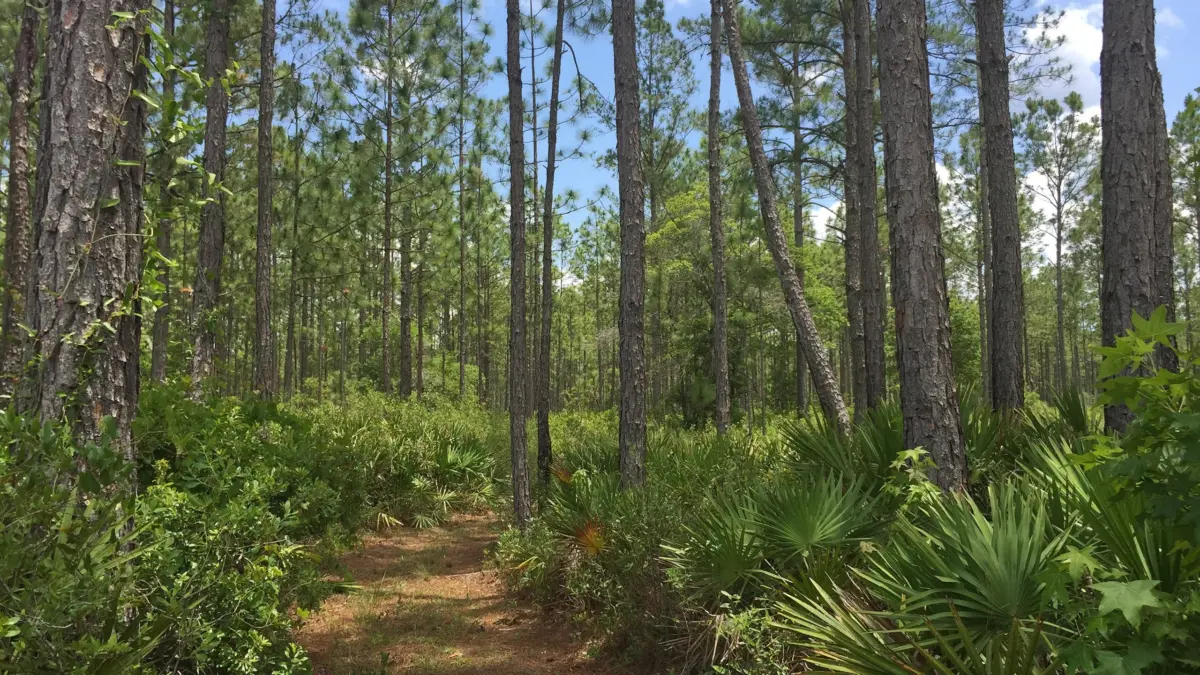

For over thirty years, the 90-acre South Tract of the LEAFS Preserve has served as a premier regional showcase for the meticulous restoration and proactive management of Florida’s longleaf pine flatwoods. Originally established in 1993 by the Longleaf Ecology and Forestry Society (LEAFS) as an active laboratory and sanctuary for this endangered ecosystem, the property underwent a significant transition in 2022 when stewardship of the land was officially transferred to the Alachua Conservation Trust (ACT).
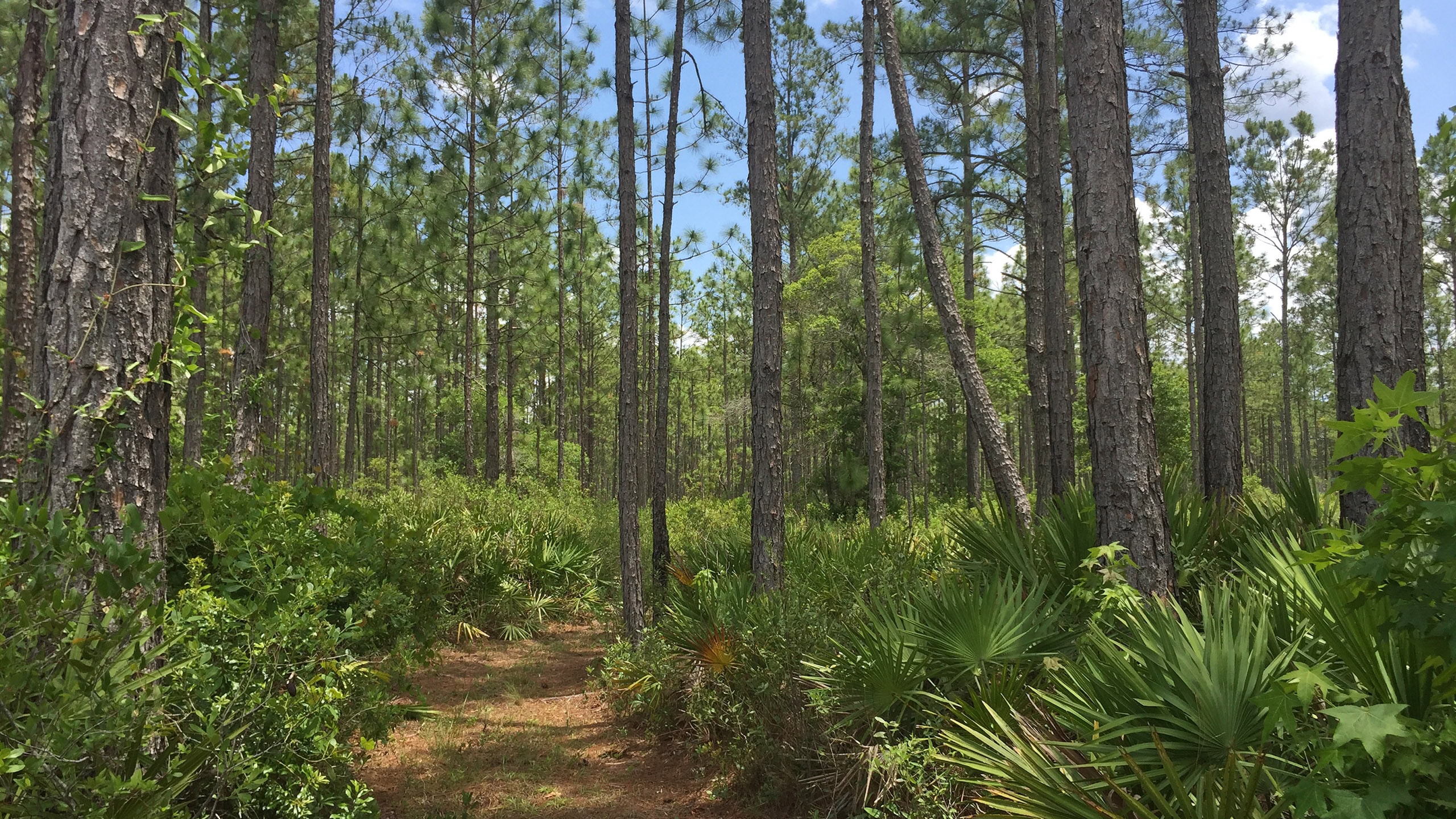
Situated just east of U.S. Route 301 on higher ground than its counterpart to the north, the South Tract offers naturalists, hikers, and conservationists an intimate window into North Florida’s pre-development ecology. The property features the 1-mile Longleaf Trail, a carefully maintained circuit of mowed footpaths and historic forest roads designed to provide low-impact access while safeguarding fragile understory regeneration. Open to the public daily from sunrise to sunset, this conserved landscape stands as a testament to decades of hard-fought ecological restoration, offering a living classroom where native flora and fauna thrive under the watchful eye of modern conservation science.

Detailed Chronology
1993: Establishment and Vision
The history of the LEAFS Preserve South Tract is rooted in grassroots environmental stewardship. Founded by the Longleaf Ecology and Forestry Society in 1993, the 90-acre parcel was designated as a living experiment in habitat reclamation. At the time of its acquisition, large swaths of Florida’s historic longleaf pine ecosystems had been fragmented, logged, or altered by fire suppression. The founders of LEAFS sought to reverse this trend by establishing a dedicated tract where the natural dynamics of fire-maintained flatwoods could be reintroduced, studied, and preserved. Over the ensuing decades, the organization engaged in rigorous management practices—including controlled burns, invasive species removal, and native planting—transforming the landscape into a thriving biological mosaic.

2022: Stewardship Transition to Alachua Conservation Trust
As decades passed, the logistical and financial burdens of maintaining and protecting conservation lands grew increasingly complex for smaller non-profit entities. Recognizing the need for long-term institutional stability, leadership at LEAFS orchestrated a pivotal transition in 2022, formally donating the South Tract to the Alachua Conservation Trust (ACT). ACT, a prominent regional land trust with a proven track record of safeguarding North Florida’s natural heritage, stepped in to guarantee the permanent protection of the property. This transfer ensured that the scientific investments and restoration milestones achieved over the previous thirty years would be perpetually safeguarded, while simultaneously opening the tract to structured public recreation and education.

Present Day: Public Access and Trail Dynamics
Today, the LEAFS Preserve South Tract functions as both an ecological refuge and a popular recreational destination. Visitors utilizing the 1-mile Longleaf Trail encounter a carefully curated pathway that navigates the shifting topography of the flatwoods. The journey begins at the trailhead kiosk, where explorers can secure physical maps or digital references corresponding to a series of numbered interpretive posts.

As hikers step past the threshold into the forest, they are immediately greeted by a dense matrix of younger longleaf pines whose upper reaches form a verdant canopy overhead. Within the first tenth of a mile, arriving at Marker 3 signals the commencement of the counterclockwise loop. Here, the understory presents a dense entanglement of saw palmetto intermixed with gallberry shrubs. Rising above this low-lying thicket, candle-stage longleaf pines emerge like giant green bottlebrushes, showcasing the various age classes critical to a sustainable forest.

Navigating deeper into the interior, the trail transitions from soft pine duff to grassy footpaths that intersect with established fire lines. Thoughtfully placed directional arrows guide hikers safely through these structural jogs. Seasonal blooms of dwarf pawpaw frequently punctuate the clearings in the pine duff, offering splashes of localized color against the neutral forest floor.

As the trail dips into lower, slightly damp depressions, the botanical composition shifts subtly, with gallberry encroaching upon the saw palmetto. Crossing a primary firebreak near Marker 7 at the half-mile mark, the terrain dries once more, ushering hikers into an authentic thicket of mature flatwoods where low-bush blueberry lines the margins of the path. Between Markers 9 and 11, the immersion in the restored ecosystem reaches its zenith; a narrow ribbon of pathway winds through an endless sea of saw palmetto, occasionally interrupted by the chalky plumes of bluestem grass. Navigating a sharp left turn at a T-intersection roughly 0.7 miles into the trek, hikers catch glimpses of lower elevation bay trees before closing the loop and returning triumphantly to the trailhead.

Supporting Context & Metrics
Understanding the ecological significance of the LEAFS Preserve South Tract requires an examination of the broader geographical and biological framework within which it operates.

Geographic and Logistical Profile
- Location: Waldo, Florida (Alachua County)
- Tract Size: 90 acres of restored longleaf pine flatwoods
- Trail Length: 1-mile loop (inclusive of mowed footpaths and forest service roads)
- Trailhead Coordinates: 29.76513, -82.13623
- Physical Address: 11985 NE CR 1471, Waldo, FL
- Operating Hours: Open daily from sunrise to sunset
- Admission Fees: Free of charge
- Amenities: None (no restrooms on-site; visitors are advised to plan accordingly)
- Pet Policy: Leashed dogs are welcome
Directions and Accessibility
Reaching the LEAFS Preserve South Tract is straightforward for regional travelers. From the State Road 26 interchange in Hawthorne, motorists travel north on U.S. Route 301 for approximately 3 miles before turning right onto County Road 1471. The trailhead is situated on the right-hand side within half a mile. Alternatively, travelers approaching from the south via the State Road 24 junction in Waldo can drive 2.5 miles south on U.S. Route 301, turn off onto NE 114th Ave, take a quick left onto CR 1471, and proceed half a mile to the trailhead.

Ecological Context: The Longleaf Pine Ecosystem
Historically, longleaf pine (Pinus palustris) flatwoods covered millions of acres across the southeastern United States, representing one of the most biodiverse terrestrial ecosystems outside of the tropics. Characterized by an open canopy of longleaf pines and a rich, herbaceous groundcover dominated by wiregrass, native grasses, and low shrubs, this environment evolved alongside frequent, low-intensity natural fires. These fires cleared out competing hardwood species and returned vital nutrients to the soil.

The restoration work at the LEAFS Preserve has deliberately emulated these natural processes. By utilizing prescribed fire management and active thinning, land managers have successfully recreated the structural openness required by dozens of endemic plant and animal species. The presence of young pine cohorts, native dwarf pawpaw, chalky bluestem, and gallberry within the South Tract confirms that the ecological succession of the property is functioning precisely as intended by conservation biologists.

Official Statements
While the operational transition of the property from LEAFS to the Alachua Conservation Trust concluded in 2022, the legacy of the original founding society continues to resonate through the statements of regional conservation leaders and land management authorities.

Representatives from the Alachua Conservation Trust have consistently emphasized the irreplaceable value of community-supported land conservation. In public briefs regarding the acquisition of the LEAFS properties, ACT leadership noted that the incorporation of both the North and South Tracts into their regional portfolio ensures the permanent protection of vital ecological corridors within the greater Lake Alto basin. Conservation advocates point out that protecting upland forests like the LEAFS South Tract not only preserves botanical diversity but also safeguards local hydrological systems that feed surrounding wetlands and watersheds.

Furthermore, outdoor educators and environmental historians have lauded the preservation of the site as a masterclass in private-public conservation continuity. By taking over a property that had spent nearly three decades operating as an independent ecological laboratory, ACT demonstrated a commitment to honoring grassroots conservation history while scaling up public access and institutional oversight. Official communications from land managers stress that public engagement—manifested through responsible hiking, adherence to trail markers, and respect for seasonal preserve closures—is paramount to maintaining the delicate balance between human recreation and ecological preservation.

Future Outlook
Looking ahead, the long-term trajectory for the LEAFS Preserve South Tract focuses on adaptive management, climate resilience, and enhanced educational outreach. As regional development pressures continue to mount across Alachua County and North Central Florida, isolated green spaces face increasing threats from habitat fragmentation and altered hydrological cycles. In response, the Alachua Conservation Trust remains dedicated to implementing rigorous, science-based management protocols designed to safeguard the property against these external stressors.

A cornerstone of the future management plan involves the continued execution of prescribed burning regimes. Because the longleaf pine flatwoods ecosystem is fundamentally pyrogenic—meaning it requires fire to survive and reproduce—land managers will periodically close portions of the preserve or the entire tract to conduct controlled burns. These tactical interventions are essential for reducing accumulated fuel loads, controlling invasive hardwoods, and stimulating the germination of fire-dependent understory flora such as the dwarf pawpaw and native grasses observed along the trail. Visitors are strongly encouraged to consult the official ACT website prior to planning any excursion to verify current preserve status and check for temporary maintenance closures.

In addition to active fire management, future initiatives will likely explore expanded interpretive programming. Given the rich thirty-year history of restoration on the property, there is significant potential to develop enhanced educational signage, guided nature walks, and citizen-science monitoring programs. By engaging local schools, universities, and nature enthusiasts, the LEAFS Preserve South Tract will continue to serve not merely as a scenic backdrop for a quiet afternoon hike, but as an active, enduring center for environmental literacy and ecological stewardship in North Florida.

0 Comments