

Executive Overview
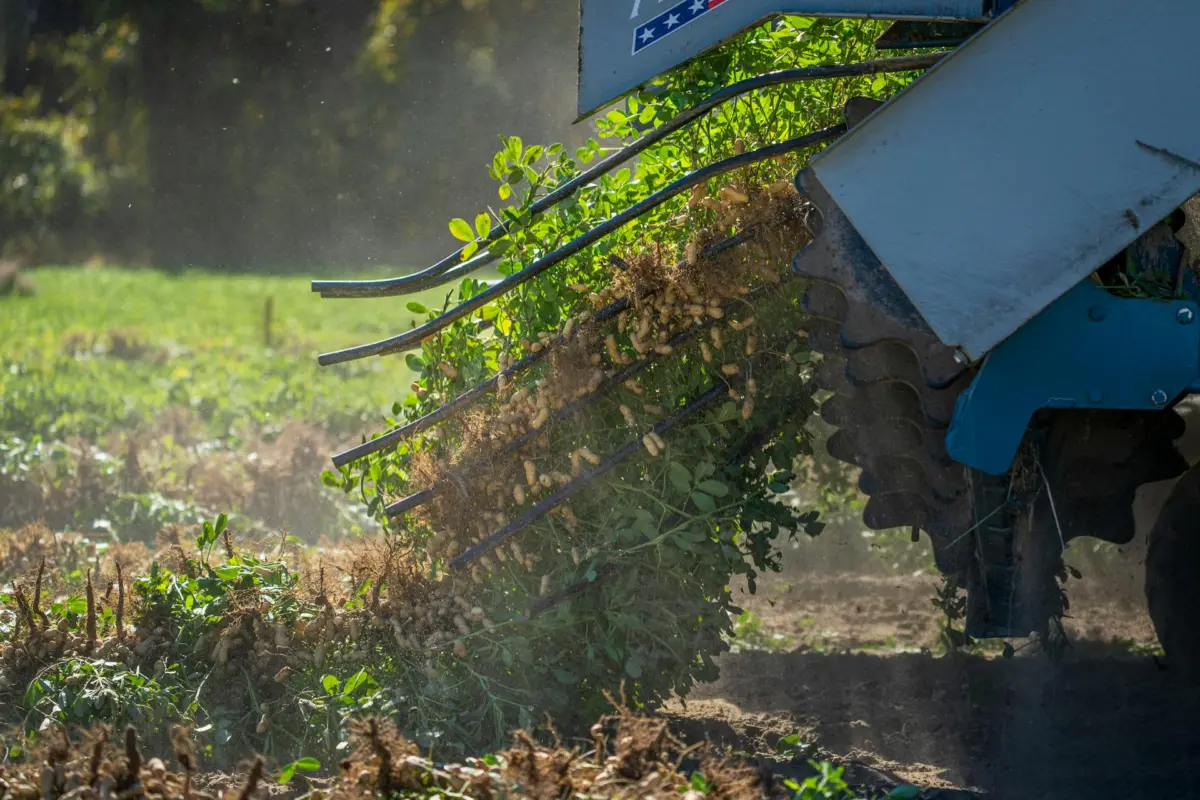
As the late-summer sun beats down on the rich, reddish-brown soils of the American Southeast, agricultural communities are shifting into high gear for the 2026 peanut harvest. Spanning the fertile agrarian landscapes of South Georgia, northern Florida, and the wiregrass region of Alabama, farmers are once again taking to the fields. Yet, the atmosphere in the machine sheds and farm offices this season is markedly different from years past. It is a mood tempered by caution, vigilance, and the exhausting reality of navigating a deeply complex agricultural cycle.
Growers across the tri-state region are perpetually looking upward, keeping a nervous eye on the skies. The timing of this year’s harvest is critical, but it is complicated by an unprecedented convergence of delayed field schedules, late-season disease pressures, localized drought pockets, and a volatile global commodities market. Georgia remains the undisputed titan of American peanut production, regularly accounting for a massive share of the nation’s overall supply. However, defending that crown in 2026 has required nothing short of a masterclass in risk management, agronomic adaptability, and sheer perseverance.
The challenges of the current production cycle began long before the first vines were ever inverted. From a treacherous, waterlogged spring that threw planting schedules into disarray, to a summer defined by erratic rainfall patterns, the 2026 crop has been a study in contrast. Agricultural extension agents, crop consultants, and generational farmers alike describe this year’s harvest as a fractured endeavor—essentially playing host to two completely distinct crops growing simultaneously in the same region: one early-planted and mature, the other late-planted and desperately racing the calendar.
As combines begin to roll and drying facilities gear up for peak capacity, the stakes could not be higher. This comprehensive report explores the trajectory of the 2026 southeast peanut harvest, breaking down the meteorological hurdles, the agronomic realities on the ground, the economic forces shaping the marketplace, and what consumers and industry stakeholders can expect as these vital legumes make their way from the furrow to the processing plant.
Detailed Chronology: A Season Defined by Extremes
To understand the current state of the 2026 peanut harvest, one must trace the timeline of the growing season back to its tumultuous origins. The story of this year’s crop is ultimately one of remarkable recovery against stiff odds, but it was a journey that tested the resolve of even the most seasoned producers in the agricultural sector.
Spring Setbacks: The Waterlogged May
The trouble for the 2026 crop cycle began almost as soon as the equipment was pulled out of storage. According to agricultural specialists, the month of May—traditionally a window of steady, predictable planting activity across the coastal plains—brought relentless, heavy precipitation. Soils across major producing counties were saturated to a degree that made conventional field preparation virtually impossible.
For approximately half of Georgia’s intended peanut acreage, the scheduled planting window slammed shut before seeds could even be dropped into the furrows. Extension experts, including Scott Mumford of the University of Georgia, noted that this widespread delay fundamentally fractured the state’s agricultural timeline. While a fraction of the crop went in on time and established robust root systems early, a massive portion of the acreage was pushed weeks behind schedule. In farming, a delay of two to three weeks during the spring does not just shift the calendar; it alters pest management thresholds, pushes harvest dates perilously close to autumnal tropical weather risks, and creates massive logistical bottlenecks for equipment sharing and labor deployment.
The Summer Pivot: Sporadic Rains and the "Two-Crop" Reality
As the calendar flipped from spring to summer, the weather narrative shifted from persistent floods to erratic, highly localized precipitation events. This meteorological pivot saved the 2026 season from utter disaster, but it also sowed the seeds of uneven crop development.
Throughout July and August, much of the Southeast experienced a dramatic turnaround in soil moisture conditions. For the majority of the region, timely summer rains injected vital vigor into struggling, late-planted fields. Plants that had languished in waterlogged spring soils suddenly experienced explosive vegetative growth, catching up in appearance if not in physiological maturity.
However, because these summer rains arrived as sporadic thunderstorms rather than widespread, gentle systems, the relief was distributed unevenly. This dynamic created what agronomists have termed a "two-crop scenario." Across county lines and sometimes even within the boundaries of a single farming operation, producers are now managing two distinct populations of peanuts:
- The Early Crop: Planted on time, this cohort weathered the spring relatively well, developed deep taproots, and is currently exhibiting steady maturity patterns that align with traditional harvest calendars.
- The Late Crop: Spawned by the delayed May and June plantings, this cohort is lagging behind. While the recent moisture helped these plants recover significantly over the last month and a half, they require a longer runway of warm, dry weather to reach optimal kernel maturity.
This bifurcation presents a logistical nightmare for harvest management. Farmers cannot blanket their acreage with a uniform harvest schedule; instead, they must constantly test maturity profiles field by field, balancing the risk of digging too early (which sacrifices yield and quality) against the danger of leaving late crops exposed to autumn frost or tropical storm activity.
Supporting Context & Metrics: Irrigation, Infrastructure, and Agronomic Pressures
The logistical hurdles of the 2026 harvest are deeply intertwined with the underlying infrastructure and environmental conditions of the Southeast agricultural belt. A closer look at the data reveals both the vulnerabilities and the structural strengths of the region’s peanut industry.
The Irrigation Safety Net
One of the most telling metrics of the 2026 season is the proportion of agricultural land equipped with artificial watering systems. Current regional assessments indicate that roughly 60% of the peanut acreage across the primary producing states is irrigated, while the remaining 40% relies entirely on dryland farming.
This breakdown has proven to be the ultimate differentiator during the erratic summer of 2026:
- Irrigated Fields: Producers who invested in center-pivot irrigation systems were able to buffer their crops against the dry spells that routinely interrupted the sporadic summer rainfall patterns. These fields are displaying consistent yields, well-filled pods, and predictable grade outcomes.
- Dryland Fields: Conversely, dryland farmers found themselves at the mercy of localized weather anomalies. In counties where summer rain clouds bypassed local farms, non-irrigated crops suffered from severe moisture stress during critical pod-filling stages. Consequently, yields in these dryland pockets are expected to be noticeably depressed, highlighting the ongoing vulnerability of rain-fed agriculture in a changing climate.
Disease Management and Late-Season Pressures
Beyond moisture management, the heavy spring rainfall and subsequent humid summer conditions created an ideal incubator for fungal pathogens. Throughout August, extension entomologists and plant pathologists issued warnings regarding heightened disease pressures, particularly concerning leaf spot, white mold, and stem rot.
Managing these diseases required aggressive, costly fungicide application programs. Because the late-planted crop was maturing during a period when humidity remained high, farmers had to carefully time their tractor passes to avoid compacting wet soils while still protecting the vulnerable canopy. These added operational costs have squeezed profit margins, making the financial success of the 2026 harvest heavily dependent on achieving strong final grades at the buying points.
Official Statements and Industry Insights
The complexities of the 2026 season have been closely monitored by academic institutions and agricultural communication networks dedicated to keeping producers informed in real time.
Providing critical on-the-ground updates for Southeast AgNet, agricultural broadcaster Tyron Spearman has emphasized the psychological and operational shifts required of growers this autumn. Through regular audio reports from the field, Spearman has captured the sentiment of an industry that refuses to be sidelined by early-season adversity.
Academic voices have played a crucial role in contextualizing the year’s challenges. Scott Mumford of the University of Georgia provided a candid assessment of the crop’s trajectory during a recent update to regional stakeholders:
"The 2026 peanut crop got off to a difficult start. The wet May delayed planting for roughly half of the state’s peanut crop. Despite these early setbacks, sporadic summer rains have turned the crop around, and the outlook looks a little bit better. But it’s almost like two crops: one early, one late."
Elaborating on the dramatic mid-season recovery, Mumford noted the localized nature of the relief:
"The crop has improved dramatically over the last month and a half with the idea that we’ve been getting more rain in most all areas. It’s been sporadic, which means that we’re going to have some areas in the state that are still extremely dry, and the crop is struggling a little bit in those areas. About sixty percent of the acres are irrigated this year, which has certainly helped stabilize the overall production baseline."
These statements underscore the delicate balancing act defining modern farming in the American Southeast: while scientific advancements, resilient seed varieties, and sophisticated irrigation technology can rescue a troubled crop, success ultimately hinges on an unforgiving intersection of local weather patterns and timely human intervention.
Future Outlook: Markets, Processing, and the Road Ahead
As the first truckloads of freshly inverted peanuts begin rolling into buying points across South Georgia, north Florida, and Alabama, attention is already shifting from production to processing, commercial distribution, and global trade dynamics.
Navigating Global Trade and Market Realities
Producing the crop is only half the battle; marketing it profitably in a complex global arena presents its own set of hurdles. Peanut growers in the Southeast are operating within an increasingly interconnected international marketplace. Fluctuating global demand, shifting currency values, and international trade policies continue to exert pressure on domestic pricing structures.
Domestic consumption—driven by robust demand for peanut butter, snack nuts, and confectionary products—remains a steady anchor for the industry. However, export markets are facing heightened competition from international producers, making the quality, grade, and safety of the U.S. peanut crop paramount. Because the 2026 harvest features both high-quality irrigated lots and potentially lower-grading dryland or late-season lots, buying points and shellers will need to exercise rigorous quality control to ensure that export standards are consistently met.
Logistical Preparedness at Buying Points
Shelling plants and buying stations across the tri-state area are currently ramping up their operational hours, bringing in seasonal labor, and calibrating moisture-testing equipment to handle the incoming harvest rush. Because the crop is split into early and late maturities, storage facilities and drying warehouses anticipate a prolonged, staggered intake period rather than the traditional short, intense harvest rush. This stretched-out timeline will require careful coordination between growers, trucking companies, and processing plants to avoid storage bottlenecks and ensure that peanuts are cured at optimal moisture levels immediately upon delivery.
Conclusion
The 2026 peanut harvest in South Georgia, Florida, and Alabama will undoubtedly be remembered as a testament to the resilience of the American farmer. Navigating through a waterlogged, delayed spring, enduring erratic summer drought pockets, and managing high disease pressures, the agricultural community has once again pulled a remarkable turnaround from the brink of a difficult start.
As combines sweep across the landscape and the familiar, earthy aroma of freshly harvested peanuts fills the autumn air, growers remain watchful. By leveraging modern irrigation infrastructure, heeding the guidance of agricultural extension specialists, and managing the intricate dynamics of a "two-crop" season, Southeast producers are proving once again why the region remains the premier powerhouse of the nation’s peanut industry. The road ahead remains challenging, but as the harvest gathers momentum, the outlook for 2026 stands as a powerful reminder of nature’s capacity for recovery and humanity’s steadfast dedication to the land.

0 Comments