

Executive Overview
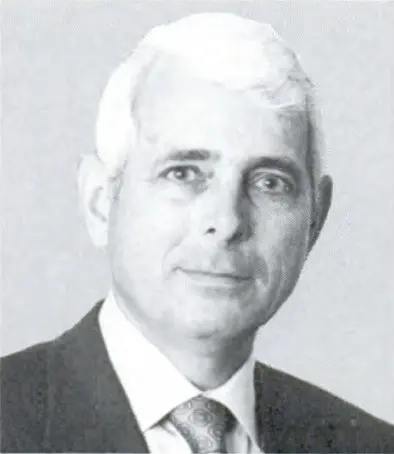
The agricultural community of the American Southeast is mourning the loss of a devoted public servant and an indefatigable champion of the farming industry. Former U.S. Congressman Charles Floyd Hatcher, whose political career spanned nearly two decades of profound legislative impact in Washington, D.C., and the Georgia state legislature, has passed away at the age of 87.
Hatcher, a Democrat who represented Southwest Georgia, left an indelible mark on federal agricultural policy, most notably as a fierce protector and advocate for the American peanut industry. During his six terms in the U.S. House of Representatives—from 1980 to 1992—Hatcher represented a district that produced more peanuts than any other congressional district in the United States. In an era marked by shifting economic landscapes, complex farm bills, and fierce competition from global markets, Hatcher stood as an unyielding bulwark for the family farm.
Beyond Capitol Hill, Hatcher’s life was defined by deep roots in the agrarian soil of Southwest Georgia, a successful career in private legal practice, and a lifetime of public service that began in the halls of the Georgia State Capitol. His passing marks the end of an era for traditional Southern agrarian politics—a time when regional leaders leveraged their committee assignments and political capital directly to secure the economic livelihoods of rural constituents.
Funeral services for the former congressman are scheduled for 3:00 p.m. on Thursday, September 10, at the Camilla United Methodist Church in Camilla, Georgia. As family, friends, and political peers gather to celebrate his legacy, agricultural leaders across the nation are pausing to reflect on a career that fundamentally shaped the business of farming in the American South.
Detailed Chronology: From the Fields of Georgia to the Halls of Congress
Early Life, Education, and Legal Roots
Born into the fabric of rural Georgia, Charles Floyd Hatcher developed an early appreciation for the trials and triumphs of the farming community. His formative years in the region instilled in him an innate understanding of agricultural economics, laying the groundwork for his future legislative priorities.
Hatcher pursued higher education within his home state, enrolling at Georgia Southern University, where he honed his academic and leadership skills. Following his undergraduate studies, he advanced to the University of Georgia School of Law, earning his Juris Doctor. Armed with a rigorous legal education, Hatcher returned to Southwest Georgia, establishing a thriving private law practice in Albany. For years, he served local clients, navigating complex legal matters and embedding himself deeply within the civic and professional fabric of Dougherty County and the surrounding region.
State-Level Public Service (1973–1980)
Hatcher’s transition from private law to public policy began in the early 1970s. Recognizing a calling to public service and community advocacy, he successfully ran for a seat in the Georgia House of Representatives.
Serving in the state legislature from 1973 to 1980, Hatcher quickly established a reputation as a pragmatic, results-oriented lawmaker. During his tenure under the Gold Dome in Atlanta, he navigated the intricate dynamics of state governance, building coalitions and championing issues vital to rural and semi-urban communities alike. His success at the state level served as a natural springboard for higher office, preparing him for the complex legislative battles of Washington, D.C.
Washington Years: U.S. House of Representatives (1981–1993)
In 1980, Hatcher set his sights on federal office, winning election to the United States House of Representatives to represent Georgia’s 2nd Congressional District. He took the oath of office in January 1981, stepping onto the national stage during a period of significant economic transition for rural America.
Over his six consecutive terms, Hatcher served on key congressional committees where he could exert maximum influence over agricultural policy. As a senior member of the House Agriculture Committee, he positioned himself at the center of deliberations concerning federal crop programs, commodity supports, agricultural research, and international trade agreements.
Hatcher’s legislative footprint extended beyond agriculture; he was known among constituents and colleagues alike as an accessible, hard-working representative who prioritized constituent services. Whether assisting local municipalities with federal grant acquisition or interceding with federal agencies on behalf of individual farmers, Hatcher maintained a reputation as a legislator who never forgot his roots.
Supporting Context & Metrics: The Peanut Capital’s Voice in Washington
To fully appreciate Charles Hatcher’s legislative legacy, one must examine the unique economic ecosystem of the congressional district he represented. Southwest Georgia is the heartland of the American peanut industry, an economic engine driven by generations of dedicated farm families, processing facilities, and supporting agribusinesses.
The Peanut Program and Federal Policy
During Hatcher’s tenure in Congress, the federal peanut program—governed largely by the Agricultural Adjustment Act of 1938 and subsequent omnibus farm bills—was a frequent target of legislative reform and budget-cutting scrutiny. The program utilized a system of poundage quotas and price supports designed to stabilize grower incomes and ensure a reliable domestic supply of peanuts against volatile global market conditions.
Because his district harvested more peanuts than any other in the United States, Hatcher became the de facto floor leader for peanut policy in the House. Critics of federal agricultural subsidies frequently targeted the peanut program, arguing that quotas created artificial market barriers. However, Hatcher, working alongside a robust coalition of Southern lawmakers and industry stakeholders, successfully defended the program through multiple farm bill cycles in the 1980s and early 1990s.
His defense was not merely ideological; it was deeply pragmatic. Hatcher understood that without federal price stability, thousands of family farms across Georgia, Alabama, Florida, and Texas faced financial ruin from foreign competition and unpredictable weather patterns.
A Culture of Advocacy: The Peanut Commission Tradition
Hatcher’s commitment to the peanut industry was famously reflected in the daily operations of his Capitol Hill office. True to his constituents, Hatcher’s congressional suite famously maintained an open, welcoming atmosphere characterized by a persistent fixture: a prominent bag of fresh peanuts supplied by the Georgia Peanut Commission.
For lobbyists, fellow members of Congress, journalists, and visiting constituents, stepping into Hatcher’s office meant stepping into a cultural embassy for Southern agriculture. The accessible snacks served as an effective, folksy conversation starter for serious policy discussions regarding trade tariffs, nutrition programs, and agricultural research funding. Through these efforts, Hatcher kept the economic interests of Southern farmers front and center in the minds of national policymakers who might otherwise have viewed agriculture solely through the lens of Midwestern corn and wheat production.
Official Statements and Tributes
Following the announcement of his passing, agricultural organizations, political peers, and community leaders released statements honoring Hatcher’s lifetime of service and his unwavering dedication to rural America.
Industry analysts and agricultural journalists, including veteran broadcaster Tyron Spearman of Southeast AgNet, remembered Hatcher as a true statesman of the soil. In memorial broadcasts, agricultural advocates highlighted that "a good friend to agriculture has passed," emphasizing the irreplaceable role Hatcher played during turbulent decades for Southern farming.
Colleagues from his congressional days recall Hatcher as a legislator of deep conviction who knew how to bridge partisan divides to achieve practical outcomes for his district. While fiercely protective of agricultural interests, he maintained cordial, cross-aisle relationships that enabled him to secure vital federal investments for rural infrastructure, healthcare access, and economic development in Southwest Georgia.
Local leaders in Albany and Camilla, Georgia, where Hatcher maintained lifelong ties, noted that despite his national prominence and time spent navigating the corridors of power in Washington, D.C., he remained fundamentally grounded as a local community member, legal practitioner, and neighbor.
Future Outlook: The Enduring Legacy of an Agrarian Statesman
As the agricultural community prepares to bid its final farewell to Charles Hatcher on September 10 at the Camilla United Methodist Church, reflections naturally turn to the future of the industry he fought so hard to protect.
The landscape of American agriculture has evolved dramatically since Hatcher left Congress in the early 1990s. Today’s farm economy is shaped by advanced precision agriculture, biotechnology, shifting global supply chains, and complex international trade agreements. Yet, the core challenges that Hatcher dedicated his life to solving—protecting the viability of the family farm, ensuring regulatory stability, and advocating for regional commodities against global market shocks—remain just as urgent today.
The federal peanut program and broader agricultural policies have undergone significant structural transformations since Hatcher’s congressional tenure, including the elimination of the historic quota buyout in the 2002 Farm Bill. Nevertheless, the political infrastructure, advocacy organizations, and grower consciousness that Hatcher helped nurture and defend continue to sustain the industry today. The Georgia Peanut Commission and other regional associations stand as testaments to the institutional strength built during eras of strong leadership like Hatcher’s.
Ultimately, Charles Floyd Hatcher’s legacy is securely woven into the rich agricultural heritage of the American South. From his early days practicing law in Albany and debating policy under the Gold Dome in Atlanta, to his influential tenure as the undisputed champion of the American peanut farmer in Washington, D.C., Hatcher demonstrated how dedicated, localized representation could shape national prosperity.
As future generations of policymakers navigate the complexities of feeding a growing nation and supporting rural communities, the standard set by Charles Hatcher—marked by tireless advocacy, deep regional loyalty, and an open door symbolized by a simple bag of Georgia peanuts—will endure as a timeless model of effective public service.

0 Comments