

By Clint Thompson | Agricultural News & Research
Executive Overview
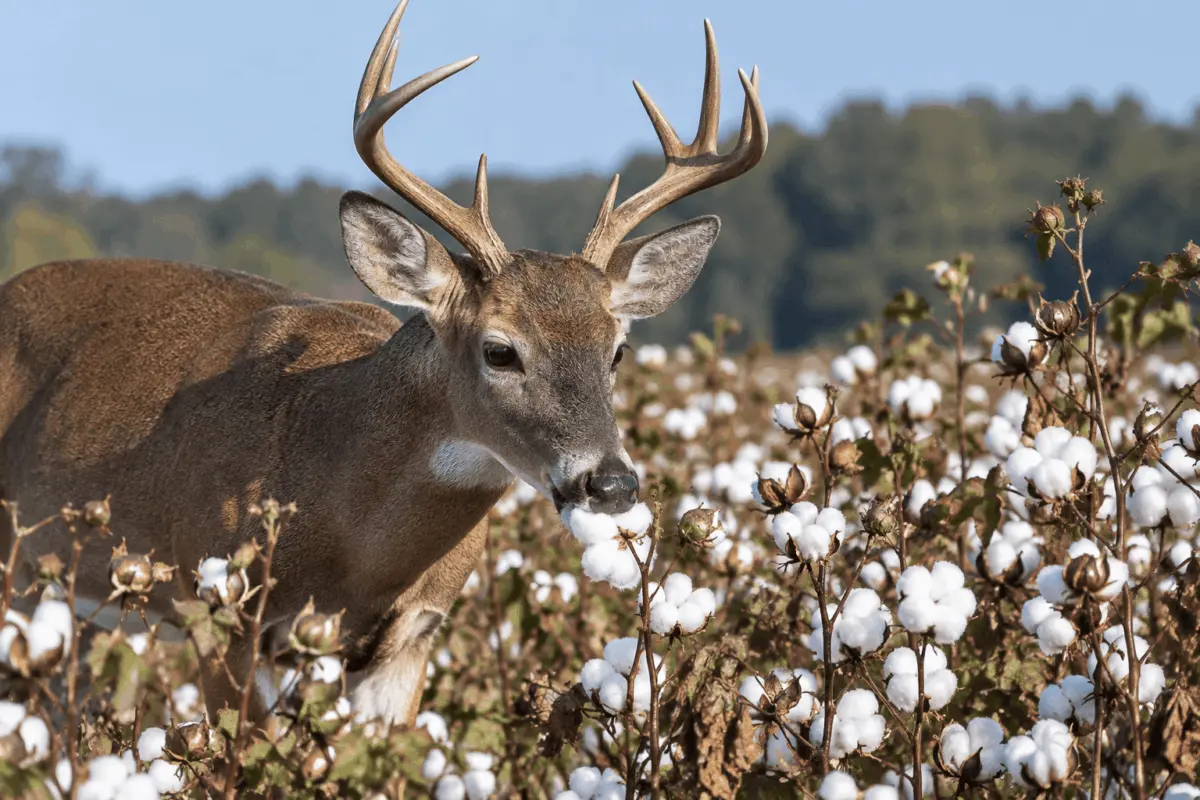
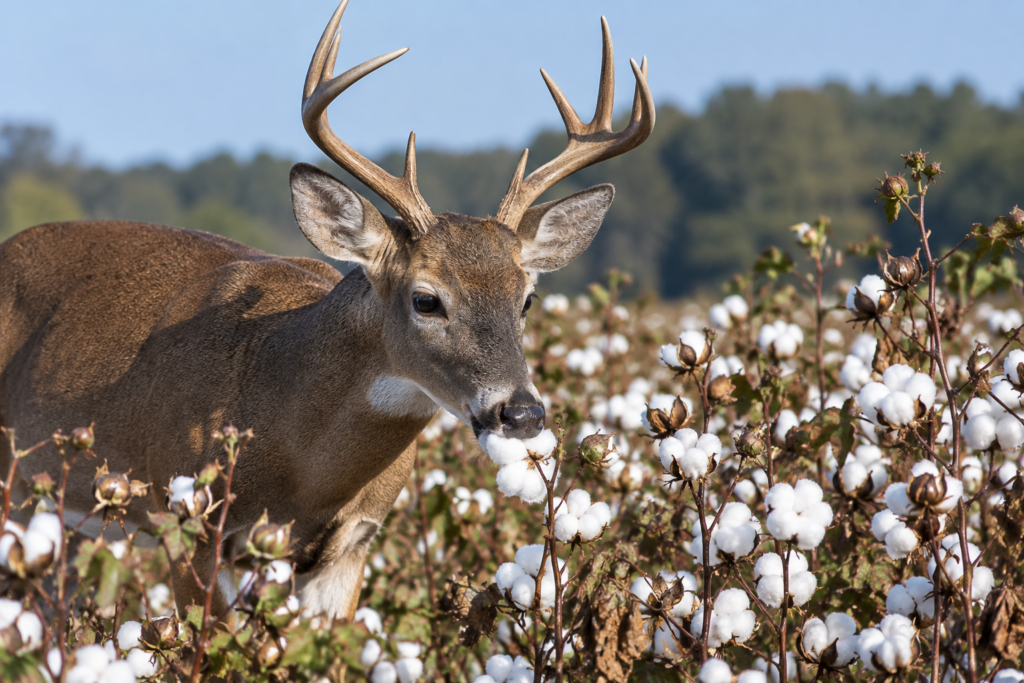
Agricultural challenges in the American Southeast have taken a sharp, economically damaging turn, particularly for cotton producers navigating the margins of heavy timberlands. In South Georgia, surging white-tailed deer populations are no longer just a minor nuisance for local farmers—they have evolved into an apex agricultural hazard capable of wiping out entire seasons of hard work in a matter of weeks.
To combat this escalating crisis, researchers and extension specialists at the University of Georgia (UGA) have launched intensive field trials aimed at evaluating and optimizing the use of specialized chemical deer repellents. Highlighted prominently at the recent UGA Cotton and Peanut Research Field Day, this research addresses a critical economic bottleneck: while chemical repellents are proven deterrents, their baseline costs ($10 to $15 per acre right out of the gate) present a significant barrier to widespread, profitable adoption.
Led by UGA Extension Cotton Agronomist Dr. Camp Hand, the ongoing studies are exploring innovative cost-reduction strategies, including strategic tank-mixing with standard agricultural chemicals and precise determinations of seasonal repellent termination timing. With field data revealing staggering yield losses—sometimes up to 99% in unprotected plots near wooded boundaries—the stakes for the regional textile and agricultural economies have never been higher. This comprehensive report delves into the mechanics of the UGA study, the economic scale of the deer depredation crisis, and the multi-pronged strategies growers must implement to protect their bottom lines.
Detailed Chronology: Unfolding the Crisis and Research Response
The collision course between South Georgia’s expanding white-tailed deer herds and its prized cotton crop has been decades in the making, accelerated by suburban encroachment, favorable forestry management practices, and an abundance of high-protein agricultural forage. However, the systematic push by university researchers to scientifically quantify and mitigate this damage has reached a critical juncture.
Phase 1: Documentation of Baseline Losses (The On-Farm Studies)
Before actionable solutions could be engineered, UGA Extension specialists had to establish concrete empirical data proving the scale of deer depredation. For years, anecdotal evidence from growers indicated severe losses along field edges bordering timber and scrubland. To move past speculation, researchers established monitored test plots—featuring fenced, protected cages paired with adjacent unprotected acreage—across several high-risk counties, including Berrien County.
The findings stunned even veteran agronomists. While protected test plots demonstrated healthy, commercially viable yields, unprotected rows situated just feet away were decimated. This phase of the research visually and statistically verified that deer grazing was not merely trimming ornamental foliage, but systematically stripping fruiting structures (squares, blooms, and bolls) at critical developmental windows, completely erasing any prospect of a profitable harvest for affected growers.
Phase 2: Introduction of Repellent Field Trials
With the magnitude of the problem documented, researchers pivoted from passive observation to active intervention. Chemical repellents—designed to mimic predator scent, trigger sensory aversion, or make the foliage unpalatable—emerged as the primary line of defense.
However, introducing repellents into standard farm operations exposed immediate economic and logistical friction points. Applying these treatments as standalone passes across large acreage proved prohibitively expensive. Consequently, the research timeline shifted toward optimizing application methodologies. Dr. Camp Hand and his team began testing whether deer repellents could be successfully co-applied in tank mixtures with routine defoliants, insecticides, or liquid fertilizers.
Phase 3: Field Day Revelations and Current Trials
The latest data and methodologies were brought to the forefront at the UGA Cotton and Peanut Research Field Day. Here, researchers shared preliminary insights regarding tank-mix compatibility—ensuring that combining repellents with other inputs does not induce phytotoxicity (crop damage or stunted growth)—and analyzed the optimal terminal date for spraying. By pinpointing the exact phenological stage at which cotton plants become less attractive or resilient to deer browsing, researchers hope to help farmers save valuable input costs by cutting off repellent applications weeks earlier than previously thought necessary, without sacrificing yield quality.
Supporting Context & Metrics: The Scale of Destruction
To understand why UGA is dedicating substantial institutional resources to deer repellent research, one must examine the staggering metrics of crop loss recorded in South Georgia’s agrarian landscape.
The Berrien County Case Study
In agricultural research, outliers can sometimes skew perception, but the data captured in Berrien County illustrates a devastating baseline for dryland cotton production under high-pressure wildlife conditions.
According to data presented by Dr. Camp Hand, a parcel of dryland cotton situated near heavy cover produced a respectable and economically viable 650 to 700 pounds of lint per acre inside a protected, fenced exclusion cage. In stark contrast, the unprotected cotton directly outside the cage—subjected to unrestricted seasonal browsing by local deer herds—yielded a meager 15 pounds per acre.
- Total Calculated Yield Loss: Approximately 99%.
- Economic Impact: At current market values, a 650-pound dryland yield provides a vital return on investment; a 15-pound yield represents a catastrophic financial loss that does not even cover the cost of seed, land preparation, and baseline chemical applications.
Spatial Vulnerability: Field Geometry Matters
The research underscores that deer damage is rarely uniform across a large landscape. Instead, it follows predictable spatial patterns tied to wildlife habitat.
- Field Edge Effects: Small, irregular fields are disproportionately vulnerable. A classic example highlighted by researchers is a 7-acre tract completely encircled by dense, mature timberlands.
- The "Edge Zone" Trap: Deer prefer the safety of cover, making the perimeter of a field their primary feeding ground during twilight and overnight hours. In smaller fields, the "edge zone" comprises a massive percentage of the total acreage, effectively placing the entire crop within striking distance. Growers managing these pocket fields face an uphill battle, often requiring aggressive, round-the-clock defense mechanisms.
Economic Realities of Repellents
While commercial deer repellents offer a chemical shield, their cost structure presents a major hurdle for commodity crop producers working on tight profit margins.
- Initial Application Costs: Standard commercial repellents cost between $10 and $15 per acre just for the product input.
- Application Frequency: Because rainfall washes away treatments and new plant growth emerges rapidly, multiple applications are required throughout the growing season, multiplying the per-acre cost significantly.
- The Optimization Imperative: For a grower managing hundreds or thousands of acres of cotton, spending upwards of $30 to $45 per acre on seasonal deer deterrence can quickly erode profitability. This economic reality is precisely why UGA’s research into tank-mixing and precise termination timing is vital for the survival of the practice.
Official Statements and Expert Insights
Addressing attendees and agricultural stakeholders at the field day, Dr. Camp Hand provided a candid assessment of both the challenges growers face and the pragmatic direction of university research.
"We’ve done the research on-farm to document what is being lost. What we’re moving towards is optimizing the use of these repellents. I’ve seen them work. I’ve used them in the past," Dr. Camp Hand explained to growers and industry representatives.
Emphasizing the economic hurdles that prevent widespread prophylactic use, Hand highlighted the necessity of reducing operational friction:
"The thing is, they’re pretty expensive in and of themselves. They’re $10 to $15 an acre right out of the gate. We’re looking at how to optimize the use of a deer repellent. In many cases, it means throwing it in the tank with something else, right? So that’s one thing we’re looking at—tank mixtures that include some of these deer repellents just to see if there’s any adverse impacts on the crop itself, growth, development; all of that."
Hand also addressed the critical timing element that dictates input efficiency:

"We are also looking at termination timing of the repellents. When can growers stop spraying the repellents and still maximize yield and quality with respect to deer damage?"
Beyond chemical interventions, agricultural extension agents are reminding producers to utilize wildlife management frameworks provided by state agencies. Hand specifically pointed out regulatory adjustments implemented by the Georgia Department of Natural Resources (DNR):
"Growers need to remember that the Georgia Department of Natural Resources has established specific regulatory windows, such as the October 3-4 antlerless-only weekend where firearms can be utilized, even while standard bow season remains active, to help manage local herd densities."
Future Outlook: Integrating Science, Management, and Policy
As South Georgia cotton producers look toward upcoming growing seasons, the path forward requires a balanced, multi-faceted approach to wildlife management and crop protection. Relying solely on chemical deterrents or traditional fencing is frequently cost-prohibitive or physically impractical for large-scale row-crop operations.
1. Technological Advancements in Tank-Mixing
The immediate future of chemical deer deterrence hinges on the success of UGA’s ongoing tank-mix trials. If researchers can definitively prove that repellents can be safely co-applied with standard post-emergent herbicides, insecticides, or foliar fertilizers without inducing crop injury or chemical antagonism, the labor and application costs of deer management will drop precipitously. Eliminating a dedicated, standalone pass across the field transforms repellents from an expensive luxury into a manageable, integrated input.
2. Precision Agriculture and Predictive Modeling
Future research will likely incorporate predictive mapping tools. By analyzing historical field boundary data, local timber density, and regional deer population metrics, extension specialists hope to help growers identify high-risk acreage before planting. Armed with this data, farmers can make informed decisions about whether to plant high-vulnerability crops near dense forests or allocate capital toward preventative measures only where ROI is guaranteed.
3. Comprehensive Wildlife Management Integration
University experts continually stress that chemical repellents and agricultural fencing are merely stopgap measures. Long-term mitigation requires active population management through hunting and cooperative wildlife management programs. The utilization of specialized regulatory frameworks—such as the early antlerless firearm weekends established by the Georgia DNR—plays an essential role in keeping local deer carrying capacities at sustainable levels, reducing the pressure on adjacent agricultural enterprises.
Ultimately, while the war against deer depredation in South Georgia cotton fields is far from over, ongoing university research provides a beacon of hope. By refining application economics, establishing precise termination thresholds, and encouraging proactive herd management, growers will soon be better equipped to safeguard their harvests, protect their profit margins, and secure the future of southeastern cotton production.

0 Comments