

By Agricultural News Desk
Published: August 2024
Executive Overview
As the late-summer sun beats down across the fertile fields of the American Southeast, the stage is set for the 2024 Georgia peanut harvest. For growers in the Peach State—which perennially leads the nation in peanut production—the upcoming season represents the culmination of months of meticulous crop management, heavy financial investments, and weathered risks. However, this year’s harvest will be anything but standard.
According to Dr. Scott Monfort, University of Georgia (UGA) Extension peanut agronomist, Georgia farmers should prepare for a disjointed, interrupted harvest cycle. Persistent, heavy rainfall during the critical planting window in the spring of 2024 forced extended delays, creating a fragmented crop maturity timeline. Consequently, the harvest is projected to kick off, abruptly stall into an unpredictable lull, and then resume once the later-planted fields reach maturity.
Beyond logistical hurdles regarding equipment scheduling and labor, producers face escalating biological threats. Foremost among these is the aggressive resurgence of leaf spot, a fungal disease capable of defoliating peanut vines prematurely. As Monfort and other agricultural extension specialists warn, failing to maintain rigorous fungicide programs now could force premature digging, severely undercutting both total crop yields and financial grades. This in-depth report examines the root causes of the staggered harvest, analyzes ongoing disease pressures, and provides strategic insights for Georgia’s peanut producers as they navigate the critical final weeks leading up to the combine.
Detailed Chronology: From a Wet Spring to a Staggered Autumn
The anomalies defining the 2024 peanut season trace their origins back to the foundational weeks of planting. In an ideal agricultural calendar, planting operations proceed smoothly from mid-April through May, establishing a uniform crop canopy that matures in predictable, chronological waves. This year, however, Mother Nature intervened.
The Spring Rains and Planting Stalls
According to UGA Extension data, approximately one-third of Georgia’s peanut crop was successfully established between late April and early May, right around May 5th and 6th. Just as equipment was rolling across the state’s coastal plain and southwestern agricultural hubs, persistent weather systems moved in, dumping heavy rainfall across prime growing regions.
For roughly two weeks—and stretching up to three weeks in localized, low-lying tracts—fields were rendered entirely unworkable. Heavy machinery sat idle in farm sheds as saturated soils prevented tillage, seedbed preparation, and planting. In hard-hit agricultural corridors like Randolph and Calhoun counties, the delays were particularly pronounced.
"We planted one-third of this crop from April to May, about May 5th or 6th. And that’s when we started getting those rains," explains Dr. Scott Monfort. "I think for two weeks we didn’t plant much; maybe three weeks in some places. If you get to Randolph and Calhoun County, some of those folks didn’t plant for quite a while. It depends on how much rain you had and that kind of thing."
The Harvest Lull: What Growers Can Expect
Because of this multi-week planting gap, the maturity of the crop has effectively been split into two distinct windows: an early-planted group and a late-planted group.
As a result, the harvest will not follow the steady, continuous rhythm that farmers prefer. Instead, combine operators will roll out to harvest the early-season acreage, only to hit a sudden wall of unready crops as they transition to the fields that were delayed by the spring rains.
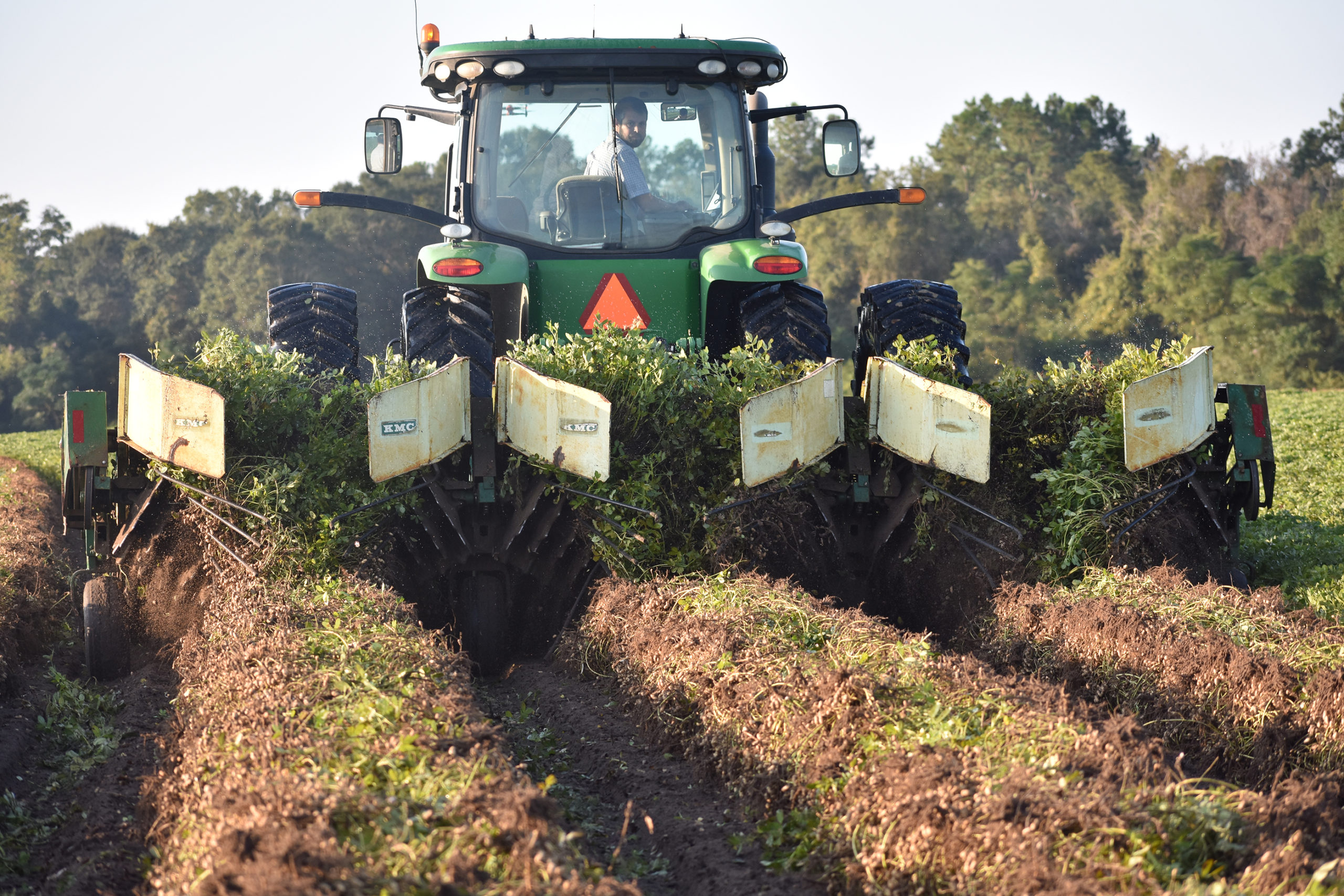
While predicting the exact duration of this operational pause remains difficult due to fluctuating late-summer temperatures and localized irrigation practices, Monfort estimates the lull could last anywhere from one to several weeks. This interruption poses unique operational challenges for custom harvesters, buying points, and shelling facilities, which must synchronize labor, machinery maintenance, and storage capacities around a fractured timeline.
Agronomic Challenges: Managing Leaf Spot and Protecting Crop Value
While the weather-induced planting delays created structural headaches for harvest logistics, the immediate agronomic threat facing growers in the field is biological. As the peanut plants enter their finishing stages, disease management—specifically the control of foliar fungal pathogens—takes center stage.
The Threat of Leaf Spot
Leaf spot, encompassing both early leaf spot (Cercospora arachidicola) and late leaf spot (Nothopassalora personata), is a perennial adversary for peanut producers in the humid Southeast. The disease attacks the leaves and stems of the plant, causing dark lesions, chlorosis, and, ultimately, severe defoliation.
When a peanut plant loses its leaves prematurely, its physiological ability to photosynthesize and fill the developing pods underground is severely compromised. This leads directly to stunted kernels, reduced test weights, lower financial grades at the buying point, and significant overall yield loss.
According to Monfort, early indicators suggest that leaf spot pressure is mounting across several regions of the state. Because portions of the crop still have a lengthy duration before reaching optimal maturity, the window for fungal infection remains wide open.
The Risk of Cost-Cutting on Fungicides
In an agricultural economy squeezed by high input costs—including fertilizers, fuel, and equipment—growers are perpetually looking for avenues to trim operational budgets. However, Monfort issues a stark warning against economizing on crop protection chemicals during these final weeks.
Some producers may be tempted to scale back or substitute premium, broad-spectrum fungicides with cheaper, less effective alternatives to save money as the season winds down. Monfort stresses that this short-term savings can result in catastrophic long-term losses.
"For peanuts, for certain, it’s holding the leaves on this crop," Monfort emphasizes. "Right now, we’ve got leaf spot showing up. We’ve got a long way to go in some of this. If growers backed off on some of the better fungicides, we need to rethink that situation because if not, we’re going to dig early, which means that we’re going to lose some yield and grade. I don’t want anybody to do that."
Already, the consequences of inadequate disease control have materialized in isolated pockets. Extension agents have reported at least a field or two where severe leaf spot outbreaks forced emergency, premature digging. Agricultural authorities are intensely monitoring the situation to ensure these isolated incidents do not metastasize into a widespread epidemic.
Supporting Context & The Economic Stakes of Georgia Peanuts
To understand the gravity of these harvest anomalies and disease pressures, one must look at the monumental scale of Georgia’s peanut industry.

The Peach State’s Agricultural Backbone
Georgia consistently ranks as the number-one peanut-producing state in the United States, accounting for roughly half of the entire nation’s annual peanut crop. Cultivated extensively across the sandy loam soils of the Coastal Plain—spanning from Bainbridge and Tifton up toward Cordele and Swainsboro—peanuts are a vital economic engine for rural communities.
The crop contributes billions of dollars annually to the state’s economy, supporting not only farm families but also a vast network of local agricultural service providers, trucking companies, buying points, processing plants, and manufacturing facilities that turn raw peanuts into peanut butter, confections, and oil.
The Fine Line Between Profit and Loss: Digging Date Optimization
Achieving maximum economic return in peanut farming hinges almost entirely on determining the precise physiological maturity of the pods before initiating harvest. Unlike many other row crops, peanuts flower and set pods continuously over an extended period. They do not ripen uniformly.
The harvest process involves a two-step procedure:
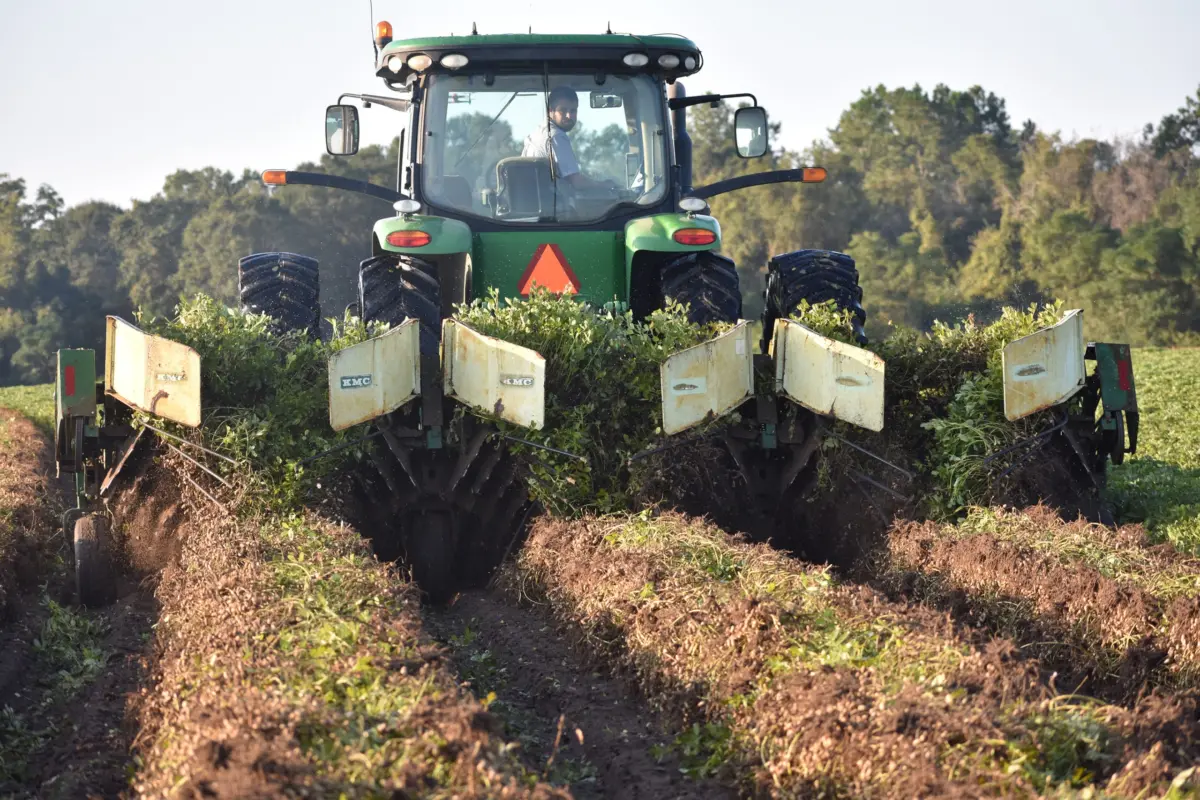
- Digging and Inverting: A specialized digger blade cuts the taproot just below the soil surface, lifting the plant and inverting it so the pods are exposed to the sun to dry for a few days.
- Threshing (Combining): A combine passes through the windrows, picking up the dried vines and separating the clean peanuts from the plant matter.
If a grower digs too early—whether panicked by leaf spot defoliation, weather forecasts, or equipment availability—a significant percentage of the crop remains immature (referred to in the industry as "pops" or immature kernels). This results in depressed grades, lower loan values, and reduced tonnage. Conversely, if harvesting is delayed past peak maturity, the pegs holding the pods to the vine weaken, causing pods to detach and remain trapped in the soil, leading to severe field losses.
The dual challenge of a staggered planting schedule and active leaf spot pressure threatens to disrupt this delicate mathematical equation for thousands of Georgia farmers.
Official Recommendations and Best Practices
In light of the 2024 seasonal constraints, UGA Extension specialists have outlined several critical recommendations for peanut growers to protect their investments during the final stretch:
- Maintain Active Scouting Protocols: Farmers and crop consultants must walk fields regularly to monitor the progression of leaf spot and other secondary diseases, such as stem rot (Sclerotium rolfsii). Early detection allows for targeted, responsive management.
- Stick to Proven Fungicide Programs: Avoid the temptation to downgrade fungicide selections. Utilizing efficacious, full-rate fungicide rotations is essential for preserving canopy integrity and keeping leaves active until natural maturity is achieved.
- Utilize the hull-scrape method for Maturity Testing: Before making the final decision to deploy digging equipment, growers should rely on objective maturity indexing (such as the hull-scrape profile board method) rather than calendar dates alone, especially given the disrupted spring planting timelines.
- Plan for Logistical Bottlenecks: With a harvest lull expected, custom operators and farm managers should coordinate equipment maintenance, labor availability, and drying/storage logistics well in advance to prevent downtime when the second wave of the crop reaches maturity.
Future Outlook
As August transitions into September, the resilience of Georgia’s agricultural community will once again be put to the test. While the 2024 peanut season has presented unique hurdles—from rain-logged tractors in April and May to aggressive fungal pressures in the dog days of summer—the foundational health of the crop remains promising in fields where intensive management practices have been maintained.
The coming weeks will require vigilance, patience, and strategic decision-making. By resisting the urge to cut corners on crop protection and carefully timing digging operations around actual pod maturity rather than calendar panic, Georgia farmers can mitigate the effects of the spring weather anomalies.
Ultimately, the 2024 harvest may be fractured and unconventional, but with attentive agronomic management, the state’s growers remain well-positioned to deliver another robust harvest to domestic and global markets.

0 Comments