

As the agricultural sector transitions deeper into the autumn buying and selling cycle, the livestock markets across the Southeast are exhibiting a fascinating divergence in pricing and supply dynamics. Compiled officially by the Livestock Market News Service, the market reports for Alabama, Florida, and Georgia for the week ending September 11, 2026, paint a picture of a resilient regional cattle industry. While feeder cattle prices continue to demonstrate remarkable strength—driven by robust buyer demand, tight national inventories, and active trading floors—slaughter classes are facing a downward correction across all three states.
Total auction receipts across the tri-state area reflect a continued contraction in overall year-over-year market volume, a structural trend that has persisted throughout much of 2026. This contraction in available head is largely responsible for the underlying price support keeping feeder cattle buoyant despite broader macroeconomic headwinds. Producers bringing high-quality, medium and large frame 1-2 steers and heifers to auction have found a receptive and aggressive buyer base, with some weight classes experiencing dramatic weekly surges. Conversely, cow-calf operators and backgrounders looking to offload older breeding stock or cull cows have had to contend with softer bids, as packing plants adjust procurement costs downward.
This comprehensive report synthesizes the weekly auction data, analyzes regional pricing trends, contextualizes the year-to-date performance metrics, and projects what livestock producers in Alabama, Florida, and Georgia can anticipate as the fall marketing season accelerates.
Detailed Chronology: Week-by-Week and State-by-State Market Breakdown
To fully understand the current pulse of the southeastern beef industry, it is necessary to examine the specific operational figures, volume fluctuations, and price ranges recorded at auction houses across Alabama, Florida, and Georgia for the week ending September 11, 2026.
Alabama Livestock Auctions: Strong Feeder Demand Counters Slaughter Softness
Across Alabama’s participating livestock auctions, market receipts for the week ending September 11, 2026, totaled 7,731 head. This figure represents a slight cooling from the previous week’s volume of 7,976 head and remains notably below the 12,180 head recorded during the corresponding week in 2025. Cumulatively, Alabama’s year-to-date receipts stand at 309,144 head, trailing behind the 353,062 head handled by this point last year—underscoring the lingering tight supply constraints governing the state’s herd inventory.
Trading activity throughout Alabama was characterized by strong buyer demand and active movement on the auction floors. Feeder cattle captured the most attention, posting broad gains of $1.00 to $8.00 per hundredweight (cwt), with select lots leaping by as much as $15.00 cwt. Meanwhile, replacement cattle held steady, while slaughter cattle markets lost ground, trading steady to $5.00 lower.
- Feeder Steers (Medium and Large Frame 1-2):
- 300–400 lbs: $405.00 – $520.00
- 400–500 lbs: $380.00 – $445.00
- 500–600 lbs: $335.00 – $412.50
- 600–700 lbs: $305.00 – $377.50
- Feeder Heifers (Medium and Large Frame 1-2):
- 300–400 lbs: $320.00 – $460.00
- 400–500 lbs: $315.00 – $405.00
- 500–600 lbs: $280.00 – $378.00
- 600–700 lbs: $265.00 – $335.00
- Slaughter & Breeding Stock:
- Boning Slaughter Cows (80-85% lean, 850-1200 lbs): $141.00 – $155.00
- Lean Slaughter Cows (85-90% lean, 850-1200 lbs): $123.00 – $143.00
- Slaughter Bulls (Yield Grade 1-2, 1500-2100 lbs): $170.00 – $193.00
Florida Livestock Auctions: High-End Steers Hit Peak Marks Amid Packer Pullback
Florida’s auction markets experienced a marked contraction in volume compared to historical averages, recording a total throughput that reflects the state’s unique seasonal production cycles. For the week ended September 11, 2026, Florida auctions processed a combined volume that followed a lower trajectory than the 8,907 head handled earlier in the season and the 6,147 head reported during the same week last year. Total year-to-date receipts reached 211,461 head, hovering closely near the 217,848 head registered by mid-September 2025.
Pricing dynamics in the Sunshine State featured a clear bifurcation. Slaughter cows and bulls faced downward pressure, dropping $3.00 to $6.00 per cwt as regional packing demand moderated. However, feeder cattle found solid footing, trading anywhere from steady to $5.00 higher, while replacement and feeder cattle complexes maintained a firm, stable posture. Notably, lightweight steer classes in Florida achieved some of the highest absolute price ceilings in the region, touching $610.00 cwt.
- Feeder Steers (Medium and Large Frame 1-2):
- 300–400 lbs: $375.00 – $610.00
- 400–500 lbs: $310.00 – $490.00
- 500–600 lbs: $290.00 – $410.00
- 600–700 lbs: $285.00 – $370.00
- Feeder Heifers (Medium and Large Frame 1-2):
- 300–400 lbs: $335.00 – $500.00
- 400–500 lbs: $320.00 – $435.00
- 500–600 lbs: $250.00 – $380.00
- 600–700 lbs: $250.00 – $330.00
- Slaughter & Breeding Stock:
- Boning Slaughter Cows (80-85% lean, 850-1200 lbs): $127.00 – $156.00
- Lean Slaughter Cows (85-90% lean, 850-1200 lbs): $114.00 – $145.00
- Slaughter Bulls (Yield Grade 1, 1000-2100 lbs): $165.00 – $200.00
Georgia Livestock Auctions: Aggressive Gains in Feeder Classes Offset Lower Cull Bids
Reporting for the week ending September 12, 2026, Georgia’s network of 20 livestock auction markets handled 5,124 head of cattle. This compares with 6,326 head the previous week and 8,807 head during the same period in 2025. Georgia’s year-to-date receipts now stand at 239,002 head, down from the 270,079 head recorded at this juncture last year, mirroring the broader regional trend of tighter cattle supplies.
Georgia markets experienced some of the most aggressive upward movements in feeder classes across the tri-state region, with nearly all feeder categories surging $3.00 to $10.00 higher. Replacement cows remained mostly steady. In contrast, slaughter cows and bulls encountered headwinds, sliding $2.00 to $7.00 lower as commercial buyers adjusted their grid pricing.
- Feeder Steers (Medium and Large Frame 1-2):
- 300–400 lbs: $370.00 – $460.00
- 400–500 lbs: $315.00 – $425.00
- 500–600 lbs: $300.00 – $405.00
- 600–700 lbs: $272.00 – $358.00
- Feeder Heifers (Medium and Large Frame 1-2):
- 300–400 lbs: $310.00 – $470.00
- 400–500 lbs: $295.00 – $417.50
- 500–600 lbs: $257.50 – $355.00
- 600–700 lbs: $230.00 – $330.00
- Slaughter & Breeding Stock:
- Boning Slaughter Cows (80-85% lean, 850-1200 lbs): $137.00 – $164.00
- Lean Slaughter Cows (85-90% lean, 850-1200 lbs): $120.00 – $147.00
- Slaughter Bulls (Yield Grade 1, 1000-2100 lbs): $170.00 – $205.00
Supporting Context & Metrics: Analyzing Regional Supply and Price Drivers
The underlying mechanics of the September 2026 livestock markets cannot be fully understood without examining the macroeconomic and biological factors driving inventory levels and pricing structures in the American Southeast.
Inventory Retrenchment and Herd Rebuilding
A recurring theme across Alabama, Florida, and Georgia is the ongoing deficit in total year-to-date receipts compared to 2025. Alabama is down nearly 44,000 head year-to-date, Georgia trails by roughly 31,000 head, and Florida maintains a slight contraction. This persistent decline is the downstream effect of multi-year cow herd liquidation phases driven by past drought conditions, high input costs for feed, fertilizer, and fuel, and rising land-use pressures.
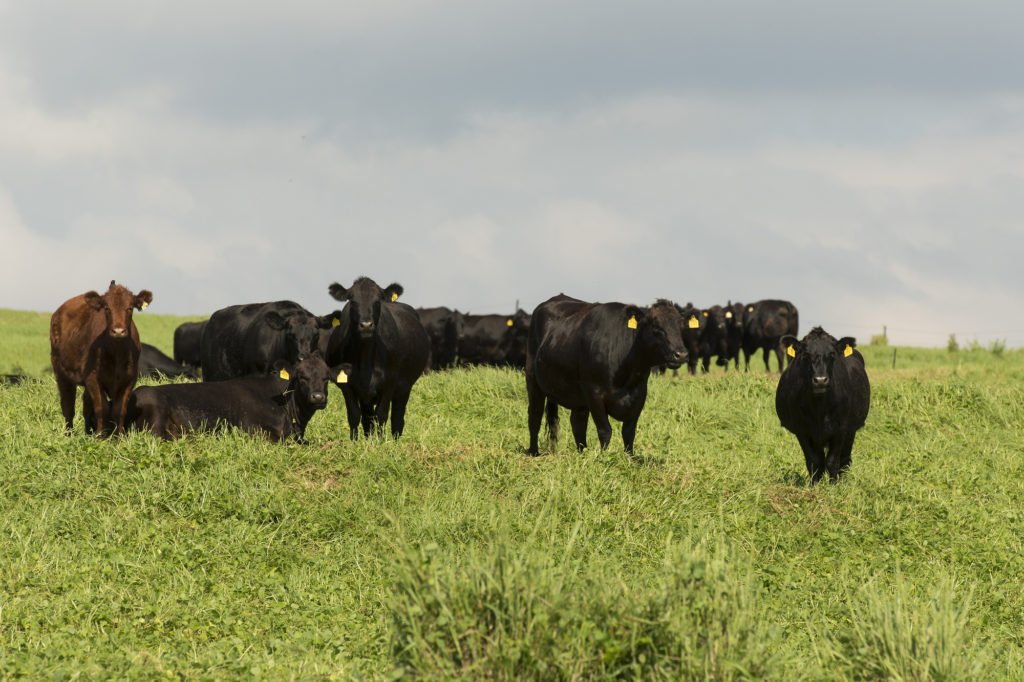
Even as pasture conditions have generally improved across the Southeast heading into the autumn months, cow-calf producers have exhibited caution. Rather than aggressively expanding herds to flood the market, many operators are retaining replacement heifers to rebuild their foundational breeding inventories. This intentional holding back of female stock directly restricts the supply of lightweight feeder cattle entering commercial channels, creating a localized supply squeeze that underpins the robust price floors observed in Alabama, Florida, and Georgia auction rings.
The Feeder vs. Slaughter Price Dichotomy
The stark divergence between rising feeder cattle prices and softening slaughter cow/bull values highlights differing market pressures in the feeding sector versus the processing sector.
- Feeder Strength: Backgrounders, stocker operators, and feedlots are competing fiercely for available lightweight and midweight calves. With grain and feed costs stabilizing relative to previous volatile years, finishing operations have greater economic incentive to place cattle on feed. The sheer scarcity of head ensures that buyers must bid aggressively to secure loads.
- Slaughter Softening: On the processing side, packing plants are experiencing margin compressions and adjusting their procurement schedules. Lower wholesale boxed beef values or seasonal adjustments in consumer demand at the retail counter often translate downstream into lower bids for boning cows, lean cows, and heavy slaughter bulls. Producers looking to cull older, unproductive cows are finding a less lucrative market than they did earlier in the summer.
Official Statements and Industry Perspectives
Agricultural economists and livestock market reporters point out that the current market environment represents a textbook application of supply-and-demand fundamentals during a national cattle cycle contraction phase.
According to regional livestock market analysts, the ability of southeastern producers to command historically high prices for medium and large frame feeder steers—reaching upwards of $610.00 per cwt for lightweight classes in Florida and breaking past the $500.00 threshold in Alabama—reflects a fundamental shift in national protein valuations.
"We are witnessing a structural realignment of the North American cattle inventory," notes an agricultural extension livestock marketing specialist. "The structural lows in total beef cow numbers mean that every head of quality feeder cattle entering an auction ring in Alabama, Georgia, or Florida carries a premium. Buyers know that replacements are hard to source, and that dynamic is overriding minor short-term market corrections."
Furthermore, trade associations representing southeastern cattlemen emphasize that while input costs have stabilized, producers are operating in an environment that demands meticulous herd management. The profitability margin is heavily dependent on maximizing weaning weights and ensuring that calves meet the stringent quality standards required for Medium and Large Frame 1-2 classifications, which consistently capture top-tier bids across all regional trading floors.
Future Outlook: What Southeastern Cattle Producers Can Expect
As the agricultural calendar moves deeper into the fall of 2026, several key factors will dictate the trajectory of livestock markets across Alabama, Florida, and Georgia.
Seasonal Fall Runs and Volume Expectations
Traditionally, the autumn months herald the peak of the annual fall calf run, during which a large percentage of spring-born calves are weaned and marketed. Market observers anticipate that auction receipts will experience a seasonal uptick in volume over the coming weeks as producers clear pastures ahead of winter.
However, because the national and regional cow herd remains historically tight, this "fall run" is not expected to trigger a market crash or a catastrophic oversupply. Instead, buyers are expected to absorb the incoming volume readily, though localized temporary dips in weekly prices could occur if multiple markets experience sudden surges in head counts on the same sale days.
Weather and Forage Conditions
Pasture health and winter forage establishment will play a critical role in determining producer behavior through the end of the year. Ample rainfall across much of the Southeast during the late summer has left pastures in good condition, allowing producers to background calves longer if they choose not to sell immediately at weaning. If winter grazing prospects (such as ryegrass and small grains) remain favorable, producers may hold onto stocker cattle longer to add weight, further tightening immediate auction supplies and supporting high price points.
Summary Recommendations for Producers
For cow-calf producers and stocker operators navigating this market, strategic planning remains paramount:
- Quality Pays: Sorting and grading cattle uniformly continues to pay dividends, as buyers prioritize Medium and Large Frame 1-2 lots that promise efficient feed-to-gain performance in the feedlot.
- Monitor Cull Timelines: With slaughter cow and bull prices experiencing downward pressure, producers should evaluate whether holding cull cows for additional conditioning makes financial sense relative to immediate auction bids.
- Weigh Expansion Opportunities: For those positioned to retain replacement heifers, current market valuations affirm that building internal herd equity remains a viable long-term strategy amidst constrained national inventory numbers.
As the Livestock Market News Service continues its weekly tracking through September and into the fourth quarter, stakeholders across Alabama, Florida, and Georgia will be watching closely to see if the resilience in feeder markets can offset ongoing pressures in the slaughter sector.

0 Comments