

Executive Overview
In a decisive recalibration of U.S. foreign policy, the Trump administration has officially notified Congress of its intent to strip tens of millions of dollars in military assistance from traditional allies in Europe and the Middle East, redirecting those funds toward conservative-leaning governments in Central and South America.
According to formal notifications delivered by the State Department, $52 million in Foreign Military Financing (FMF) originally allocated for Slovakia, North Macedonia, Tunisia, and Iraq will be re-routed to Panama, Peru, Ecuador, and Colombia. This maneuver underscores a profound regional pivot: the White House is dramatically shifting its geopolitical focus away from trans-Atlantic partnerships and Middle Eastern stabilization efforts, concentrating instead on America’s geographic "backyard."
Driven by Secretary of State Marco Rubio—who recently returned from a high-stakes diplomatic tour of the Andean region—the administration has framed the reallocation as a vital national security imperative. The freshly targeted funds are designed to empower regional partners to combat narcoterrorism, curb illegal immigration, secure critical infrastructure such as the Panama Canal, and aggressively counter the expanding economic and strategic influence of the People’s Republic of China in the Western Hemisphere.
While administration officials champion the strategy as a long-overdue restoration of hemispheric defense, critics and international partners are sounding alarms. The sudden withdrawal of financial support from vulnerable European border states and key Middle Eastern allies risks fracturing coalition dynamics, sending mixed signals to nations navigating volatile security landscapes, and intensifying global debates over Washington’s long-term reliability as a strategic partner.
Detailed Chronology of the Policy Shift
The Diplomatic Groundwork: Rubio’s Andean Tour
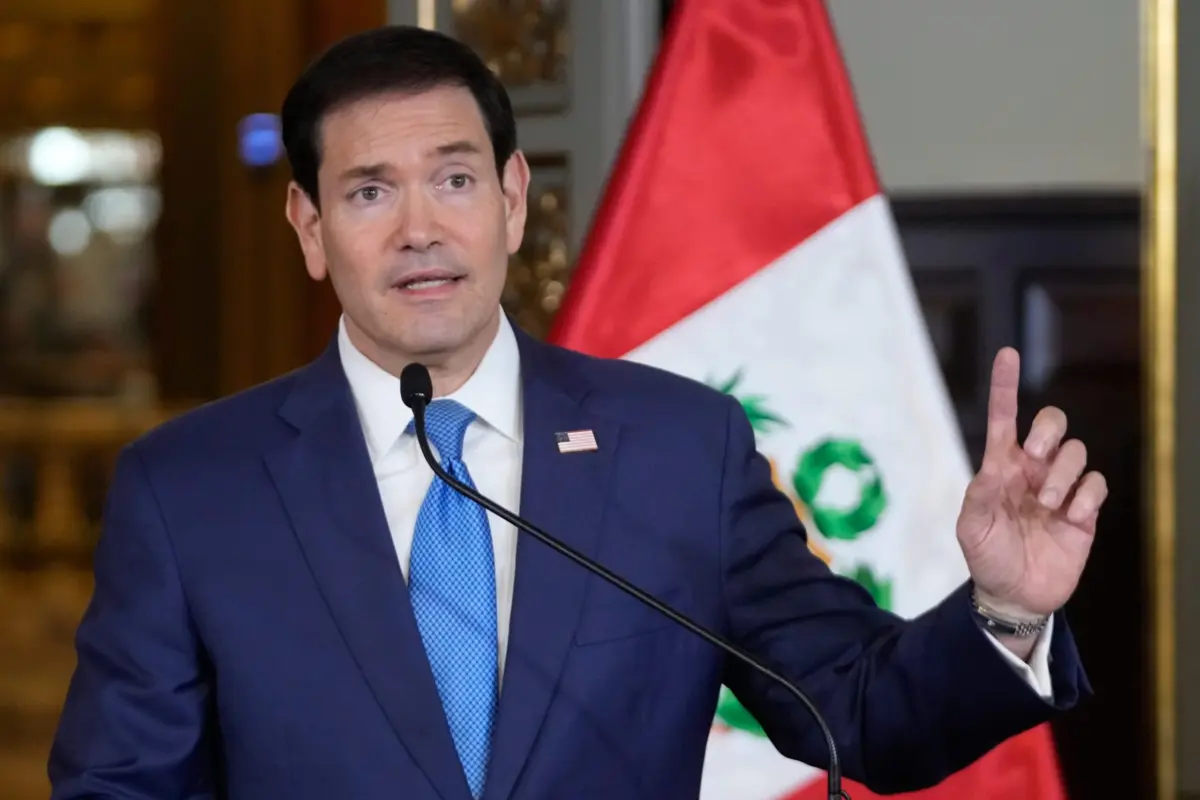
The intellectual and operational groundwork for this massive financial realignment was laid during Secretary of State Marco Rubio’s high-profile diplomatic swing through South America in early September 2026. Visiting Colombia, Ecuador, and Peru, Rubio engaged in a series of closed-door bilateral summits with regional heads of state, including Peruvian President Keiko Fujimori.
During these meetings, Rubio made explicit commitments that Washington would dramatically elevate its security cooperation with nations actively aligning with U.S. priorities. These discussions directly linked economic and military assistance to aggressive domestic action against transnational drug cartels, organized crime syndicates, and unregulated migration flows heading north toward the United States.
The Congressional Notification
On a Tuesday following Rubio’s return, the Department of State formally transmitted its reprogramming package to Capitol Hill. Under the mechanisms governing foreign assistance, the executive branch must notify key congressional committees before shifting appropriated funds between distinct geographic accounts.
The $52 million reprogramming package specifically targets four current recipients—Slovakia, North Macedonia, Tunisia, and Iraq—whose existing funding streams will be pruned. These resources are being swiftly redirected to capitalize military procurement accounts for Panama, Peru, Ecuador, and Colombia. While the policy shift does not completely zero out foreign military financing for the European and Middle Eastern nations, it significantly curtails their U.S.-backed defense modernization timelines.
The Immediate Aftermath and Domestic Reactions
The announcement has triggered intense debates within Washington policy circles. Congressional hawks and defense-minded lawmakers are divided. Proponents of the Trump administration’s "America First" hemisphere-first doctrine praise the agility of the resource shift, arguing that immediate threats on the U.S. southern border and within Latin America warrant prioritized funding. Conversely, members of congressional oversight committees—particularly those focused on European security and Middle Eastern stabilization—have questioned the timing and diplomatic fallout of penalizing frontline NATO allies and post-conflict partners.
Supporting Context & Metrics: Decoding Foreign Military Financing
To fully understand the weight of this $52 million reallocation, it is essential to examine the mechanics of Foreign Military Financing (FMF) and the broader geopolitical chessboard in which these transactions occur.
What is Foreign Military Financing?
Foreign Military Financing is a cornerstone tool of U.S. statecraft. Rather than handing direct cash grants to foreign governments, the FMF program provides U.S. taxpayer-funded subsidies that enable eligible foreign partners to purchase American-made defense equipment, services, and training directly from U.S. defense contractors. This creates a dual benefit: it upgrades the military capabilities of allied nations while simultaneously injecting capital back into the U.S. defense industrial base.
The Financial Breakdown: Donors vs. Recipients
While the State Department has maintained operational discretion regarding the exact residual balances left in the accounts of the donor nations, the financial footprint involves strategically sensitive states:
- The Donors:
- Slovakia: A frontline NATO member situated on the alliance’s eastern flank, heavily reliant on Western defense coordination in the wake of ongoing European security crises.
- North Macedonia: A critical Balkan partner whose stability is vital to preventing regional ethnic and political fractures.
- Tunisia: A North African democracy navigating complex economic and security challenges while battling localized extremist elements.
- Iraq: A key operational theater for counter-terrorism efforts and regional stabilization against remnants of extremist networks.
- The Recipients:
- Panama: Central to global maritime commerce, specifically regarding the security, sovereignty, and operational integrity of the Panama Canal.
- Colombia: A historic U.S. security partner currently navigating shifting political dynamics while managing extensive border vulnerabilities and drug trafficking corridors.
- Ecuador: Confronting an unprecedented internal security crisis driven by violent drug cartels that have deeply penetrated local institutions.
- Peru: A Pacific-facing Andean nation grappling with extensive illicit drug production, illegal mining, and rising transnational crime networks.
The Great Power Competition: Countering Beijing
Underpinning this fiscal maneuver is an acute awareness of China’s expanding footprint in Latin America. Over the past decade, Beijing has aggressively leveraged its Belt and Road Initiative, massive infrastructure investments, and telecommunications dominance to secure deep economic and diplomatic footholds across Central and South America.
By redirecting military assistance to conservative governments in the region, the Trump administration seeks to offer a compelling security alternative. The policy aims to ensure that Latin American militaries remain interoperable with U.S. systems, thereby locking out Chinese defense contractors and preventing Beijing from establishing dual-use military facilities or deep-water port access in the Western Hemisphere.
Official Statements and Administrative Rationale
The State Department’s official justifications for the funding shift offer a stark window into the administration’s overarching worldview. In statements accompanying the congressional notification, department spokespersons laid out a clear defense of the policy:
"These funds will prevent adversaries from establishing strategic footholds in our hemisphere," the State Department asserted, delivering a thinly veiled critique of Chinese encroachment in Latin America.
Furthermore, the administration explicitly linked the reallocation to immediate domestic security concerns inside the United States:
"The funds will be used to combat narcoterrorism in our backyard and help continue to secure the Panama Canal."
Addressing criticisms regarding the reduction of aid to traditional allies in Europe and the Middle East, the administration argued that past resource distributions were out of sync with contemporary geopolitical realities:
"The current distribution of financing does not align with the administration’s prioritization of the Western Hemisphere. For far too long, our own hemisphere has been historically neglected in U.S. military assistance while resources were funneled overseas to address distant entanglements."
Secretary Rubio himself reinforced this message during his Andean tour, emphasizing that the United States expects its regional partners to act as frontline defenders against transnational cartels that directly fuel the American drug epidemic and irregular migration crises.
Future Outlook: Strategic Implications and Long-Term Risks
As the Trump administration implements this bold realignment, analysts are weighing the long-term consequences across multiple geopolitical theaters.
1. The Domestic and Regional Impact in Latin America
For nations like Ecuador and Peru, the influx of U.S. military financing arrives at a critical juncture. Ecuador, in particular, has struggled to contain cartel-driven violence that has turned streets into war zones. The specialized equipment and training enabled by these FMF funds will provide local security forces with enhanced capabilities to target drug-running cartels, secure remote borders, and protect vital infrastructure.
However, human rights organizations and regional watchdogs have raised concerns. Increased militarization of domestic law enforcement can sometimes lead to expanded civil rights abuses if not paired with rigorous institutional reforms and anti-corruption measures. The administration will need to balance tactical empowerment with strategic oversight to ensure U.S. equipment is not misused.
2. The Trans-Atlantic and Middle Eastern Fallout
The decision to pull funds from Slovakia, North Macedonia, Tunisia, and Iraq carries undeniable diplomatic risks. In Europe, any reduction in U.S. security commitment—however modest the line-item shift may be—reignites anxieties among eastern flank NATO allies regarding the durability of American security guarantees. In the Middle East and North Africa, trimming assistance to partners like Tunisia and Iraq could weaken fragile security architectures, potentially opening strategic vacuums that local extremist groups or opportunistic rivals like Russia and Iran could exploit.
3. The Congressional Battleground
While the executive branch possesses broad statutory authority to reprogram foreign assistance funds, it must navigate the oversight of congressional committees that hold purse-string powers. Lawmakers sympathetic to traditional alliance networks are expected to grill State Department officials during upcoming appropriations hearings, demanding guarantees that the drawdown in Europe and the Middle East will not compromise vital broader strategic interests.
Conclusion
The Trump administration’s decision to reallocate $52 million in military assistance represents more than a simple budgetary adjustment; it is a profound philosophical statement on the hierarchy of American national security. By drawing a hard line around the Western Hemisphere, prioritizing the defense of the Panama Canal, and directly challenging Chinese influence in Latin America, Washington has signaled that the security of its immediate neighborhood supersedes distant overseas commitments. Whether this high-stakes gamble successfully fortifies the Americas or destabilizes traditional alliances abroad remains one of the defining foreign policy questions of the decade.

0 Comments