

WASHINGTON — In a major escalation of economic pressure against Moscow, President Donald Trump signed a sweeping bipartisan sanctions package into law on Friday. Aimed directly at crippling the financial engines powering Russia’s war machine in Ukraine, the legislation marks the culmination of more than a year of intense congressional negotiation and serves as the crowning legislative legacy of the late Senator Lindsey Graham (R-S.C.).
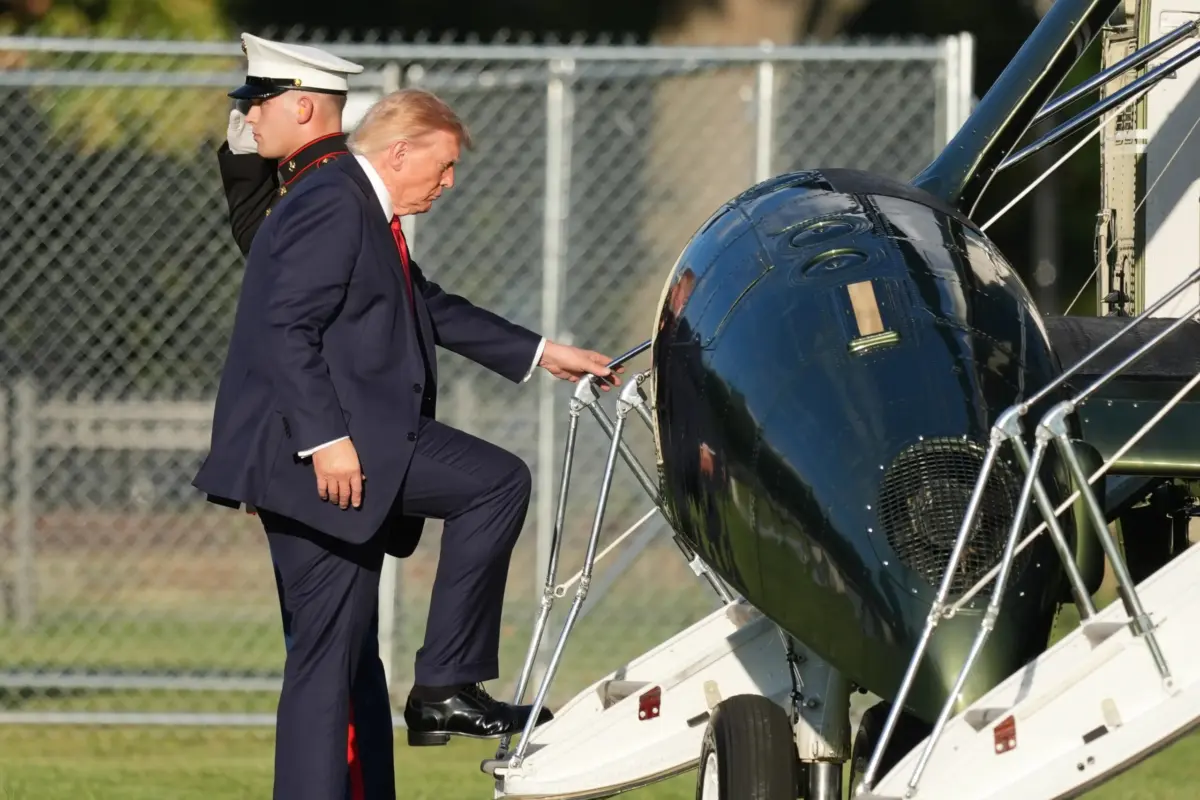
The signing ceremony, which took place just before the president boarded Marine One on the Ellipse near the White House, brings to fruition a signature foreign policy measure championed by Graham, a close presidential ally and outspoken hawk on Russia. Graham passed away unexpectedly in July following a high-profile diplomatic mission to Kyiv, transforming the long-stalled sanctions bill into a poignant bipartisan monument to his decades-long career in national security.
Despite deep-seated partisan divides on numerous domestic and international fronts in Washington, the legislation achieved overwhelming legislative approval. It cleared the Senate by a commanding 86–11 margin before securing a 262–159 vote in the House of Representatives.
The new law represents one of the most aggressive economic interventions by the United States since the Kremlin launched its full-scale invasion of Ukraine more than four years ago. By targeting high-ranking Russian officials, foundational pillars of the nation’s banking infrastructure, and maritime logistics, the package is explicitly designed to starve Russian President Vladimir Putin of the capital and resources necessary to sustain protracted military operations.
Executive Overview: A Watershed Moment in U.S.–Russia Policy
The signing of the sanctions bill alters the geopolitical and economic landscape of the conflict. More than four years after Russian forces rolled across the Ukrainian border, sparking the largest conventional military conflict in Europe since World War II, Washington has escalated its strategy from defensive military aid and targeted asset freezes to a total structural assault on Russia’s export economy.
Drafted in close collaboration between the late Senator Graham and Senator Richard Blumenthal (D-Conn.), the bipartisan measure bridges traditional congressional divides. It establishes a hardline stance that binds current and future administrations to aggressive economic enforcement.
At its core, the legislation introduces a dual-pronged enforcement mechanism:
- Direct Sectoral and Individual Sanctions: Imposing crippling restrictions on Russian financial institutions, political elites, and the illicit maritime networks used to bypass international oil caps.
- Secondary Tariff Penalties: Mandating punitive tariffs of up to 100% on major global importers of Russian energy products if they fail to wind down commerce with Moscow.
Administration officials emphasize that the primary objective is to fundamentally degrade the Kremlin’s fiscal stamina. By cutting off revenues generated from international oil and natural gas markets, Washington aims to force a strategic reassessment in Moscow, paving the way for a credible, sovereign peace settlement for Ukraine.
Detailed Chronology: From Concept to Law
The path to the Resolute Desk was fraught with legislative hurdles, diplomatic anxieties, and profound personal tragedy. The origins of the package date back to early 2025, when policymakers in both chambers recognized that existing sanctions regimes—while impactful—had developed significant loopholes, particularly regarding energy exports and the use of maritime "shadow fleets."
The Genesis of a Bipartisan Pact
Recognizing the need for a unified congressional front, Senator Lindsey Graham teamed up with Senator Richard Blumenthal. The pairing of a conservative defense hawk and a progressive legal mind lent immediate credibility to the initiative, insulating the bill from standard partisan gridlock. For over a year, the lawmakers hammered out the text, consulting with intelligence agencies, energy analysts, and international trade partners to craft a package that would maximize pain for Moscow while minimizing systemic shocks to global energy supplies.
Graham’s Final Mission and Untimely Passing
The political momentum surrounding the bill reached an emotional climax in July 2026. Senator Graham traveled to Kyiv on what would be his final diplomatic mission, meeting with Ukrainian leadership to assess battlefield conditions and reassure allies of Washington’s unwavering commitment. Upon his return to the United States, Graham actively lobbied colleagues to push the package across the finish line.
Days after completing the trip, Graham passed away unexpectedly, sending shockwaves through Capitol Hill. The sudden loss galvanized lawmakers from both parties. Colleagues who had previously expressed reservations about the bill’s aggressive secondary tariffs rallied behind the legislation, framing its passage as a tribute to Graham’s career-defining defense of democratic allies.
Legislative Hurdles and Floor Victories
Following Graham’s death, leadership in both the Senate and the House expedited the legislative calendar.
- The Senate Vote: Despite pushback from a small faction of isolationist lawmakers concerned about potential impacts on global inflation, the Senate passed the bill 86–11, reflecting a deeply entrenched bipartisan consensus on Russia’s culpability.
- The House Vote: In the House, debate was fiercer, centering on the secondary tariff provisions and potential trade friction with major economies in Asia and Europe. Nevertheless, the measure secured a comfortable 262–159 majority, propelled by moderate Democrats and hawkish Republicans alike.
Supporting Context & Metrics: Dismantling the Russian War Machine
To understand the gravity of the new legislation, one must examine the specific mechanics of Russia’s wartime economy. Over the past four years, Moscow has successfully blunted the impact of initial Western sanctions by pivoting its energy exports eastward, utilizing intricate networks of shell companies, and deploying an aging fleet of unflagged or improperly insured tankers—commonly referred to as the "shadow fleet."
Targeting the Shadow Fleet and Banking Sector
The new law explicitly targets this maritime underground. Under the legislation, the Treasury Department is granted expanded authorities to penalize any vessel, captain, or insurance provider facilitating the transport of Russian crude oil above established international price caps. Furthermore, the bill expands secondary sanctions on foreign financial institutions that knowingly process transactions for sanctioned Russian banks, effectively threatening global lenders with exclusion from the U.S. financial system if they maintain ties to Moscow’s military-industrial complex.
The 100% Tariff Mechanism
Perhaps the most contentious—and potent—element of the law is its directive concerning secondary energy tariffs. The legislation compels President Trump to impose tariffs of up to 100% on the top five global importers of Russian crude oil and natural gas.
However, the statute includes a carefully crafted exemption designed to avoid alienating key international allies:
- Countries that currently import less than 15% of their total natural gas supplies from Russia are exempt from the punitive tariffs, provided they can demonstrate verifiable, progressive steps toward eliminating those imports entirely.
This provision places immense pressure on major economies—particularly within parts of Europe and Asia that have remained dependent on Russian commodities—to accelerate their green energy transitions and diversify their supply chains.
Official Statements and Reactions
The signing ceremony drew sharp reactions from global capitals, domestic political figures, and international organizations.
Speaking from Washington, key co-sponsor Senator Richard Blumenthal reflected on the emotional weight of the day’s events. "This law is a testament to the vision, tenacity, and unwavering moral clarity of my dear friend, Lindsey Graham," Blumenthal said during a joint press briefing. "Lindsey knew that Vladimir Putin only understands strength. By starving the Kremlin of its financial lifeblood and holding enablers accountable, we are honoring his legacy and standing shoulder-to-shoulder with the people of Ukraine."
Foreign policy analysts have widely praised the legislation’s structural ambition. Dr. Elena Vance, senior fellow at the Institute for Global Security, noted: "For years, the Achilles’ heel of Western sanctions has been enforcement loopholes—specifically the shadow fleet and third-party intermediaries. By authorizing up to 100% tariffs on major energy importers and tightening maritime restrictions, this bill changes the calculus for anyone thinking about keeping Putin’s war chest full."
Conversely, initial reactions from Moscow were swift and defiant. Kremlin spokesperson Dmitry Peskov condemned the legislation as an "illegal and hostile act of economic warfare" designed to sabotage any prospective diplomatic resolutions. Economic officials in Moscow insisted that the Russian economy has successfully adapted to external pressures and possesses sufficient domestic reserves to withstand the new wave of restrictions.
Future Outlook: Implementation and Global Economic Impact
As the ink dries on the historic legislation, attention now shifts from Capitol Hill to the executive agencies tasked with its implementation. The Departments of State and Treasury face a complex operational roadmap in identifying shadow fleet vessels, mapping global financial networks, and evaluating compliance among the world’s top energy-importing nations.
Diplomatic and Market Pressures
Global energy markets have already begun reacting to the legislation. Oil futures experienced moderate volatility following the House vote, as commodities traders factored in the potential reduction of Russian crude reaching international ports. However, energy analysts suggest that increased output from other global suppliers, coupled with strategic petroleum reserves, will likely cushion consumers against severe price shocks.
The true test of the new law will lie in its diplomatic execution. The administration must carefully wield the threat of 100% tariffs to encourage compliance among fence-sitting nations without triggering unnecessary trade wars with critical international partners.
A Lasting Monument to Bipartisan Resolve
For Ukraine, the signing of the sanctions package arrives at a critical juncture. As ground forces brace for ongoing winter campaigns, the promise of degraded Russian war-financing provides both a strategic and psychological boost.
Ultimately, the legislation transcends standard foreign policy maneuvering. It stands as a legislative monument to Senator Lindsey Graham—a politician who spent his final months fighting to ensure that American strength and democratic solidarity would outlast authoritarian aggression. As President Trump handed out commemorative pens following the signing, the message to Moscow was unequivocal: the United States and its allies remain firmly committed to the economic isolation of the Kremlin until a just and durable peace is restored to Europe.

0 Comments