
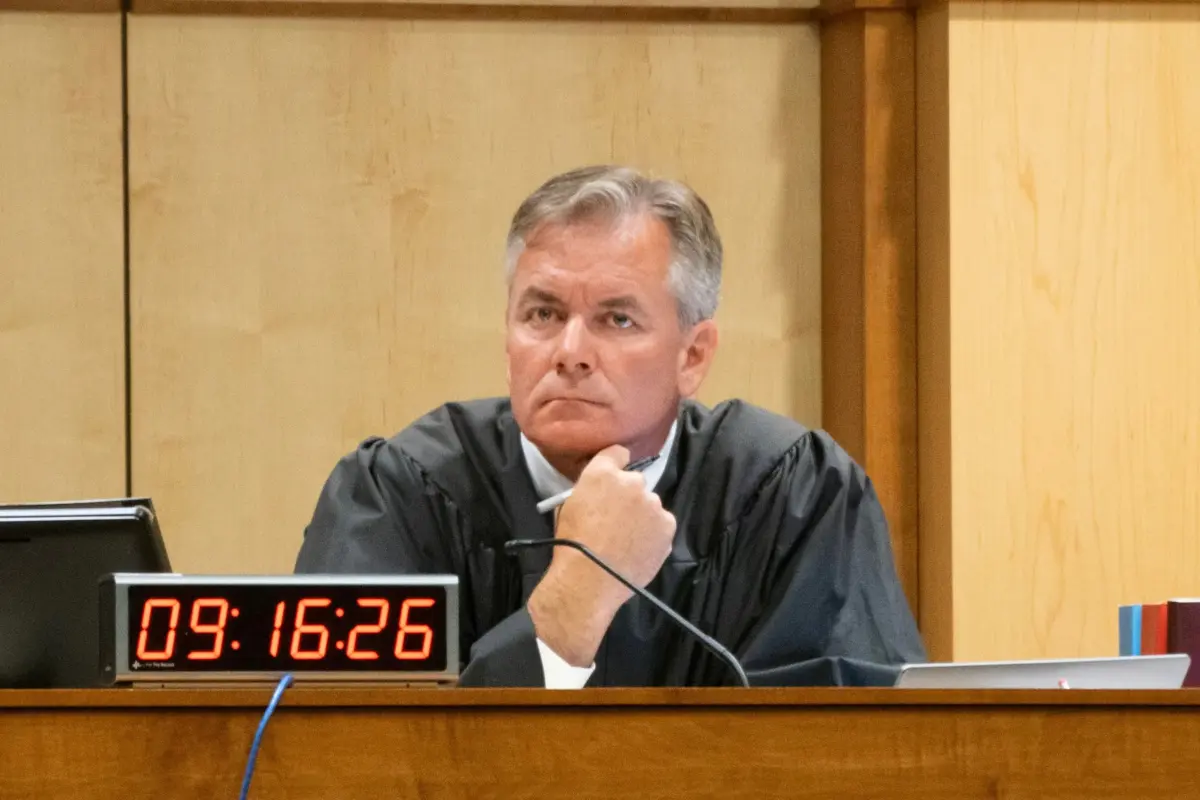

CONCORD, N.H. — More than three decades after a sensationalized murder trial gripped a nationwide audience, a New Hampshire judge has officially dismissed the latest legal bid by Pamela Smart to overturn her life sentence. Merrimack County Superior Court Judge James Kennedy ruled against Smart’s petition for habeas corpus relief, effectively shutting down her most recent avenue for freedom.
Smart, now 59 years of age, is currently incarcerated at the Bedford Hills Correctional Facility for Women in Bedford Hills, New York. In 1991, she was convicted of being an accomplice to first-degree murder, conspiracy, and witness tampering following the 1990 shooting death of her husband, Gregory Smart. At the center of the notorious case was a harrowing reality: Smart, then a 22-year-old high school media coordinator, had engaged in a sexual relationship with a 15-year-old student, William Flynn, whom she subsequently manipulated into orchestrating and carrying out the execution of her husband.
The latest legal challenge, filed in January and argued during a July hearing, claimed a series of sweeping constitutional violations. Smart’s defense team argued that flawed trial transcripts, prejudicial media saturation, and improper jury instructions irreparably tainted the original verdict. However, Judge Kennedy firmly rejected these arguments, determining that the issues raised had either already been addressed in prior appellate reviews or lacked substantive legal merit.
This latest judicial roadblock highlights the enduring legal, cultural, and psychological fallout of a case that helped pioneer the modern era of 24-hour sensational television news and true-crime obsession. Despite Smart finally breaking decades of public denial in 2024 to accept responsibility for her role in her husband’s murder, the courts remain resolute: her life sentence without the possibility of parole stands.
Detailed Chronology: From 1990 Tragedy to the 2026 Legal Dismissal
To understand the weight of Judge Kennedy’s recent ruling, it is necessary to retrace the timeline of a tragedy that transformed a quiet New Hampshire community into a national media epicenter.
The Murder of Gregory Smart (1990)
On May 1, 1990, 24-year-old Gregory Smart was found dead in his condominium in Derry, New Hampshire, killed by a single gunshot wound to the head. Initially investigated as a violent botched burglary, the narrative quickly shifted as police uncovered a dark web of conspiracy, teen manipulation, and infidelity.
Investigators soon zeroed in on William Flynn, a 15-year-old sophomore at Winnacunnet High School where Pamela Smart worked. Under interrogation, Flynn confessed to pulling the trigger, implicating not only Pamela—with whom he was having an intense sexual affair—but also three other teenage friends who assisted in the plot: Patrick Randall, Raymond Fowler, and Vance Lattime Jr.
According to trial testimony, Smart expressed profound anxiety that a divorce from Gregory would strip her of her lifestyle, assets, and social standing. She allegedly gave Flynn an ultimatum, telling the teenager that she would terminate their relationship unless he proved his love by eliminating her husband.
The 1991 Trial and Media Circus
The subsequent trial of Pamela Smart in late 1991 remains a watershed moment in American legal and media history. It was one of the first high-profile criminal trials in the United States to be broadcast live on television from gavel to gavel. Millions of Americans tuned in daily, transfixed by the grotesque juxtaposition of a youthful, defiant school employee and the teenage co-conspirators testifying against her.
In March 1991, a jury convicted Smart of accomplice to first-degree murder, conspiracy to commit murder, and witness tampering. Due to the calculated nature of the crime and her position of authority over the teenage perpetrators, the presiding judge handed down a sentence of life in prison without the possibility of parole.
Decades of Appeals and the 2024 Admission
Over the next thirty years, Smart maintained her innocence, launching numerous appeals, petitioning for commutations, and arguing that she had been framed by rogue teenagers and overzealous prosecutors. Her case became a fixture of legal textbooks and popular culture, inspiring Joyce Maynard’s 1992 novel To Die For and the subsequent 1995 film adaptation directed by Gus Van Sant and starring Nicole Kidman.
The defensive wall finally fractured in 2024, when Smart publicly shifted her stance. For the first time, she explicitly took responsibility for her husband’s death, attributing her decades of denial to a psychological "coping mechanism." Yet, this long-awaited admission of guilt did not translate into legal clemency; the parole board and lower courts maintained that her remorse did not erase her underlying conviction or justify her release.
The 2026 Habeas Corpus Challenge
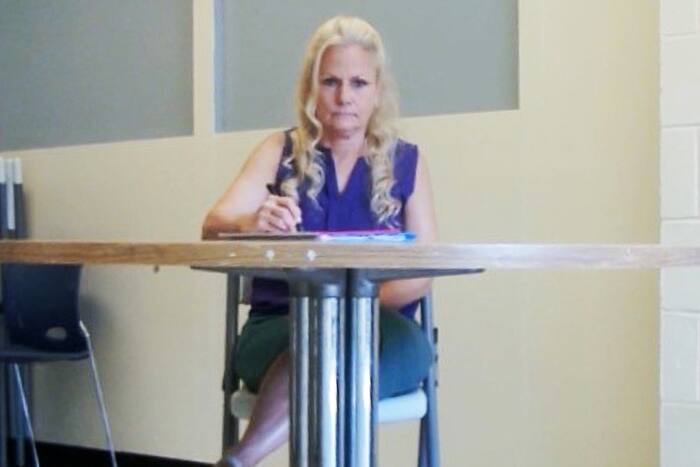
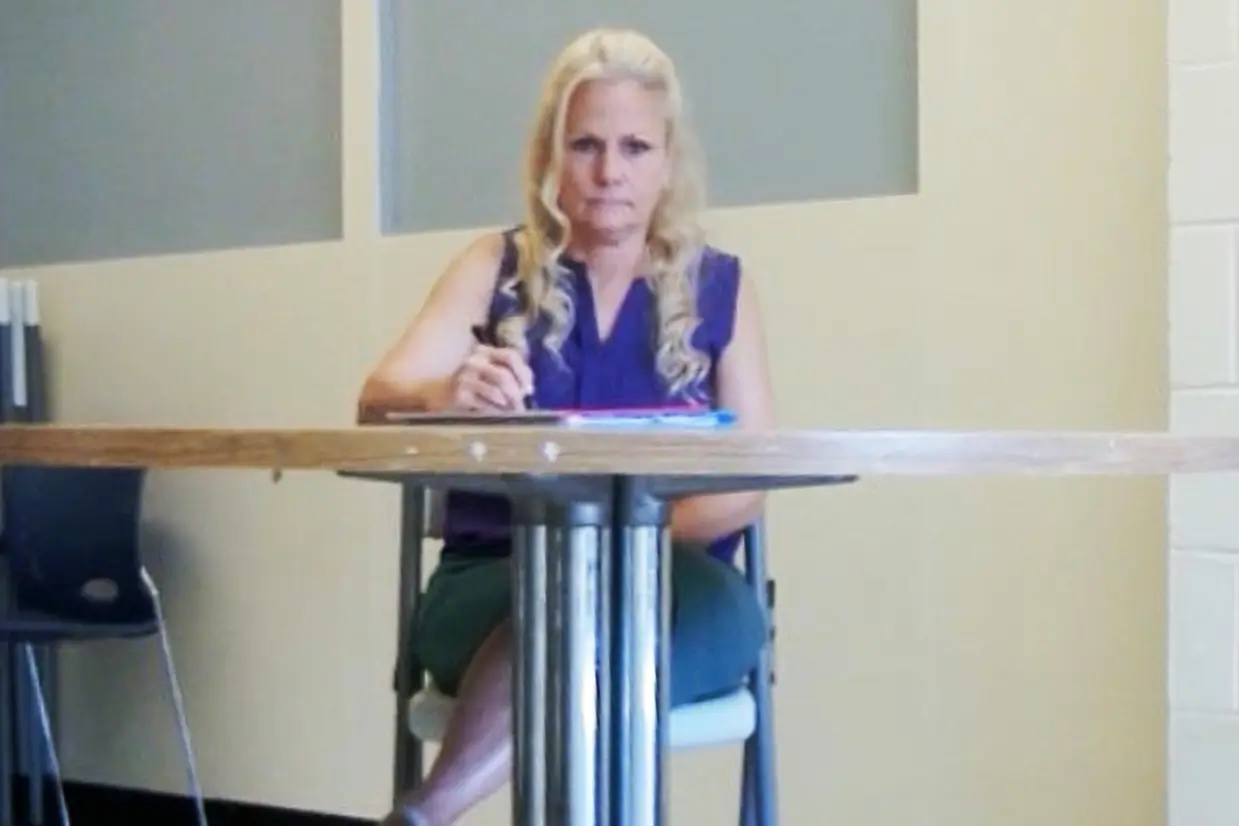
Seeking a final legal breakthrough, Smart’s defense counsel filed a petition for habeas corpus relief in January, culminating in a high-stakes virtual hearing in July 2026 before Judge James Kennedy. Smart participated remotely from Bedford Hills Correctional Facility, watching as her attorneys brought forth novel arguments regarding the integrity of the original trial evidence—efforts that ultimately culminated in Thursday’s dismissal.
Supporting Context & Metrics: The Evidence and Legal Arguments
The core of Smart’s recent legal petition centered on technical assertions regarding how evidence was presented to the 1991 jury, specifically targeting covertly recorded audio transcripts and their psychological impact on jurors.
The Transcript Controversy
Smart’s legal team argued that prosecutors fundamentally misled the jury by providing written transcripts of surreptitiously recorded conversations between Smart and her student intern that featured words completely inaudible on the original audio tapes.
Among the disputed phrases highlighted in the petition were:
- The word “killed” embedded within the sentence, “you had your husband killed.”
- The word “busted” within the phrase, “I’m gonna be busted.”
- The word “murder” within the statement, “this would have been the perfect murder.”
To substantiate their claims, Smart’s attorneys introduced a forensic study designed to demonstrate a cognitive phenomenon: when juries are provided with written transcripts alongside muffled or low-quality audio recordings, human psychology compels listeners to trust the written text, effectively hallucinating or mishearing the disputed audio to match the transcript.
Judicial Dismissal of the Forensic Claims
Judge Kennedy dismantled these arguments point by point in his dismissal order. The jurist ruled that the forensic study cited by Smart’s defense was of “dubious” legal relevance because it had never been formally published or made available for peer review in its entirety. Furthermore, Kennedy noted that even the summaries provided by Smart’s lawyers failed to definitively prove that the disputed words were completely absent from the operational audio recordings or that their inclusion substantially altered the overwhelming totality of evidence presented against her in 1991.
Broader Context of Co-Conspirator Releases
While Smart remains behind bars serving a life sentence, the young men who physically carried out the conspiracy have long since reintegrated into society:
- William Flynn, the shooter, served 25 years before being granted parole in 2015.
- The three other teenage accomplices—Patrick Randall, Raymond Fowler, and Vance Lattime Jr.—similarly cooperated with the state, served their respective prison sentences, and were released years ago.
This disparity in outcomes—where the young executors of the crime walked free while the adult orchestrator remains imprisoned—has continuously fueled the debates surrounding Smart’s prolonged incarceration, though courts continue to hold that her role as the mastermind warrants the severity of her punishment.
Official Statements and Judicial Rationale
The written decision issued by Merrimack County Superior Court Judge James Kennedy provides a definitive legal accounting of why Smart’s latest maneuver failed to meet the rigorous standards required for habeas corpus relief.
Judge Kennedy emphasized that post-conviction relief is not an open-ended mechanism to relitigate a case simply because new theories or modern forensic studies emerge decades later. His ruling stressed that the constitutional violations alleged by Smart’s defense counsel suffered from a fatal procedural flaw: the arguments either had been thoroughly litigated during her direct appeals in the 1990s or could have been raised decades ago with reasonable diligence.
Furthermore, addressing the defense’s contentions regarding pervasive media pre-trial publicity and faulty jury instructions, Judge Kennedy noted that the trial court operated within the constitutional boundaries of the era and that the trial judge provided adequate safeguards to ensure an impartial jury.
Legal analysts reviewing the decision point out that New Hampshire courts maintain an exceptionally high threshold for overturning decades-old convictions, particularly when the defendant confessed to their complicity as late as 2024. By acknowledging her role in the orchestration of the murder, legal experts argue, Smart inadvertently weakened future arguments claiming absolute factual innocence, leaving her defense to rely entirely on procedural technicalities that courts are historically reluctant to entertain.
Future Outlook: The End of the Road for Pamela Smart?
As the dust settles on Judge Kennedy’s dismissal, legal scholars and observers are forced to evaluate what lies ahead for one of America’s most infamous inmates.
With her latest habeas corpus petition officially dismissed, Smart’s avenues for judicial relief through the New Hampshire state court system are effectively exhausted. While her defense team retains the theoretical right to appeal Judge Kennedy’s ruling to the New Hampshire Supreme Court, appellate attorneys view the chances of a reversal as vanishingly slim given the explicit nature of the lower court’s findings on procedural default and lack of substantive merit.
For the public and the legal community, the case of Pamela Smart serves as a permanent historical marker. It established early legal precedents regarding the admissibility of audio enhancements, the ethics of televising high-profile criminal trials, and the complex psychological dynamics of grooming and manipulation within educational institutions.
Ultimately, barring an unprecedented act of executive clemency or a commutation by the governor—outcomes that remain politically and legally improbable given the gravity of the crime and her historical resistance to accountability—Pamela Smart is destined to live out the remainder of her days behind the walls of Bedford Hills Correctional Facility. The ghost of 1990 Derry, New Hampshire, continues to loom large, a chilling reminder of a tragedy that forever altered multiple lives and permanently embedded itself into the annals of American true-crime history.

0 Comments