As artificial intelligence continues to accelerate past conventional paradigms, few academic disciplines are feeling the shockwaves quite as acutely as mathematics. Long considered the purest domain of human logic, abstract reasoning, and rigorous manual calculation, the field is undergoing a profound structural metamorphosis. To address these tectonic shifts, Florida State University (FSU) is hosting a high-profile virtual conference titled "Mathematics at a Turning Point: AI, Research, and the Next Generation."
Kicking off on Friday, September 25, at 1:20 p.m., the online symposium brings together world-class mathematicians, computer scientists, and educators to debate, dissect, and strategize around the rapid integration of artificial intelligence into mathematical research and higher education. Spearheaded by Martin Bauer, the Marion Bradley Brennan Professor of Mathematics at FSU, the event serves as a critical forum for a discipline grappling with both the unprecedented potential and the existential risks of automated reasoning.
The conference is open to the public via advance online registration and forms the centerpiece of an ongoing academic dialogue at FSU regarding the future of scientific inquiry. With automation now capable of assisting in complex proofs, generating computational hypotheses, and accelerating research pipelines from months to mere minutes, the mathematical community faces a defining dilemma: How does a field rooted in foundational mastery adapt to a world where machines can bypass the manual toil of problem-solving?
Detailed Chronology: The Rise of AI in the Mathematical Sciences
The journey toward this pivotal moment in mathematical history has been characterized by a rapid, almost breathless succession of technological milestones. For centuries, the pacing of mathematical breakthroughs was dictated by the stamina and intuition of human minds. Pen and paper, blackboards, and painstakingly long peer-review cycles were the primary instruments of the trade.
The Shift from Auxiliary Tool to Active Collaborator
In the early days of computational mathematics, computers served primarily as calculators—glorified number-crunchers used to verify arithmetic or run heavy simulations in applied fields like fluid dynamics or cryptography. However, the paradigm shifted dramatically over the last decade with the advent of machine learning models trained on vast corpuses of scientific literature, formal logic languages, and code repositories.
By the mid-2020s, advanced AI models crossed a critical threshold. They were no longer just assisting with arithmetic; they were participating in the creative aspects of mathematics. Systems began demonstrating capabilities in proof-assistant software (such as Lean and Coq), automatically verifying complex logical steps, and occasionally suggesting novel paths toward solving long-standing conjectures.
Recognizing that these developments were outpacing traditional academic discourse, Professor Martin Bauer and his colleagues at FSU began organizing structured interventions to address the community’s anxieties and opportunities. This academic year marked a watershed moment for FSU’s Department of Mathematics. Earlier in September, Bauer hosted an inaugural virtual seminar titled "The crisis of AI-generated mathematics," which drew an astonishing level of international attention.
The success of that initial session—which welcomed participants from 205 distinct higher-education institutions and campuses across 31 countries—paved the way for the September 25 panel. While the first event focused broadly on the philosophical and educational crises sparked by generative AI, "Mathematics at a Turning Point" narrows its lens to the practical, structural, and career-oriented challenges facing the upcoming generation of researchers.
Supporting Context & Metrics: A Global Academic Community in Transition
The urgency driving FSU’s conference is backed by hard metrics and widespread international concern. The academic community is no longer whispering about the implications of AI; institutions globally are mobilizing to establish ethical boundaries, pedagogical best practices, and collaborative frameworks.
Global Engagement and Participation
Over 700 Confirmed Registrations: Across both of Bauer’s fall semester AI panels, the academic appetite for guidance has been overwhelming, with hundreds of faculty members, postdoctoral researchers, and graduate students locking in their virtual seats.
31 Countries, 205 Institutions: The international footprint of the September 11 preliminary session highlights that the anxieties surrounding automated mathematics are universal. From elite European research universities to developing institutions in the Global South, mathematicians share a common set of questions regarding the future of the discipline.
The Pedagogical Dilemma: Shortcuts vs. Mastery
At the heart of the debate is a profound educational tension. Undergraduate and graduate mathematics programs have traditionally relied on endless hours of manual problem-solving, repetitive calculation, and grueling proof-writing to forge mathematical intuition.
When students can instantly query an AI model to solve a differential equation or outline a topological proof, the immediate danger is the evisceration of the learning process.
"One challenge for current undergraduate students is learning how to use AI without letting it become a shortcut that prevents them from developing their own understanding," Martin Bauer notes. "I always encourage my students not to dismiss AI, as it is an essential tool that they will need to learn how to use effectively. At the same time, working through problems and calculations themselves remains necessary for understanding the deeper meaning of the material."
This duality forms the crux of modern mathematics education reform. Educators are tasked with walking a razor-thin line: rejecting AI risks rendering students professionally obsolete in an automated workforce; embracing it indiscriminately risks producing a generation of practitioners who can operate the tools without comprehending the underlying theorems.
Official Statements and Expert Perspectives
The gravity of the current moment has drawn commentary from leadership at the highest levels of the Florida State University academic ecosystem.
Sam Huckaba, Dean of the FSU College of Arts and Sciences—who earned his Ph.D. in mathematics from Purdue University in 1986 and has spent decades navigating the evolution of academic math—emphasizes the sheer velocity of change currently buffeting the discipline.
"Mathematicians making targeted use of AI have demonstrated stunning effectiveness at tackling research-level mathematics problems," Huckaba observes. "It’s an understatement to say that the recent advancements of this technology, which are multiplying ever more swiftly and have opened possibilities not previously thought to be easily reachable, have captured the attention of the entire discipline."
Dean Huckaba views the FSU-hosted panel not merely as a discussion circle, but as an essential catalyst for institutional adaptation.
"The panel event provides a fantastic opportunity for mathematics experts who have been using and thinking about AI to share their knowledge and experiences," Huckaba adds. "My hope is that it will serve as a catalyst and help the participants better understand both challenges and opportunities facing the field."
Professor Bauer echoes this sentiment, framing the situation not as a localized academic inconvenience, but as a sweeping scientific transformation that demands collective, community-wide problem-solving.
"AI has the potential to reshape every part of the mathematical research process, raising profound questions and uncertainties for mathematics and, more broadly, for science in general," Bauer states. "This panel aims to examine what these changes may mean for the future of research, with a particular emphasis on the challenges faced by early-career mathematicians. I strongly believe that there are, unfortunately, no easy answers: responding to this transition will require our community to come together and work hard to address the most pressing questions and develop solutions that will allow the next generation of researchers to thrive in this new environment."
Future Outlook: Navigating the New Mathematical Frontier
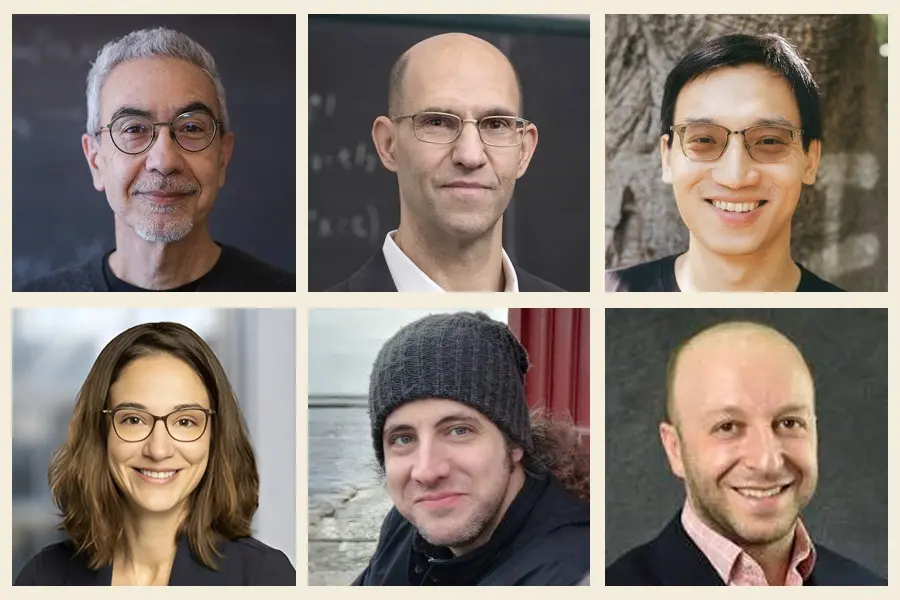
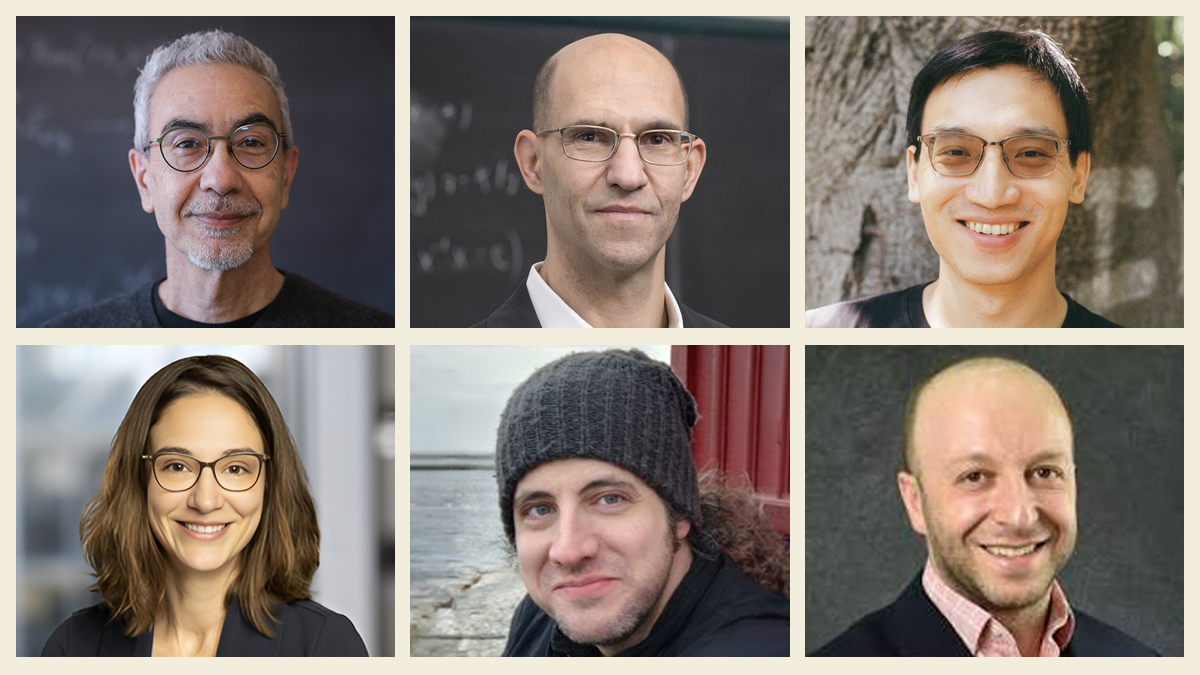
As "Mathematics at a Turning Point" convenes its panel of distinguished researchers—featuring experts such as Ettore Aldrovandi, Jeremy Avigad, Tony Feng, Alex Kontorovich, Javier Gómez-Serrano, and Rachel Ward—the discussion will inevitably pivot toward what lies ahead for the discipline over the next decade.
1. Redefining the Research Workflow
In the near future, the traditional workflow of a research mathematician—solitary brooding over a notebook followed by months of trial-and-error calculations—will likely be permanently augmented by automated systems. AI will act as an intellectual sparring partner, capable of testing thousands of hypotheses in the time it takes a human to draft a single lemma. However, this raises critical questions regarding authorship, verification, and intellectual property. When an AI system assists in generating a novel proof, who—or what—gets the credit?
2. The Evolution of Career Training
For graduate students and postdoctoral researchers, the job market is shifting. Early-career mathematicians must now cultivate a hybrid skillset that combines traditional analytical depth with computational literacy and prompt engineering tailored to formal verification languages. Panels like the one hosted at FSU are crucial for setting normative standards on how young scholars can leverage these tools responsibly without compromising their academic integrity or analytical core.
3. Establishing Ethical and Responsible Frameworks
A recurring theme across FSU’s AI symposia is the necessity of responsible AI use. Because large language models are prone to hallucinations—fabricating references, logical leaps, or outright errors that look convincing—mathematicians must remain the ultimate arbiters of truth. Developing robust frameworks to audit AI-generated mathematics will be one of the defining methodological challenges of the 21st century.
Conclusion
Florida State University’s proactive stance through the "Mathematics at a Turning Point" conference demonstrates the vital role that major research institutions must play in navigating technological disruptions. By fostering global conversations, providing actionable advice to early-career scholars, and confronting pedagogical dilemmas head-on, FSU is helping to ensure that mathematics does not lose its soul to automation, but instead harnesses it to scale new heights of human intellect.
For more information on the event, or to register for the virtual conference, visit the official FSU Mathematics AI Event Website.



0 Comments