
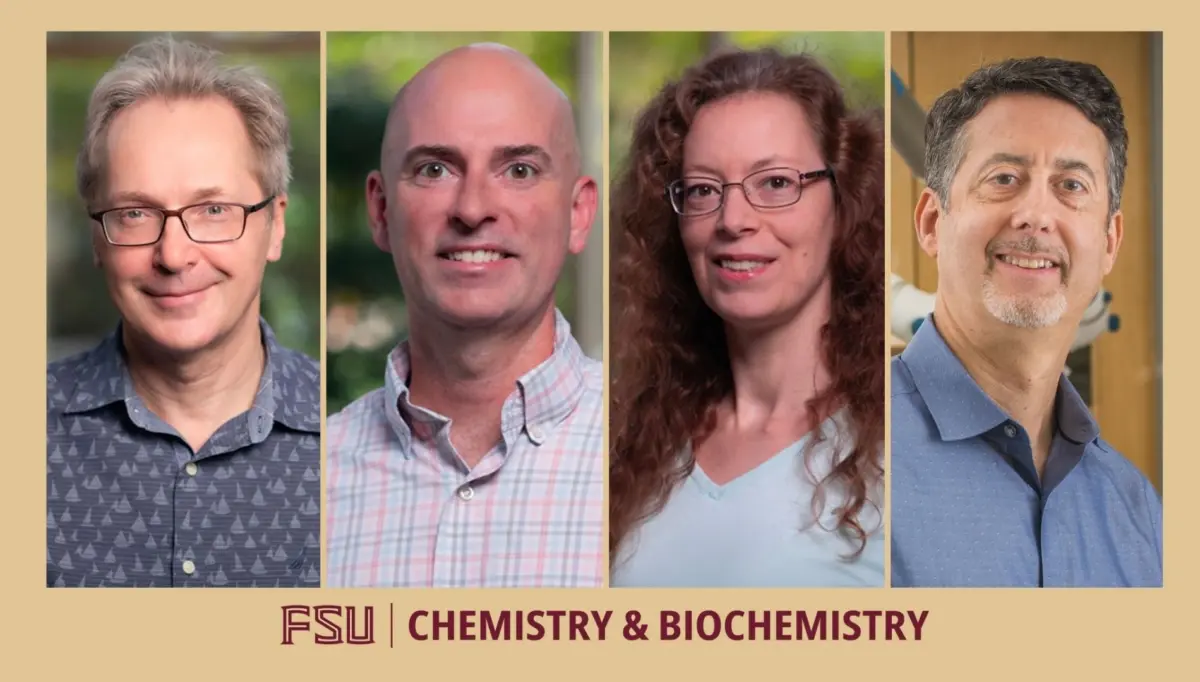

TALLAHASSEE, Fla. — In a sweeping endorsement of institutional research excellence, four faculty members within the Florida State University (FSU) Department of Chemistry and Biochemistry have been awarded a combined total of more than $2 million in competitive research grants from the National Science Foundation (NSF).
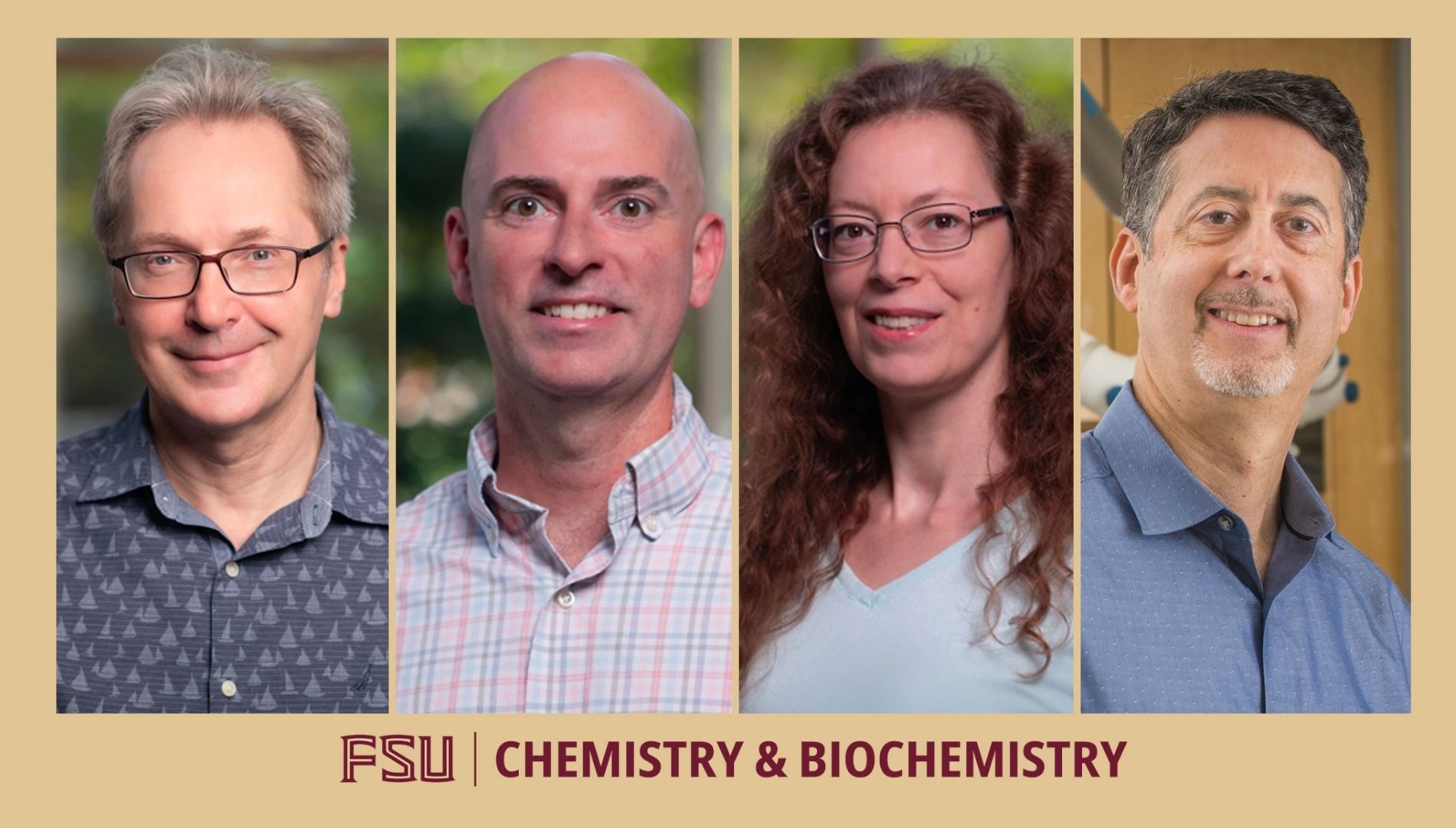
Awarded this past summer, the three-year funding packages will power an array of groundbreaking investigations designed to engineer novel materials from the atomic and molecular levels up. The research initiatives spearheaded by Distinguished Research Professor Igor Alabugin, Professors Eugene DePrince and Susan Latturner, and Robert O. Lawton Distinguished Professor Joseph Schlenoff sit at the bleeding edge of modern science. Their collective efforts are projected to drive transformative advancements across high-priority technological sectors, including quantum computing, high-density data storage, next-generation energy conversion, and advanced biomedical devices.
Beyond driving high-impact scientific discoveries, the multimillion-dollar influx of federal capital will serve as a powerful engine for academic workforce development. The funding is earmarked to support graduate research assistantships, providing the next generation of American scientists with rigorous, hands-on laboratory experience and critical mentorship.
Executive Overview: A Multidisciplinary Push for Technological Sovereignty
The modern global economy hinges on the discovery and deployment of advanced materials. From the silicon chips powering artificial intelligence to the specialized polymers required for green energy infrastructure, technological progress is fundamentally bounded by the limitations of available matter. Recognizing this bottleneck, the NSF’s latest funding cycle prioritizes fundamental chemistry projects capable of transcending these limits.
FSU’s Department of Chemistry and Biochemistry has long positioned itself as a powerhouse in materials chemistry. This latest series of awards cements the university’s status as a national leader in translating complex molecular theory into tangible technological solutions.
+-----------------------------------------------------------------------------------+
|                        FSU NSF MATERIALS CHEMISTRY AWARDS                         |
+--------------------+----------------------+---------------------------------------+
| FACULTY RESEARCHER | NSF FUNDING AMOUNT   | PRIMARY RESEARCH FOCUS                |
+--------------------+----------------------+---------------------------------------+
| Igor Alabugin      | $578,000             | Graphenic substructures & electronics |
| Eugene DePrince    | $544,501             | Quantum electrodynamics & light-matter|
| Susan Latturner    | $500,000             | Intermetallic metal fluxes & energy   |
| Joseph Schlenoff   | $560,862             | Polyelectrolyte coacervates & polymers|
+--------------------+----------------------+---------------------------------------+
The multi-pronged approach taken by the FSU research team covers four distinct yet complementary pillars of materials science:
- Controlling Electron Transport: Building precise carbon-based nano-architectures for quantum computing and data storage.
- Computational Modeling: Developing advanced quantum-chemical algorithms to simulate light-matter interactions.
- Clean Energy Generation: Synthesizing complex intermetallic compounds to capture waste heat and optimize power conversion.
- Biomaterial Engineering: Formulating responsive polymer blends for underwater adhesives and water purification membranes.
Wei Yang, chair of the FSU Department of Chemistry and Biochemistry, emphasized that these awards validate the department’s long-term strategic vision. "Materials chemistry has been one of the sustained strengths of FSU Chemistry and Biochemistry," Yang said. "As part of our department’s strategic vision, we will continue pushing forward our research of molecules and materials that enable next-generation technologies and chemical discoveries."
Detailed Chronology & Project Breakdown
To understand the scope of the $2 million+ NSF investment, one must examine the specific mechanics of the four funded projects. Each initiative tackles a fundamentally different scale of matter—ranging from sub-nanometer molecular configurations to macro-scale polymer interactions.
1. Controlling Chemistry for New Quantum Technologies ($578,000)
- Principal Investigator: Igor Alabugin, Distinguished Research Professor of Chemistry and Biochemistry
- Project Design of Functional Graphenic Substructures
As the global race toward quantum supremacy accelerates, scientists are constantly searching for new substrates that can reliably process, store, and transmit quantum information. Igor Alabugin’s project addresses this challenge by targeting graphene—a two-dimensional lattice of carbon atoms renowned for its exceptional electrical, thermal, and mechanical properties.
While bulk graphene is difficult to control precisely, Alabugin’s team is taking a modular approach. They are developing novel synthetic strategies to construct small, precisely defined fragments of graphene, effectively treating them like molecular Lego bricks.
"We can connect different pieces of graphene and ask how the way we connect them changes what the resulting molecule can do," Alabugin explained. "Ultimately, we want to understand these rules well enough to say, ‘I want a molecule that does this,’ and know how to build it."
By systematically manipulating the size, shape, and connectivity of these graphenic substructures, the team aims to observe how structural variations control electron movement, energy transfer, light interaction, and magnetic properties. Establishing these bedrock structure-property relationships will unlock new pathways for molecular electronics, high-density data storage, and quantum information processing.
2. Expanding the Computational Chemistry Toolkit ($544,501)
- Principal Investigator: Eugene DePrince, Professor of Chemistry and Biochemistry
- Project Molecular Response Properties from Ab Initio Quantum Electrodynamics
Before physical materials can be synthesized in a laboratory, theoretical chemists must map out how they will behave. However, traditional computational chemistry models often struggle to accurately predict how molecules behave when subjected to intense electromagnetic fields—such as those found inside optical cavities.
Eugene DePrince is tackling this theoretical frontier by developing new theories and algorithms for high-accuracy quantum chemical simulations. His project focuses on ab initio quantum electrodynamics, a framework that analyzes how interactions between light and matter alter the intrinsic properties of a molecular system.
"We’re aiming to expand computational chemists’ toolkit and introduce new ways of controlling molecular properties through strong interactions with light," DePrince stated.
By creating sophisticated computational models that accurately simulate these environments, DePrince’s team is laying the groundwork for revolutionary applications in solar energy capture and optoelectronics. In the long term, these theoretical tools will serve as a compass for experimentalists, dramatically shortening the design cycle for advanced quantum technology materials.
3. More Efficient Data Storage and Energy Applications ($500,000)
- Principal Investigator: Susan Latturner, Professor of Chemistry and Biochemistry
- Project Directing the Synthesis of Complex Materials from Metal Fluxes
Global energy consumption continues to soar, making the capture and conversion of waste energy an urgent engineering priority. Susan Latturner’s research focuses on the synthesis of novel intermetallic compounds—substances forged from two or more metallic elements, such as nickel and aluminum—grown from molten metal fluxes.
These complex materials exhibit extraordinary magnetic, thermoelectric, and superconducting properties that can be harnessed for diverse applications, from advanced data storage architectures to medical diagnostic equipment. Of particular note is their potential in thermoelectric energy conversion.
"Some compounds we’re creating are semiconducting, and they could be used as thermoelectric modules that harness waste heat," Latturner noted. "When driving a car, for example, the engine gets hot and most of that heat energy is lost. If we put a thermoelectric module in the car and convert heat back to electricity, the whole system becomes more efficient."
Latturner’s NSF-backed research will streamline the discovery process for these high-performance intermetallics, offering scalable solutions for industrial energy management.
4. New Polymer Blends for Water Purification and Biomedical Use ($560,862)
- Principal Investigator: Joseph Schlenoff, Robert O. Lawton Distinguished Professor of Chemistry and Biochemistry
- Project Extremes of Macromolecular Charge Pairing Motif in Polyelectrolyte Complex Coacervates
At the intersection of polymer science and biotechnology lies the work of Joseph Schlenoff. His project investigates polyelectrolyte complex coacervates—dense, liquid-like phases formed by the mixing of oppositely charged, water-soluble polymers. These long, spaghetti-like molecular chains possess unique phase-separation behaviors that can be tuned to engineer advanced membranes, coatings, and adhesives.
Schlenoff’s team is leveraging the $560,862 NSF grant to explore the extremes of macromolecular charge pairing, with immediate implications for critical infrastructure and healthcare.
"We’re working to better understand and create new biocompatible polymer blends, including adhesives that can join surfaces underwater for biomedical applications such as wound closure and tissue repair," Schlenoff explained. Beyond surgical adhesives, these advanced polymer networks hold immense promise for next-generation water purification membranes and high-efficiency energy storage components like fuel cells and advanced batteries.
Supporting Context & Institutional Metrics
The success of FSU’s Department of Chemistry and Biochemistry in securing these prestigious NSF grants is not an isolated anomaly; it reflects a broader, sustained upward trajectory in research productivity and institutional funding at Florida State University.
Over the past decade, FSU has steadily climbed the ranks of premier public research universities, driven by strategic investments in STEM infrastructure, faculty recruitment, and interdisciplinary collaboration centers. The Department of Chemistry and Biochemistry has been a primary beneficiary and contributor to this growth, regularly outperforming national averages in federal grant acquisition.
+-----------------------------------------------------------------------------------+
|                     FSU RESEARCH FUNDING TRAJECTORY (METRICS)                     |
+-----------------------------------+-----------------------------------------------+
| Metric                            | Institutional Status                          |
+-----------------------------------+-----------------------------------------------+
| Total Annual Research Expenditures| Exceeds $400 Million                          |
| NSF Grant Success Rate (FSU Chem) | Significantly above national median           |
| Graduate Student Support          | Enhanced via multi-year research assistantships|
| Interdisciplinary Centers         | Integration with Quantum & Materials Institutes|
+-----------------------------------+-----------------------------------------------+
Federal funding agencies like the NSF operate under fiercely competitive review processes. Proposals are evaluated based on two strict criteria: Intellectual Merit (the potential to advance knowledge) and Broader Impacts (the potential to benefit society and contribute to achievement of specific, desired societal outcomes). The simultaneous award of four major grants to a single academic department underscores the rigorous caliber of FSU’s scholarship and its direct alignment with national strategic priorities.
Furthermore, the integration of student training into these federally funded projects addresses a critical national shortage of trained materials scientists and quantum engineers. By embedding undergraduate and graduate students directly into high-stakes, discovery-driven laboratories, FSU is actively cultivating a robust, highly skilled STEM workforce.
Official Statements & Academic Perspective
The announcement of the NSF awards has reverberated throughout the academic community, drawing praise from university leadership and highlighting the indispensable role of federal backing in basic scientific research.
Reflecting on the philosophical and practical importance of the grants, Joseph Schlenoff noted the foundational nature of the enterprise: "Almost all scientific breakthroughs are underpinned by this kind of systematic fundamental research, and NSF’s support in our pursuit of these discoveries cannot be overstated."
This sentiment was echoed across the board by his colleagues, who emphasized that commercial technological revolutions—from quantum computing hardware to eco-friendly automotive systems—cannot occur without a deep, foundational understanding of chemical interactions at the molecular level.
Department Chair Wei Yang reiterated that the department remains fully committed to fostering an environment where daring, high-risk, high-reward research can flourish. By empowering researchers like Alabugin, DePrince, Latturner, and Schlenoff, FSU ensures that its laboratories remain crucible environments for innovations that will shape the technological landscape of the 21st century.
Future Outlook: Translating Molecular Discovery into Real-World Impact
As the three-year grant cycle gets underway, the immediate focus for the four research teams will be the establishment of experimental protocols, the synthesis of novel compounds, and the scaling of computational models.
However, the long-term implications stretch far beyond the academic horizon:
- In Quantum Computing: Alabugin’s graphenic substructures and DePrince’s quantum electrodynamic simulations could collectively provide the physical architecture and theoretical design tools required to build fault-tolerant quantum processors.
- In Clean Energy: Latturner’s intermetallic flux synthesis offers a viable path toward capturing industrial waste heat, directly contributing to global carbon reduction targets.
- In Biomedical Engineering: Schlenoff’s water-resistant polymer coacervates stand to revolutionize surgical procedures, offering non-toxic, biocompatible alternatives to traditional sutures and staples.
As these projects progress from theoretical models and beaker-scale syntheses toward prototype development, Florida State University will undoubtedly remain at the vanguard of materials science innovation.
To learn more about ongoing research initiatives, academic programs, and faculty profiles within the Florida State University Department of Chemistry and Biochemistry, visit chem.fsu.edu.

0 Comments