
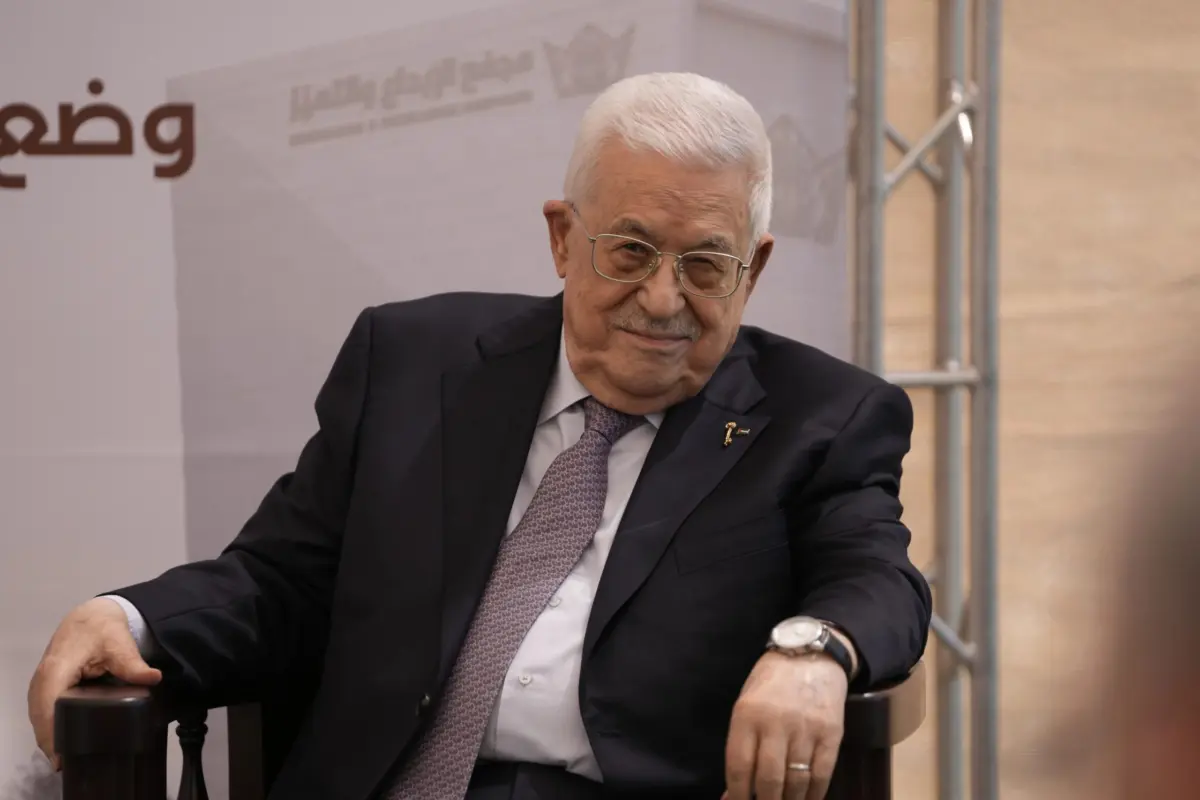

The annual gathering of the United Nations General Assembly in New York has once again served as a high-stakes diplomatic theater, laying bare the deep fractures, exclusions, and shifting power dynamics governing the Israeli-Palestinian conflict. For the second consecutive year, Palestinian President Mahmoud Abbas was forced to address the international body via prerecorded video. His virtual appearance—broadcast from his headquarters in the West Bank city of Ramallah on Thursday—followed a controversial decision by the United States government to deny entry visas to Abbas and other high-ranking Palestinian Authority officials.
While Abbas used his digital platform to critique international inaction and underscore the ongoing plight of Palestinians under occupation, Israeli Prime Minister Benjamin Netanyahu was scheduled to take the podium in person later that afternoon. The stark contrast between Abbas’s remote address and Netanyahu’s physical presence in the UN chamber encapsulates the marginalized position of the Palestinian Authority (PA) on the global stage.
Now 90 years old, Abbas has led the PA since 2005. His tenure has been defined by a paradox: while his administration has successfully galvanized international recognition for Palestinian statehood from a majority of UN member states, the reality on the ground in the West Bank and Gaza has deteriorated significantly. Decades of expanding Israeli settlements, unyielding military occupation, crippling institutional stagnation, and recent marginalization in regional peace talks—particularly through frameworks like President Donald Trump’s Board of Peace—have left the PA increasingly irrelevant to the immediate futures of millions of Palestinians.
This comprehensive report examines the geopolitical fallout of the UN General Assembly addresses, the structural and democratic crises plaguing the Palestinian Authority, the physical and political realities of the West Bank and Gaza, and the broader implications for international diplomacy in the Middle East.
Detailed Chronology of Diplomatic Events
Wednesday, September 9, 2026: Infrastructure and Optimism in Ramallah
Weeks prior to the UN General Assembly, Palestinian President Mahmoud Abbas appeared publicly at the inauguration ceremony of the Innovation and Excellence Compound in Ramallah. Photographed addressing dignitaries and local leaders, Abbas attempted to project an image of administrative continuity and technological progress within the semiautonomous zones of the West Bank. However, the domestic optimism surrounding institutional developments stood in sharp contrast to the grim diplomatic headwinds closing in around the Palestinian leadership.
Wednesday, September 16, 2026: Recording the UN Address
Following the U.S. State Department’s formal denial of entry visas for the Palestinian delegation—a move justified by Washington under restrictive visa and security criteria but widely criticized as a political maneuver—Abbas’s office finalized plans for a remote submission. On Wednesday, September 16, Abbas recorded his address from his presidential compound in Ramallah. The prerecorded format stripped the speech of the immediacy and symbolic gravity typically associated with standing at the UN podium, transforming what should have been a direct dialogue into a mediated broadcast.
Thursday, September 17, 2026: The General Assembly Showdown
On Thursday, September 17, the UN General Assembly broadcast Abbas’s prerecorded remarks. The address focused heavily on the urgency of international intervention, the expansion of illegal settlements, and the protracted suffering in Gaza.
Later that same day, Israeli Prime Minister Benjamin Netanyahu addressed the assembly in person. Netanyahu’s appearance coincided with his political party’s New Year events in Tel Aviv earlier in the week, reinforcing his domestic political positioning. His UN speech was expected to emphasize Israel’s security imperatives, reject unilateral declarations of statehood, and outline Jerusalem’s vision for regional integration that bypasses traditional Palestinian leadership structures.
Supporting Context & Metrics: The Crisis of the Palestinian Authority
Leadership Longevity and the Democratic Deficit
Elected in January 2005 following the death of longtime leader Yasser Arafat, Mahmoud Abbas was originally slated to serve a standard four-year presidential term ending in 2009. More than two decades later, Abbas remains in power.
The Palestinian Authority has not held presidential or legislative elections since 2006, when Hamas won a surprise victory in the Palestinian Legislative Council elections. The ensuing political schism erupted into violent clashes in Gaza in 2007, resulting in Hamas violently seizing control of the coastal strip and ousting the Fatah-dominated PA. Since then, the Palestinian political landscape has remained deeply fractured between the West Bank and Gaza, fueling a profound democratic deficit. Public opinion polls consistently show plummeting approval ratings for Abbas, with widespread domestic frustration over pervasive institutional corruption, economic stagnation, and the PA’s failure to secure meaningful steps toward genuine statehood.
The Geography of Occupation: West Bank and East Jerusalem
Israel captured the West Bank and East Jerusalem during the Six-Day War in June 1967. For nearly six decades, these territories have remained the focal point of the territorial dispute.
- Settlement Expansion: Despite repeated UN resolutions condemning them as violations of international law—specifically Fourth Geneva Convention stipulations regarding occupied territories—Israeli settlement construction has accelerated. Hundreds of thousands of Israeli settlers now live in the West Bank, creating a fragmented patchwork of Israeli-controlled infrastructure, bypass roads, and military checkpoints that systematically dissect Palestinian land.
- The Contiguity Crisis: Palestinians and the vast majority of the international community view these settlements not only as illegal, but as an existential obstacle to the creation of a viable, contiguous, and sovereign Palestinian state alongside Israel.
- The Reality on the Ground: While diplomatic efforts at the United Nations have succeeded in securing non-member observer state status and recognition from a majority of UN member states, these symbolic victories have translated to zero tangible improvements for daily life in the West Bank. Military raids, settler violence, administrative detentions, and severe freedom-of-movement restrictions remain the daily reality for Palestinians.
Sidelined in Regional Peace Architecture
Compounding its domestic weakness, the Palestinian Authority has been largely sidelined from high-level negotiations regarding the postwar future of the Gaza Strip and broader regional peace frameworks.
Throughout the prolonged war in Gaza, traditional diplomatic channels led by Western and Arab intermediaries have increasingly deferred to alternative transition models. Notably, processes spearheaded by President Donald Trump’s Board of Peace have bypassed the Ramallah-based administration entirely. Critics argue that by marginalizing the internationally recognized representative of the Palestinian people, these external frameworks risk fostering long-term instability, failing to address the core political grievances necessary for sustainable peace.
Official Statements and International Reactions
The exclusion of Palestinian leadership from United Nations headquarters in New York drew sharp rebukes from international law advocates, human rights organizations, and various member states, who argued that denying visas to diplomats obstructs multilateral dialogue.
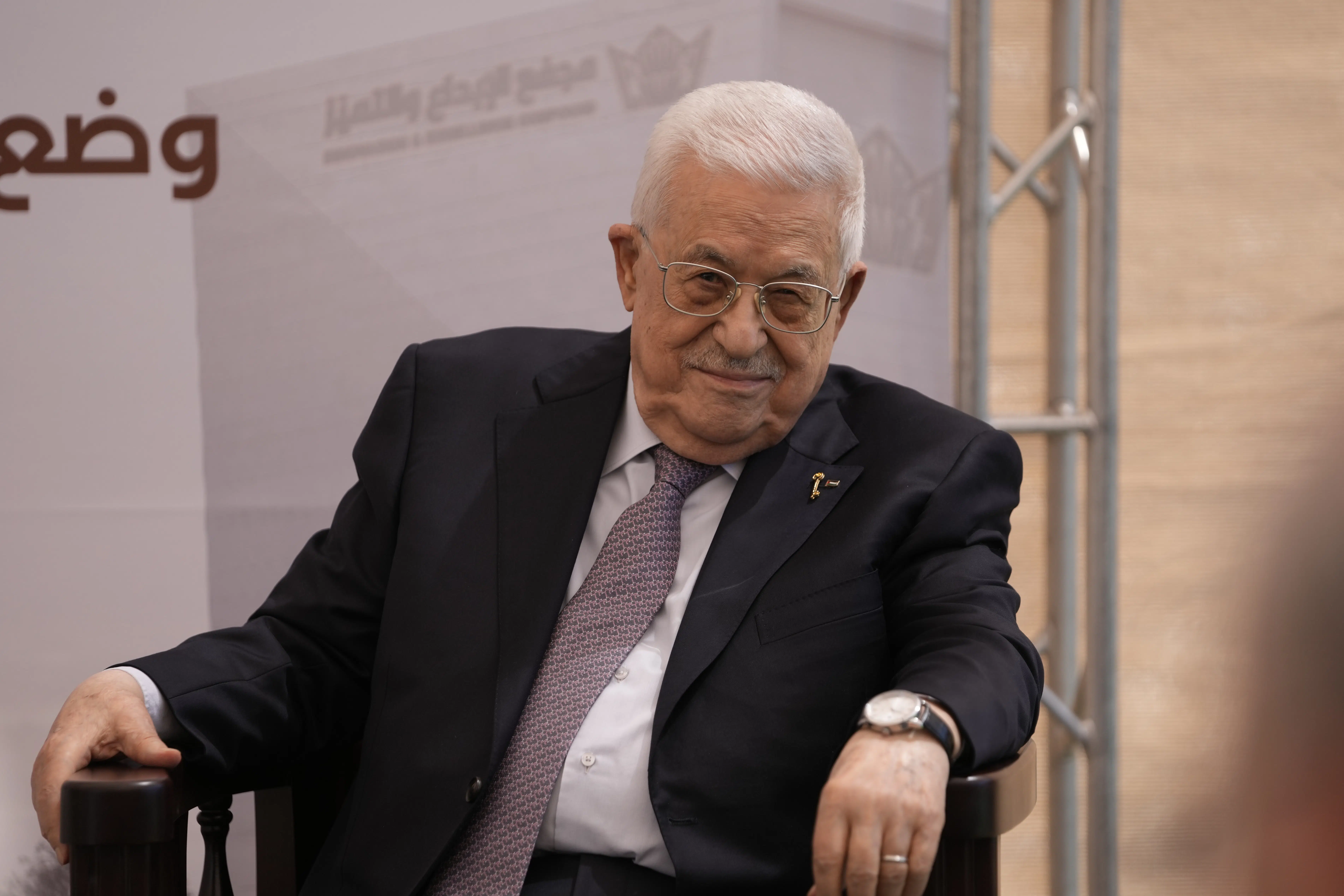
In his prerecorded address, President Abbas emphasized the historical injustice of the Palestinian predicament, calling upon the international community to move beyond rhetoric and enforce international resolutions. "The denial of our physical presence at this global forum is a symptom of a broader, systemic effort to silence the legitimate aspirations of millions of people who ask for nothing more than freedom, dignity, and independence," Abbas stated. He reiterated that peace cannot be achieved by bypassing the core representative institutions of the Palestinian people or by normalizing military occupation under the guise of regional economic restructuring.
Conversely, supporters of the Israeli government defended Prime Minister Netanyahu’s platform at the UN, framing his upcoming address as a crucial counterweight to what Jerusalem describes as diplomatic warfare waged by Palestinians in international forums. Israeli officials maintained that security arrangements, regional normalization agreements (such as the Abraham Accords framework), and defense against militant groups must take absolute precedence over premature discussions of statehood in the absence of negotiated security guarantees.
Meanwhile, representatives from the United Nations Secretariat expressed regret over the logistical and political hurdles that prevented a face-to-face dialogue between Israeli and Palestinian leaders in New York, reiterating the UN’s commitment to a two-state solution based on pre-1967 borders.
Future Outlook: Navigating a Fractured Geopolitical Landscape
As the 2026 UN General Assembly draws to a close, the path forward for Israeli-Palestinian relations appears more precarious than ever. Several critical trajectories will define the coming months:
- The Succession Crisis in Ramallah: Given Abbas’s advanced age (90) and deeply eroded domestic legitimacy, the question of political succession within the Palestinian Authority is increasingly urgent. The lack of a clear, democratic transition mechanism threatens to plunge the West Bank into internal power struggles among rival Fatah factions, further complicating relations with Hamas.
- The Future of Governance in Gaza: The postwar governance of Gaza remains an unresolved powder keg. With the Palestinian Authority sidelined from major transition processes like the Board of Peace, the international community faces a difficult choice: integrate a reformed and revitalized PA into Gaza’s administration to restore territorial unity, or risk cementing a permanent division that precludes any viable two-state solution.
- Escalation in the West Bank: With settlement expansion continuing unabated and economic pressures mounting, the West Bank remains a tinderbox. Observers warn that continued lack of political horizon for youth, coupled with unchecked settler violence and military clampdowns, could trigger widespread uprisings that dwarf previous periods of unrest.
- The Efficacy of Multilateral Diplomacy: The spectacle of a Palestinian president forced to address the UN via video feed due to U.S. visa restrictions underscores the limitations of the current international architecture. If global bodies cannot ensure equitable access for recognized negotiating parties, their credibility as neutral arbiters of peace will continue to erode.
Ultimately, the events of September 2026 at the United Nations serve as a sobering reminder: until the fundamental issues of occupation, sovereignty, democratic representation, and security are addressed through inclusive and equitable negotiations, sustainable peace in the Middle East will remain an elusive horizon.

0 Comments