
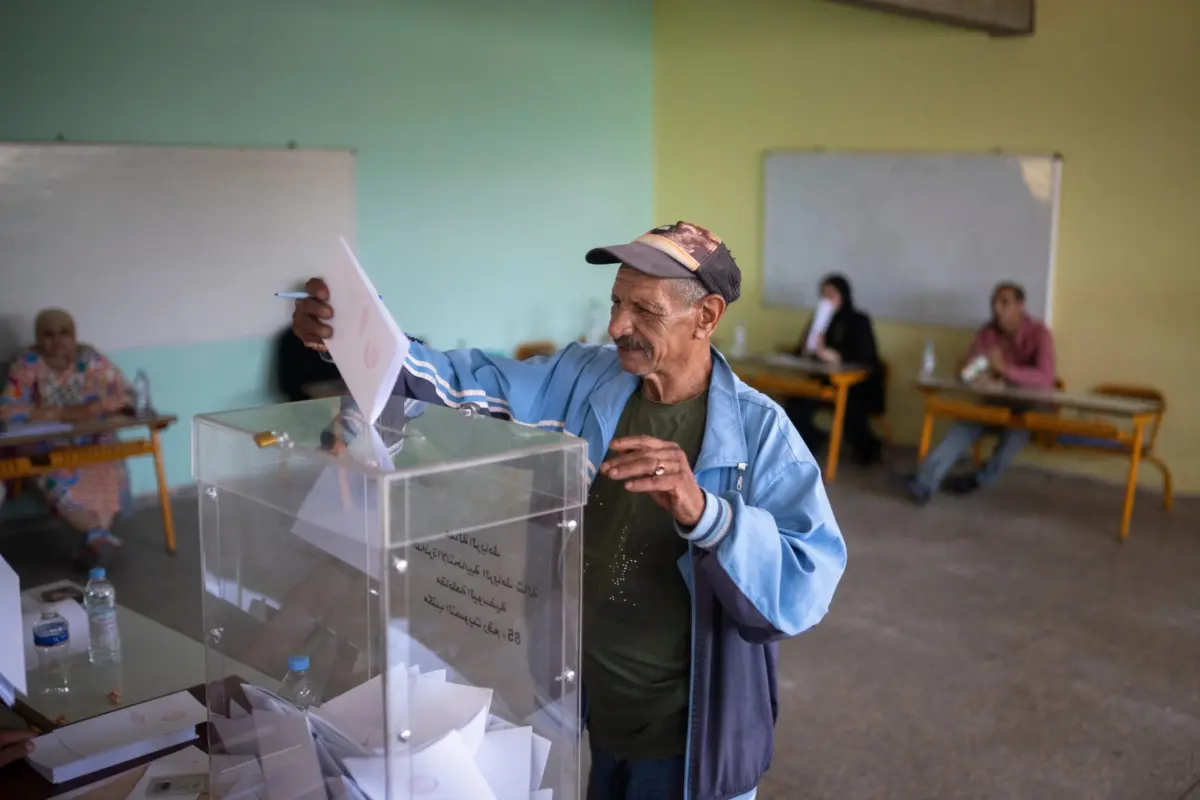

CASABLANCA — In a high-stakes electoral showdown that has fundamentally reshaped the North African kingdom’s legislative balance, Morocco’s Authenticity and Modernity Party (PAM) has clinched the highest number of seats in the nation’s parliamentary elections. Provisional results released early Thursday by the Moroccan Interior Ministry detail a sweeping realignment of the country’s political forces, marked by a stinging defeat for the incumbent governing party, a resilient showing by legacy institutions, and a dramatic, unexpected resurrection of a moderate Islamist faction.
The preliminary figures signal a profound recalibration of voter sentiment across the country’s diverse urban centers and rural constituencies. As political analysts unpack the cascading implications of Wednesday’s vote, attention is immediately turning to the impending formation of a new ruling coalition and the identity of the next prime minister tasked with navigating Morocco through a complex domestic and international environment.
Executive Overview
The September 23, 2026, legislative elections concluded after weeks of vigorous campaigning characterized by impassioned rallies, intense policy debates, and high-profile stump speeches from prominent political figures such as Fatima Ezzahra El Mansouri—Moroccan minister, politician, and the influential mayor of Marrakech—who championed the PAM platform across multiple urban strongholds including Tangier.
When the dust settled and the Interior Ministry tallied the provisional results from polling stations stretching from Rabat to the remote Atlas Mountains, the Authenticity and Modernity Party emerged at the pinnacle of the House of Representatives. PAM secured 97 out of the 395 fiercely contested seats in Morocco’s lower house.
The electoral outcome represents both continuity and disruption. While PAM and its historical ally, the Istiqlal Party, maintained or expanded their parliamentary footprints, the ruling National Assembly of Independents (RNI)—which headed the outgoing government coalition—suffered a catastrophic collapse in voter support. Simultaneously, the Justice and Development Party (PJD), a moderate Islamist faction that experienced a historic electoral wipeout in the 2021 elections, defied expectations with a massive political comeback.

Detailed Chronology: From Campaign Trail to Ballot Box
The Lead-Up: Mid-September Campaign Blitz
The final stretch of the electoral campaign in mid-September 2026 set a frenetic pace for the nation. Political heavyweights crisscrossed the country to galvanize an electorate grappling with economic pressures, post-pandemic recovery efforts, and ongoing developmental transformations.
On Wednesday, September 16, 2026, prominent PAM leaders, including Marrakech Mayor Fatima Ezzahra El Mansouri, spearheaded a massive electoral rally in the northern port city of Tangier. El Mansouri’s rallies underscored PAM’s strategic messaging: economic modernization, administrative decentralization, and robust social governance. These events served as critical catalysts, mobilizing youth and urban voters who felt alienated by the outgoing administration’s policies.
Election Day: Wednesday, September 23, 2026
Polling stations opened nationwide at 8:00 a.m. under stringent security and administrative oversight managed by the Ministry of the Interior. Millions of Moroccan citizens streamed into designated voting centers across major metropolitan hubs like Rabat, Casablanca, and Marrakech, as well as outlying rural provinces.
Visual documentation from the capital city of Rabat captured a cross-section of Moroccan society—men and women alike participating earnestly in the democratic exercise. Electoral observers noted a calm, orderly process at polling booths, with local election workers facilitating compliance with national voting regulations. Long queues formed outside various precincts throughout the morning and afternoon, reflecting a engaged citizenry keen to register their verdict on the nation’s political trajectory.
The Count: Early Thursday Declarations
As the sun set on September 23, ballot boxes were sealed and transported under armed guard to centralized municipal counting centers. By the early hours of Thursday morning, the Moroccan Interior Ministry began releasing provisional results in waves.

By sunrise, the contours of the new parliament were starkly evident. The preliminary data confirmed that the governing National Assembly of Independents had shed dozens of seats, paving the way for a complete overhaul of the legislative majority and forcing incumbent leaders back to the drawing board.
Supporting Context & Metrics: Decoding the 2026 Results
To fully appreciate the gravity of the 2026 election results, one must examine the precise distribution of power within the 395-seat House of Representatives. The provisional breakdown reveals a deeply fragmented yet decisive outcome:
- Authenticity and Modernity Party (PAM): 97 seats (New leader in seat share)
- National Assembly of Independents (RNI): 66 seats (Significant losses from the previous mandate)
- Istiqlal Party: 65 seats (Steady retention of traditional base)
- Justice and Development Party (PJD): 54 seats (Dramatic resurgence from its 2021 nadir)
- Other Parties and Independents: 113 seats (Comprising regional, leftist, and smaller centrist factions)
Historical and Structural Context
Founded in 2008 by figures closely aligned with the royal palace, the Authenticity and Modernity Party was originally conceived as a modern, centrist political vehicle designed to counter the rising influence of Islamist politics. Over the subsequent decade and a half, PAM solidified its standing as a major pillar of the Moroccan political establishment.
Its strong performance in 2026 positions it not merely as a partner in governance, but as the senior architect of the next parliamentary majority. Alongside Istiqlal—which also served within the outgoing governing coalition—PAM represents the continuity of developmental and economic strategies championed over recent years.
Conversely, the collapse of the RNI underscores the volatile nature of Moroccan voter loyalty when confronted with socioeconomic challenges. Despite leading the government through ambitious infrastructure projects and international diplomatic milestones, the RNI bore the brunt of public dissatisfaction regarding inflation, cost-of-living adjustments, and regional disparities.

Meanwhile, the resurrection of the Justice and Development Party (PJD) stands out as the most compelling narrative of the election cycle. Having dominated Moroccan governance for a decade prior to their catastrophic defeat in 2021—where they plummeted to a meager 13 seats—the moderate Islamist party leveraged grassroots networks and anti-establishment sentiment to claw back to 54 seats, proving that their political obituary was written prematurely.
Official Statements and Political Reactions
In the wake of the provisional results, party headquarters in Rabat and Casablanca buzzed with intense negotiations, press conferences, and strategic assessments.
Interior Ministry officials maintained a neutral, administrative stance during the release of the figures, emphasizing the transparency and logistical success of the vote. In an official briefing early Thursday, ministry spokespersons commended the peaceful demeanor of the electorate and the rigorous verification protocols implemented by independent election monitors.
PAM leadership was buoyant. Senior party architects highlighted the election results as a definitive validation of their reformist agenda. Speaking to a gathering of party faithful, high-ranking officials stressed that the Moroccan public has chosen progress, institutional stability, and pragmatic economic management. Although specific coalition overtures remain under wraps, insiders suggest that PAM is already exploring avenues to consolidate a stable legislative majority.
Representatives from the resilient Istiqlal Party expressed satisfaction with maintaining their competitive edge, securing 65 seats and reinforcing their status as an indispensable broker in any prospective coalition government.

On the other side of the political spectrum, leaders of the Justice and Development Party hailed their 54-seat haul as a "glorious return" and a clear signal from the electorate demanding renewed attention to social justice, economic equity, and ethical governance.
Concurrently, figures from the routed National Assembly of Independents acknowledged the voters’ message with sobering candor. Party spokespersons noted that while the electoral defeat is painful, it provides a vital opportunity for internal reflection and programmatic renewal.
Future Outlook: Coalition Dynamics and the Road Ahead
As Morocco transitions from the campaign trail to the corridors of governance, all eyes are fixed on the complex process of coalition-building. Because no single political party commands the 198 seats required for an absolute majority in the 395-member House of Representatives, coalition negotiations will dictate the formation of the next government.
The Coalition Calculus
With 97 seats under its belt, the Authenticity and Modernity Party holds the initiative, but it cannot govern alone. Natural alignment points toward historical partners like the Istiqlal Party (65 seats), which would bring their combined total to 162 seats. However, this bloc still falls short of an absolute majority, necessitating alliances with smaller centrist or independent factions to cross the threshold.
Political analysts suggest several potential coalition architectures:

- The Continuity Alliance: A renewed partnership between PAM, Istiqlal, and select moderate centrists, aiming to preserve the broad economic and foreign policies pursued during the previous legislative term.
- Broad Technocratic-Political Consensus: Incorporating a wider array of regional and independent deputies to ensure maximum legislative stability in the face of pressing domestic reforms.
Policy Priorities for the Incoming Government
The new administration will immediately confront a formidable slate of legislative and socioeconomic challenges. Chief among them are:
- Economic Resilience: Addressing inflation, generating youth employment, and bolstering regional development outside the major coastal corridors.
- Social Welfare Expansion: Continuing the rollout of universal healthcare, direct social assistance programs, and educational reforms initiated under royal directives.
- International Diplomacy: Maintaining Morocco’s proactive foreign policy stance across Africa, the Mediterranean, and global trade partnerships.
As King Mohammed VI prepares to formally invite the leader of the winning party to form a government, Morocco stands at a critical juncture. The 2026 legislative elections have demonstrated the vitality of the nation’s democratic processes, proving that Moroccan voters remain deeply engaged in shaping their collective destiny through the ballot box.

0 Comments