
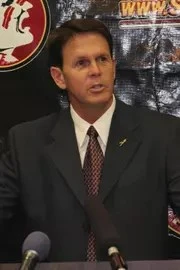

This week, Florida State University will officially enshrine former athletic director Dave Hart into its Athletics Hall of Fame. The university’s official biographical tribute credits Hart with formulating and executing "a comprehensive plan of excellence for every sport"—a blueprint that modernized facilities, expanded budgets, and pulled a historically football-centric institution into a new era of broad-based athletic competitiveness.
The metrics of Hart’s tenure from 1995 to 2007 validate these accolades. Under his watch, the Seminoles captured the 1999 consensus football national championship, two men’s outdoor track and field national titles, and 33 Atlantic Coast Conference (ACC) championships. Furthermore, 263 student-athletes earned All-America honors, while 577 achieved all-conference recognition. The athletic department’s overall competitive standing underwent a dramatic ascent, climbing more than 30 spots in the NACDA Directors’ Cup standings, from 46th in 1999–2000 to 15th by the close of the 2006–2007 academic year.
Yet, as Florida State pauses to celebrate this long-overdue institutional milestone, the induction arrives against an ironic and sobering backdrop. FSU is currently navigating a period of sharp athletic regression, highlighted by one of its worst Directors’ Cup finishes in a quarter-century.
Hart’s enshrinement is much more than a nostalgic look back at a golden era of trophies and facility upgrades; it serves as a litmus test for how the university handles internal governance, the limits of institutional authority, and the heavy shadow cast by legendary figures. Hart did not merely upgrade the Seminoles’ hardware; he attempted to build a sustainable enterprise capable of surviving long after head football coach Bobby Bowden stepped away. In doing so, he collided directly with the university’s actual power structure—a friction that ultimately cost him his job.
Detailed Chronology: The Clash Between Institutional Authority and Legend
To understand Dave Hart’s legacy at Florida State, one must examine the unique structural ecosystem he inherited. FSU did not evolve into a traditional national power through a calculated, top-down administrative blueprint. Instead, Bobby Bowden built the program virtually from scratch, pulling a regional program out of isolation through sheer force of will, extraordinary coaching brilliance, and relentless winning.
By the early 1990s, Bowden’s stature transcended normal athletic parameters. He recruited the players, commanded the television cameras, generated the revenue, and served as the emotional heartbeat of the entire university. In doing so, he accumulated personal authority that far exceeded the formal governance structure of the athletic department. When the football program stumbled, Bowden’s historic win totals usually masked any administrative shortcomings.
However, as the 2000s dawned, the infallible machinery began to sputter. Following a historic streak of 14 consecutive top-five AP poll finishes, the football program experienced a noticeable decline in offensive efficiency.
The Nepotism Dilemma and the Exit of Mark Richt
The fault lines widened significantly after offensive coordinator Mark Richt departed to become the head coach at the University of Georgia following the 2000 season. Bobby Bowden sought to elevate his son, Jeff Bowden, to the vacant offensive coordinator position. This move immediately triggered Florida State’s formal anti-nepotism policies, which had been implemented under University President Sandy D’Alemberte to prevent unvetted internal appointments.
To navigate this hurdle, the administration crafted a complex administrative workaround in February 2001. A reporting structure was approved wherein Jeff Bowden formally reported to another assistant coach, while Dave Hart retained formal administrative authority over his compensation and contractual evaluation.
On paper, the university had successfully erected institutional safeguards. In practice, however, the arrangement was a transparent fiction. Everyone within the athletic department and the broader college football landscape knew precisely who commanded the football program. As Jeff Bowden’s offense deteriorated over the subsequent seasons—culminating in an anemic, shutout loss to Wake Forest (30–0) in Tallahassee on November 11, 2006—the chasm between formal administrative governance and football reality became impossible to ignore.
The Reckoning and the Exit Strategy
Three days after the humiliating defeat to Wake Forest, Jeff Bowden announced he would step down as offensive coordinator at the conclusion of the season. Working in tandem with the Seminole Boosters, Hart helped assemble an exit package worth approximately $537,000 to facilitate the transition.
By enforcing institutional boundaries around a deeply sensitive personnel decision within the sacred confines of the Bobby Bowden dynasty, Hart crossed an unwritten Rubicon. The maneuver proved that Florida State’s formal administrative apparatus could indeed exercise authority over the football program, but it also exposed the precarious vulnerability of the athletic director tasked with carrying it out.
By July 2007, university leadership—now under the helm of President T.K. Wetherell, a former FSU player coached by Bowden decades prior—opted not to renew Hart’s contract, letting him go roughly 18 months before its scheduled expiration.
Supporting Context & Metrics: Building the Modern Foundation
While the political maneuvering surrounding the football program often dominated headlines, Hart’s most enduring contribution was his "comprehensive plan of excellence." Hart recognized that for Florida State to survive as a premier national brand, it needed to evolve past a singular reliance on football.
Transforming the Athletic Footprint
Hart initiated a systemic overhaul of the athletic department’s infrastructure, partnering with the Seminole Boosters to finance, design, and construct modern facilities across multiple sports:
- Baseball: Dick Howser Stadium was transformed into one of the premier college baseball showcases in the United States.
- Softball & Track: The university replaced a makeshift softball setup with a legitimate collegiate ballpark and thoroughly renovated its track and field infrastructure.
- Soccer: A dedicated, state-of-the-art women’s soccer complex was brought to life, signaling a firm commitment to compliance and competitive equity under Title IX.
Department-Wide Financial Elevation
Rather than treating non-revenue sports as mandatory financial burdens to be maintained at the lowest possible cost, Hart systematically increased operational budgets across the board. The fiscal injections altered the department’s competitive baseline.
The upward trajectory was starkly illustrated by the Directors’ Cup standings. In the 1999–2000 academic year, FSU ranked 46th nationally. By the 2006–2007 academic year—Hart’s final full year at the helm—the Seminoles climbed to 15th overall, proving that a comprehensive, multi-sport philosophy could yield elite national positioning.
Even today, decades after his departure, the physical and financial bedrock Hart poured remains the foundation upon which Florida State athletics stands. The cruel irony, however, is that while FSU retained the infrastructure Hart built, it largely failed to sustain the systemic, institution-wide reinvestment model that made those facilities functional at an elite level.
Official Statements and Institutional Perspectives
The narrative surrounding Dave Hart’s departure has long been parsed for political subtext. University leadership at the time frequently sought to decouple administrative turnover from football politics, pointing instead to concurrent operational challenges.
When an academic misconduct scandal involving athletes in an online music course surfaced in the fall of 2007—ultimately implicating dozens of student-athletes across multiple sports—it provided President Wetherell with an independent, tangible justification to scrutinize departmental oversight.
However, Hart consistently rejected the notion that the academic scandal catalyzed his dismissal. Upon accepting a financial buyout from the university in December 2007, Hart explicitly stated:
"My separation from Florida State had absolutely nothing to do with this current review of academic misconduct."
He maintained this stance years later. When the University of Tennessee hired Hart as its athletic director in 2011, he reiterated that his exit from Tallahassee was driven exclusively by irreconcilable philosophical conflicts with President Wetherell, rather than administrative negligence regarding academic compliance.
Reflecting on Hart’s career trajectory, his subsequent tenure at Tennessee (2011–2017) offers a complex postscript. In Knoxville, Hart successfully navigated the tricky merger of separate men’s and women’s athletic departments and stabilized shaky finances. Yet, his tenure was also marked by controversial missteps—including the ill-fated hire of basketball coach Donnie Tyndall, unwavering support for football coach Butch Jones, and strained relations with historic Lady Vols supporters. At a mature Southeastern Conference institution, Hart proved to be a capable yet polarizing administrator; at Florida State, however, he functioned as a transformational institutional visionary.
Future Outlook: Lessons for Modern Collegiate Athletics
As Florida State formally inducts Dave Hart into its Athletics Hall of Fame this week, the ceremony must serve as more than a nostalgic walk down memory lane. It should operate as a moment of severe institutional introspection.
College athletics has transformed into a high-stakes, billion-dollar enterprise defined by conference realignment, Name, Image, and Likeness (NIL) monetization, and unprecedented revenue-sharing models. Modern athletic directors require not only robust operational vision, but absolute institutional backing from university leadership to make cold, calculated business decisions—even when those decisions intersect with legendary coaching tenures or entrenched program traditions.
Hart’s tenure demonstrates a fundamental truth: an elite athletic department cannot be successfully run on the personal charisma and historical equity of a single coach forever. Systems must outlast individuals.
By honoring Hart during a period of pronounced athletic recalibration, Florida State is indirectly confronting the ghosts of its administrative past. The university must ask itself whether it possesses the institutional courage today to enact the kind of comprehensive, unyielding standards of excellence that Hart championed two decades ago. If the Hall of Fame induction is to signify a genuine path forward rather than a hollow retrospective, FSU must recommit to the hard work of structural support, financial investment, and administrative fortitude that ensures the entire athletic department can thrive long after the current generation of legends has faded from the sidelines.

0 Comments