

Executive Overview
ST. JOHNS COUNTY, Fla. — The rapid commercial expansion driving growth across Northeast Florida has hit a sudden and unexpected roadblock in northern St. Johns County. Along the bustling corridor of County Road 210, near the high-profile Beachwalk development—widely celebrated for its massive crystal-clear lagoon—two notable commercial properties have abruptly ceased operations.
The sudden shuttering of a BurgerFi franchise and a local Daybreak gas station has sent ripples through the local business community, sparking fresh anxieties about the pace of commercial development, foot traffic generation, and the fulfillment of promises made to early-adopting entrepreneurs.
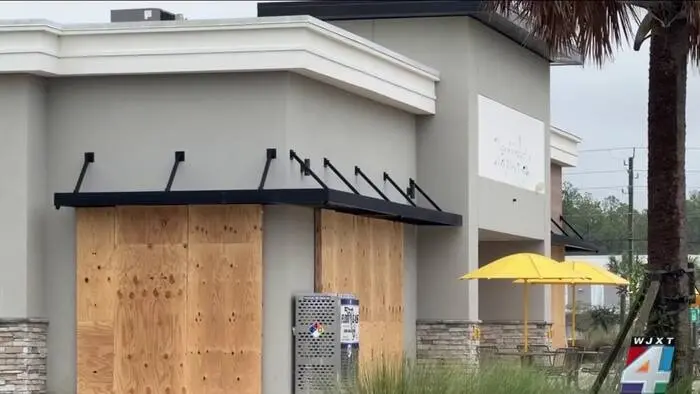
BurgerFi is now permanently closed, leaving behind an interior defined by stacked chairs and tables, accompanied by a polite sign apologizing to patrons for the sudden inconvenience. Just a stone’s throw away, the Daybreak gas station has similarly turned out the lights, its windows fortified with plywood boards and its fuel pumps securely wrapped in heavy-duty caution tape.
These closures have shattered the veneer of seamless, hyper-accelerated growth that many business owners expected when they first invested in the Beachwalk commercial hub. For years, developers marketed the area as a premier, high-density destination that would blend resort-style residential living with vibrant retail centers, dining, and hospitality. Instead, several merchants report feeling stranded in a landscape of unrealized potential, forced to weather prolonged periods of underwhelming foot traffic while waiting for promised infrastructure and surrounding developments to materialize.
Yet, amid the gloom of empty storefronts and boarded-up pumps, glimmers of hope remain. Recent municipal approvals for a 111-room hotel and nearly seven dozen residential cottages point toward a potential influx of tourism and local patrons. Some resilient business owners are holding out, tightening their belts, and betting that the long-term vision for Beachwalk will eventually catch up to the initial hype. This report examines the timeline of these developments, the growing friction between tenants and developers, the broader economic context of St. Johns County’s retail landscape, and the road ahead for this prominent coastal-adjacent corridor.
Detailed Chronology of Events
The unfolding narrative at Beachwalk is not merely a story of two isolated business closures; it is the culmination of years of shifting timelines, unmet expectations, and growing pains in one of Florida’s fastest-growing counties.
The Vision and the Promise
When the Beachwalk master-planned community first captured the regional spotlight, its centerpiece—a sprawling 14-acre crystalline lagoon—became an instant marketing phenomenon. Promoted as a revolutionary residential and commercial ecosystem, the project promised to bring a slice of paradise to the inland stretches of northern St. Johns County. Developers painted a picture of a bustling "mini-town center," a walkable urban village where residents and visitors could seamlessly transition from waterfront recreation to upscale shopping and dining.
Enticed by these sweeping blueprints, national franchises and independent operators alike rushed to secure commercial real estate leases along County Road 210. Among them was Seth Neiman, owner of Island Fin Poké, who envisioned a thriving commercial ecosystem driven by a steady stream of patrons visiting the retail hub.
Signs of Strain
However, as construction timelines stretched and expected commercial anchors failed to materialize on schedule, the promised foot traffic proved elusive. For months, business owners watched as expansive parking lots remained largely empty during peak hours, casting doubt on the immediate viability of their storefronts.
The mounting frustration boiled over publicly, highlighted by previous local media coverage detailing a war of words between disgruntled business owners and the project’s developers over glacial progress and unfulfilled commitments.
The Domino Effect: Recent Closures
The friction between projection and reality reached a tipping point recently with the dual closures of BurgerFi and the Daybreak gas station.
- BurgerFi: The popular gourmet burger chain quietly locked its doors for good. Inside the restaurant, the dining room tells a bleak story: tables are stacked haphazardly, and a simple, printed sign apologizes to customers for the sudden shutdown. The closure eliminates a major casual dining option for locals and visitors alike.
- Daybreak Gas Station: Situated nearby, the fuel and convenience station abruptly ceased operations. The property now presents a desolate exterior, featuring boarded-up windows and taped-off fuel dispensers that serve as a stark reminder of the volatile nature of retail development during transitional economic phases.
Regulatory Approvals and Municipal Shifts
As these businesses closed their doors, county records reveal that municipal machinery has continued to churn behind the scenes. In an effort to inject density and transient tourism into the area, the St. Johns County government greenlit significant hospitality additions:
- September: County planners officially approved blueprints for 68 residential cottages, designed to accommodate short-term visitors and vacationers.
- December: The county approved a four-story hotel project featuring 111 rooms, adding a critical lodging component to the immediate vicinity of the commercial plaza.
While these approvals signal that growth is still moving forward, for businesses that have already folded or are struggling to survive, the timeline feels agonizingly slow.
Supporting Context & Metrics: The St. Johns County Economic Landscape
To understand the friction at Beachwalk, one must examine the broader economic and demographic dynamics defining St. Johns County. Consistently ranked as one of the fastest-growing counties in the United States—frequently topping population growth charts driven by an influx of new residents migrating from northern states and South Florida—the region is a paradox of booming residential demand and strained commercial infrastructure.
The Growth Paradox
- Population Influx: St. Johns County has experienced double-digit percentage population growth over the past decade, heavily concentrated in northern corridors like County Road 210, International Parkway, and the Durbin Creek areas.
- Infrastructure Lag: While rooflines and residential subdivisions have multiplied at an astronomical rate, commercial, retail, and hospitality infrastructure frequently lags behind residential absorption by 12 to 36 months. This temporal gap leaves early commercial tenants stranded without an established, resident-dense customer base during their critical first years of operation.
- The "Bill of Goods" Phenomenon: As Seth Neiman bluntly described it, many early commercial tenants feel they were sold a "bill of goods." Commercial leases signed during the peak of the housing boom often relied on developer projections of dense, mixed-use commercial buildouts that faced subsequent delays due to supply chain bottlenecks, labor shortages, and protracted zoning negotiations.
Financial Pressures on Small Businesses
Independent business owners and franchisees operating in newly minted suburban developments face a unique matrix of financial challenges:
- High Capital Expenditure: Buildout costs for modern restaurant spaces, complete with grease traps, commercial hood systems, and specialized refrigeration, require substantial upfront capital.
- Carrying Costs: Operating expenses—including commercial rent, CAM (Common Area Maintenance) fees, property taxes, and insurance—continue to accrue regardless of daily foot traffic volumes.
- Staffing Adjustments: As seen with surviving establishments like Island Fin Poké, owners are forced to implement aggressive cost-cutting measures, including scaling back employee headcounts, to weather the prolonged ramp-up period.
Official Statements & Industry Perspectives
The situation along County Road 210 has prompted pointed commentary from stakeholders caught in the crosshairs of development delays, contrasted by a wall of silence from corporate entities and master developers.
The Tenant Perspective: Seth Neiman Speaks Out
Seth Neiman, proprietor of Island Fin Poké, has emerged as a vocal advocate for transparency and accountability among commercial developers in northern St. Johns County. Reflecting on his decision to plant roots in the Beachwalk commercial corridor, Neiman expressed deep frustration regarding the disparity between original marketing pitches and current operational realities.
"We were all sold a bill of goods," Neiman remarked candidly during a recent interview. "We were told something was going to be here that’s not here."
Neiman detailed how his business plan relied on the immediate realization of a dense, walkable commercial ecosystem—a mini-town center that would naturally draw crowds from surrounding neighborhoods and upcoming resort features.
"Even though Margaritaville would be great for me, if I’m still here, that’s what we were told was going be here. It was supposed to be like a mini town center behind," he explained, emphasizing the cascading financial impact of delayed neighboring phases.
Despite these hardships, Neiman maintains an optimistic outlook for the long-term viability of his storefront, pinning his recovery hopes on the recently approved hospitality projects.
"With a 110-room hotel and 68 cottages, and having a restaurant that is right in front of it, I think this is going to be a very valuable spot," Neiman stated. However, he was quick to contextualize the human cost of waiting: "Two years is not a short time."
To survive the interim, Neiman’s establishment has been forced to adapt defensively, trimming staff numbers while attempting to preserve core service standards for loyal customers.
Corporate and Developer Silence
Efforts by journalists to secure official commentary from key stakeholders yielded limited results:
- Daybreak Gas Station Corporate Office: Repeated inquiries directed to the corporate management of the shuttered Daybreak facility regarding the reasons for closure, employee disposition, and potential asset sale went entirely unanswered by the time of publication.
- Beachwalk Master Developers: Multiple requests for comment sent to the primary development entities overseeing the Beachwalk commercial tracts—seeking clarification on projected timelines, construction schedules, and tenant retention strategies—similarly met with silence.
This corporate reticence has done little to calm jittery local investors, leaving real estate analysts and neighborhood associations to read between the lines of public county filings to gauge the trajectory of the development.
Future Outlook: Can Beachwalk Deliver on Its Grand Design?
As St. Johns County continues its relentless march toward suburban and commercial densification, the corridor surrounding County Road 210 stands at a critical crossroads. The permanent closure of BurgerFi and the Daybreak gas station serves as a cautionary tale about the perils of over-promising and under-delivering in master-planned communities. Yet, the broader story of Beachwalk is far from finished.
Key Catalysts for Recovery
For surviving merchants like Island Fin Poké, the coming months and years will test their financial resilience, but several upcoming milestones offer genuine grounds for cautious optimism:
- Hospitality Integration: The physical construction and eventual opening of the approved 111-room hotel and 68 residential cottages will fundamentally alter the consumer demographic of the immediate area. By injecting transient tourists, business travelers, and out-of-town visitors directly into the commercial footprint, these lodging facilities will reduce the development’s reliance exclusively on local resident foot traffic.
- Infrastructure Maturation: As surrounding road networks, utility expansions, and auxiliary residential phases reach 100% build-out, the geographic isolation that plagued early tenants is steadily diminishing.
- Adaptive Retail Strategies: Surviving businesses are learning to pivot, implementing localized marketing, digital delivery partnerships, and community-centric events to bridge the gap while the physical destination matures.
Lessons for Future Suburban Developments
The growing pains at Beachwalk offer valuable takeaways for urban planners, county commissioners, and commercial real estate developers across Florida:
- Phasing Transparency: Developers must maintain open, honest communication channels with commercial tenants regarding infrastructure delays.
- Balanced Density: Ensuring that residential density, hospitality lodging, and commercial retail open in synchronized alignment—rather than decoupling residential growth from commercial support—is vital to protecting small business capital.
- Municipal Oversight: Local government bodies may need to implement more rigorous oversight or incentivization structures to ensure that commercial parcels designated in master plans do not languish as under-utilized parking lots.
Ultimately, the future of Beachwalk will be determined by whether the master developers can accelerate their vertical construction schedules and bring the envisioned town center to life before remaining pioneers are forced to shutter their doors. For now, business owners on County Road 210 are holding their breath, watching the construction cranes, and hoping that the next chapter of Beachwalk finally delivers the promised prosperity.

0 Comments